production
/viewbook/list/all/?page=986
/
/static/
None

ARCH 101 COLOR KIT GO TO SUPPLY DEPT
Authors:
Not Available
Publisher:
Not available
Publication Date:
Not available
ISBN:
Not available
ARCH 101 KIT
Authors:
Not Available
Publisher:
Not available
Publication Date:
Not available
ISBN:
Not available
ARCH 101 KIT (GO TO SUPPLY DEPT)
Authors:
Not Available
Publisher:
Not available
Publication Date:
Not available
ISBN:
Not available
ARCH 101 WSU DESIGN KIT
Authors:
Not Available
Publisher:
Not available
Publication Date:
Not available
ISBN:
Not available
ARCH 363 ARCHITECTURAL GRAPHICS III
Authors:
Not Available
Publisher:
Not available
Publication Date:
Not available
ISBN:
Not available
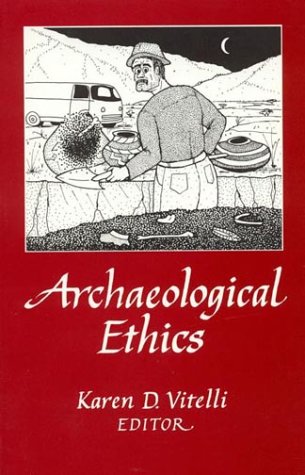
Archaeological Ethics
Authors:
Not Available
Publisher:
Not available
Publication Date:
Not available
ISBN:
0761905316
Looting. Reburial and repatriation. Relations with native peoples. Professional conduct. Archaeological Ethics combines compelling articles on these... topics written for a general audience with valuable teaching aids. The articles, drawn from recent issues of Archaeology Magazine, provide a fascinating introduction to the issues faced every day in archaeological practice. The article summaries, discussion questions, suggestions for further reading and resource guide serve as excellent teaching aids and make this volume ideal for classroom use.
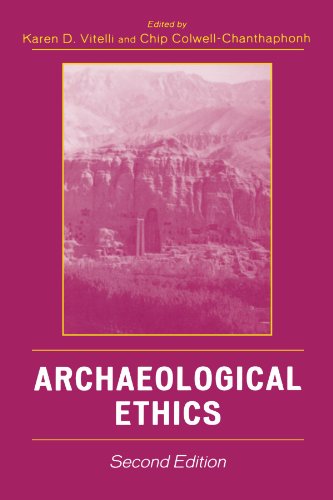
Archaeological Ethics
Authors:
Karen D. Vitelli
Publisher:
AltaMira Press
Publication Date:
Not available
ISBN:
075910963X
The second edition of Archaeological Ethics is an invitation to an ongoing and lively discussion on ethics. In addition to topics such as looting,... reburial and repatriation, relations with native peoples, and professional conduct, Vitelli and Colwell-Chanthaphonh have responded to current events and news stories. Twenty-one new articles expand this ongoing discussion into the realm of intellectual property, public outreach, archaeotourism, academic freedom, archaeological concerns in times of war, and conflicting values. These compelling articles, from Archaeology Magazine, American Archaeology, and Expedition are written for a general audience and provide a fascinating introduction to the issues faced every day in archaeological practice. The article summaries, discussion and research questions, and suggestions for further reading—particularly helpful given the vast increase in related literature over the last decade—serve as excellent teaching aids and make this volume ideal for classroom use.
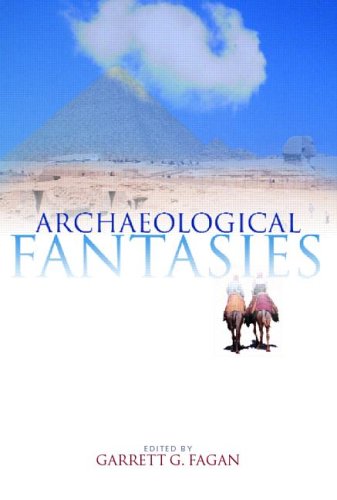
Archaeological Fantasies: How Pseudoarchaeology Misrepresents the...
Authors:
Not Available
Publisher:
Routledge
Publication Date:
Not available
ISBN:
0415305934
This edited volume examines the phenomenon of pseudoarchaeology from a variety of perspectives. The engaging and stimulating essays, written by a... diverse group of scholars, scientists and writers, explore issues including: the differences between real and pseudoarchaeology pseudoarchaeology's increasing popularity and how the media, especially TV, has contributed to this the warping of genuine archaeology to fit national and other agendas pseudoarchaeology's potential risk to the genuine academic field of archaeology. Including case studies such as the supposedly mystical Maya, Nazi pseudoarchaeology, ancient pseudohistory in modern India, and surveys of esoteric Egypt, this fascinating text will appeal to students of archaeology and ancient history as well as being of interest to the general reader.
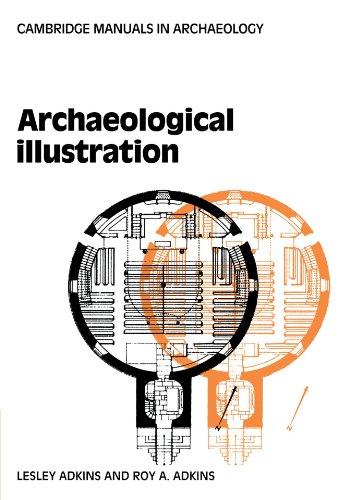
Archaeological Illustration (Cambridge Manuals in Archaeology)
Authors:
Lesley Adkins
Publisher:
Cambridge University Press
Publication Date:
Not available
ISBN:
0521103177
This volume, originally published in 1989, is intended as a practical guide to archaeological illustration, from drawing finds in the field to technical... studio drawing for publication. It is also an invaluable reference tool for the interpretation of illustrations and their status as archaeological evidence. The book's ten chapters start from first principles and guide the illustrator through the historical development of archaeological illustration and basic skills. Each chapter then deals with a different illustrative technique - drawing in the field during survey work and excavation, drawing artefacts, buildings and reconstructions, producing artwork for publication and the early uses of computer graphics. Information about appropriate equipment, as well as a guide to manufacturers, is also supplied. An obvious and important feature of Archaeological Illustration is the 120 line drawings and half-tones which show the right - and the wrong - way of producing drawings. This volume will therefore be of interest to amateur and professional archaeologists alike.
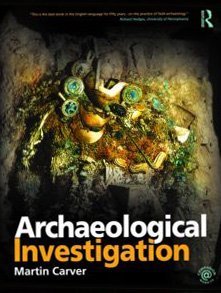
Archaeological Investigation
Authors:
Martin Carver
Publisher:
Routledge
Publication Date:
Not available
ISBN:
0415489199
Drawing its numerous examples from Britain and beyond, Archaeological Investigation explores the procedures used in field archaeology travelling over... the whole process from discovery to publication. Divided into four parts, it argues for a set of principles in part one, describes work in the field in part two and how to write up in part three. Part four describes the modern world in which all types of archaeologist operate, academic and professional. The central chapter ‘Projects Galore’ takes the reader on a whirlwind tour through different kinds of investigation including in caves, gravel quarries, towns, historic buildings and underwater. Archaeological Investigation intends to be a companion for a newcomer to professional archaeology – from a student introduction (part one), to first practical work (part two) to the first responsibilities for producing reports (part three) and, in part four, to the tasks of project design and heritage curation that provide the meat and drink of the fully fledged professional. The book also proposes new ways of doing things, tried out over the author’s thirty years in the field and brought together here for the first time. This is no plodding manual but an inspiring, provocative, informative and entertaining book, urging that archaeological investigation is one of the most important things society does.
ARCHAEOLOGICAL LABORATORY METHODS
Authors:
Not Available
Publisher:
Not available
Publication Date:
Not available
ISBN:
Not available
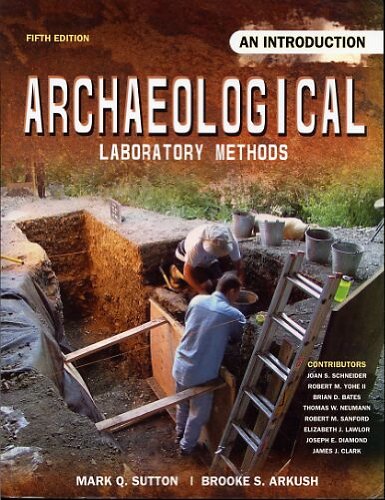
ARCHAEOLOGICAL LABORATORY METHODS: AN INTRODUCTION
Authors:
SUTTON MARK
Publisher:
Kendall Hunt Publishing
Publication Date:
Not available
ISBN:
0757559743
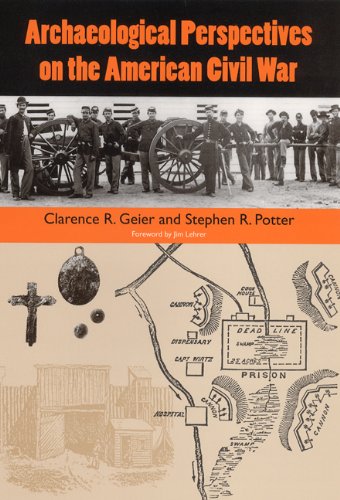
Archaeological Perspectives on the American Civil War
Authors:
Not Available
Publisher:
University Press of Florida
Publication Date:
Not available
ISBN:
0813026512
"An impressive compendium of varying but related methods of understanding the war through historical archaeology. Readers willing to expend some... effort will come away with a better understanding of the Civil War."--Civil War Book Review"Geier and Potter deliver a great book that includes archaeological fieldwork, site type diversity, and theoretical perspectives, which provide something for every reader. The authors' contributions vividly convey the battles and effects on the civilian population from participant soldier, prisoner, caregiver, commercial, and civilian perspectives. Connections between contemporary life and Civil War events are made easily here. These connections and extensive use of primary historical sources make the book an excellent undergraduate and graduate text."--Southeastern ArchaeologyFrom the introduction:"Archaeological Perspectives on the American Civil War is must reading for professionals, collectors, and all people interested in battlefield archaeology, the material culture of the Civil War era, and the preservation of associated sites. Because of the popularity of Civil War literature and archaeology, this well-illustrated and well-written publication will appeal to the general public, as well as to the professional community."--Edwin C. Bearss, historian emeritus, National Park Service"Speaks to the carnage of war, figuratively and literally, as each author [investigates] the physical evidence of the war and its ramifications to those living at the time and in our culture today. There is little question that the American Civil War changed the fabric of our culture in ways that are still being felt today, and this volume provides a real and tangible link, via the material culture left behind by its participants, to that time."--Douglas D. Scott, Midwest Archaeology Center, Lincoln, NebraskaFrom studies of Antietam Battlefield, site of the bloodiest day in American military history, to Andersonville, the infamous Confederate prison, these graphically illustrated essays broaden our understanding of the American Civil War. They demonstrate how historical archaeology, combined with the traditional techniques of the study of history, generates new insights into battlefield tactics, social and military history, and the effects of the war on civilians and communities. The paperback edition includes a new foreword by award-winning journalist Jim Lehrer.ContentsIntroduction, by Edwin C. Bearss"To Peel This Land," by Clarence R. Geier and Stephen R. PotterPart I. Tactics and the Conduct of Battle1. "No Maneuvering and Very Little Tactics": Archaeology and the Battle of Brawner Farm, by Stephen R. Potter, Robert C. Sonderman, Marian C. Creveling, and Susannah L. Dean2. The Submarine H. L. Hunley: Confederate Innovation and Southern Icon, by Steven D. Smith3. Fortifying the Landscape: An Archaeological Study of Military Engineering and the Atlanta Campaign, by Robert J. Fryman4. An Irishman Dies at Antietam: An Archaeology of the Individual, by Stephen R. Potter and Douglas W. Owsley5. The Battle of Cool Spring, July 16-20, 1864, by Joseph Whitehorne and Clarence R. GeierPart II. The Home Front and Military Life6. "For the Convenience and Comforts of the Soldiers and Employees at the Depot": Archaeology of the Owens' House/Post Office Complex, Camp Nelson, Kentucky, by W. Stephen McBride, Susan C. Andrews, and Sean P. Coughlin7. Defending the Capital: The Civil War Garrison at Fort C. F. Smith, by Joseph Balicki8. The Sheridan Field Hospital, Winchester, Virginia, 1864, by Joseph W. A. Whitehorne, Clarence R. Geier, and Warren R. Hofstra9. Far from the Battlefield: Archaeology at Andersonville Prison, by Guy Prentice and Marie C. Prentice10. Antietam: The Cultural Impact of Battle on an Agrarian Landscape, by Elise Manning-Sterling11. "Four Years of Hell": Domestic Life in Harpers Ferry during the Civil War, by Paul A. Shackel12. "The Colored Laborers Work as Well as When Slaves": African Americans in the Breadbasket of the Confederacy, 1850-1880, by Kenneth E. Koons13. "Free within Ourselves": African American Landscapes at Manassas National Battlefield Park, by Laura J. Galke14. Battling beyond First and Second Manassas: Perseverance on a Free African American Farm Site, by Erika K. Martin Seibert and Mia ParsonsPart III. New Methods and Techniques15. The Archaeology of Retreat: Systematic Metal Detector Survey and Information System Analysis at the Battlefield of Chickamauga, September 1863, by John E. Cornelison, Jr.16. Surveying the Civil War: Methodological Approaches at Antietam Battlefield, by Bruce B. Sterling and Bernard W. Slaughter17. Archaeological Interpretations of the Battle of Antietam through Analysis of Small Arms Projectiles, by Bruce B. Sterling18. Double the Cannister and Give ‘Em Hell: Artillery at Antietam, by Jeffrey HarbisonClarence R. Geier, professor of anthropology at James Madison University, is coeditor of Look to the Earth: Historical Archaeology and the American Civil War. He has directed and collaborated on historical archaeology projects at the battlefields of Third Winchester, Cool Spring, and Cedar Creek and has conducted research at the site of the Sheridan Field Hospital. His most recent work has focused on the interpretation of the Confederate military complex of Fort Edward Johnson/Camp Shenandoah in Augusta County, Virginia.Stephen R. Potter, regional archaeologist with the National Park Service for the National Capital Region, has overseen archaeological research at Harpers Ferry National Historical Park, Manassas National Battlefield Park, and Antietam National Battlefield. His work was featured on "Death at Antietam," a television program produced by the Learning Channel. He is the author of Commoners, Tribute, and Chiefs: The Development of Algonquian Culture in the Potomac Valley.
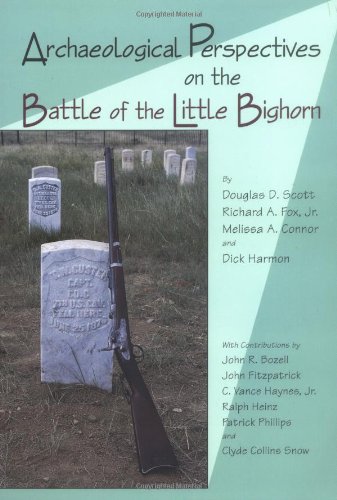
Archaeological Perspectives on the Battle of the Little Bighorn
Authors:
Douglas D. Scott
Publisher:
University of Oklahoma Press
Publication Date:
Not available
ISBN:
0806132922
Ever since the Custer massacres on June 25, 1876, the question has been asked: What happened - what REALLY happened - at the Battle of the Little... Bighorn? We know some of the answers, because half of George Armstrong Custer’s Seventh Cavalry - the men with Major Marcus Reno and Captain Frederick Benteen - survived the fight, but what of the half that did not, the troopers, civilians, scouts, and journalist who were with Custer?Now, because a grass fire in August 1983 cleared the terrain of brush and grass and made possible thorough archaeological examinations of the battlefield in 1984 and 1985, we have many answers to important questions.On the basis of the archaeological evidence presented in this book, we know more about what kinds of weapons were used against the cavalry. We know exactly where many of the men fought, how they died, and what happened to their bodies at the time of or after death. We know how the troopers were deployed, what kind of clothing they wore, what kind of equipment they had, how they fought. Through the techniques of historical archaeology and forensic anthropology, the remains and grave of one of Custer’s scouts, Mitch Boyer, have been identified. And through geomorphology and the process of elimination, we know with almost 100 percent certainty where the twenty-eight missing men who supposedly were buried en masse in Deep Ravine will be found.
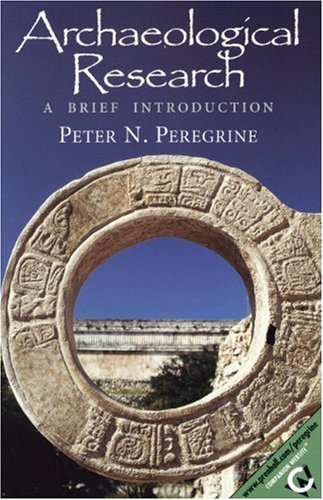
Archaeological Research: A Brief Introduction
Authors:
Peter N. Peregrine
Publisher:
Pearson
Publication Date:
Not available
ISBN:
0130811270
This concise yet thorough book introduces readers to the basic methods of data collection, analysis, and interpretation of archaeological research.... Focusing on the process itself, it explores why archaeologists choose and use particular methods over others, along with the varying circumstances of their research. It also provides a brief overview of archaeological literature, and legal and ethical issues in the field. Topics include the archaeological process and record, sampling and research design, survey and excavation methods and strategies, recordkeeping, dating archaeological materials, presenting results, and research opportunities. For armchair archaeologists who recognize that a better understanding of the past will yield a better understanding of ourselves, our biases, and social world today.
 '
'