production
/viewbook/list/all/?page=998
/
/static/
None

ARCHITECTURE KIT
Authors:
Not Available
Publisher:
Not available
Publication Date:
Not available
ISBN:
Not available
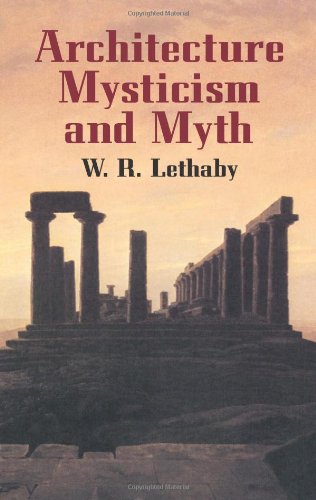
Architecture, Mysticism and Myth (Dover Architecture)
Authors:
W. R. Lethaby
Publisher:
Dover Publications
Publication Date:
Not available
ISBN:
0486435199
First published in 1892, this classic explores the symbolism of classical architecture. A milestone in relating mysticism to design, it shows the... correlation between mythology and the design of St. Paul's Cathedral, the Taj Mahal, the Palace of Versailles, and other architectural masterpieces. 30 black-and-white illustrations.
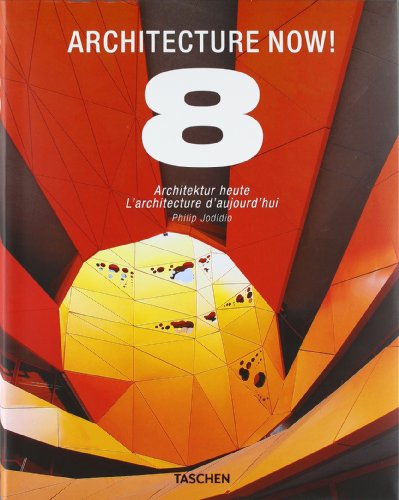
Architecture Now! 8
Authors:
Philip Jodidio
Publisher:
Taschen
Publication Date:
Not available
ISBN:
3836526816
Currents in architecture around the world Architecture Now! 8 reviews new and exciting projects completed and under construction in the whole world.... No style, no building type is ignored, making this volume a true compendium of what anybody interested in buildings today needs to know. From well-known figures such as Zaha Hadid, Ryue Nishizawa of SANAA fame and Thom Mayne of Morphosis, to rising stars like Joshua Prince-Ramus (REX) and Sou Fujimoto and on to less-known architects who are the “stars” of tomorrow, like the Indians of Studio Mumbai, the Norwegian Todd Saunders, the Burkinabe Diébédo Francis Kéré, and the Colombian Giancarlo Mazzanti, or the Chinese architect Li Xiaodong, they are all here and many more as well. Don’t miss this opportunity to see the best of what architecture has to offer… Now! For anyone interested in the zeitgeist and building design in the 21st century, the Architecture Now! series is an essential work of reference. Easy-to-navigate illustrated A–Z entries include current and recent projects, biographies, contact information, and websites. Featured architects and practices include: 2012Architecten, 24H Architecture, Effan Adhiwira, AFF Architekten, al bordE, Aparicio + Donaire, Ron Arad, Birk & Heilmeyer, Odile Decq Benoît Cornette, FELIX-DELUBAC, Foster + Partners, Sou Fujimoto, Massimiliano and Doriana Fuksas, Manuelle Gautrand, Frank O. Gehry, Zaha Hadid, Hapsitus, HplusF Architects, IA+B, Arata Isozaki, Jakob + MacFarlane, Diébédo Francis Kéré, Kengo Kuma, Li Xiaodong, LIN Finn Geipel Giulia Andi, Luis Longhi, LOT-EK, Gurjit Singh Matharoo, Maurer United, Giancarlo Mazzanti, Morphosis, Neri & Hu, Neutelings Riedijk Architects, Ryue Nishizawa, Jean Nouvel, Bassam El Okeily, Olson Kundig Architects, Carlos Ott, Muti Randolph, rare architecture, REX, Fernando Romero, Todd Saunders, Savioz Fabrizzi, Kazuyo Sejima & Associates, Studio Mumbai, Terrain, Undurraga Deves, UNStudio, Urbana, Various Architects, Vo Trong Nghia, Isay Weinfeld, Changki Yun, Peter Zumthor
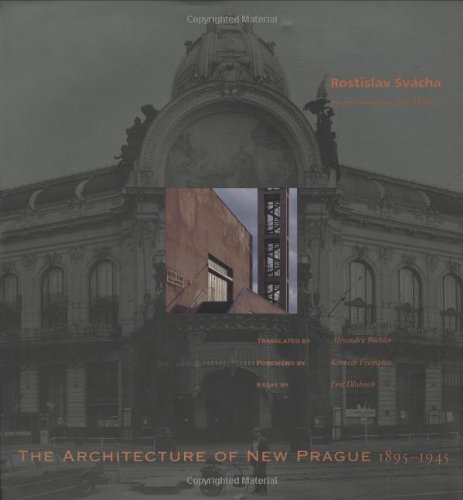
Architecture of New Prague 1895-1945
Authors:
Rostislav Svacha
Publisher:
The MIT Press
Publication Date:
Not available
ISBN:
0262193582
foreword by Kenneth Frampton essay by Eric DluhoschPrague is a one of Europe's oldest and most beautiful cities. Originally published in Czech in 1985,... this seminal work focuses on the architecture of Prague from the turn of the century to the end of the Second World War: a rich matrix within which to place the figures who created the powerful, innovative spirit of modern Czech architecture.Encyclopedic in its coverage, The Architecture of New Prague documents the architects, structures, and theoretical underpinnings that helped to shape Prague's cultural heritage and present-day artistic spirit. Three supplements appear in this edition: a directory of approximately 1,200 buildings (with street addresses), 25 short biographies of the main Prague architects of the time, and a revised bibliography. The more than 300 illustrations, all commissioned for the book, were taken by architectural photographer Jan Maly.The text provides detailed coverage of the most important architects and their buildings, many of which have never been documented in any English-language publication. There are also valuable insights into the cultural conditions that helped to shape the Czech capital. An introductory chapter takes up Prague's urbanistic development and its context within international architectural movements.
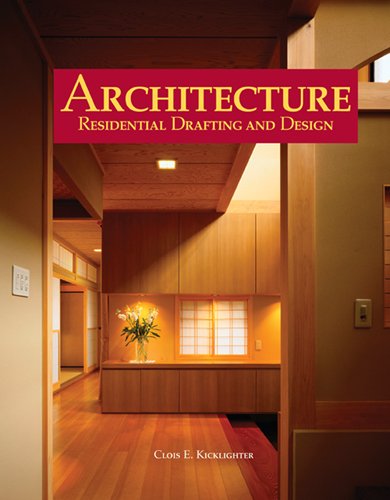
Architecture: Residential Drafting and Design
Authors:
Clois E. Kicklighter Ed. D.
Publisher:
Goodheart-Willcox Co
Publication Date:
Not available
ISBN:
1590706994
Architecture: Residential Drawing and Design provides comprehensive instruction for preparing architectural working drawings using traditional and... computer-based methods. The text also serves as a reference for design and construction principles and methods. Its exciting format organizes content around the design-building process, making the text easy to understand and appealing to students. Content is up-to-date, with coverage of state-of-the-art technology.This textbook is an ADDA approved publication.
Architecture: Residential Drafting and Design, Workbook
Authors:
Clois E. Kicklighter Ed. D.
Publisher:
Goodheart-Willcox Co
Publication Date:
Not available
ISBN:
1590707001
Architecture: Residential Drawing and Design provides comprehensive instruction for preparing architectural working drawings using traditional and... computer-based methods. The text also serves as a reference for design and construction principles and methods. Its exciting format organizes content around the design-building process, making the text easy to understand and appealing to students. Content is up-to-date, with coverage of state-of-the-art technology.The Workbook is organized to follow the textbook on a chapter-by-chapter basis, providing questions to help the student review the material presented in the chapter. This supplement is a consumable resource, designed with perforated pages so that a given chapter can be removed and turned in for grading or checking.
Architecture's Desire: Reading the Late Avant-Garde (Writing...
Authors:
K. Michael Hays
Publisher:
The MIT Press
Publication Date:
Not available
ISBN:
0262513021
While it is widely recognized that the advanced architecture of the 1970s left a legacy of experimentation and theoretical speculation as intense as any... in architecture's history, there has been no general theory of that ethos. Now, in Architecture's Desire, K. Michael Hays writes an account of the "late avant-garde" as an architecture systematically twisting back on itself, pondering its own historical status, and deliberately exploring architecture's representational possibilities right up to their absolute limits. In close readings of the brooding, melancholy silence of Aldo Rossi, the radically reductive "decompositions" and archaeologies of Peter Eisenman, the carnivalesque excesses of John Hejduk, and the "cinegrammatic" delirium of Bernard Tschumi, Hays narrates the story of architecture confronting its own boundaries with objects of ever more reflexivity, difficulty, and intransigence.The late avant-garde is the last architecture with philosophical aspirations, an architecture that could think philosophical problems through architecture rather than merely illustrate them. It takes architecture as the object of its own reflection, which in turn produces an unrelenting desire. Using the tools of critical theory together with the structure of Lacan's triad imaginary-symbolic-real, Hays constructs a theory of architectural desire that is historically specific and yet sets the terms and the challenges of all subsequent architectural practice, including today's.
Architectures of Possibility: After Innovative Writing
Authors:
Lance Olsen
Publisher:
Guide Dog Books
Publication Date:
Not available
ISBN:
1935738194
Ideal for individual or classroom use, ARCHITECTURES OF POSSIBILITY theorizes and questions the often unconscious assumptions behind such traditional... writing gestures as temporality, scene, and characterization; offers various suggestions for generating writing that resists, rethinks, and/or expands the very notion of narrativity; visits a number of important concerns/trends/obsessions in current writing (both on the page and off); discusses marketplace (ir)realities; hones critical reading and manuscript editing capabilities; and strengthens problem-solving muscles from brainstorming to literary activism. Exercises and supplemental reading lists challenge authors to push their work into self-aware and surprising territory. In addition, ARCHITECTURES OF POSSIBILITY features something entirely lacking in most books about creative writing: more than 40 interviews with contemporary innovative authors, editors, and publishers (including Robert Coover, Lydia Davis, Brian Evenson, Shelley Jackson, Ben Marcus, Carole Maso, Scott McCloud, Steve Tomasula, Deb Olin Unferth, Joe Wenderoth, and Lidia Yuknavitch) working in diverse media, providing significant insights into the multifaceted worlds of experimental writers' writing.
Architecture Theory since 1968
Authors:
Not Available
Publisher:
The MIT Press
Publication Date:
Not available
ISBN:
0262581884
In the discussion of architecture, there is a prevailing sentiment that, since 1968, cultural production in its traditional sense can no longer be... understood to rise spontaneously, as a matter of social course, but must now be constructed through ever more self-conscious theoretical procedures. The development of interpretive modes of various stripes--post-structuralist, Marxian, phenomenological, psychoanalytic, as well as others dissenting or eccentric--has given scholars a range of tools for rethinking architecture in relation to other fields and for reasserting architectures general importance in intellectual discourse.This anthology presents forty-seven of the primary texts of architecture theory, introducing each with an explication of the concepts and categories necessary for its understanding and evaluation. It also presents twelve documents of projects or events that had major theoretical repercussions for the period. Several of the essays appear here in English for the first time.Contributors : Diana Agrest, Stanford Anderson, Archizoom, George Baird, Jennifer Bloomer, Massimo Cacciari, Jean-Louis Cohen, Beatriz Colomina, Alan Colquhoun, Maurice Culot, Jacques Derrida, Ignasi de Solá-Morales, Peter Eisenman, Robin Evans, Michel Foucault, Kenneth Frampton, Mario Gandelsonas, Frank Gehry, Jürgen Habermas, John Hejduk, Denis Hollier, Bernard Huet, Catherine Ingraham, Fredric Jameson, Charles A. Jencks, Jeffrey Kipnis, Fred Koetter, Rem Koolhaas, Leon Krier, Sanford Kwinter, Henri Lefebvre, Daniel Libeskind, Mary McLeod, Alberto Pérez-Gómez, José Quetglas, Aldo Rossi, Colin Rowe, Massimo Scolari, Denise Scott Brown, Robert Segrest, Jorge Silvetti, Robert Somol, Martin Steinmann, Robert A. M. Stern, James Stirling, Manfredo Tafuri, Georges Teyssot, Bernard Tschumi, Anthony Vidler, Paul Virilio, Mark Wigley.
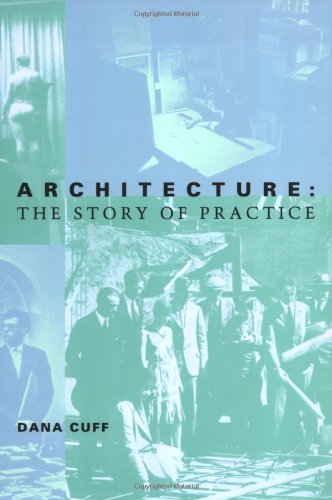
Architecture: The Story of a Practice
Authors:
Dana Cuff
Publisher:
The MIT Press
Publication Date:
Not available
ISBN:
0262531127
Although architecture is the fastest-growing profession in America, its private context remains shrouded in myth. In this book, Dana Cuff delves into... the architect's everyday work world to uncover an intricate social art of design. The result is a new portrait of the profession that sheds light on what it means to become an architect, how design problems are construed and resolved, how clients and architects negotiate, and how design excellence is achieved.Dana Cuff has taught as a social scientist among architects and as an architect among social scientists. Her participant/observer studies for this book, carried out over the past decade, involved more than 200 individuals representing 80 different firms. She is Associate Professor of Architecture and Planning at the University of Southern California.
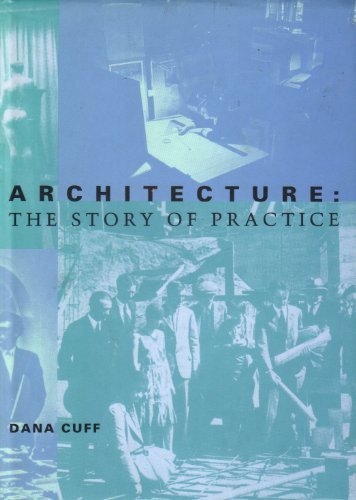
Architecture: The Story of Practice
Authors:
Dana Cuff
Publisher:
MIT Press
Publication Date:
Not available
ISBN:
0262031752
Although architecture is the fastest-growing profession in America, its private context remains shrouded in myth. As Dana Cuff shrewdly observes, it is... filled with contradictions, particularly in the realm of practice. She delves into the architect's everyday work world to uncover an intricate social art of design. The result is a new portrait of the profession that reveals what it means to become an architect, how design problems are construed and resolved, how clients and architects negotiate, and how design excellence is achieved. Cuff concludes by discussing how the design profession, particularly the schools, can take advantage of these observations to strengthen the profession and lay claim to the whole design process.Cuff shows how architects fashion a meaningful place in society by working in collaborative settings, although attributing singular importance to the creative individual. She addresses the discrepancy between the many competencies required by practitioners in complex settings and the narrow teachings of architecture schools. Throughout, she questions whether architecture is essentially the domain of specialists or of qualified generalists.The different components of Cuff's cultural model of architectural practice are described in full. These include history and demographics; the differences between design problems in practice, in the academy, and as construed by the professional organization; the metamorphosis of layperson into architect; the culture of the office and its influence on interactions with the client.Dana Cuff has taught as a social scientist among architects and as an architect among social scientists. Her participant/observer studies for this book,carried out over the past decade, involved nearly 200 individuals representing 80 different firms. She is Associate Professor of Architecture and Planning at the University of Southern California.
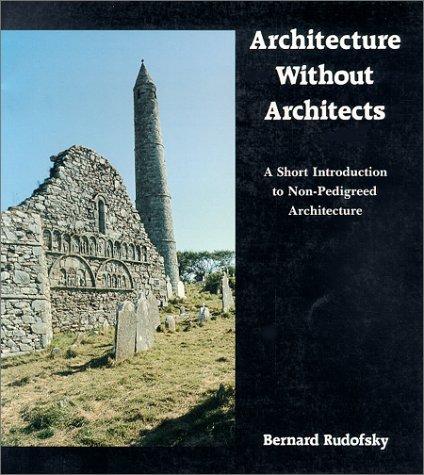
Architecture Without Architects: A Short Introduction to...
Authors:
Bernard Rudofsky
Publisher:
University of New Mexico Press
Publication Date:
Not available
ISBN:
0826310044
In this book, Bernard Rudofsky steps outside the narrowly defined discipline that has governed our sense of architectural history and discusses the art... of building as a universal phenomenon. He introduces the reader to communal architecture--architecture produced not by specialists but by the spontaneous and continuing activity of a whole people with a common heritage, acting within a community experience. A prehistoric theater district for a hundred thousand spectators on the American continent and underground towns and villages (complete with schools, offices, and factories) inhabited by millions of people are among the unexpected phenomena he brings to light. The beauty of "primitive" architecture has often been dismissed as accidental, but today we recognize in it an art form that has resulted from human intelligence applied to uniquely human modes of life. Indeed, Rudofsky sees the philosophy and practical knowledge of the untutored builders as untapped sources of inspiration for industrial man trapped in his chaotic cities.
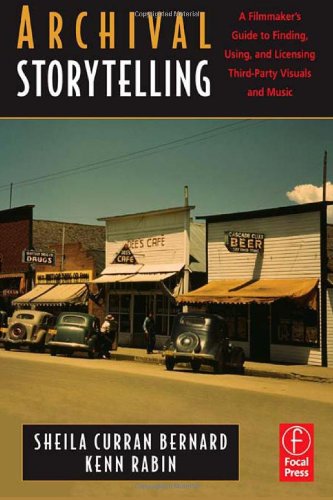
Archival Storytelling: A Filmmaker's Guide to Finding, Using, and...
Authors:
Sheila Curran Bernard
Publisher:
Focal Press
Publication Date:
Not available
ISBN:
0240809734
Archival Storytelling is an essential, pragmatic guide to one of the most challenging issues facing filmmakers today: the use of images and music that... belong to someone else. Where do producers go for affordable stills and footage? How do filmmakers evaluate the historical value of archival materials? What do verite' producers need to know when documenting a world filled with rights-protected images and sounds? How do filmmakers protect their own creative efforts from infringement? Filled with advice and insight from filmmakers, archivists, film researchers, music supervisors, intellectual property experts, insurance executives and others, Archival Storytelling defines key terms-copyright, fair use, public domain, orphan works and more-and challenges filmmakers to become not only archival users but also archival and copyright activists, ensuring their ongoing ability as creators to draw on the cultural materials that surround them. Features conversations with industry leaders including Patricia Aufderheide, Hubert Best, Peter Jaszi, Jan Krawitz, Lawrence Lessig, Stanley Nelson, Rick Prelinger, Geoffrey C. Ward and many others. Additional praise for Archival Storytelling:"I've been making historical documentaries for many years, yet I learned new things from this book. This is the definitive guide for archival research for documentary filmmakers. An invaluable resource." -Mark Jonathan Harris, Distinguished Professor, School of Cinematic Arts, University of Southern California, and writer/director, The Long Way Home and Into the Arms of Strangers "One of the best-and most needed-[books] I have seen in a while..The challenge is to keep what is a fairly technical aspect of filmmaking interesting without compromising the quality and depth of information. The authors have done an exceptional job in this regard by the careful interweaving of interviews with researchers, filmmakers and legal experts through the factual material.There is the strong sense of being in the presence of experienced filmmakers and researchers who accept that while there are standard practices, archival use and intellectual property laws etc. are contingent fields in which each case must be assessed and dealt with on its merits." -Bruce Sheridan, Chair, Film & Video Department, Columbia College "It's hard to imagine a more organized, comprehensive dissection of Byzantine material. The authors have produced a tremendous guide for all who use archival resources. Best of all, because of their effort, I believe more individuals will be able to access and properly utilize such material. This book will serve filmmakers and, in turn, the public for years to come." -Thomas Speicher, Producer, Pennsylvania College of Technology "Not simply a 'how-to' manual, it is also a discussion of ideas, issues and history that creates an enjoyable text even when the subject matter becomes complicated.The real world examples, the roundtable discussions, and the exploration of ideas and issues surrounding the technical aspects are very welcome and well done." -Dustin Ogdin, Filmmaker, Spoke Digital Films "The book properly advances the notion that 'films matter,' but this is countered by discussants with 'films cost money too.' Filmmakers may take decades to recoup, and licensing helps. It's an ongoing volley, the chapter engenders a road map through the split, the tension makes a good read...This authorative book belongs on every producer's shelf." -Loren S. Miller, Freelance Documentary and Dramatic Editor, Emerson College
Archive Fever: A Freudian Impression (Religion and Postmodernism)
Authors:
Jacques Derrida
Publisher:
University Of Chicago Press
Publication Date:
Not available
ISBN:
0226143678
In Archive Fever, Jacques Derrida deftly guides us through an extended meditation on remembrance, religion, time, and technology—fruitfully occasioned... by a deconstructive analysis of the notion of archiving. Intrigued by the evocative relationship between technologies of inscription and psychic processes, Derrida offers for the first time a major statement on the pervasive impact of electronic media, particularly e-mail, which threaten to transform the entire public and private space of humanity. Plying this rich material with characteristic virtuosity, Derrida constructs a synergistic reading of archives and archiving, both provocative and compelling."Judaic mythos, Freudian psychoanalysis, and e-mail all get fused into another staggeringly dense, brilliant slab of scholarship and suggestion."—The Guardian"[Derrida] convincingly argues that, although the archive is a public entity, it nevertheless is the repository of the private and personal, including even intimate details."—Choice"Beautifully written and clear."—Jeremy Barris, Philosophy in Review"Translator Prenowitz has managed valiantly to bring into English a difficult but inspiring text that relies on Greek, German, and their translations into French."—Library Journal
Archives and Archivists in the Information Age (The Archivist's and...
Authors:
Richard J. Cox
Publisher:
Neal Schuman Pub
Publication Date:
Not available
ISBN:
1555705308
In today’s information world, the importance and need for archival collections and professionals to care for them cannot be understated. Noted... professor and author Richard J. Cox provides an insightful guide to the new roles, responsibilities, and considerations for archival management. Cox examines the role of archival collections in public scholarship, distance learning, and the digital era. He explores the need for modern organizations that collect historical materials. Chapters guide readers through the creation of job descriptions and the hiring an archivists and consultants. Cox delineates the role of the archivist in the knowledge age; the profession’s changing credentials and specialties; and the growing base of knowledge found in the field’s scholarly works. Informative and timely, this guide contains vital new information for archivists, records managers, students, and all information workers who are interested in understanding the important roles archivists play in modern institutions and the information profession.
 '
'