production
/viewbook/list/all/?page=1354
/
/static/
None
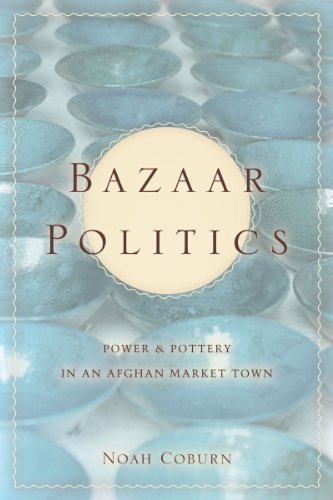
Bazaar Politics: Power and Pottery in an Afghan Market Town...
Authors:
Noah Coburn
Publisher:
Stanford University Press
Publication Date:
Not available
ISBN:
0804776717
After the fall of the Taliban, instability reigned across Afghanistan. However, in the small town of Istalif, located a little over an hour north of... Kabul and not far from Bagram on the Shomali Plain, local politics remained relatively violence-free. Bazaar Politics examines this seemingly paradoxical situation, exploring how the town's local politics maintained peace despite a long, violent history in a country dealing with a growing insurgency.At the heart of this story are the Istalifi potters, skilled craftsmen trained over generations. With workshops organized around extended families and competition between workshops strong, kinship relations become political and subtle negotiations over power and authority underscore most interactions. Starting from this microcosm, Noah Coburn then investigates power and relationships at various levels, from the potters' families; to the local officials, religious figures, and former warlords; and ultimately to the international community and NGO workers.Offering the first long-term on-the-ground study since the arrival of allied forces in 2001, Noah Coburn introduces readers to daily life in Afghanistan through portraits of local residents and stories of his own experiences. He reveals the ways in which the international community has misunderstood the forces driving local conflict and the insurgency, misunderstandings that have ultimately contributed to the political unrest rather than resolved it. Though on first blush the potters of Istalif may seem far removed from international affairs, it is only through understanding politics, power, and culture on the local level that we can then shed new light on Afghanistan's difficult search for peace.
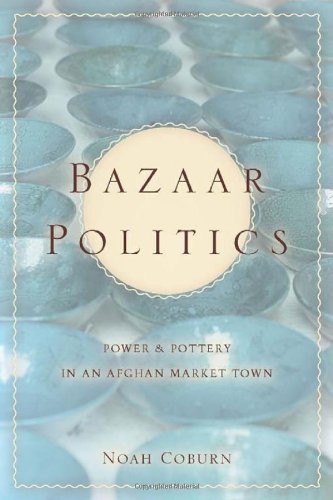
Bazaar Politics: Power and Pottery in an Afghan Market Town...
Authors:
Noah Coburn
Publisher:
Stanford University Press
Publication Date:
Not available
ISBN:
0804776725
After the fall of the Taliban, instability reigned across Afghanistan. However, in the small town of Istalif, located a little over an hour north of... Kabul and not far from Bagram on the Shomali Plain, local politics remained relatively violence-free. Bazaar Politics examines this seemingly paradoxical situation, exploring how the town's local politics maintained peace despite a long, violent history in a country dealing with a growing insurgency.At the heart of this story are the Istalifi potters, skilled craftsmen trained over generations. With workshops organized around extended families and competition between workshops strong, kinship relations become political and subtle negotiations over power and authority underscore most interactions. Starting from this microcosm, Noah Coburn then investigates power and relationships at various levels, from the potters' families; to the local officials, religious figures, and former warlords; and ultimately to the international community and NGO workers.Offering the first long-term on-the-ground study since the arrival of allied forces in 2001, Noah Coburn introduces readers to daily life in Afghanistan through portraits of local residents and stories of his own experiences. He reveals the ways in which the international community has misunderstood the forces driving local conflict and the insurgency, misunderstandings that have ultimately contributed to the political unrest rather than resolved it. Though on first blush the potters of Istalif may seem far removed from international affairs, it is only through understanding politics, power, and culture on the local level that we can then shed new light on Afghanistan's difficult search for peace.
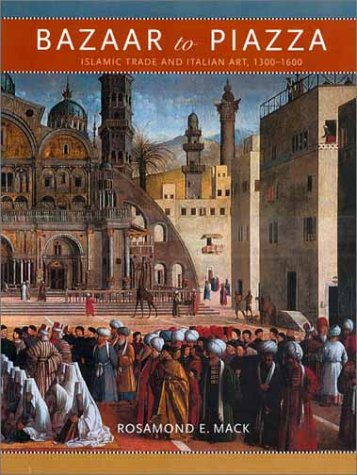
Bazaar to Piazza: Islamic Trade and Italian Art, 1300-1600
Authors:
Rosamond E. Mack
Publisher:
University of California Press
Publication Date:
Not available
ISBN:
0520221311
The Mediterranean trade in luxury goods from the East made a strong and lasting impression on Italian artistic taste and production during the early... Renaissance. This opulently illustrated book describes and illustrates the fascinating ways that imported art objects inspired improvements and new variety in Italian decorative arts. From Italian textiles featuring Islamic and Asian motifs to ceramics and glassware that reflected Syrian techniques and ornamental concepts, this book gives an extraordinary view of the influence of imported Oriental goods in Italy over three crucial centuries of artistic development.Rosamond Mack traces Italy's emerging decorative arts tradition as she discusses textiles, ceramics, glass, bookbinding, and metalwork; she also considers how Italian painting reflects trans-Mediterranean trade and travel. Painters represented carpets and ceramics from the East in their works, as well as textiles with bands of writing replicating or suggesting Arabic script, negotiating cultural differences in their borrowings. These paintings show how Islamic motifs were absorbed into Christian contexts.Beginning in the 1300s and 1400s, the works of Italian craftsmen inspired by luxury goods from Islamic and Asian countries gradually began to compete with those brought to Europe in huge quantities on Italian merchant ships. Yet even after their own versions surpassed the quality of some of the imported goods, Italians continued to collect, imitate, and adapt objects from the Ottoman empire and China. As Mack discusses these important influences, she provides useful summaries of the history of Renaissance decorative arts and presents a balanced and carefully researched view of the controversial topic of East-West artistic exchange.This uniquely comprehensive study offers an intriguing look at the effects of exchange in Renaissance material culture, shedding new light on the development of the Italian Renaissance as a whole. No other source provides so rich and inclusive a synthesis of the period's decorative arts.

Bazin at Work: Major Essays and Reviews From the Forties and Fifties
Authors:
Andre Bazin
Publisher:
Routledge
Publication Date:
Not available
ISBN:
0415900182
Bazin's impact on film art, as theorist and critic, is considered to be greater than that of any single director, actor, or producer. He is credited... with almost single-handedly establishing the study of film as an accepted intellectual pursuit, as well as with being the spiritual father of the French New Wave. Bazin at Work is the first English collection of disparate Bazin writings since the appearance of the second volume of What Is Cinema? in 1971. It includes work from Cahiers le cinema (which he founded and which is the most influential single critical periodical in the history of the cinema) and Esprit. He addresses filmmakers including Rossellini, Eisenstein, Pagnol, and Capra and well-known films including La Strada, Citizen Kane, Scarface, and The Bridge on the River Kwai.

BBCIII POWER SUPPLY KIT FOR CPSC
Authors:
Not Available
Publisher:
Not available
Publication Date:
Not available
ISBN:
Not available
BB H 048 PACKET FA12-
Authors:
Not Available
Publisher:
Not available
Publication Date:
Not available
ISBN:
Not available
BB H 148S MEYER PACKET FA12-126
Authors:
Not Available
Publisher:
Not available
Publication Date:
Not available
ISBN:
Not available
BB H 497 KUBALAK FA12-094
Authors:
Not Available
Publisher:
Not available
Publication Date:
Not available
ISBN:
Not available
Bc Annual Practice 2013
Authors:
Not Available
Publisher:
Not available
Publication Date:
Not available
ISBN:
0836039100
BC CATALYST VIRGINIA STATE UNIVERSITY
Authors:
Not Available
Publisher:
Not available
Publication Date:
Not available
ISBN:
Not available
BC CYMBIOSIS CUSTOM LAB MANUAL
Authors:
Not Available
Publisher:
Not available
Publication Date:
Not available
ISBN:
Not available
BC INTEGRATE FOR UNE
Authors:
Not Available
Publisher:
Not available
Publication Date:
Not available
ISBN:
Not available
BC INTEGRATE SWP
Authors:
Not Available
Publisher:
Not available
Publication Date:
Not available
ISBN:
Not available
BCOM
Authors:
Not Available
Publisher:
Not available
Publication Date:
Not available
ISBN:
Not available
BCOM3 (PKG W/WRITE EXPERIENCE ACCESS)
Authors:
Not Available
Publisher:
Not available
Publication Date:
Not available
ISBN:
Not available
 '
'