production
/viewbook/list/all/?page=1585
/
/static/
None
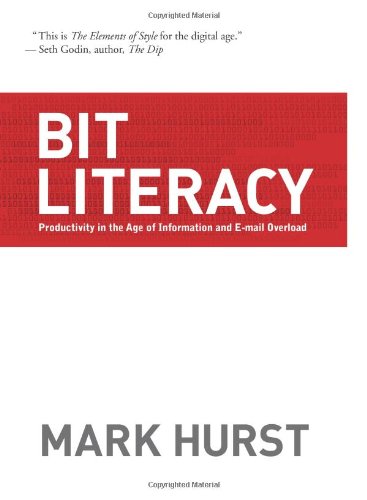
Bit Literacy: Productivity in the Age of Information and E-mail...
Authors:
Mark Hurst
Publisher:
Good Experience Press
Publication Date:
Not available
ISBN:
0979368103
"Bit Literacy" is essential reading for anyone who has experienced "digital overload": the daily flood of e-mail, multiple todo lists, a cluttered... desktop, documents in various file formats, and the constant distraction of cell phones and other devices. More than a quick fix or another "how-to" guide, the book offers an entirely new way of attaining productivity that users at any level of expertise can put into action right away. This is "bit literacy," a method for working more productively in the digital age, with less stress. Mark Hurst - who has reached hundreds of thousands of readers through his Good Experience e-mail newsletter, Uncle Mark technology guides, thisisbroken.com, and other websites - has revealed the way to survive, and thrive, in the digital age: "Let the bits go."

BITM215 CUSTOM UALBANY PACKAGE W/CODE
Authors:
Not Available
Publisher:
Not available
Publication Date:
Not available
ISBN:
Not available
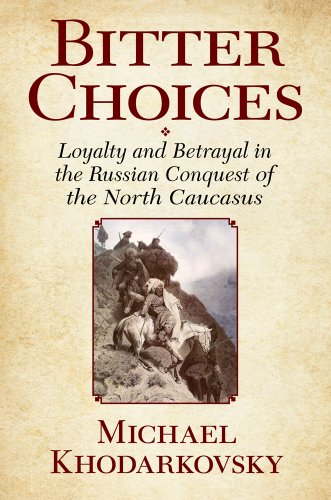
Bitter Choices: Loyalty and Betrayal in the Russian Conquest of the...
Authors:
Michael Khodarkovsky
Publisher:
Cornell University Press
Publication Date:
Not available
ISBN:
0801449723
Russia's attempt to consolidate its authority in the North Caucasus has exerted a terrible price on both sides since the mid-nineteenth century. Michael... Khodarkovsky's book tells the story of a single man with multiple allegiances and provides a concise and compelling history of the mountainous region between the Black and Caspian seas. After forays beginning in the late 1500s, Russia tenuously conquered the peoples of the region in the 1850s; the campaign was defined by a cruelty on both sides that established a pattern repeated in our own time, particularly in Chechnya.At the center of Khodarkovsky's sweeping account is Semen Atarshchikov (1807-1845). His father was a Chechen translator in the Russian army, and Atarshchikov grew up with roots in both Russian and Chechen cultures. His facility with local languages earned him quick promotion in the Russian army. Atarshchikov enjoyed the confidence of his superiors, yet he saw the violence that the Russians inflicted on the native population and was torn between his duties as a Russian officer and his affinity with the highlanders. Twice he deserted the army to join the highlanders in raids against his former colleagues. In the end he was betrayed by a compatriot who sought to gain favor with the Russians by killing the infamous Atarshchikov.Khodarkovsky places Atarshchikov's life in a rich context: we learn a great deal about the region's geography, its peoples, their history, and their conflicts with both the Russians and one another. Khodarkovsky reveals disputes among the Russian commanders and the policies they advocated; some argued for humane approaches but always lost out to those who preferred more violent means. Like Hadji Murat-the hero of Tolstoy's last great work-Atarshchikov moved back and forth between Russian and local allegiances; his biography is the story of the North Caucasus, one as relevant today as in the nineteenth century.

Bitter Creek Junction (Poetry of the American West)
Authors:
Linda M. Hasselstrom
Publisher:
High Plains Press
Publication Date:
Not available
ISBN:
0931271533
The west found in Linda Hasselstrom's poems is neither the mythical Old West nor the New West of ranchettes and trophy homes. Hasselstrom's aria is set... to the rhythms of the authentic West, laced with lyrical realism, and distilled to the sharp crispness of a plains morning. Here you'll find th night heron whose "slender beak descends, a sudden hammer on a silver spine." You'll "give yourself sunsets...in shades of pink and gold" while "long tatters curl eastward like discarded ribbons." You'll met Death riding as the Horseman, and again when he steers and oncoming car then "comes to th reunion picnics, pushes to the front in all the pictures." And you'll confront the darkness lingering ovr the West, casting shadows of violence and abuse on a place called Bitter Creek Junction.
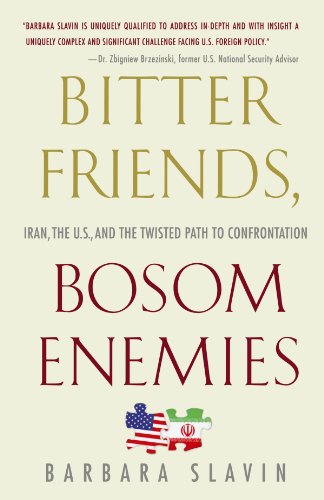
Bitter Friends, Bosom Enemies: Iran, the U.S., and the Twisted Path...
Authors:
Barbara Slavin
Publisher:
St. Martin's Griffin
Publication Date:
Not available
ISBN:
0312384912
In Bitter Friends, Bosom Enemies, Barbara Slavin untangles the love-hate relationship between Iran and the United States that has brought the two... countries to the brink of war. Slavin reveals that relations between Washington and Tehran have been riddled with contradictions for decades and details missed opportunities for reconciliation under both the Clinton and Bush administrations, including diplomatic rebuffs to Iran in Bush’s first term based on the mistaken belief that the U.S. invasion of Iraq would weaken Iran's Islamic government. On e of the few reporters to interview high-profile Iranian officials, including Iran’s current and last two presidents, Slavin describes all the key constituencies in Iran society from the clerics, to the Revolutionary Guards, to reformers and Iranian youth. She unveils Iran and shows it to be a country that both adores and fears the United States. Despite government propaganda that portrays the U.S. as the "Great Satan," many Iranians have come to idolize staples of American pop culture while holding on to their own traditions. The United States, on the other hand, has demonized Iran as a member of an “axis of evil” that supports terrorists and represses its own people who, in the words of U.S. officials, “deserve better.” As Iran moves toward becoming a nuclear power, Slavin believes that the power brokers in Washington may be suffering from the same lack of understanding and foresight that led the U.S. into prolonged warfare in Iraq. Distrustful of each other's intentions yet longing at some level to reconcile, neither Tehran nor Washington knows how this story will end. Anyone interested in understanding the dynamics of this pivotal international relationship will find Bitter Friends, Bosom Enemies a crucial and compelling read.
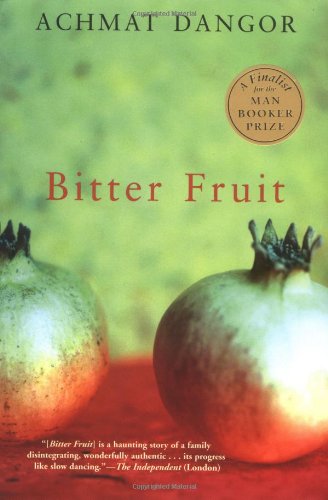
Bitter Fruit: A Novel
Authors:
Achmat Dangor
Publisher:
Black Cat
Publication Date:
Not available
ISBN:
0802170064
With the publication of Kafka's Curse, Achmat Dangor established himself as an utterly singular voice in South African fiction. His new novel, a... finalist for the Man Booker Prize and the IMPAC-Dublin Literary Award, is a clear-eyed, witty, yet deeply serious look at South Africa's political history and its damaging legacy in the lives of those who live there.The last time Silas Ali encountered Lieutenant Du Boise, Silas was locked in the back of a police van and the lieutenant was conducting a vicious assault on Silas's wife, Lydia, in revenge for her husband's participation in Nelson Mandela's African National Congress. When Silas sees Du Boise by chance twenty years later, as the Truth and Reconciliation Commission is about to deliver its report, crimes from the past erupt into the present, splintering the Alis' fragile peace. Meanwhile Silas and Lydia's son, Mikey, a thoroughly contemporary young hip-hop lothario, contends in unforeseen ways with his parents' pasts.A harrowing story of a brittle family on the crossroads of history and a fearless skewering of the pieties of revolutionary movements, Bitter Fruit is a cautionary tale of how we do, or do not, address the past's deepest wounds.
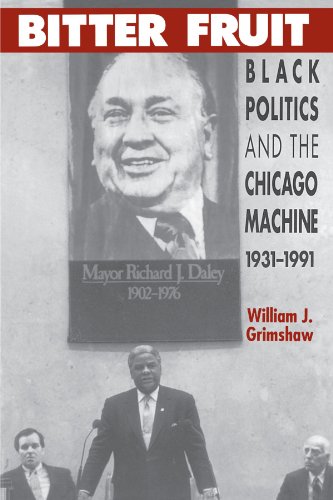
Bitter Fruit: Black Politics and the Chicago Machine, 1931-1991...
Authors:
William J. Grimshaw
Publisher:
University Of Chicago Press
Publication Date:
Not available
ISBN:
0226308944
William Grimshaw offers an insider's chronicle of the tangled relationship between the black community and the Chicago Democratic machine from its Great... Depression origins to 1991. What emerges is a myth-busting account not of a monolithic organization but of several distinct party regimes, each with a unique relationship to black voters and leaders.

Bitter Fruit: The Story of the American Coup in Guatemala, Revised...
Authors:
Stephen Schlesinger
Publisher:
David Rockefeller Center for Latin American Studies
Publication Date:
Not available
ISBN:
067401930X
Bitter Fruit is a comprehensive and insightful account of the CIA operation to overthrow the democratically elected government of Jacobo Arbenz of... Guatemala in 1954. First published in 1982, this book has become a classic, a textbook case of the relationship between the United States and the Third World. The authors make extensive use of U.S. government documents and interviews with former CIA and other officials. It is a warning of what happens when the United States abuses its power.
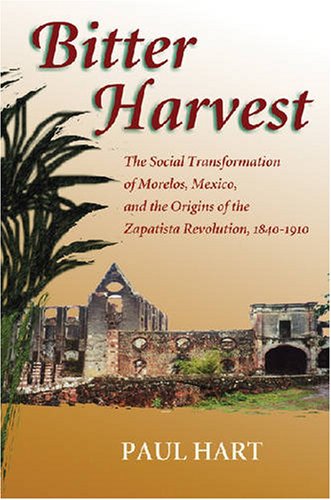
Bitter Harvest: The Social Transformation of Morelos, Mexico, and...
Authors:
Paul Hart
Publisher:
University of New Mexico Press
Publication Date:
Not available
ISBN:
0826336647
Between 1910 and 1919, Morelos, Mexico, was home to a bloody agrarian revolution that saw government troops burn villages, cities stand abandoned, and... two of every five people either flee the fighting or die in it. The conflict came in response to an intense economic transformation that changed the region's peasant economy into the hub of the Mexican sugar industry during the nineteenth century.By focusing on the creation of the rural working class in Morelos, Bitter Harvest argues that developments there reflected a broader pattern shared with other parts of Mexico that erupted in revolution. The volatile nature of the sugar industry in Morelos, and the silver and cattle industries of the North, exacerbated the social problems created by an exclusionary political regime. Soon, displaced peasants, small farmers, disgruntled ranch hands, and unemployed miners joined Francisco Villa in northern Mexico, while peasants, farmers, and sugar workers rallied around the leadership of Emiliano Zapata in Morelos. When President Porfirio Díaz and the revolutionary leaders that came after him resisted the call for deep social change, turmoil engulfed much of the nation for the next decade. In the end, the Zapatistas were defeated militarily, yet they still forced major concessions out of the national government, which helped shape Mexican society for the rest of the twentieth century.
Bitter in the Mouth: A Novel
Authors:
Monique Truong
Publisher:
Random House
Publication Date:
Not available
ISBN:
1400069084
From Monique Truong, the bestselling and award-winning author of The Book of Salt, comes a brilliant, mesmerizing, beautifully written novel about a... young woman’s search for identity and family, as she uncovers the secrets of her past and of history. Growing up in the small town of Boiling Springs, North Carolina, in the 70’s and 80’s, Linda believes that she is profoundly different from everyone else, including the members of her own family. “What I know about you, little girl, would break you in two” are the cruel, mysterious last words that Linda’s grandmother ever says to her.Now in her thirties, Linda looks back at her past when she navigated her way through life with the help of her great-uncle Harper, who loves her and loves to dance, and her best friend Kelly, with whom Linda exchanges almost daily letters. The truth about my family was that we disappointed one another. When I heard the word “disappoint,” I tasted toast, slightly burnt. For as long as she can remember, Linda has experienced a secret sense—she can “taste” words, which have the power to disrupt, dismay, or delight. She falls for names and what they evoke: Canned peaches. Dill. Orange sherbet. Parsnip (to her great regret). But with crushes comes awareness. As with all bodies, Linda’s is a mystery to her, in this and in other ways. Even as Linda makes her way north to Yale and New York City, she still does not know the truth about her past. Then, when a personal tragedy compels Linda to return to Boiling Springs, she gets to know a mother she never knew and uncovers a startling story of a life, a family. Revelation is when God tells us the truth. Confession is when we tell it to him.This astonishing novel questions many assumptions—about what it means to be a family and to be a friend, to be foreign and to be familiar, to be connected and to be disconnected—from others and from the past, our bodies, our histories, and ourselves.
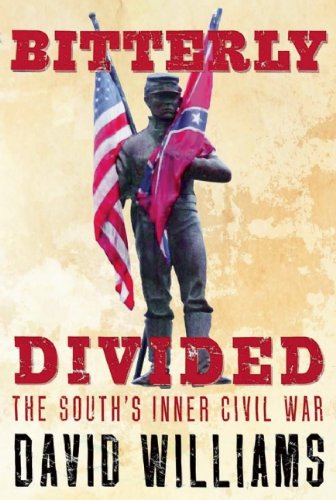
Bitterly Divided: The South's Inner Civil War
Authors:
David Williams
Publisher:
New Press, The
Publication Date:
Not available
ISBN:
1595584757
Bitterly Divided lays bare the myth of a united confederacy, revealing that the South was in fact fighting two civil warsan external one that we know... so much about and an internal one about which there is scant literature and virtually no public awareness. A fascinating look at a hidden side of the South’s history, historian David Williams shows the powerful and little-understood impact of the thousands of draft resisters, Southern Unionists, fugitive slaves, and other Southerners who opposed the Confederate cause.
Bitter Melon: Inside America's Last Rural Chinese Town
Authors:
Jeff Gillenkirk
Publisher:
Heyday
Publication Date:
Not available
ISBN:
0930588584
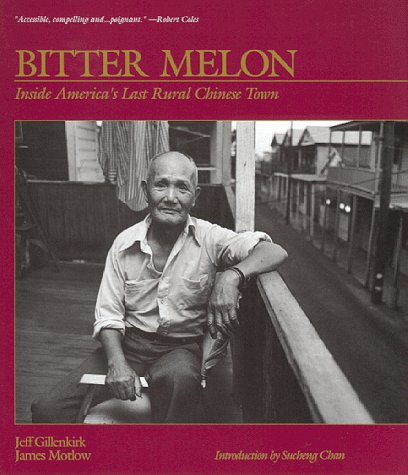
At the turn of the century, the Sacramento Delta was home to thousands of Chinese immigrants. By day, laborers engaged in the back-breaking work of... building the levees and harvesting crops. After work, many of them returned to the bustling, safe town of Locke. Locke, with its single-family homes, stores, saloons, restaurants, boarding houses, school, five gambling dens, and two brothels was the only village in the United States built and inhabited exclusively by Chinese.Bitter Melon: Inside America's Last Rural Chinese Town is a collection of moving oral histories and stunning historical photographs (all printed in duotone), offers an unforgettable glimpse into this unique and vibrant community, and in doing so contributes significantly to our understanding of immigrant experience in California.
Bitter Milk
Authors:
Madeleine R. Grumet
Publisher:
University of Massachusetts Press
Publication Date:
Not available
ISBN:
087023613X
James A. Keene s treatment of this interesting and unique history represents a deep and penetrating look at a subject that until recent years has been... largely neglected by teachers and scholars. A large population of music teachers have taught and acted with little insight about those special teachers who have accepted the formidable job of introducing music to the children of the United States from the earliest colonial times to the present day. The history of music education cannot have an independent existence, however, and is inextricably linked both to the history of education in this country as well as to the history of music as an art, both popular and high. Paralleling the history of education, music education is also the history of reform. Our founding fathers considered their efforts to be rooted in an idealism whether it be expressed in terms of religious or political liberty, and from such beginnings Americans have tended to regard themselves as reformers from that day to the present. It is less important to approve or disapprove of each reform than it is to observe the consistent efforts of Americans to cast aside the old way and adopt that which appears to be new and different. This national trait prevailed throughout the history of music education in America, resulting in our music educators changing methods and philosophies sometimes thoughtfully, and sometimes capriciously. Parts of this history deal forthrightly with various historical and philosophical tendencies, while relating them to the prevailing thoughts and movements in music education. It was necessary for society to accept the idea of a general expansion of the school curriculum before the arts could gain a foothold as part of the school curriculum. And with each degree of acceptance, from the introduction of vocal music into the curriculum to the rise of instrumental music and a cappella choirs, negative as well as positive reactions germinated requiring continuing defenses of the art even though the practices were ordinarily extremely popular with the children, many of whom discovered their talent for the first time while others could and did develop an appreciation brought about by exposure and practice of the art form.

Bitter Money: Cultural Economy and Some African Meanings of...
Authors:
Parker Shipton
Publisher:
American Anthropological Association
Publication Date:
Not available
ISBN:
0913167290
“fascinating little book adds to the study of culture to political economy” MacGaffey ~Journal of Anthropological Research “presents... fascinating material on beliefs about money in some Luo-speaking communities of Kenya… an insightful analysis… a case that will generate fruitful discussions for years to come” Ferguson ~American Ethnologist BITTER MONEY unites symbolic and economic analysis in exploring the beliefs about forbidden exchanges among the Luo of Kenya and other African peoples. Shipton's multi-paradigmatic theoretical explanation briefly summarizes a century of anthropological thought about African exchange, while integrating ways of understanding rural African economy, politics, and culture.
Bitter Waters: Life And Work In Stalin's Russia
Authors:
Gennady M. Andreev-Khomiakov
Publisher:
Westview Press
Publication Date:
Not available
ISBN:
0813323746
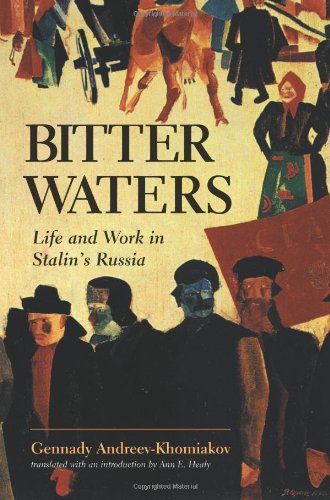
One dusty summer day in 1935, a young writer named Gennady Andreev-Khomiakov was released from the Siberian labor camp where he had spent the last eight... years of his life. His total assets amounted to 25 rubles, a loaf of bread, five dried herrings, and the papers identifying him as a convicted enemy of the people.” From this hard-pressed beginning, Andreev-Khomiakov would eventually work his way into a series of jobs that would allow him to travel and see more of ordinary life and work in the Soviet Union of the 1930s than most of his fellow Soviet citizens would ever have dreamed possible. Capitalizing on this rare opportunity, Bitter Waters is Andreev-Khomiakov’s eyewitness account of those tumultuous years, a time when titanic forces were shaping the course of Russian history.Later to become a successful writer and editor in the Russian émigré community in the 1950s and 1960s, Andreev-Khomiakov brilliantly uses this memoir to explore many aspects of Stalinist society. Forced collectivization, Five Year Plans, purges, and the questionable achievements of shock worker brigades” are only part of this story. Andreev-Khomiakov exposes the Soviet economy as little more than a web of corruption, a system that largely functioned through bribery, barter, and brute forceand that fell into temporary chaos when the German army suddenly invaded in 1941.Bitter Waters may be most valuable for what it reveals about Russian society during the tumultuous 1930s. From remote provincial centers and rural areas, to the best and worst of Moscow and Leningrad, Andreev-Khomiakov’s series of deftly drawn sketches of people, places, and events provide a unique window on the hard daily lives of the people who built Stalin’s Soviet Union.
 '
'