production
/viewbook/list/all/?page=1599
/
/static/
None
Black Like Me
Authors:
Robert Bonazzi
Publisher:
Signet
Publication Date:
Not available
ISBN:
0451192036
Black Like Me (50th Anniversary Edition)
Authors:
John Howard Griffin
Publisher:
Signet
Publication Date:
Not available
ISBN:
0451234219
He trudged southern streets searching for a place where he could eat or rest, looking vainly for a job other than menial labor, feeling the "hate... stare." He was John Griffin, a white man who darkened the color of his skin and crossed the line into a country of hate, fear, and hopelessness--the country of the American Black man.
Black Like Me: The Definitive Griffin Estate Edition
Authors:
John Howard Griffin
Publisher:
Wings Press
Publication Date:
Not available
ISBN:
0930324722
Black Like You: Blackface, Whiteface, Insult & Imitation in...
Authors:
John Strausbaugh
Publisher:
Tarcher
Publication Date:
Not available
ISBN:
1585425931
A refreshingly clearheaded and taboo-breaking look at race relations reveals that American culture is neither Black nor White nor Other, but a mix-a... mongrel. Black Like You is an erudite and entertaining exploration of race relations in American popular culture. Particularly compelling is Strausbaugh's eagerness to tackle blackface-a strange, often scandalous, and now taboo entertainment. Although blackface performance came to be denounced as purely racist mockery, and shamefacedly erased from most modern accounts of American cultural history, Black Like You shows that the impact of blackface on American culture was deep and long-lasting. Its influence can be seen in rock and hiphop; in vaudeville, Broadway, and gay drag performances; in Mark Twain and "gangsta lit"; in the earliest filmstrips and the 2004 movie White Chicks; on radio and television; in advertising and product marketing; and even in the way Americans speak. Strausbaugh enlivens themes that are rarely discussed in public, let alone with such candor and vision: - American culture neither conforms to knee-jerk racism nor to knee-jerk political correctness. It is neither Black nor White nor Other, but a mix-a mongrel. - No history is best forgotten, however uncomfortable it may be to remember. The power of blackface to engender mortification and rage in Americans to this day is reason enough to examine what it tells us about our culture and ourselves. - Blackface is still alive. Its impact and descendants-including Black performers in "whiteface"-can be seen all around us today.
Readers love sleuth V.I. Warshawski. Now she returns in a novel of secrets and betrayals that stretch across four generations-from one of the most... compelling writers in American crime fiction.
Blacklisted by History: The Untold Story of Senator Joe McCarthy...
Authors:
M. Stanton Evans
Publisher:
Three Rivers Press
Publication Date:
Not available
ISBN:
1400081068
Accused of creating a bogus Red Scare and smearing countless innocent victims in a five-year reign of terror, Senator Joseph McCarthy is universally... remembered as a demagogue, a bully, and a liar. History has judged him such a loathsome figure that even today, a half century after his death, his name remains synonymous with witch hunts. But that conventional image is all wrong, as veteran journalist and author M. Stanton Evans reveals in this groundbreaking book. The long-awaited Blacklisted by History, based on six years of intensive research, dismantles the myths surrounding Joe McCarthy and his campaign to unmask Communists, Soviet agents, and flagrant loyalty risks working within the U.S. government. Evans’s revelations completely overturn our understanding of McCarthy, McCarthyism, and the Cold War. Drawing on primary sources—including never-before-published government records and FBI files, as well as recent research gleaned from Soviet archives and intercepted transmissions between Moscow spymasters and their agents in the United States—Evans presents irrefutable evidence of a relentless Communist drive to penetrate our government, influence its policies, and steal its secrets. Most shocking of all, he shows that U.S. officials supposedly guarding against this danger not only let it happen but actively covered up the penetration. All of this was precisely as Joe McCarthy contended.Blacklisted by History shows, for instance, that the FBI knew as early as 1942 that J. Robert Oppenheimer, the director of the atomic bomb project, had been identified by Communist leaders as a party member; that high-level U.S. officials were warned that Alger Hiss was a Soviet spy almost a decade before the Hiss case became a public scandal; that a cabal of White House, Justice Department, and State Department officials lied about and covered up the Amerasia spy case; and that the State Department had been heavily penetrated by Communists and Soviet agents before McCarthy came on the scene.Evans also shows that practically everything we’ve been told about McCarthy is false, including conventional treatment of the famous 1950 speech at Wheeling, West Virginia, that launched the McCarthy era (“I have here in my hand . . .”), the Senate hearings that casually dismissed his charges, the matter of leading McCarthy suspect Owen Lattimore, the Annie Lee Moss case, the Army-McCarthy hearings, and much more. In the end, Senator McCarthy was censured by his colleagues and condemned by the press and historians. But as Evans writes, “The real Joe McCarthy has vanished into the mists of fable and recycled error, so that it takes the equivalent of a dragnet search to find him.” Blacklisted by History provides the first accurate account of what McCarthy did and, more broadly, what happened to America during the Cold War. It is a revealing exposé of the forces that distorted our national policy in that conflict and our understanding of its history since.From the Hardcover edition.
Black Looks: Race and Representation
Authors:
bell hooks
Publisher:
South End Press
Publication Date:
Not available
ISBN:
0896084337
In these twelve essays, bell hooks digs ever deeper into the personal and political consequences of contemporary representations of race and ethnicity... within a white supremacist culture.
Black Macho and the Myth of the Superwoman (Verso Classics)
Authors:
Michele Wallace
Publisher:
Verso
Publication Date:
Not available
ISBN:
1859842968
Originally published in 1978, this book caused a storm of controversy as Micheke Wallace blasted the masculinist bias of the black politics that emerged... from the sixties. She described how women remained marginalized by the patriarchal culture of Black Power and the ways in which a genuine female subjectivity was blocked by the traditional myths of black womanhood. In 1990 the author added a new introduction examining the debate the book had sparked between intellectuals and political leaders; an extensive bibliography of contemporary black feminist studies was also added. Black Macho raised issues and arguments that framed the terms of current feminist and black theory and continues to be relevant today.
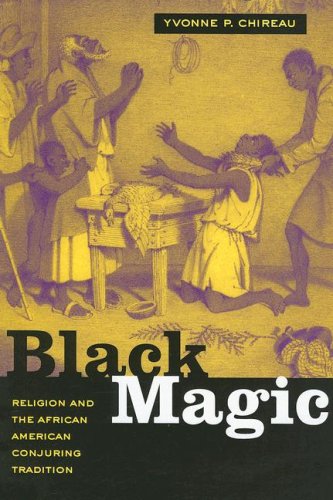
Black Magic: Religion and the African American Conjuring Tradition
Authors:
Yvonne P. Chireau
Publisher:
University of California Press
Publication Date:
Not available
ISBN:
0520249887
Black Magic looks at the origins, meaning, and uses of Conjure--the African American tradition of healing and harming that evolved from African,... European, and American elements--from the slavery period to well into the twentieth century. Illuminating a world that is dimly understood by both scholars and the general public, Yvonne P. Chireau describes Conjure and other related traditions, such as Hoodoo and Rootworking, in a beautifully written, richly detailed history that presents the voices and experiences of African Americans and shows how magic has informed their culture. Focusing on the relationship between Conjure and Christianity, Chireau shows how these seemingly contradictory traditions have worked together in a complex and complementary fashion to provide spiritual empowerment for African Americans, both slave and free, living in white America. As she explores the role of Conjure for African Americans and looks at the transformations of Conjure over time, Chireau also rewrites the dichotomy between magic and religion. With its groundbreaking analysis of an often misunderstood tradition, this book adds an important perspective to our understanding of the myriad dimensions of human spirituality.
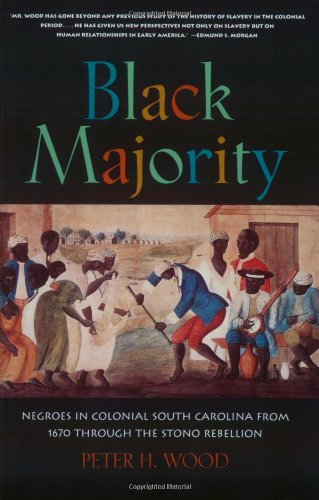
Black Majority: Negroes in Colonial South Carolina from 1670...
Authors:
Peter H. Wood
Publisher:
W. W. Norton & Company
Publication Date:
Not available
ISBN:
0393314820
Black Males Left Behind
Authors:
Not Available
Publisher:
Urban Inst Pr
Publication Date:
Not available
ISBN:
0877667276
Despite the overall economic gains in the 1990s, many young black men continue to have the poorest life chances of anyone in our society. Joblessness... and low earnings among these less-educated young adults are contributing to reductions in marriage, increases in nonmarital childbearing, and a host of other social problems. In Black Males Left Behind, Ronald Mincy has assembled a distinguished group of experts who examine how less-educated black men fared relative to other less-educated young people during the economic expansion of the 1990s and why. Chapters explore the roles of the macroeconomy, the deconcentration of blue-collar employment, criminal justice policy, and the employment aspirations of young less-educated black men and consider their implications for the design of employment services, welfare-to-work policies, workforce development policy, and child support enforcement. Two chapters comprehensively review policy opportunities to assist less-educated young black fathers and discuss how to overcome political resistance to initiatives serving less-educated black men. This book makes a compelling case for greater public attention to a serious domestic problem.
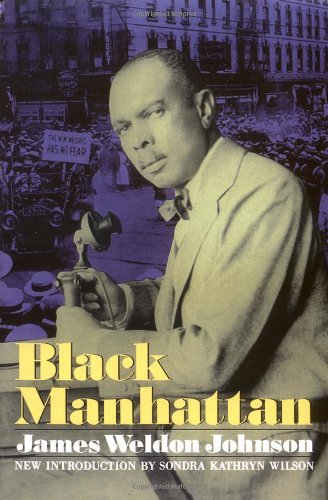
Black Manhattan
Authors:
James Weldon Johnson
Publisher:
Da Capo Press
Publication Date:
Not available
ISBN:
030680431X
In this classic work, first published in 1930, James Weldon Johnson, one of the leading lights of the Harlem Renaissance, combined the skills of the... historian, social scientist, and the reporter to trace the New York black experience from the earliest settlements on Chatham Square during the pre-revolutionary period to the triumphant achievements of Harlem in the 1920s. But Black Manhattan is by no means simply history; It illuminates Johnson and his contributions to both black literature and black organizations; it provides us with an intimate account of the black theatrical and musical world of which Johnson had been a part; and it raises searching questions about the black people's struggle to find their identity. Black Manhattan remains one of the essential books on the black American experience, losing none of its resonance and value after many decades.
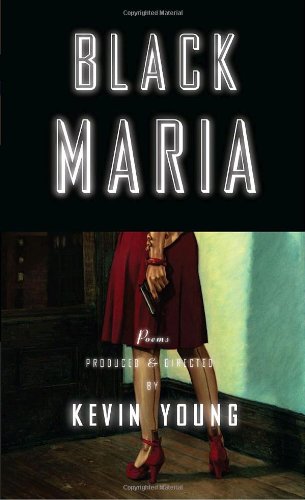
Kevin Young follows his acclaimed exploration of the blues in Jelly Roll with another playful riff on a vital art form, giving us a film noir in verse.... Black Maria–the title is a slang term for a police van as well as a hearse–is a twisting tale of suspicion, passion, mystery, and the city. Young channels the world of detective movies, picking up its lingo and dark glamour in five “reels” of poetry–the adventures of a “soft-boiled” private eye, known as A.K.A. Jones, and an ingenue turned femme fatale, Delilah Redbone, who’s come to town from down south (“Mama bent till dark / tending rows to send / Me to school . . . I wanted / To head on & hitch . . . strike it / Big”). We follow Jones and Delilah through a maze of aliases and ambushes, sex and suspicions, fast talk and hard luck, in Shadowtown where noir characters abound. The Killer, The Gunsel, The Hack, The Director, The Champ, and The Snitch are among the local luminaries and beautiful losers who mingle with Jones and his elusive lady as they stalk one another through the scenes of the poet’s dazzling “treatment.” Charming, funky, bleak, humorous, picaresque, and full of pathos, Black Maria is brimming with the originality and stark lyricism we have come to expect from this remarkable poet.When we met her first request:Got a light?*I only had darkso gave her that instead.*Ashtray full of butts& maybes.*The sound of her heels down the hallto me means reveille.(from “Stills”)Click on the poem titles below to hear Kevin Young read from Black Maria.From the Hardcover edition.
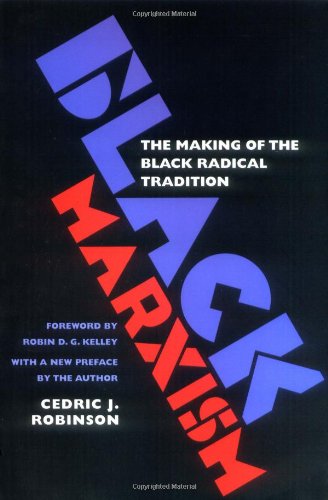
Black Marxism: The Making of the Black Radical Tradition
Authors:
Cedric J. Robinson
Publisher:
The University of North Carolina Press
Publication Date:
Not available
ISBN:
0807848298
In this ambitious work, first published in 1983, Cedric Robinson demonstrates that efforts to understand black people's history of resistance solely... through the prism of Marxist theory are incomplete and inaccurate. Marxist analyses tend to presuppose European models of history and experience that downplay the significance of black people and black communities as agents of change and resistance. Black radicalism must be linked to the traditions of Africa and the unique experiences of blacks on western continents, Robinson argues, and any analyses of African American history need to acknowledge this.To illustrate his argument, Robinson traces the emergence of Marxist ideology in Europe, the resistance by blacks in historically oppressive environments, and the influence of both of these traditions on such important twentieth-century black radical thinkers as W. E. B. Du Bois, C. L. R. James, and Richard Wright.
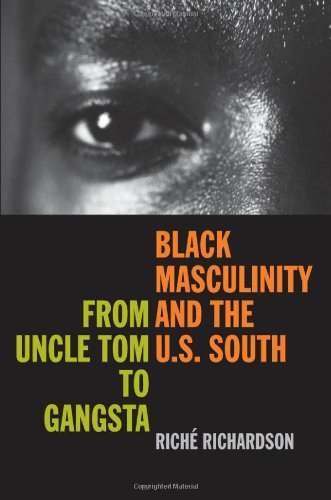
Black Masculinity And the U.S. South: From Uncle Tom to Gangsta...
Authors:
Riche Richardson
Publisher:
University of Georgia Press
Publication Date:
Not available
ISBN:
0820328901
This pathbreaking study of region, race, and gender reveals how we underestimate the South's influence on the formation of black masculinity at the... national level. Many negative stereotypes of black men—often contradictory ones—have emerged from the ongoing historical traumas initiated by slavery. Are black men emasculated and submissive or hypersexed and violent? Nostalgic representations of black men have arisen as well: think of the philosophical, hardworking sharecropper or the abiding, upright preacher. To complicate matters, says Riché Richardson, blacks themselves appropriate these images for purposes never intended by their (mostly) white progenitors. Starting with such well-known caricatures as the Uncle Tom and the black rapist, Richardson investigates a range of pathologies of black masculinity that derive ideological force from their associations with the South. Military policy, black-liberation discourse, and contemporary rap, she argues, are just some of the instruments by which egregious pathologies of black masculinity in southern history have been sustained. Richardson's sources are eclectic and provocative, including Ralph Ellison's fiction, Charles Fuller's plays, Spike Lee's films, Huey Newton's and Malcolm X's political rhetoric, the O. J. Simpson discourse, and the music production of Master P, the Cash Money Millionaires, and other Dirty South rappers. Filled with new insights into the region's role in producing hierarchies of race and gender in and beyond their African American contexts, this new study points the way toward more epistemological frameworks for southern literature, southern studies, and gender studies.
 '
'