production
/viewbook/list/all/?page=1600
/
/static/
None
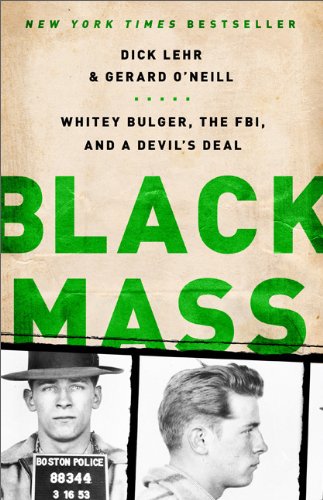
Black Mass: Whitey Bulger, the FBI, and a Devil's Deal
Authors:
Dick Lehr
Publisher:
PublicAffairs
Publication Date:
Not available
ISBN:
1610391098
John Connolly and James Whitey” Bulger grew up together on the tough streets of South Boston. Decades later in the mid-1970s, they met again. By... then, Connolly was a major figure in the FBI’s Boston office and Whitey had become godfather of the Irish Mob. Connolly had an idea, a scheme that might bring Bugler into the FBI fold and John Connolly into the Bureau’s big leagues. But Bulger had other plans. Compellingly told by two former Boston Globe reporters who were on the case from the beginning, Black Mass is the chilling true story of what happened between thema dark deal that spiraled out of control, leading to drug dealing, racketeering, and murder.
Black Masters: A Free Family of Color in the Old South
Authors:
Michael P. Johnson
Publisher:
W. W. Norton & Company
Publication Date:
Not available
ISBN:
0393303144
"A remarkably fine work of creative scholarship." —C. Vann Woodward, New York Review of BooksIn 1860, when four million African Americans were... enslaved, a quarter-million others, including William Ellison, were "free people of color." But Ellison was remarkable. Born a slave, his experience spans the history of the South from George Washington and Thomas Jefferson to Robert E. Lee and Jefferson Davis. In a day when most Americans, black and white, worked the soil, barely scraping together a living, Ellison was a cotton-gin maker—a master craftsman. When nearly all free blacks were destitute, Ellison was wealthy and well-established. He owned a large plantation and more slaves than all but the richest white planters. While Ellison was exceptional in many respects, the story of his life sheds light on the collective experience of African Americans in the antebellum South to whom he remained bound by race. His family history emphasizes the fine line separating freedom from slavery.

BLACK MATTE BOARD 30X40"
Authors:
Not Available
Publisher:
Not available
Publication Date:
Not available
ISBN:
Not available
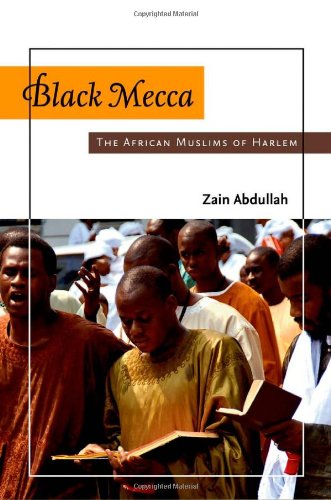
Black Mecca: The African Muslims of Harlem
Authors:
Zain Abdullah
Publisher:
Oxford University Press, USA
Publication Date:
Not available
ISBN:
0195314255
The changes to U.S. immigration law that were instituted in 1965 have led to an influx of West African immigrants to New York, creating an enclave... Harlem residents now call ''Little Africa.'' These immigrants are immediately recognizable as African in their wide-sleeved robes and tasseled hats, but most native-born members of the community are unaware of the crucial role Islam plays in immigrants' lives. Zain Abdullah takes us inside the lives of these new immigrants and shows how they deal with being a double minority in a country where both blacks and Muslims are stigmatized. Dealing with this dual identity, Abdullah discovers, is extraordinarily complex. Some longtime residents embrace these immigrants and see their arrival as an opportunity to reclaim their African heritage, while others see the immigrants as scornful invaders. In turn, African immigrants often take a particularly harsh view of their new neighbors, buying into the worst stereotypes about American-born blacks being lazy and incorrigible. And while there has long been a large Muslim presence in Harlem, and residents often see Islam as a force for social good, African-born Muslims see their Islamic identity disregarded by most of their neighbors. Abdullah weaves together the stories of these African Muslims to paint a fascinating portrait of a community's efforts to carve out space for itself in a new country.
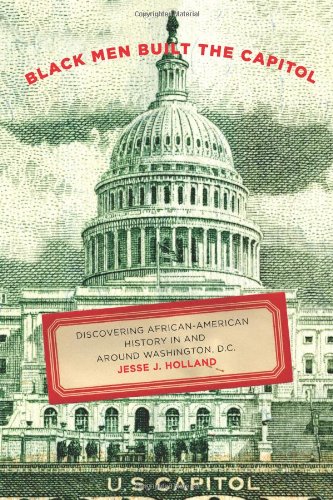
Black Men Built the Capitol: Discovering African-American History...
Authors:
Jesse J. Holland
Publisher:
Globe Pequot
Publication Date:
Not available
ISBN:
0762745363
Millions of people visit the National Mall, the White House, and the U.S.Capitol each year. If they only hear the standard story, a big question... remains:“Where’s the black history?”Packed with new information and archival photos, Black Men Built the Capitolanswers this question. In this thoroughly researched yet completely accessible volume, Washington insider and political journalist Jesse J. Holland shines a lighton the region’s African-American achievements, recounting little-known storiesand verifying rumors, such as:• Enslaved black men built the Capitol, White House, and other important Washington structures.• Philip Reid, a thirty-nine-year-old slave from South Carolina, cast and helped save the model of the Statue of Freedom that sits atop the Capitol Dome.• The National Mall sits on the former site of the city’s most bustling slave market.• The grounds that are now Arlington National Cemetery were, from 1863 to1888, a self-sustaining village for former slaves called the Freedman’s Village. Included are hundreds of places in the District of Columbia, Maryland, and Virginia that illuminate “the rest of the story” for Washington residents and visitors alike.
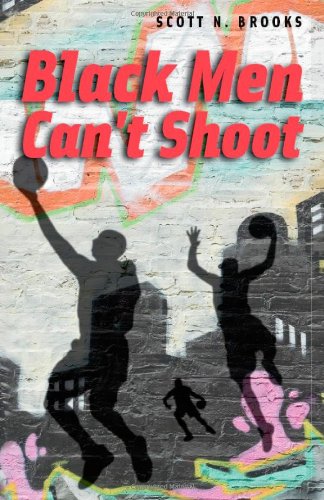
Black Men Can't Shoot
Authors:
Scott N. Brooks
Publisher:
University Of Chicago Press
Publication Date:
Not available
ISBN:
0226076032
The myth of the natural black athlete is widespread, though it’s usually only talked about when a sports commentator or celebrity embarrasses himself... by bringing it up in public. Those gaffes are swiftly decried as racist, but apart from their link to the long history of ugly racial stereotypes about black people—especially men—they are also harmful because they obscure very real, hard-fought accomplishments. As Black Men Can’t Shoot demonstrates, such successes on the basketball court don’t just happen because of natural gifts—instead, they grow out of the long, tough, and unpredictable process of becoming a known player.Scott N. Brooks spent four years coaching summer league basketball in Philadelphia. And what he saw, heard, and felt working with the young black men on his team tells us much about how some kids are able to make the extraordinary journey from the ghetto to the NCAA. To show how good players make the transition to greatness, Brooks tells the story of two young men, Jermaine and Ray, following them through their high school years and chronicling their breakthroughs and frustrations on the court as well as their troubles at home. We witness them negotiating the pitfalls of forging a career and a path out of poverty, we see their triumphs and setbacks, and we hear from the network of people—their families, the neighborhood elders, and Coach Brooks himself—invested in their fates.Black Men Can’t Shoot has all the hallmarks of a classic sports book, with a climactic championship game and a suspenseful ending as we wait to find out if Jermaine and Ray will be recruited. Brooks’s moving coming-of-age story counters the belief that basketball only exploits kids and lures them into following empty dreams—and shows us that by playing ball, some of these young black men have already begun their education even before they get to college.
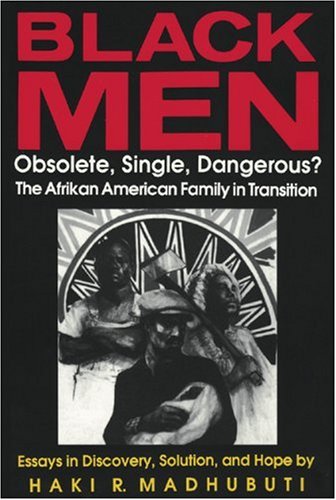
Black Men, Obsolete, Single, Dangerous?: The Afrikan American...
Authors:
Haki R. Madhubuti
Publisher:
Third World Press
Publication Date:
Not available
ISBN:
0883781352
Here is the seminal and critical work that helped solidify Haki Madhubuti as an informed, passionate, and caring commentator on Black life, culture,... relationships, and the development and stability of the Black community. In Black Men, an integral text for anyone with vested interest in building healthy, thriving Black families and communities, Madhubuti takes aim at some of the critical issues facing the African American family. He offers useful, pointed, practical solutions for overcoming these obstacles and challenges.
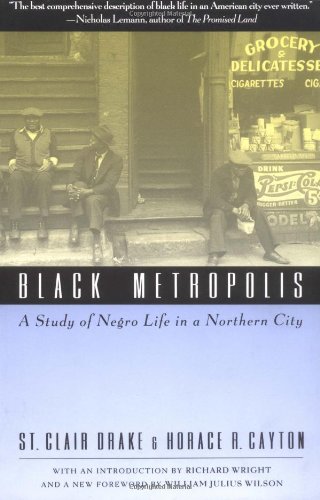
Black Metropolis: A Study of Negro Life in a Northern City
Authors:
St. Clair Drake
Publisher:
University Of Chicago Press
Publication Date:
Not available
ISBN:
0226162346
Ground-breaking when first published in 1945, Black Metropolis remains a landmark study of race and urban life. Based on a mass of research conducted by... Works Progress Administration field workers in the late 1930s, it is a historical and sociological account of the people of Chicago's South Side, the classic urban ghetto. Drake and Cayton's findings not only offer a generalized analysis of black migration, settlement, community structure, and black-white race relations in the early part of the twentieth century, but also tell us what has changed in the last hundred years and what has not. This edition includes the original Introduction by Richard Wright and a new Foreword by William Julius Wilson."Black Metropolis is a rare combination of research and synthesis, a book to be deeply pondered. . . . No one who reads it intelligently can ever believe again that our racial dilemma can be solved by pushing buttons, or by gradual processes which may reach four or five hundred years into the future."—Bucklin Moon, The Nation"This volume makes a great contribution to the building of the future American and the free world."—Louis Wirth, New York Times"By virtue of its range, its labor and its insight, the book seems certain to become a landmark not only in race studies but in the broader field of social anthropology."—Thomas Sancton, New Republic
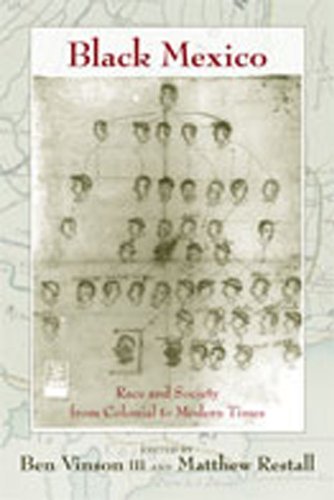
Black Mexico: Race and Society from Colonial to Modern Times...
Authors:
Ben
Publisher:
University of New Mexico Press
Publication Date:
Not available
ISBN:
0826347010
This edited volume compiles the most recent research on a pivotal topic in Latin American history--Afro-Mexican experiences from pre-conquest to the... modern period.
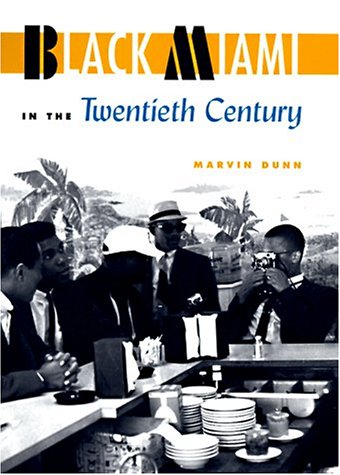
Black Miami in the Twentieth Century (Florida History and Culture)
Authors:
MARVIN DUNN
Publisher:
University Press of Florida
Publication Date:
Not available
ISBN:
0813015308
The first book devoted to the history of African Americans in south Florida and their pivotal role in the growth and development of Miami, Black Miami... in the Twentieth Century traces their triumphs, drudgery, horrors, and courage during the first 100 years of the city's history. Firsthand accounts and over 130 photographs, many of them never published before, bring to life the proud heritage of Miami's black community. Beginning with the legendary presence of black pirates on Biscayne Bay, Marvin Dunn sketches the streams of migration by which blacks came to account for nearly half the city’s voters at the turn of the century. From the birth of a new neighborhood known as "Colored Town," Dunn traces the blossoming of black businesses, churches, civic groups, and fraternal societies that made up the black community. He recounts the heyday of "Little Broadway" along Second Avenue, with photos and individual recollections that capture the richness and vitality of black Miami's golden age between the wars. A substantial portion of the book is devoted to the Miami civil rights movement, and Dunn traces the evolution of Colored Town to Overtown and the subsequent growth of Liberty City. He profiles voting rights, housing and school desegregation, and civil disturbances like the McDuffie and Lozano incidents, and analyzes the issues and leadership that molded an increasingly diverse community through decades of strife and violence. In concluding chapters, he assesses the current position of the community--its socioeconomic status, education issues, residential patterns, and business development--and considers the effect of recent waves of immigration from Latin America and the Caribbean. Dunn combines exhaustive research in regional media and archives with personal interviews of pioneer citizens and longtime residents in a work that documents as never before the life of one of the most important black communities in the United States.
Black Milk
Authors:
Sa'adat Hasan Manto
Publisher:
Sang-e-Meel Publications
Publication Date:
Not available
ISBN:
9693503007
This volume examines issues of history and political economy that are central to the problems of nationalism, democracy, and development. The... contributors, including Amartya Sen and Pranab Bardhan, question the dichotomy between secular nationalism and religious communalism and take issue with cultural critiques of modernity and nationalism.
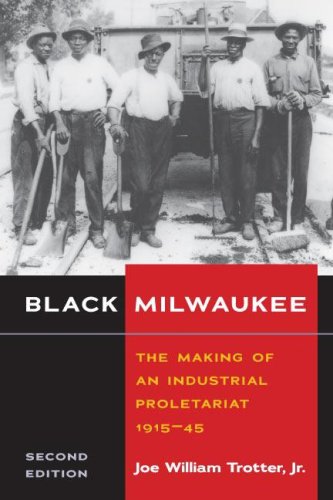
Black Milwaukee: The Making of an Industrial Proletariat, 1915-45
Authors:
Joe William Trotter Jr.
Publisher:
University of Illinois Press
Publication Date:
Not available
ISBN:
0252074106
Other historians have tended to treat black urban life mainly in relation to the ghetto experience, but in Black Milwaukee, Joe William... Trotter Jr. offers a new perspective that complements yet also goes well beyond that approach. The blacks in Black Milwaukee were not only ghetto dwellers; they were also industrial workers. The process by which they achieved this status is the subject of Trotter’s ground-breaking study. This second edition features a new preface and acknowledgments, an essay on African American urban history since 1985, a prologue on the antebellum and Civil War roots of Milwaukee’s black community, and an epilogue on the post-World War II years and the impact of deindustrialization, all by the author. Brief essays by four of Trotter’s colleagues--William P. Jones, Earl Lewis, Alison Isenberg, and Kimberly L. Phillips--assess the impact of the original Black Milwaukee on the study of African American urban history over the past twenty years.
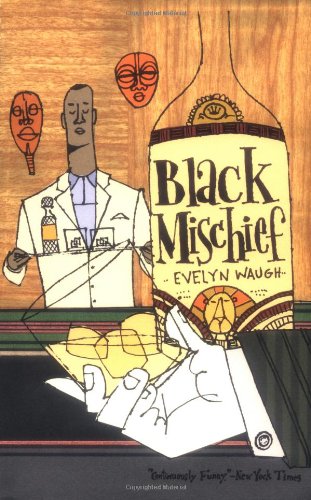
Black Mischief
Authors:
Evelyn Waugh
Publisher:
Back Bay Books
Publication Date:
Not available
ISBN:
0316917338
Black Mischief, " Waugh's third novel, helped to establish his reputation as a master satirist. Set on the fictional African island of Azania, the novel... chronicles the efforts of Emperor Seth, assisted by the Englishman Basil Seal, to modernize his kingdom. Profound hilarity ensues from the issuance of homemade currency, the staging of a "Birth Control Gala, " the rightful ruler's demise at his own rather long and tiring coronation ceremonies, and a good deal more mischief.
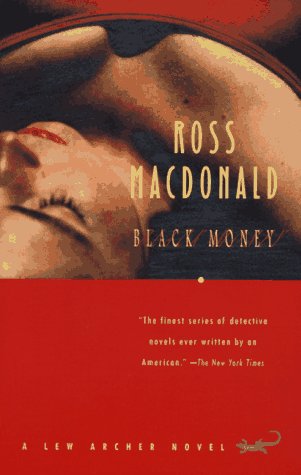
Black Money (Vintage Crime/Black Lizard)
Authors:
Ross Macdonald
Publisher:
Vintage
Publication Date:
Not available
ISBN:
0679768106
When Lew Archer is hired to get the goods on the suspiciously suave Frenchman who's run off with his client's girlfriend, it looks like a simple case of... alienated affections. Things look different when the mysterious foreigner turns out to be connected to a seven-year-old suicide and a mountain of gambling debts. Black Money is Ross Macdonald at his finest.

Black Mountain: An Exploration in Community
Authors:
Martin Duberman
Publisher:
Northwestern University Press
Publication Date:
Not available
ISBN:
0810125943
First published in 1992 at the height of the furor over the Rodney King incident, Studs Terkel’s Race was an immediate bestseller. Offering a rare and... revealing look at how people in America truly feel about race, Terkel’s candid interviews depict a complexity of thoughts and emotions and uncover a fascinating narrative of changing opinions. Preachers and street punks, college students and Klansmen, pioneering interracial couples, the nephew of the founder of apartheid, and Emmett Till’s mother are among those whose voices appear in Race. In all, nearly one hundred Americans talk openly about what few are willing to admit in public: feelings about affirmative action, gentrification, secret prejudices, and dashed hopes.This reissue of Race comes at a particularly dynamic time in the history of American race relations. Our first black president, rapidly shifting immigration and population patterns, and the rising force of multiracialism all necessitate a narrative around race that is more nuanced than ever before. Yet many of the issues we have grappled with over the past few decades remain to be solved. Gary Younge, a longtime columnist for The Guardian and The Nation, provides a new introduction to Race that serves to contextualize it, rendering it relevant to these contemporary frameworks, while paying homage to a keystone piece of oral history on a uniquely American subject.
 '
'