production
/viewbook/list/all/?page=1601
/
/static/
None
Black Mountain Breakdown
Authors:
Lee Smith
Publisher:
Berkley Trade
Publication Date:
Not available
ISBN:
0425243389
The New York Times bestselling author of The Last Girls presents one of her most compelling novels, acclaimed by Anne Tyler, Annie Dillard, and... more... Everywhere about her, from the traffic on Highway 460 to the river that's gone black with coal dust, Crystal Spangler sees a current flowing from the mountain town of Black Rock into the wider world. As a teenager, she is elected beauty queen, gets good grades, and-despite her many enviable qualities-manages also to be well-loved. Everyone knows that she is destined to leave town and do great things.And she does.But no one expects her return; drawn back home by some sort of memory, as if the current that had taken her away had changed its mind...
Black Movements in America (Revolutionary Thought/Radical Movements)
Authors:
Cedric J. Robinson
Publisher:
Routledge
Publication Date:
Not available
ISBN:
0415912229
Cedric Robinson traces the emergence of Black political cultures in the United States from slave resistances in the 16th and 17th centuries to the civil... rights movements of the present. Drawing on the historical record, he argues that Blacks have constructed both a culture of resistance and a culture of accommodation based on the radically different experiences of slaves and free Blacks.
Black Music of Two Worlds: African, Caribbean, Latin, and...
Authors:
John Storm Roberts
Publisher:
Schirmer
Publication Date:
Not available
ISBN:
002864929X
BLACK MUSIC OF TWO WORLDS defines the scope of world music studies, by exploring the impact that both African and European cultures had on music of the... Americas.
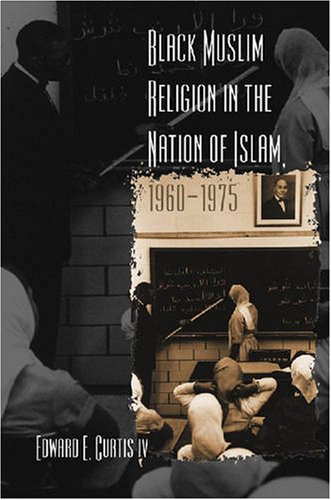
Black Muslim Religion in the Nation of Islam, 1960-1975
Authors:
Edward E. Curtis IV
Publisher:
The University of North Carolina Press
Publication Date:
Not available
ISBN:
0807857718
Elijah Muhammad's Nation of Islam came to America's attention in the 1960s and 1970s as a radical separatist African American social and political... group. But the movement was also a religious one. Edward E. Curtis IV offers the first comprehensive examination of the Nation of Islam's rituals, ethics, theologies, and religious narratives, showing how the movement combined elements of Afro-Eurasian Islamic traditions with African American traditions to create a new form of Islamic faith.Considering everything from bean pies to religious cartoons, clothing styles to prayer rituals, Curtis explains how the practice of Islam in the movement included the disciplining and purifying of the black body, the reorientation of African American historical consciousness toward the Muslim world, an engagement with both mainstream Islamic texts and the prophecies of Elijah Muhammad, and the development of a holistic approach to political, religious, and social liberation. Curtis's analysis pushes beyond essentialist ideas about what it means to be Muslim and promotes a view of the importance of local processes in identity formation and appropriations of Islamic traditions.
Black Nationalism in American Politics and Thought
Authors:
Dean E. Robinson
Publisher:
Cambridge University Press
Publication Date:
Not available
ISBN:
0521626277
Black Nationalism in American Politics and Thought revisits the activism and arguments in support of separate black statehood from the mid-19th century... to the present, detailing the ways black nationalism mirrors broader currents in U.S. politics and thought. This book challenges the idea that black nationalism is a timeless, unchanging, and anti-assimilationist impulse. It argues that black nationalism in the United States draws on analogous political strategy and thinking unique to specific historical eras--often inadvertently reproducing strategies and thinking responsible for racial inequality in the first place.
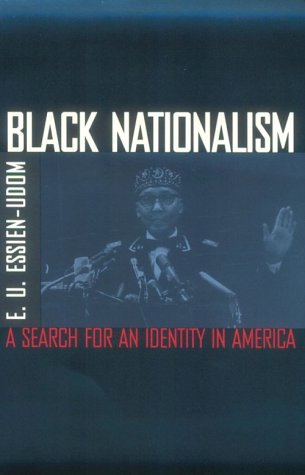
Black Nationalism: The Search for an Identity
Authors:
E. U. Essien-Udom
Publisher:
University Of Chicago Press
Publication Date:
Not available
ISBN:
0226218538
One of the first studies of the organization, life and meaning of the Nation of Islam and, by extension, all Black Nationalist movements, this classic... work dispels the still common conception that the movement functioned primarily for political purposes. By observing the daily life of its members, Essien-Udom demonstrates that the Nation of Islam served primarily as a means for poor urban blacks to attain a national identity, a sense of ethnic consciousness, and empowerment in a society that denied them these privileges. Black Nationalism continues to hold profound implications for our understanding of the appeal of Black Nationalism as an ideology and a political force."An excellent standard treatment of black nationalist belief and practice in the 50's."—Michael Eric Dyson, New York Times Book Review"This is an absorbing exercise in first class reporting. . . . In the light of his scrupulous fairness, the book is another illustration of how the press prejudges a story. And most provocatively, Essien-Udom has emphasized that even after the current campaigns for wide-scale integration are won, there will be an even wider chasm between the 'liberated' Negro middle class and the rootless Negro poor."—Nat Hentoff,Commonweal
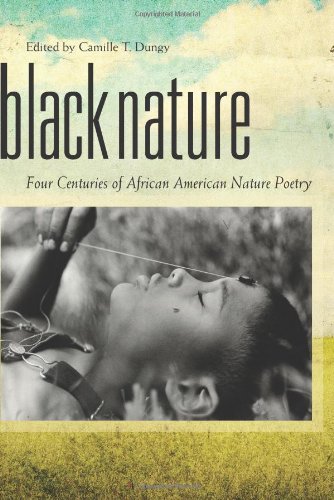
Black Nature: Four Centuries of African American Nature Poetry
Authors:
Camille T. Dungy
Publisher:
University of Georgia Press
Publication Date:
Not available
ISBN:
0820334316
Black Nature is the first anthology to focus on nature writing by African American poets, a genre that until now has not commonly been counted as one in... which African American poets have participated.Black poets have a long tradition of incorporating treatments of the natural world into their work, but it is often read as political, historical, or protest poetry--anything but nature poetry. This is particularly true when the definition of what constitutes nature writing is limited to work about the pastoral or the wild.Camille T. Dungy has selected 180 poems from 93 poets that provide unique perspectives on American social and literary history to broaden our concept of nature poetry and African American poetics. This collection features major writers, such as Phillis Wheatley, Rita Dove, Yusef Komunyakaa, Gwendolyn Brooks, Sterling Brown, Robert Hayden, Wanda Coleman, Natasha Trethewey, and Melvin B. Tolson, as well as newer talents, such as Douglas Kearney, Major Jackson, and Janice Harrington. Included are poets writing out of slavery, Reconstruction, the Harlem Renaissance, the Black Arts Movement, and late twentieth- and early twenty-first-century African American poetic movements.Black Nature brings to the fore a neglected and vital means of considering poetry by African Americans and nature-related poetry as a whole.
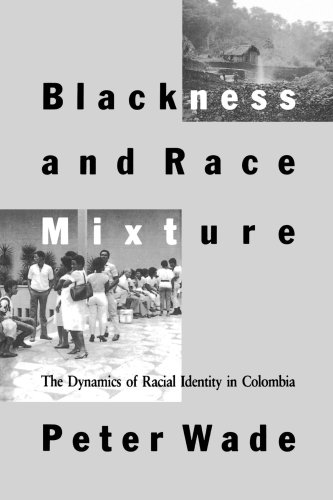
Blackness and Race Mixture: The Dynamics of Racial Identity in...
Authors:
Peter Wade
Publisher:
The Johns Hopkins University Press
Publication Date:
Not available
ISBN:
080185251X
Drawing on extensive anthropological fieldwork, Peter Wade shows how the concept of "blackness" and discrimination are deeply embedded in different... social levels and contexts—from region to neighborhood, and from politics and economics to housing, marriage, music, and personal identity.
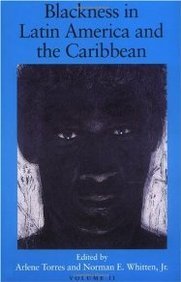
Blackness in Latin America and the Caribbean, Volume 2: Social...
Authors:
Arlene Torres
Publisher:
Indiana University Press
Publication Date:
Not available
ISBN:
0253211948
If we are to understand the meanings of "blackness" in the African diaspora and elsewhere, we must critically examine the paradigms that have emerged... from Euro-American racism and black liberation over the past five centuries. So argue the editors of these foundational volumes, which add immeasurably to our understanding of black experiences in Central America, South America, and the Caribbean. In their introduction to this extensive collection, the editors discuss historical forces and provide a critical, interpretive theory of structures of domination and processes of liberation in the Black Americas. By dealing with racialist concepts from the dual standpoints of nation-state and ethnic bloc, they clarify many issues of cultural representation and social identity in Latin America and the Caribbean.
Blackness Visible: Essays on Philosophy and Race
Authors:
Charles W. Mills
Publisher:
Cornell University Press
Publication Date:
Not available
ISBN:
0801484715
Charles Mills makes visible in the world of mainstream philosophy some of the crucial issues of the black experience. Ralph Ellison's metaphor of black... invisibility has special relevance to philosophy, whose demographic and conceptual "whiteness" has long been a source of wonder and complaint to racial minorities. Mills points out the absence of any philosophical narrative theorizing and detailing race's centrality to the recent history of the West, such as feminists have articulated for gender domination.European expansionism in its various forms, Mills contends, generates a social ontology of race that warrants philosophical attention. Through expropriation, settlement, slavery, and colonialism, race comes into existence as simultaneously real and unreal: ontological without being biological, metaphysical without being physical, existential without being essential, shaping one's being without being in one's shape. His essays explore the contrasting sums of a white and black modernity, examine standpoint epistemology and the metaphysics of racial identity, look at black-Jewish relations and racial conspiracy theories, map the workings of a white-supremacist polity and the contours of a racist moral consciousness, and analyze the presuppositions of Frederick Douglass's famous July 4 prognosis for black political inclusion. Collectively they demonstrate what exciting new philosophical terrain can be opened up once the color line in western philosophy is made visible and addressed.
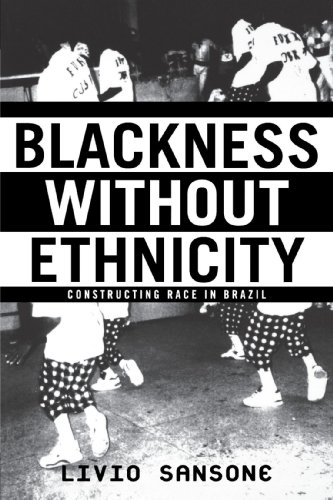
Blackness Without Ethnicity: Constructing Race in Brazil
Authors:
Livio Sansone
Publisher:
Palgrave Macmillan
Publication Date:
Not available
ISBN:
0312293755
Drawing on 15 years of research in Bahia, Rio de Janeiro, Suriname, and the Netherlands, Livio Sansone explores the very different ways that race and... ethnicity are constructed in Brazil and the rest of Latin America. He compares Latin American conceptions of race to US and European notions of race that are defined by clearly identifiable black-white ethnicities. Sansone argues that understanding more complex, ambiguous notions of culture and identity will expand international discourse on race and move it away from American definitions unable to describe racial difference. He also explores the effects of globalization on constructions of race.
Black Noir: Mystery, Crime, and Suspense Fiction by...
Authors:
Not Available
Publisher:
Pegasus
Publication Date:
Not available
ISBN:
1605980579
Black Noise: Rap Music and Black Culture in Contemporary America...
Authors:
Tricia Rose
Publisher:
Wesleyan
Publication Date:
Not available
ISBN:
0819562750
From its beginnings in hip hop culture, the dense rhythms and aggressive lyrics of rap music have made it a provocative fixture on the American... cultural landscape. In Black Noise: Rap Music and Black Culture in Contemporary America, Tricia Rose, described by the New York Times as a "hip hop theorist," takes a comprehensive look at the lyrics, music, cultures, themes, and styles of this highly rhythmic, rhymed storytelling and grapples with the most salient issues and debates that surround it.Assistant Professor of Africana Studies and History at New York University, Tricia Rose sorts through rap's multiple voices by exploring its underlying urban cultural politics, particularly the influential New York City rap scene, and discusses rap as a unique musical form in which traditional African-based oral traditions fuse with cutting-edge music technologies. Next she takes up rap's racial politics, its sharp criticisms of the police and the government, and the responses of those institutions. Finally, she explores the complex sexual politics of rap, including questions of misogyny, sexual domination, and female rappers' critiques of men.But these debates do not overshadow rappers' own words and thoughts. Rose also closely examines the lyrics and videos for songs by artists such as Public Enemy, KRS-One, Salt N' Pepa, MC Lyte, and L. L. Cool J. and draws on candid interviews with Queen Latifah, music producer Eric "Vietnam" Sadler, dancer Crazy Legs, and others to paint the full range of rap's political and aesthetic spectrum. In the end, Rose observes, rap music remains a vibrant force with its own aesthetic, "a noisy and powerful element of contemporary American popular culture which continues to draw a great deal of attention to itself."
Black No More
Authors:
George S. Schuyler
Publisher:
Dover Publications
Publication Date:
Not available
ISBN:
0486480402
Written by an unsung hero of African-American literature, this satirical work of speculative fiction recounts the consequences of a mysterious... scientific process that transforms black people into whites. A humorous approach to debunking the myths of white supremacy and racial purity, this 1931 novel also lampoons prominent leaders of the NAACP and Harlem Renaissance.
Black No More : A Novel (Modern Library Paperbacks)
Authors:
George S. Schuyler
Publisher:
Modern Library
Publication Date:
Not available
ISBN:
037575380X
Modern Library Harlem RenaissanceWhat would happen to the race problem in America if black people turned white? Would everybody be happy? These... questions and more are answered hilariously in Black No More, George S. Schuyler's satiric romp. Black No More is the story of Max Disher, a dapper black rogue of an insurance man who, through a scientific transformation process, becomes Matthew Fisher, a white man. Matt dreams up a scam that allows him to become the leader of the Knights of Nordica, a white supremacist group, as well as to marry the white woman who rejected him when he was black. Black No More is a hysterical exploration of race and all its self-serving definitions. If you can't beat them, turn into them. Ishmael Reed, one of today's top black satirists and the author of Mumbo Jumbo and Japanese by Spring, provides a spirited Introduction.The fertile artistic period now known as the Harlem Renaissance (1920- 1930) gave birth to many of the world-renowned masters of black literature and is the model for today's renaissance of black writers.
 '
'