production
/viewbook/list/all/?page=2656
/
/static/
None
Computational Frameworks for the Fast Fourier Transform (Frontiers...
Authors:
Charles Van Loan
Publisher:
Society for Industrial and Applied Mathematics
Publication Date:
Not available
ISBN:
0898712858
The most comprehensive treatment of FFTs to date. Van Loan captures the interplay between mathematics and the design of effective numerical... algorithms--a critical connection as more advanced machines become available. A stylized Matlab notation, which is familiar to those engaged in high-performance computing, is used. The Fast Fourier Transform (FFT) family of algorithms has revolutionized many areas of scientific computation. The FFT is one of the most widely used algorithms in science and engineering, with applications in almost every discipline. This volume is essential for professionals interested in linear algebra as well as those working with numerical methods. The FFT is also a great vehicle for teaching key aspects of scientific computing.
Computational Gasdynamics
Authors:
Culbert B. Laney
Publisher:
Cambridge University Press
Publication Date:
Not available
ISBN:
0521625580
Numerical methods are indispensable tools in the analysis of complex fluid flows. This book focuses on computational techniques for high-speed gas... flows, especially gas flows containing shocks and other steep gradients. The book decomposes complicated numerical methods into simple modular parts, showing how each part fits and how each method relates to or differs from others. The text begins with a review of gasdynamics and computational techniques. Next come basic principles of computational gasdynamics. The last two parts cover basic techniques and advanced techniques. Senior- and graduate-level students, especially in aerospace engineering, as well as researchers and practicing engineers, will find a wealth of invaluable information on high-speed gas flows in this text.
Computational Genome Analysis: An Introduction
Authors:
Richard C. Deonier
Publisher:
Springer
Publication Date:
Not available
ISBN:
1441931627
This book presents the foundations of key problems in computational molecular biology and bioinformatics. It focuses on computational and statistical... principles applied to genomes, and introduces the mathematics and statistics that are crucial for understanding these applications. The book features a free download of the R software statistics package and the text provides great crossover material that is interesting and accessible to students in biology, mathematics, statistics and computer science. More than 100 illustrations and diagrams reinforce concepts and present key results from the primary literature. Exercises are given at the end of chapters.
Computational Genome Analysis: An Introduction (Statistics for...
Authors:
Richard C. Deonier
Publisher:
Springer
Publication Date:
Not available
ISBN:
0387987851
This book presents the foundations of key problems in computational molecular biology and bioinformatics. It focuses on computational and statistical... principles applied to genomes, and introduces the mathematics and statistics that are crucial for understanding these applications. The book features a free download of the R software statistics package and the text provides great crossover material that is interesting and accessible to students in biology, mathematics, statistics and computer science. More than 100 illustrations and diagrams reinforce concepts and present key results from the primary literature. Exercises are given at the end of chapters.
Computational Geometry: Algorithms and Applications
Authors:
Mark de Berg
Publisher:
Springer
Publication Date:
Not available
ISBN:
3642096816
This introduction to computational geometry focuses on algorithms. Motivation is provided from the application areas as all techniques are related to... particular applications in robotics, graphics, CAD/CAM, and geographic information systems. Modern insights in computational geometry are used to provide solutions that are both efficient and easy to understand and implement.
Computational Geometry: Algorithms and Applications
Authors:
Mark de Berg
Publisher:
Springer
Publication Date:
Not available
ISBN:
3540779736
This introduction to computational geometry focuses on algorithms. Motivation is provided from the application areas as all techniques are related to... particular applications in robotics, graphics, CAD/CAM, and geographic information systems. Modern insights in computational geometry are used to provide solutions that are both efficient and easy to understand and implement.
Computational Geometry in C (Cambridge Tracts in Theoretical...
Authors:
Joseph O'Rourke
Publisher:
Cambridge University Press
Publication Date:
Not available
ISBN:
0521649765
This is the newly revised and expanded edition of the popular introduction to the design and implementation of geometry algorithms arising in areas such... as computer graphics, robotics, and engineering design. The second edition contains material on several new topics, such as randomized algorithms for polygon triangulation, planar point location, 3D convex hull construction, intersection algorithms for ray-segment and ray-triangle, and point-in-polyhedron. A new "Sources" chapter points to supplemental literature for readers needing more information on any topic. A novel aspect is the inclusion of working C code for many of the algorithms, with discussion of practical implementation issues. The self-contained treatment presumes only an elementary knowledge of mathematics, but reaches topics on the frontier of current research, making it a useful reference for practitioners at all levels. The code in this new edition is significantly improved from the first edition, and four new routines are included. Java versions for this new edition are also available. All code is accessible from the book's Web site (http://cs.smith.edu/~orourke/) or by anonymous ftp.
Computational Handbook of Statistics (4th Edition)
Authors:
James L. Bruning
Publisher:
Pearson
Publication Date:
Not available
ISBN:
0673990850
Features a step-by-step approach to statistical analysis. Includes illustrative examples from the behavioral and social sciences – applicable to... education as well as a broad range of other fields.
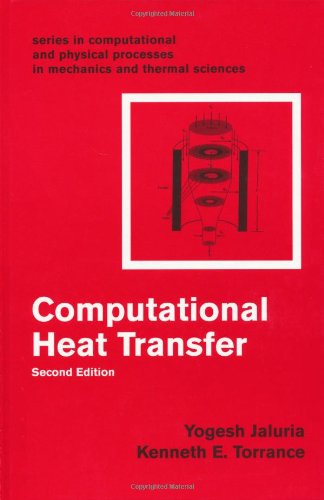
Computational Heat Transfer (Series in Computational and Physical...
Authors:
Yogesh Jaluria
Publisher:
Taylor & Francis
Publication Date:
Not available
ISBN:
1560324775
This new edition updated the material by expanding coverage of certain topics, adding new examples and problems, removing outdated material, and adding... a computer disk, which will be included with each book. Professor Jaluria and Torrance have structured a text addressing both finite difference and finite element methods, comparing a number of applicable methods.
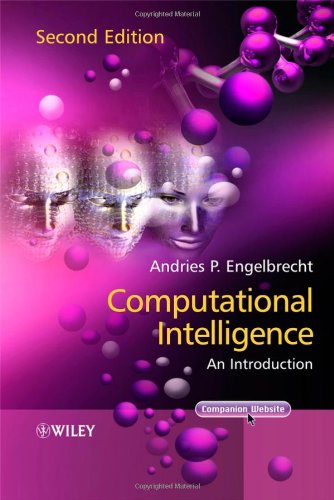
Computational Intelligence: An Introduction
Authors:
Andries P. Engelbrecht
Publisher:
Wiley
Publication Date:
Not available
ISBN:
0470035617
Computational Intelligence: An Introduction, Second Edition offers an in-depth exploration into the adaptive mechanisms that enable intelligent... behaviour in complex and changing environments. The main focus of this text is centred on the computational modelling of biological and natural intelligent systems, encompassing swarm intelligence, fuzzy systems, artificial neutral networks, artificial immune systems and evolutionary computation.Engelbrecht provides readers with a wide knowledge of Computational Intelligence (CI) paradigms and algorithms; inviting readers to implement and problem solve real-world, complex problems within the CI development framework. This implementation framework will enable readers to tackle new problems without any difficulty through a single Java class as part of the CI library.Key features of this second edition include:A tutorial, hands-on based presentation of the material.State-of-the-art coverage of the most recent developments in computational intelligence with more elaborate discussions on intelligence and artificial intelligence (AI).New discussion of Darwinian evolution versus Lamarckian evolution, also including swarm robotics, hybrid systems and artificial immune systems.A section on how to perform empirical studies; topics including statistical analysis of stochastic algorithms, and an open source library of CI algorithms.Tables, illustrations, graphs, examples, assignments, Java code implementing the algorithms, and a complete CI implementation and experimental framework.Computational Intelligence: An Introduction, Second Edition is essential reading for third and fourth year undergraduate and postgraduate students studying CI. The first edition has been prescribed by a number of overseas universities and is thus a valuable teaching tool. In addition, it will also be a useful resource for researchers in Computational Intelligence and Artificial Intelligence, as well as engineers, statisticians, operational researchers, and bioinformaticians with an interest in applying AI or CI to solve problems in their domains. Check out http://www.ci.cs.up.ac.za for examples, assignments and Java code implementing the algorithms.
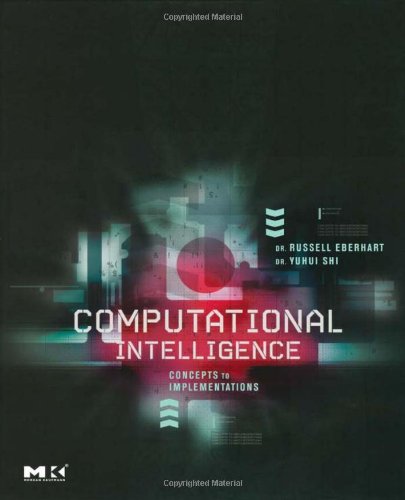
Computational Intelligence: Concepts to Implementations
Authors:
Russell C. Eberhart
Publisher:
Morgan Kaufmann
Publication Date:
Not available
ISBN:
1558607595
Russ Eberhart and Yuhui Shi have succeeded in integrating various natural and engineering disciplines to establish Computational Intelligence. This is... the first comprehensive textbook, including lots of practical examples. -Shun-ichi Amari, RIKEN Brain Science Institute, JapanThis book is an excellent choice on its own, but, as in my case, will form the foundation for our advanced graduate courses in the CI disciplines. -James M. Keller, University of Missouri-ColumbiaThe excellent new book by Eberhart and Shi asserts that computational intelligence rests on a foundation of evolutionary computation. This refreshing view has set the book apart from other books on computational intelligence. The book has an emphasis on practical applications and computational tools, which are very useful and important for further development of the computational intelligence field. -Xin Yao, The Centre of Excellence for Research in Computational Intelligence and Applications, BirminghamThe "soft” analytic tools that comprise the field of computational intelligence have matured to the extent that they can, often in powerful combination with one another, form the foundation for a variety of solutions suitable for use by domain experts without extensive programming experience.Computational Intelligence: Concepts to Implementations provides the conceptual and practical knowledge necessary to develop solutions of this kind. Focusing on evolutionary computation, neural networks, and fuzzy logic, the authors have constructed an approach to thinking about and working with computational intelligence that has, in their extensive experience, proved highly effective. Features. Moves clearly and efficiently from concepts and paradigms to algorithms and implementation techniques by focusing, in the early chapters, on the specific concepts and paradigms that inform the authors' methodologies.. Explores a number of key themes, including self-organization, complex adaptive systems, and emergent computation.. Details the metrics and analytical tools needed to assess the performance of computational intelligence tools.. Concludes with a series of case studies that illustrate a wide range of successful applications.. Presents code examples in C and C++.. Provides, at the end of each chapter, review questions and exercises suitable for graduate students, as well as researchers and practitioners engaged in self-study.. Makes available, on a companion website, a number of software implementations that can be adapted for real-world applications. · Moves clearly and efficiently from concepts and paradigms to algorithms and implementation techniques by focusing, in the early chapters, on the specific concepts and paradigms that inform the authors' methodologies.· Explores a number of key themes, including self-organization, complex adaptive systems, and emergent computation.· Details the metrics and analytical tools needed to assess the performance of computational intelligence tools.· Concludes with a series of case studies that illustrate a wide range of successful applications.· Presents code examples in C and C++.· Provides, at the end of each chapter, review questions and exercises suitable for graduate students, as well as researchers and practitioners engaged in self-study.· Makes available, on a companion website, a number of software implementations that can be adapted for real-world applications.
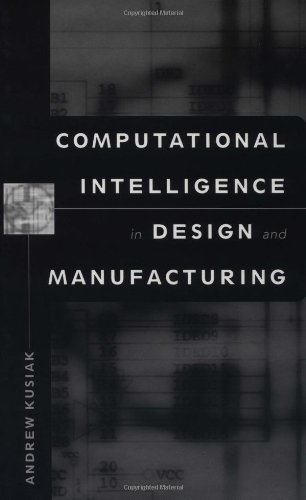
Computational Intelligence in Design and Manufacturing
Authors:
Andrew Kusiak
Publisher:
Wiley-Interscience
Publication Date:
Not available
ISBN:
0471348791
Take the next step in Integrated Product and Process DevelopmentThis pioneering book is the first to apply state-of-the-art computational intelligence... techniques to all phases of manufacturing system design and operations. It equips engineers with a superior array of new tools for optimizing their work in Integrated Product and Process Development.Drawing on his extensive experience in the field of advanced manufacturing, Andrew Kusiak has masterfully embedded coverage of data mining, expert systems, neural networks, autonomous reasoning techniques, and other computational methods in chapters that cover all key facets of integrated manufacturing system design and operations, including:* Process planning* Setup reduction* Production planning and scheduling* Kanban systems* Manufacturing equipment selection* Group technology* Facilities and manufacturing cell layout* Warehouse layout* Manufacturing system product and component design* Supplier evaluationEach chapter includes questions and problems that address key issues on model integration and the use of computational intelligence approaches to solve difficulties across many areas of an enterprise. Examples and case studies from real-world industrial projects illustrate the powerfulapplication potential of the computational techniques.Comprehensive in scope and flexible in approach, Computational Intelligence in Design and Manufacturing is right in step with the enterprise of the future: extended, virtual, model-driven, knowledge-based, and integrated in time and space. It is essential reading for forward-thinking students and professional engineers and managers working in design systems, manufacturing, and related areas.
Computational Intelligence Paradigms: Theory & Applications...
Authors:
S. Sumathi
Publisher:
CRC Press
Publication Date:
Not available
ISBN:
143980902X
Offering a wide range of programming examples implemented in MATLAB®, Computational Intelligence Paradigms: Theory and Applications Using MATLAB®... presents theoretical concepts and a general framework for computational intelligence (CI) approaches, including artificial neural networks, fuzzy systems, evolutionary computation, genetic algorithms and programming, and swarm intelligence. It covers numerous intelligent computing methodologies and algorithms used in CI research. The book first focuses on neural networks, including common artificial neural networks; neural networks based on data classification, data association, and data conceptualization; and real-world applications of neural networks. It then discusses fuzzy sets, fuzzy rules, applications of fuzzy systems, and different types of fused neuro-fuzzy systems, before providing MATLAB illustrations of ANFIS, classification and regression trees, fuzzy c-means clustering algorithms, fuzzy ART map, and Takagi–Sugeno inference systems. The authors also describe the history, advantages, and disadvantages of evolutionary computation and include solved MATLAB programs to illustrate the implementation of evolutionary computation in various problems. After exploring the operators and parameters of genetic algorithms, they cover the steps and MATLAB routines of genetic programming. The final chapter introduces swarm intelligence and its applications, particle swarm optimization, and ant colony optimization. Full of worked examples and end-of-chapter questions, this comprehensive book explains how to use MATLAB to implement CI techniques for the solution of biological problems. It will help readers with their work on evolution dynamics, self-organization, natural and artificial morphogenesis, emergent collective behaviors, swarm intelligence, evolutionary strategies, genetic programming, and the evolution of social behaviors.
Computational Macroeconomics for the Open Economy
Authors:
G. C. Lim
Publisher:
The MIT Press
Publication Date:
Not available
ISBN:
0262123061
Policymakers need quantitative as well as qualitative answers to pressing policy questions. Because of advances in computational methods, quantitative... estimates are now derived from coherent nonlinear dynamic macroeconomic models embodying measures of risk and calibrated to capture specific characteristics of real-world situations. This text shows how such models can be made accessible and operational for confronting policy issues. The book starts with a simple setting based on market-clearing price flexibility. It gradually incorporates departures from the simple competitive framework in the form of price and wage stickiness, taxes, rigidities in investment, financial frictions, and habit persistence in consumption. Most chapters end with computational exercises; the Matlab code for the base model can be found in the appendix. As the models evolve, readers are encouraged to modify the codes from the first simple model to more complex extensions. Computational Macroeconomics for the Open Economy can be used by graduate students in economics and finance as well as policy-oriented researchers.
Computational Mathematics: Models, Methods, and Analysis with...
Authors:
Robert E. White
Publisher:
Chapman and Hall/CRC
Publication Date:
Not available
ISBN:
1584883642
Computational Mathematics: Models, Methods, and Analysis with MATLAB and MPI explores and illustrates this process. Each section of the first six... chapters is motivated by a specific application. The author applies a model, selects a numerical method, implements computer simulations, and assesses the ensuing results. These chapters include an abundance of MATLAB code. By studying the code instead of using it as a "black box, " you take the first step toward more sophisticated numerical modeling. The last four chapters focus on multiprocessing algorithms implemented using message passing interface (MPI). These chapters include Fortran 9x codes that illustrate the basic MPI subroutines and revisit the applications of the previous chapters from a parallel implementation perspective. All of the codes are available for download from www4.ncsu.edu./~white.This book is not just about math, not just about computing, and not just about applications, but about all three--in other words, computational science. Whether used as an undergraduate textbook, for self-study, or for reference, it builds the foundation you need to make numerical modeling and simulation integral parts of your investigational toolbox.
 '
'