production
/viewbook/list/all/?page=3007
/
/static/
None
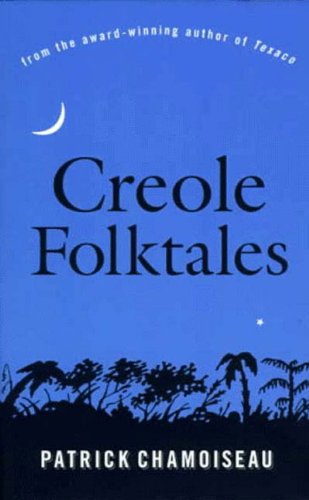
Creole Folktales
Authors:
Patrick Chamoiseau
Publisher:
New Press, The
Publication Date:
Not available
ISBN:
1565843967
In this unusual collection of stories and fables, Goncourt prize-winner Patrick Chamoiseau re-creates in truly magical language the stories he heard as... a child in Martinique.
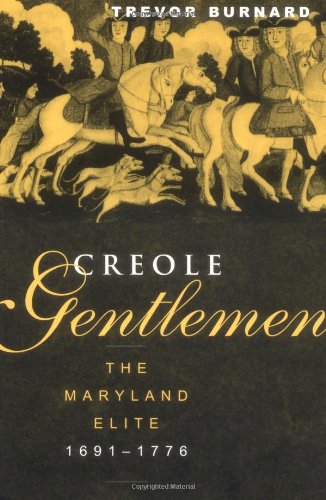
Creole Gentlemen: The Maryland Elite, 1691-1776 (New World in the...
Authors:
Trevor Burnard
Publisher:
Routledge
Publication Date:
Not available
ISBN:
0415931746
Examining the lives of 460 of the wealthiest men who lived in colonial Maryland, Burnard traces the development of this elite from a hard-living,... profit-driven merchant-planter class in the seventeenth century to a more genteel class of plantation owners in the eighteenth century. This study innovatively compares these men to their counterparts elsewhere in the British Empire, including absentee Caribbean landowners and East Indian nabobs, illustrating their place in the Atlantic economic network.
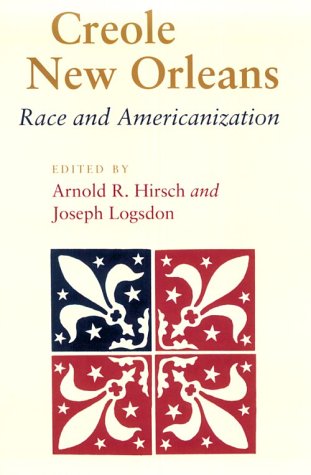
Creole New Orleans: Race and Americanization
Authors:
Arnold R. Hirsch
Publisher:
Louisiana State Univ Pr
Publication Date:
Not available
ISBN:
0807117749
This collection of six original essays explores the peculiar ethnic composition and history of New Orleans, which the authors persuasively argue is... unique among American cities. The focus of Creole New Orleans is on the development of a colonial Franco-African culture in the city, the ways that culture was influenced by the arrival of later immigrants, and the processes that led to the eventual dominance of the Anglo-American community. Essays in the book's first section focus not only on the formation of the curiously blended Franco-African culture but also on how that culture, once established, resisted change and allowed New Orleans to develop along French and African creole lines until the early nineteenth century. Jerah Johnson explores the motives and objectives of Louisiana's French founders, giving that issue the most searching analysis it has yet received. Gwendolyn Midlo Hall, in her account of the origins of New Orleans' free black population, offers a new approach to the early history of Africans in colonial Louisiana. The second part of the book focuses on the challenge of incorporating New Orleans into the United States. As Paul F. LaChance points out, the French immigrants who arrived after the Louisiana Purchase slowed the Americanization process by preserving the city's creole culture. Joseph Tregle then presents a clear, concise account of the clash that occurred between white creoles and the many white Americans who during the 1800s migrated to the city. His analysis demonstrates how race finally brought an accommodation between the white creole and American leaders. The third section centers on the evolution of the city's race relations during the nineteenth and twentieth centuries. Joseph Logsdon and Caryn Cosse Bell begin by tracing the ethno-cultural fault line that divided black Americans and creoles through Reconstruction and the emergence of Jim Crow.
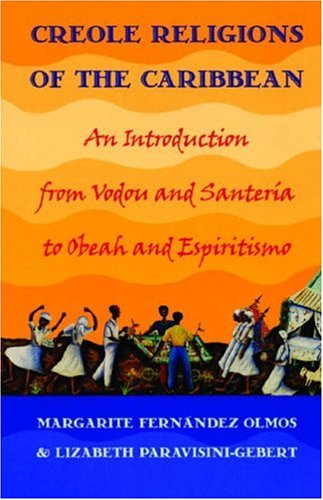
Creole Religions of the Caribbean: An Introduction from Vodou and...
Authors:
Lizabeth Paravisini-Gebert
Publisher:
NYU Press
Publication Date:
Not available
ISBN:
0814727204
Creolization—the coming together of diverse beliefs and practices to form new beliefs and practices-is one of the most significant phenomena in... Caribbean religious history. Brought together in the crucible of the sugar plantation, Caribbean peoples drew on the variants of Christianity brought by European colonizers, as well as on African religious and healing traditions and the remnants of Amerindian practices, to fashion new systems of belief.Creole Religions of the Caribbean offers a comprehensive introduction to the syncretic religions that have developed in the region. From Vodou, Santería, Regla de Palo, the Abakuá Secret Society, and Obeah to Quimbois and Espiritismo, the volume traces the historical-cultural origins of the major Creole religions, as well as the newer traditions such as Pocomania and Rastafarianism. Chapters devoted to specific traditions trace their history, their pantheons and major rituals, and their current-day expressions in the Caribbean and in the diaspora. The volume also provides a general historical background of the Caribbean region. Creole Religions of the Caribbean is the first text to provide a study of the Creole religions of the Caribbean and will be an indispensable guide to the development of these rich religious traditions and practices.With 23 black and white illustrations
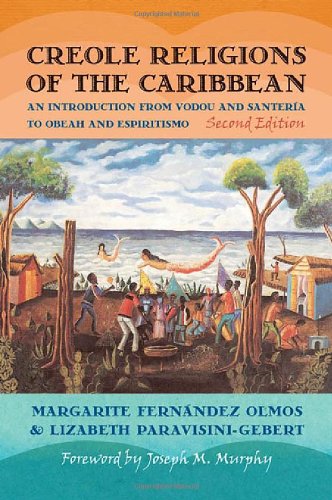
Creole Religions of the Caribbean: An Introduction from Vodou and...
Authors:
Margarite Fernandez Olmos
Publisher:
NYU Press
Publication Date:
Not available
ISBN:
081476228X
Creolization--the coming together of diverse beliefs and practices to form new beliefs and practices--is one of the most significant phenomena in... Caribbean religious history. Brought together in the crucible of the sugar plantation, Caribbean peoples drew on the variants of Christianity brought by European colonizers, as well as on African religious and healing traditions and the remnants of Amerindian practices, to fashion new systems of belief.Creole Religions of the Caribbean offers a comprehensive introduction to the syncretic religions that have developed in the region. From Vodou, Santería, Regla de Palo, the Abakuá Secret Society, and Obeah to Quimbois and Espiritismo, the volume traces the historical–cultural origins of the major Creole religions, as well as the newer traditions such as Pocomania and Rastafarianism. This second edition updates the scholarship on the religions themselves and also expands the regional considerations of the Diaspora to the U. S. Latino community who are influenced by Creole spiritual practices. Fernández Olmos and Paravisini–Gebert also take into account the increased significance of material culture--art, music, literature--and healing practices influenced by Creole religions.In the Religion, Race, and Ethnicity series
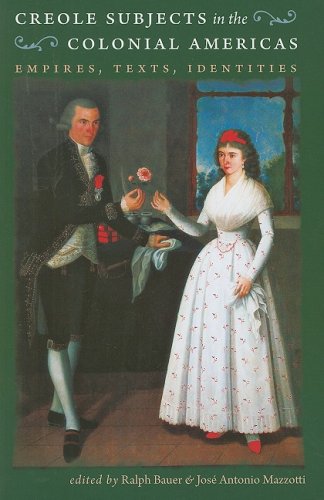
Creole Subjects in the Colonial Americas: Empires, Texts, Identities
Authors:
Ralph and Jose Antonio Mazotti; Editors Bauer
Publisher:
The University of North Carolina Press
Publication Date:
Not available
ISBN:
0807859680
Creolization describes the cultural adaptations that occur when a community moves to a new geographic setting. Exploring the consciousness of peoples... defined as "creoles" who moved from the Old World to the New World, this collection of eighteen original essays investigates the creolization of literary forms and genres in the Americas between the sixteenth and nineteenth centuries.Creole Subjects in the Colonial Americas facilitates a cross-disciplinary, intrahemispheric, and Atlantic comparison of early settlers' colonialism and creole elites' relation to both indigenous peoples and imperial regimes. Contributors explore literatures written in Spanish, Portuguese, and English to identify creole responses to such concepts as communal identity, local patriotism, nationalism, and literary expression. The essays take the reader from the first debates about cultural differences that underpinned European ideologies of conquest to the transposition of European literary tastes into New World cultural contexts, and from the natural science discourse concerning creolization to the literary manifestations of creole patriotism. The volume includes an addendum of etymological terms and critical bibliographic commentar.ContributorsRalph Bauer, University of MarylandRaquel Chang-Rodriguez, City University of New YorkLucia Helena Costigan, Ohio State UniversityJim Egan, Brown UniversitySandra M. Gustafson, University of Notre DameCarlos Jauregui, Vanderbilt UniversityYolanda Martinez-San Miguel, University of PennsylvaniaJose Antonio Mazzotti, Tufts UniversityStephanie Merrim, Brown UniversitySusan Scott Parrish, University of MichiganLuis Fernando Restrepo, University of Arkansas, FayettevilleJeffrey H. Richards, Old Dominion UniversityKathleen Ross, New York UniversityDavid S. Shields, University of South CarolinaTeresa A. Toulouse, Tulane UniversityLisa Voigt, University of ChicagoJerry M. Williams, West Chester University
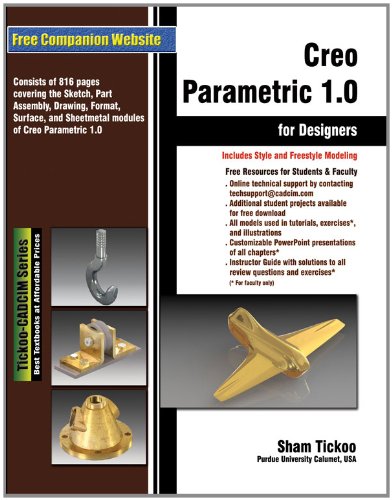
Creo Parametric 1.0 for Designers
Authors:
Prof. Sham Tickoo Purdue Univ. and CADCIM Technologies
Publisher:
CADCIM Technologies
Publication Date:
Not available
ISBN:
1936646129
Creo Parametric 1.0 for Designers is a comprehensive textbook that introduces the users to Creo Parametric 1.0, a feature-based 3D parametric solid... modeling software. The textbook covers all major environments of Creo Parametric 1.0 with a thorough explanation of all tools, options, and their applications to create real-world products. About 60 mechanical engineering industry examples are used as tutorials and an additional 40 as exercises to ensure that the users can relate their knowledge and understand the design techniques used in the industry. After reading the textbook, the users will be able to create parts and assemblies, and then render them, create drawing views with bill of materials, and learn the editing techniques that are essential to make a successful design. Also, the surfacing techniques like Style and Freestyle are discussed in this book.Salient Features of the TextbookConsists of 16 pedagogical sequenced chapters covering the Sketching, Modeling, Assembly, Drafting, Surfacing, and Sheet Metal environments of Creo Parametric 1.0. The first page of every chapter summarizes the topics that will be covered in it.Real-world projects and examples focusing on industry experience.Step-by-step examples that guide the users through the learning process. Additional information is provided throughout the textbook in the form of tips and notes.Self-Evaluation test and review questions are provided at the end of each chapter so that the users can assess their knowledge. Free Teaching and Learning ResourcesCADCIM Technologies provides the following Free Teaching and Learning Resources with this textbook:Technical supportDrawing files of the models used in illustrations, examples, and exercisesCustomizable PowerPoint presentations of every chapter in this textbook Instructor's guide that provides solutions to review questions and exercisesStudent projects to enhance the skills

Creo Parametric 1.0 Tutorial and MultiMedia DVD
Authors:
Roger Toogood
Publisher:
SDC Publications
Publication Date:
Not available
ISBN:
1585036927
The eleven lessons in this tutorial introduce you to the design capabilities of Creo Parametric 1.0. The tutorial covers the major concepts and... frequently used commands required to advance from a novice to an intermediate user level. Major topics include part and assembly creation, and creation of engineering drawings. Also illustrated are the major functions that make Creo Parametric a parametric solid modeler. These topics are further demonstrated in the video files that come with every book. Although the commands are presented in a click-by-click manner, an effort has been made, in addition to showing/illustrating the command usage, to explain why certain commands are being used and the relation of feature selection and construction to the overall part design philosophy. Simply knowing where commands can be found is only half the battle. As is pointed out numerous times in the text, creating useful and effective models of parts and assemblies requires advance planning and forethought. Moreover, since error recovery is an important skill, considerable time is spent exploring the created models. In fact, some errors are intentionally induced so that users will become comfortable with the debugging phase of model creation. At the end of each lesson is a short quiz reviewing the new topics covered in that chapter. Following the quiz are several simple exercise parts that can be created using new commands taught in that lesson. In addition to these an ongoing project throughout the book is also included. This project consists of several parts that are introduced with the early lessons and finally assembled at the end. Table of Contents Introduction to Creo Parametric 1. User Interface, View Controls and Model Structure 2. Creating a Simple Object (Part I) 3. Creating a Simple Object (Part II) 4. Revolved Protrusions, Mirror Copies, Rounds, and Chamfers 5. Modeling Utilities and the 3 R's 6. Datum Planes and Sketcher Tools 7. Patterns and Copies 8. Engineering Drawings 9. Assembly Fundamentals 10. Assembly Operations 11. Sweeps and Blends Appendix: Creo Parametric Customization Index
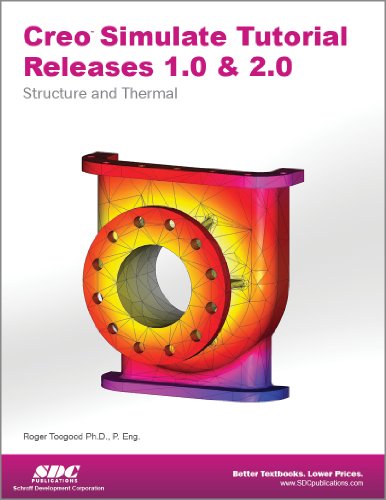
Creo Simulate Tutorial Releases 1.0 & 2.0
Authors:
Roger Toogood
Publisher:
SDC Publications
Publication Date:
Not available
ISBN:
1585037583
Creo Simulate Tutorial Releases 1.0 & 2.0 introduces new users to finite element analysis using Creo Simulate and how it can be used to analyze a... variety of problems. The tutorial lessons cover the major concepts and frequently used commands required to progress from a novice to an intermediate user level. The commands are presented in a click-by-click manner using simple examples and exercises that illustrate a broad range of the analysis types that can be performed. In addition to showing the command usage, the text will explain why certain commands are being used and, where appropriate, the relation of commands to the overall Finite Element Analysis (FEA) philosophy are explained. Moreover, since error analysis is an important skill, considerable time is spent exploring the created models so that users will become comfortable with the debugging phase of modeling. This textbook is written for first-time FEA users in general and Creo Simulate users in particular. After a brief introduction to finite element modeling, the tutorial introduces the major concepts behind the use of Creo Simulate to perform Finite Element Analysis of parts. These include: modes of operation, element types, design studies (analysis, sensitivity studies, organization), and the major steps for setting up a model (materials, loads, constraints, analysis type), studying convergence of the solution, and viewing the results. Both 2D and 3D problems are treated. This tutorial deals exclusively with operation in integrated mode with Creo Parametric. It is suitable for use with both Releases 1.0 and 2.0 of Creo Simulate. Table of Contents 1. Introduction to the Tutorials 2. Finite Element Modeling with Creo Simulate 3. Solid Models (Part 1) 4. Solid Models (Part 2) 5. Plane Stress and Plane Strain Models 6. Axisymmetric Solids and Shells 7. Shell Models 8. Beams and Frames 9. Miscellaneous Topics 10. Thermal Models
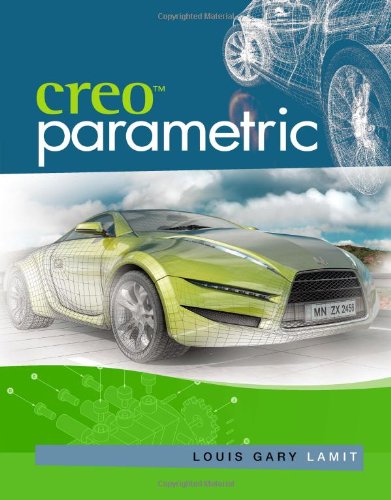
Creo(TM) Parametric
Authors:
Louis Gary Lamit
Publisher:
CL Engineering
Publication Date:
Not available
ISBN:
111157684X
CREO™ PARAMETRIC, designed in direct consultation with PTC, acts as a user friendly guide to the Creo Parametric program, formerly known as... Pro/ENGINEER. The text walks the reader through the software, helping them to gain a better understanding of Creo Parametric, its assets, and uses. Step by step instructions are provided for utilizing the new capabilities and attributes of the redesigned software.

CRE PRIMER
Authors:
Not Available
Publisher:
Not available
Publication Date:
Not available
ISBN:
Not available
Crepuscular Dawn (Semiotext(e) / Foreign Agents)
Authors:
Paul Virilio
Publisher:
Semiotext(e)
Publication Date:
Not available
ISBN:
158435013X
The accident is a new form of warfare. It is replacing revolution and war. Sarajevo triggered the First World War. New York is what Sarajevo was.... September 11th opened Pandora's box. The first war of globalization will be the global accident, the total accident, including the accident of science. And it is on the way.In 1968, Virilio abandoned his work in oblique architecture, believing that time had replaced space as the most important point of reflection because of the dominance of speed.We were basically on the verge of converting space time into space speed... Speed facilitates the decoding of the human genome, and the possibility of another humanity: a humanity which is no longer extra-territorial, but extra-human.Crespuscular Dawn expands Virilio's vision of the implosion of physical time and space, onto the micro-level of bioengineering and biotechnology. In this cat-and-mouse dialogue between Sylvere Lotringer and Paul Virilio, Lotringer pushes Virilio to uncover the historical foundations of his biotech theories. Citing various medical experiments conducted during World War II, Lotringer asks whether biotechnology isn't the heir to eugenics and the "science for racial improvement" that the Nazis enthusiastically embraced. Will the endocolonizataion of the body come to replace the colonization of one's own population by the military?Both biographical and thematic, the book explores the development of Virilio's investigation of space (architecture, urbanism) and time (speed and simultanaeity) that would ultimately lay the foundation for his theories on biotechnology and his startling declaration that after the colonization of space begins the colonization of the body.
CREPUSCULE DES TEMPS AN CIENS
Authors:
Not Available
Publisher:
Not available
Publication Date:
Not available
ISBN:
Not available
Crescendo
Authors:
Not Available
Publisher:
Not available
Publication Date:
Not available
ISBN:
Not available
Crescendo!: An Intermediate Italian Program with Text Audio CD
Authors:
Francesca Italiano
Publisher:
Wiley
Publication Date:
Not available
ISBN:
0470425857
CRESCENDO! is a comprehensive intermediate Italian program that promotes the development of all four skills, encourages the acquisition of vocabulary,... and provides a full review and expansion of Italian grammar-all within a rich cultural framework. Sophisticated, respected and functionally organized, CRESCENDO! emphasizes learning language in context through extensive use of authentic materials, including short stories by well-known modern Italian authors. In each thematically organized chapter, the vocabulary, situations, culturally relevant authentic readings, grammar structures and exercises are all correlated to reinforce the topics and structures featured and to give students the tools they need to express their thoughts and ideas on the themes treated.
 '





