production
/viewbook/list/all/?page=3490
/
/static/
None

Disarmed: The Missing Movement for Gun Control in America (Priceton...
Authors:
Kristin A. Goss
Publisher:
Princeton University Press
Publication Date:
Not available
ISBN:
069113832X
More than any other advanced industrial democracy, the United States is besieged by firearms violence. Each year, some 30,000 people die by gunfire.... Over the course of its history, the nation has witnessed the murders of beloved public figures; massacres in workplaces and schools; and epidemics of gun violence that terrorize neighborhoods and claim tens of thousands of lives. Commanding majorities of Americans voice support for stricter controls on firearms. Yet they have never mounted a true national movement for gun control. Why? Disarmed unravels this paradox.Based on historical archives, interviews, and original survey evidence, Kristin Goss suggests that the gun control campaign has been stymied by a combination of factors, including the inability to secure patronage resources, the difficulties in articulating a message that would resonate with supporters, and strategic decisions made in the name of effective policy. The power of the so-called gun lobby has played an important role in hobbling the gun-control campaign, but that is not the entire story. Instead of pursuing a strategy of incremental change on the local and state levels, gun control advocates have sought national policies. Some 40% of state gun control laws predate the 1970s, and the gun lobby has systematically weakened even these longstanding restrictions.A compelling and engagingly written look at one of America's most divisive political issues, Disarmed illuminates the organizational, historical, and policy-related factors that constrain mass mobilization, and brings into sharp relief the agonizing dilemmas faced by advocates of gun control and other issues in the United States.
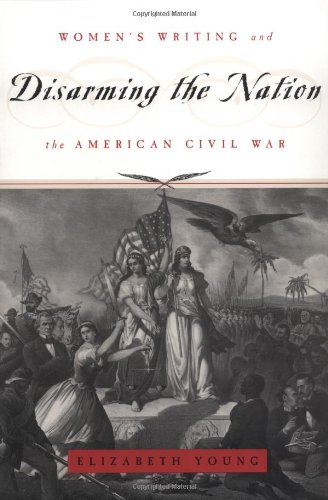
Disarming the Nation: Women's Writing and the American Civil War...
Authors:
Elizabeth Young
Publisher:
University Of Chicago Press
Publication Date:
Not available
ISBN:
0226960889
In a study that will radically shift our understanding of Civil War literature, Elizabeth Young shows that American women writers have been profoundly... influenced by the Civil War and that, in turn, their works have contributed powerfully to conceptions of the war and its aftermath. Offering fascinating reassessments of works by white writers such as Harriet Beecher Stowe, Louisa May Alcott, and Margaret Mitchell and African-American writers including Elizabeth Keckley, Frances Harper, and Margaret Walker, Young also highlights crucial but lesser-known texts such as the memoirs of women who masqueraded as soldiers. In each case she explores the interdependence of gender with issues of race, sexuality, region, and nation.Combining literary analysis, cultural history, and feminist theory, Disarming the Nation argues that the Civil War functioned in women's writings to connect female bodies with the body politic. Women writers used the idea of "civil war" as a metaphor to represent struggles between and within women—including struggles against the cultural prescriptions of "civility." At the same time, these writers also reimagined the nation itself, foregrounding women in their visions of America at war and in peace. In a substantial afterword, Young shows how contemporary black and white women—including those who crossdress in Civil War reenactments—continue to reshape the meanings of the war in ways startlingly similar to their nineteenth-century counterparts.Learned, witty, and accessible, Disarming the Nation provides fresh and compelling perspectives on the Civil War, women's writing, and the many unresolved "civil wars" within American culture today.
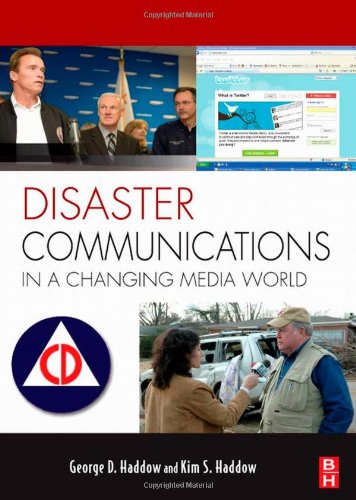
Disaster Communications in a Changing Media World...
Authors:
Kim S Haddow
Publisher:
Butterworth-Heinemann
Publication Date:
Not available
ISBN:
1856175545
Communications is key to the success of disaster mitigation, preparedness, response and recovery. Accurate information disseminated to the general... public, to elected officials and community leaders, and to the media reduces risk, saves lives and property, and speeds recovery. The ability to communicate is no longer an afterthought or a luxury; timely communication is now as important as logistics or the pre-deployment of materials. Planning and controlling the flow of information before, during and after a disaster will define your organization's credibility, trustworthiness, authority, and effectiveness.The emergence of new media like the internet, e-mail, blogs, text messaging, cell phone photos, and the increasing role played by "first informers"-- witnesses who now have the ability to transmit information immediately from the event--are redefining the roles of government and media.The government's historical role as gatekeeper is now an anachronism. Traditional media's role as the sole conduit of reliable and officially-sanctioned information has been eclipsed by the advent of new media. The tools and rules of communications are evolving and disaster communications must evolve to capitalize on these changes and exploit the opportunities they provide. Bloggers have the potential either to add to the chaos during a crisis, or to help convey accurate data and report on local conditions. Disaster communications must incorporate a way to manage their impact and if possible use them for the common good.Finally, even though the means to the end are evolving, the goals, the values, and the underlying principles of effective disaster communication-- the need for transparency, increased accessibility, trustworthiness and reliability, and to create partnerships with the media--have not changed and need to be embraced along with the practical ability to convey information effectively. * Applies the principles of emergency management to communications during a disaster* Covers terrorist incidents, accidents, and natural disasters like hurricanes and earthquakes* Shows how to use blogs, text messages, and cell phone cameras as well as government channels and traditional media to communicate during a crisis
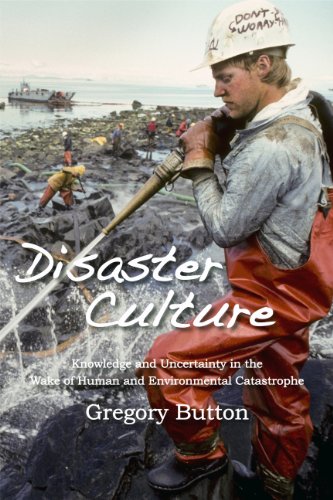
Disaster Culture: Knowledge and Uncertainty in the Wake of Human...
Authors:
Gregory Button
Publisher:
Left Coast Press
Publication Date:
Not available
ISBN:
1598743899
When disaster strikes, a ritual unfolds: a flood of experts, bureaucrats, and analysts rush to the scene; personal tragedies are played out in a barrage... of media coverage; on the ground, confusion and uncertainty reign. In this major comparative study, Gregory Button draws on three decades of research on the most infamous human and environmental calamities to break new ground in our understanding of these moments of chaos. He explains how corporations, state agencies, social advocacy organizations, and other actors attempt to control disaster narratives, adopting public relations strategies that may either downplay or amplify a sense of uncertainty in order to advance political and policy goals. Importantly, he shows that disasters are not isolated events, offering a holistic account of the political dynamics of uncertainty in times of calamity.
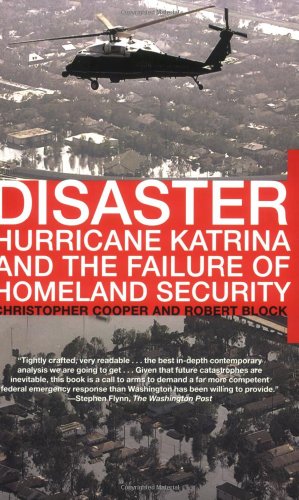
Disaster: Hurricane Katrina and the Failure of Homeland Security
Authors:
Christopher Cooper
Publisher:
Holt Paperbacks
Publication Date:
Not available
ISBN:
0805086501
"[A] tightly crafted, very readable book . . . the best in-depth contemporary analysis we are going to get."--Stephen Flynn, The Washington Post When... Hurricane Katrina roared ashore on August 29, 2005, federal and state officials were not prepared for the devastation it would bring. In this searing indictment of what went wrong, Christopher Cooper and Robert Block take readers inside FEMA and the Department of Homeland Security to reveal the inexcusable mismanagement during the crisis--the bad decisions that were made, the facts that were ignored, and the individuals who saw that the system was broken but did nothing to fix it.In this award-winning and critically acclaimed book, Cooper and Block reconstruct the crucial days before and after the storm hit, laying bare the government's inability to respond to the most elemental needs. They also demonstrate how the Bush administration's obsessive focus on terrorist threats fatally undermined the government's ability to respond to natural disasters. The incompetent response to Hurricane Katrina is a wake-up call to all Americans, wherever they live, about how distressingly vulnerable we remain.
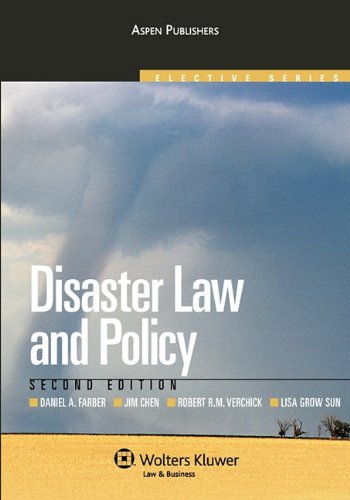
Disaster Law and Policy, Second Edition
Authors:
Daniel A. Farber
Publisher:
Aspen Publishers
Publication Date:
Not available
ISBN:
0735588341
This ground-breaking guide introduces lawyers and other professionals to a powerful class of software that supports core aspects of legal work. The... author discusses how technologies like practice systems, work product retrieval, document assembly, and interactive checklists help people work smarter. If you are looking to work more effectively, this book provides a clear roadmap, with many concrete examples and thought-provoking ideas. "This book is a first rate primer on knowledge systems for lawyers. On each page, it exhibits the extensive practical experience and deep conceptual insight of its author. Crucially, it is written with a jauntiness and a lightness of touch that render it entirely accessible to all lawyers."--Professor Richard Susskind, author, The End of Lawyers?"This is mandatory reading for anyone considering game-changing technology applications with high impact on day-to-day legal practice. From document assembly to decision-assistance, Marc Lauritsen opens the doors to meaningful technological change."--Dennis Kennedy, author, The Lawyer's Guide to Collaboration Tools and Technologies
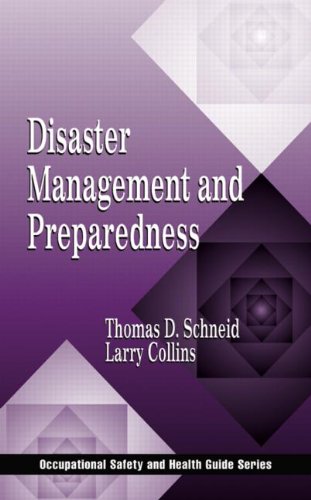
Disaster Management and Preparedness (Occupational Safety &...
Authors:
Larry R. Collins
Publisher:
CRC Press
Publication Date:
Not available
ISBN:
156670524X
Detailing methods for preparing organizations for disasters, this book discusses not only tried and true tactics, but also areas often overlooked during... the reactive and post-disaster phases. The authors address special considerations important in planning for disaster management, from chemical spills, floods, aircraft crashes, and terrorist attacks to catastrophic events. They cover all aspects of disaster preparedness from assessing the risk prior to a disaster to the legal ramifications following one. The book includes how-tos for dealing with the media and protecting an organization’s assets and furnishes OSHA and FEMA regulations, charts, and sample programs and audits. Disaster Management and Preparedness details a new and innovative method for preparing companies and organizations to address the substantial risk of disasters in the workplace. It encompasses not only the tried and true tactics used by safety experts for decades but also focuses on areas often overlooked during the reactive and post disaster phases. Technological progress and terrorist activities has forced safety professionals to rethink their modus operandi for disaster preparedness and expand their proactive measures to safeguard assets on all levels and at all times. Disaster Management and Preparedness gives you the how-tos for avoiding the common mistakes which turn natural and man-made catastrophes into economic disasters.
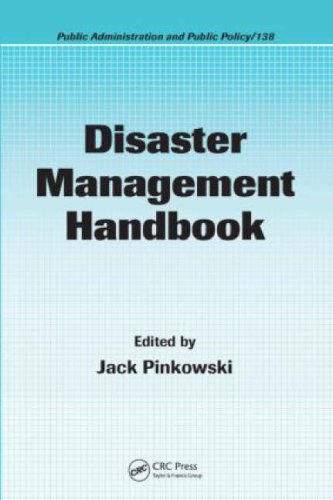
Disaster Management Handbook (Public Administration and Public Policy)
Authors:
Not Available
Publisher:
CRC Press
Publication Date:
Not available
ISBN:
1420058622
Record breaking hurricane seasons, tornados, tsunamis, earthquakes, and intentional acts of mass-casualty violence, give lie to the delusion that... disasters are the anomaly and not the norm. Disaster management is rooted in the fundamental belief that we can protect ourselves. Even if we cannot control all the causes, we can prepare and respond. We can craft constructive, workable policy that will contribute to the prevention of enormous financial impact, destruction of the environment, and needless loss of life. Integrating scholarly articles from international experts and first hand accounts from the practitioner community, Disaster Management Handbook presents an analytical critique of the interrelated, multidisciplinary issues of preparedness, response, and recovery in anticipating and rebuilding from disasters. Beginning with an introduction to the theoretical constructs and conceptual foundations of disaster management, the book reviews the relationship of modern development to disaster vulnerability, the politics of disaster management, leadership, and the role of agency coordination. The second and third sections examine case studies and lessons learned through natural disasters in North America and around the world. They compare and contrast the efficacy of different management strategies from national, provincial, and local governments, as well as non-governmental agencies. Taking a narrower scope, the fourth section focuses on emergency personnel and the methods and issues faced in on-the-scene response and preparation. It also considers the special needs of hospitals and the effective use of the media. Contributions in the final two sections present strategies for limiting and ameliorating the psychological impact of disaster on victims and personnel, and look forward to how we can be better prepared in the future and rebuild stronger, more resilient communities.
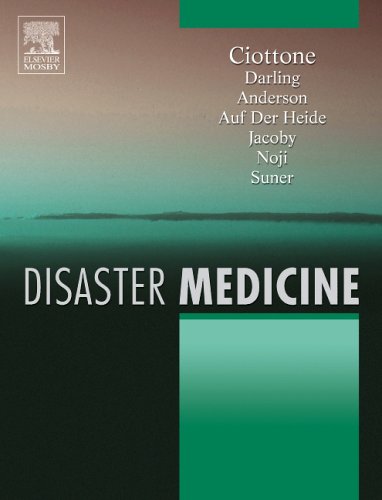
Disaster Medicine, 1e
Authors:
Not Available
Publisher:
Mosby
Publication Date:
Not available
ISBN:
0323032532
Editor-in-Chief, Dr. Gregory Ciottone, and Associate Editors, Dr. Philip D. Anderson, Dr. Erik Auf Der Heide, Dr. Robert G. Darling, Dr. Irving Jacoby,... Dr. Eric Noji, and Dr. Selim Suner, recognized worldwide as authorities in the field, bring you this brand-new reference, which offers comprehensive yet succinct guidance on the preparation, assessment, and management of a full range of disasters, both natural and man-made (including terrorist attacks and the threat of biological warfare). More than 200 contributors carefully outline the basics of disaster management and provide guidance on more than 100 specific disaster situations. Part 1 offers an A to Z source for information on every aspect of disaster medicine and management. Part 2 features an exhaustive compilation of every conceivable disaster event, organized to facilitate fast reference in a real-time setting. The second part of the book also serves as a quick consult on disaster medicine.Presents a full range of coverage from the basics of disaster medicine to more advanced concepts, such as tactical EMS, hazard vulnerability analysis, impact of disaster on children, and more.Discusses identification of risks, planning of organization and equipment, and education and training.Includes individual Concepts and Events sections that provide information on the general approach to disaster medicine and practical information on specific disasters.Offers comprehensive coverage of natural disasters, accidental disasters, transportation disasters, and intentional events.Includes an exhaustive list of chapters on the conceivable chemical and biologic weapons known today.Features a practical chapter organization throughout that covers description of event, pre-incident considerations, post-incident considerations, medical treatment of casualties, unique considerations, pitfalls, case presentations, and suggested reading.Discusses the management of future events, or possible scenarios, for which there is no precedent.
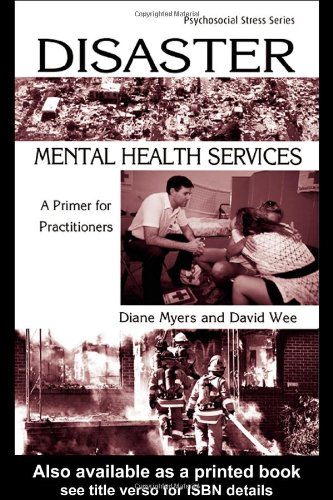
Disaster Mental Health Services: A Primer for Practitioners...
Authors:
Diane Myers
Publisher:
Routledge
Publication Date:
Not available
ISBN:
1583910646
Disaster mental health is a growing field of practice designed to help victims and relief workers learn to effectively cope with the extreme stresses... they will face in the aftermath of a disaster. The goal of disaster mental health is to prevent the development of long-term, negative psychological consequences, such as PTSD. This book assists clinicians and traumatologists in "making the bridge" between their clinical knowledge and skills and the unique, complex, chaotic, and highly political field of disaster. It combines information from a vast reservoir of prior research and literature with the authors' practical and pragmatic experience in providing disaster mental health services in a wide variety of disasters.
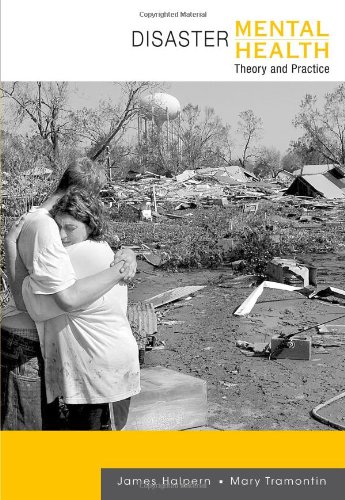
Disaster Mental Health: Theory and Practice
Authors:
James Halpern
Publisher:
Brooks Cole
Publication Date:
Not available
ISBN:
0534534716
Prepare for disaster with DISASTER MENTAL HEALTH: THEORY AND PRACTICE! This tool in disaster preparedness and planning presents a theoretical... integration and context for what disaster mental health is and what it is not. A practical discussion of a range of mental health interventions appropriate in the wake of a disaster helps you effectively prepare to respond to a disaster of any kind.

Disaster Movies: The Cinema of Catastrophe (Short Cuts)
Authors:
Stephen Keane
Publisher:
Wallflower Press
Publication Date:
Not available
ISBN:
1905674031
Stephen Keane's history of the disaster genre offers a detailed analysis of films such as The Towering Inferno, Independence Day, Titanic, and The... Day After Tomorrow. He looks at the ways in which disaster movies can be read in relation to both contextual considerations and the increasing commercial demands of contemporary Hollywood. In this second edition, he adds new material regarding cinematic representations of disaster in the wake of 9/11 and an analysis of disaster movies in light of recent natural disasters. Keane continually reworks this previously unexplored genre.
Disaster Nursing: A Handbook For Practice
Authors:
Deborah S Adelman
Publisher:
Jones & Bartlett Learning
Publication Date:
Not available
ISBN:
0763758442
Disaster Nursing: A Handbook For Practice Covers All Aspects Of Disaster Nursing Ncluding Being A First Responder, Disaster Volunteering, Disaster... Management On Site And In A Hospital, Disaster Preparedness, And Hospital And Community Nursing Response In A Disaster. The Only Text Of Its Kind, This Handbook Covers All Topics Pertinent To Disaster Nursing From A Leadership Standpoint.
Disaster Nursing and Emergency Preparedness for Chemical,...
Authors:
Not Available
Publisher:
Springer Publishing Company
Publication Date:
Not available
ISBN:
0826108644
The new edition of this AJN Book of the Year continues to provide nurses with the most comprehensive, current, and reliable information available so... they can develop the skills to efficiently and effectively respond to disasters or public health emergencies. Researched and reviewed by the world's foremost experts in emergency preparedness, the text has been revised and updated with significant new content, including 10 new chapters and a digital adjunct teacher's guide with exercises and critical thinking questions. New chapters address climate change, global complex human emergencies, caring for patients with HIV/AIDS following a disaster, information technology and disaster response, and hospital and emergency department preparedness.
Disaster Nursing and Emergency Preparedness for Chemical,...
Authors:
Not Available
Publisher:
Springer Publishing Company
Publication Date:
Not available
ISBN:
0826121446
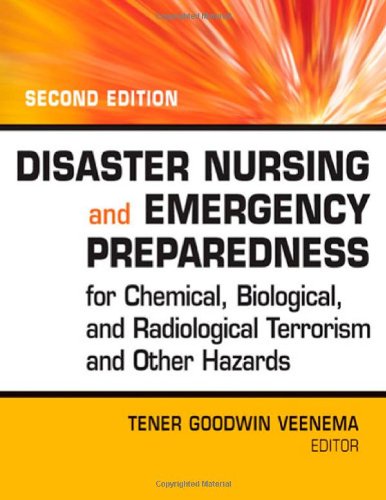
Read a fascinating interview with editor Tener Goodwin Veenema! Tener Veenema Interview Disaster planning and emergency preparedness have never been... more critical to the nurses who serve as our front-line response. Today's pandemic threats of global terrorism, disease, and natural disasters make this comprehensive handbook of best practices a necessity--meeting the need for a nursing workforce that is adequately prepared to respond to any disaster or public health emergency. In addition to a thorough update based on the most recent recommendations, this second edition contains six new chapters: Emergency Health Services (EMS and other first responders) Burn Assessment and Management Explosive & Traumatic Terrorism Caring for High-Risk, High-Vulnerability Patients Emerging Infectious Disease (avian and other flu pandemics) Chemical Decontamination All content reflects the guidelines provided in the Federal Disaster Response Plan and the National Incident Management System (NIMS) and therapeutic recommendations from the national Centers for Disease Control and Prevention. Disaster Nursing will prepare any nurse or EMS team to provide health care under a variety of disaster conditions.
 '





