production
/viewbook/list/all/?page=3690
/
/static/
None
Eating Close to Home: A Guide to Local Seasonal Sustenance in the...
Authors:
Elin England
Publisher:
Elkdream Farm Press
Publication Date:
Not available
ISBN:
0578000695
Eating Close to Home is both a discussion of why we need to relocalize our diets and a compilation of recipes, cooking and food storage tips that will... enable you to do so. The book is an invitation to experience the delights of preparing wonderfully simple food from ingredients that still remember the soil that nourished them, so that they in turn can nourish you.
Eating Disorders
Authors:
Pamela K. Keel
Publisher:
Pearson
Publication Date:
Not available
ISBN:
0131839195
For courses in Abnormal Psychology, Clinical Psychology, Gender and Psychopathology, and Eating Disorders. In addition, Eating Disorders may be a... useful supplemental text in courses within the following areas: Nursing, Nutrition, and Sports Medicine. Eating Disorders presents a comprehensive and accessible investigation of eating disorders, including but not limited to anorexia nervosa, and bulimia nervosa. The text spans topics such as historical and cross-cultural trends in prevalence of eating pathology, biological bases of eating disorders, and treatment and prevention.

Eating Disorders , 2 Edition
Authors:
Not Available
Publisher:
Not available
Publication Date:
Not available
ISBN:
Not available
Eating Disorders and Obesity, Second Edition: A Comprehensive Handbook
Authors:
Not Available
Publisher:
The Guilford Press
Publication Date:
Not available
ISBN:
1593852363
This unique handbook presents and integrates virtually all that is currently known about eating disorders and obesity in one authoritative, accessible,... and eminently practical volume. From leading international authorities, 112 concise chapters encapsulate the latest information on all pertinent topics, from biological, psychological, and social processes associated with risk, to clinical methods for assessment and intervention. Suggestions for further reading at the end of each chapter replace extended references and enhance the practical value and readability of the volume.
Eating Disorders: Time For Change: Plans, Strategies, and Worksheets
Authors:
Mona Villapiano
Publisher:
Routledge
Publication Date:
Not available
ISBN:
1583910573
This collection for therapists and clients presents practical, how-to information, for the treatment of eating disorders. The authors have kept the... needs of the therapist in mind by considering managed care as well as specific therapeutic issues. This resource will maximize the efficient use of time and resources for the therapist and increase the efficacy of work with clients with eating disorders. Clients will find the tools to be helpful resources and a critical extension of individual therapy.
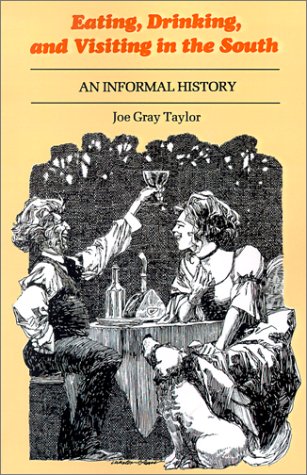
Eating, Drinking, and Visiting in the South: An Informal History
Authors:
Joe Gray Taylor
Publisher:
Louisiana State University Press
Publication Date:
Not available
ISBN:
0807110132
A lively, informal history of over three centuries of southern hospitality and cuisine, Eating, Drinking, and Visiting in the South traces regional... gastronomic habits from the sparse diet of the first settlers on the Atlantic shore, who learned from necessity to eat what the Indians ate, to the lavish corporate cocktail parties of the New South.

Eating Fire
Authors:
Margaret Atwood
Publisher:
Virago
Publication Date:
Not available
ISBN:
1860495052
The evolution of Margaret Atwood's poetry illuminates one of our major literary talents. Here, as in her novels, is intensity combined with sardonic... detachment, and in these early poems her genius for a level stare at the ordinary is wonderfully apparent. Just as startling is her ability to contrast the everyday with the terrifying: 'Each time I hit a key/ on my electric typewriter/ speaking of peaceful trees/ another village explodes.' Her poetic voice is crystal clear, insistent, unmistakably her own. Through bus trips and postcards, wilderness and trivia, she reflects the passion and energy of a writer intensely engaged with her craft and the world. Two former collections, Poems 1965 - 1975 and Poems 1976 - 1986, are presented together with her latest collection, Morning in the Burned House, in this omnibus that represents the development of a major poet.
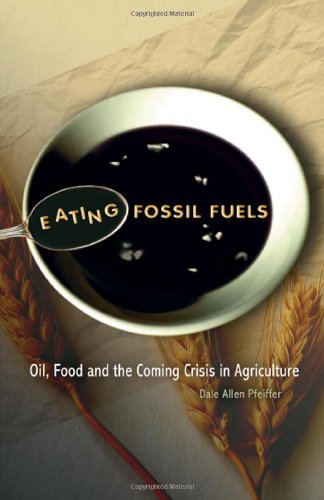
Eating Fossil Fuels: Oil, Food and the Coming Crisis in Agriculture
Authors:
Dale Allen Pfeiffer
Publisher:
New Society Publishers
Publication Date:
Not available
ISBN:
0865715653
The miracle of the Green Revolution was made possible by cheap fossil fuels to supply crops with artificial fertilizer, pesticides, and irrigation.... Estimates of the net energy balance of agriculture in the United States show that ten calories of hydrocarbon energy are required to produce one calorie of food. Such an imbalance cannot continue in a world of diminishing hydrocarbon resources. Eating Fossil Fuels examines the interlinked crises of energy and agriculture and highlights some startling findings: • The worldwide expansion of agriculture has appropriated fully 40 percent of the photosynthetic capability of this planet. • The Green Revolution provided abundant food sources for many, resulting in a population explosion well in excess of the planet’s carrying capacity. • Studies suggest that without fossil fuel-based agriculture, the United States could only sustain about two-thirds of its present population. For the planet as a whole, the sustainable number is estimated to be about two billion. Concluding that the effect of energy depletion will be disastrous without a transition to a sustainable, re-localized agriculture, the book draws on the experiences of North Korea and Cuba to demonstrate stories of failure and success in the transition to non-hydrocarbon-based agriculture. It urges strong grassroots activism for sustainable, localized agriculture and a natural shrinking of the world’s population.

Eating History: Thirty Turning Points in the Making of American...
Authors:
Andrew F. Smith
Publisher:
Columbia University Press
Publication Date:
Not available
ISBN:
0231140924
Food expert and celebrated food historian Andrew F. Smith recounts—in delicious detail—the creation of contemporary American cuisine. The diet of... the modern American wasn't always as corporate, conglomerated, and corn-rich as it is today, and the style of American cooking, along with the ingredients that compose it, has never been fixed. With a cast of characters including bold inventors, savvy restaurateurs, ruthless advertisers, mad scientists, adventurous entrepreneurs, celebrity chefs, and relentless health nuts, Smith pins down the truly crackerjack history behind the way America eats.Smith's story opens with early America, an agriculturally independent nation where most citizens grew and consumed their own food. Over the next two hundred years, however, Americans would cultivate an entirely different approach to crops and consumption. Advances in food processing, transportation, regulation, nutrition, and science introduced highly complex and mechanized methods of production. The proliferation of cookbooks, cooking shows, and professionally designed kitchens made meals more commercially, politically, and culturally potent. To better understand these trends, Smith delves deeply and humorously into their creation. Ultimately he shows how, by revisiting this history, we can reclaim the independent, locally sustainable roots of American food.
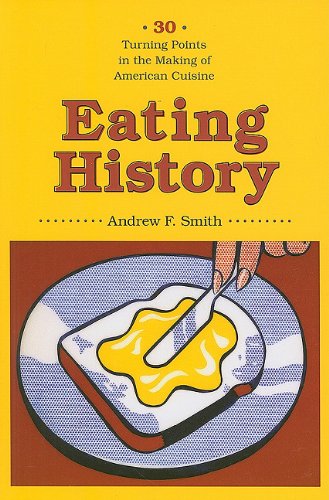
Eating History: Thirty Turning Points in the Making of American...
Authors:
Andrew F. Smith
Publisher:
Columbia University Press
Publication Date:
Not available
ISBN:
0231140932
Food expert and celebrated food historian Andrew F. Smith recounts—in delicious detail—the creation of contemporary American cuisine. The diet of... the modern American wasn't always as corporate, conglomerated, and corn-rich as it is today, and the style of American cooking, along with the ingredients that compose it, has never been fixed. With a cast of characters including bold inventors, savvy restaurateurs, ruthless advertisers, mad scientists, adventurous entrepreneurs, celebrity chefs, and relentless health nuts, Smith pins down the truly crackerjack history behind the way America eats.Smith's story opens with early America, an agriculturally independent nation where most citizens grew and consumed their own food. Over the next two hundred years, however, Americans would cultivate an entirely different approach to crops and consumption. Advances in food processing, transportation, regulation, nutrition, and science introduced highly complex and mechanized methods of production. The proliferation of cookbooks, cooking shows, and professionally designed kitchens made meals more commercially, politically, and culturally potent. To better understand these trends, Smith delves deeply and humorously into their creation. Ultimately he shows how, by revisiting this history, we can reclaim the independent, locally sustainable roots of American food.
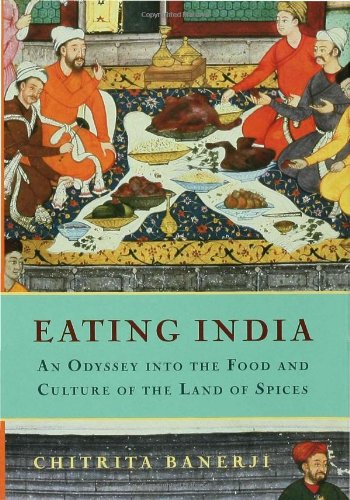
Eating India: An Odyssey into the Food and Culture of the Land of...
Authors:
Chitrita Banerji
Publisher:
Bloomsbury USA
Publication Date:
Not available
ISBN:
1596910186
Though it's primarily Punjabi food that's become known as Indian food in the United States, India is as much an immigrant nation as America, and it has... the vast range of cuisines to prove it. In Eating India, award-winning food writer and Bengali food expert Chitrita Banerji takes readers on a marvelous odyssey through a national cuisine formed by generations of arrivals, assimilations, and conquests. With each wave of newcomers--ancient Aryan tribes, Persians, Middle Eastern Jews, Mongols, Arabs, Europeans--have come new innovations in cooking, and new ways to apply India's rich native spices, poppy seeds, saffron, and mustard to the vegetables, milks, grains, legumes, and fishes that are staples of the Indian kitchen. In this book, Calcutta native and longtime U.S. resident Banerji describes, in lush and mouthwatering prose, her travels through a land blessed with marvelous culinary variety and particularity.

Eating on the Run - 3rd Edition
Authors:
Evelyn Tribole
Publisher:
Human Kinetics
Publication Date:
Not available
ISBN:
0736046089
Work, social, and family commitments often make it difficult to fit tasty and healthy food choices into your diet. In Eating on the Run, Evelyn... Tribole solves your dieting dilemma using her proven expertise concerning all foods, savory and sweet. Divided into four parts for easy reference, Eating on the Run presents the latest and best information on the following issues:-Smart food choices for you and your family-Eating options for managing weight-Strategies for speedy grocery shopping—including sample shopping lists-Healthful eating away from home, whether at work, at a restaurant, in your car, or at the airport-Nutritional values for common fast foods-Eating and ordering ethnic cuisine-Dietary decisions relative to hypertension, high cholesterol, and heart disease-Diets and supplements, with advice on today's most popular programs, including liquid meal replacements and high-protein diets such as the Atkins and Zone diets-Easy meal preparation, including recipes and tipsEvelyn Tribole is the nation's leading nutritionist for busy people who want to remain healthy and trim. A former nutritional adviser for “Good Morning America” and the American Dietetic Association, she's been a columnist for SHAPE and has written several books on nutrition. She also juggles work, family, and frequent speaking engagements—so she knows firsthand just how hectic life can get. Her experience and strategies will help you avoid flavorless, fast-fried choices and eat great while on the go.
Eating on the Wild Side: The Pharmacologic, Ecologic and Social...
Authors:
Not Available
Publisher:
University of Arizona Press
Publication Date:
Not available
ISBN:
0816520674
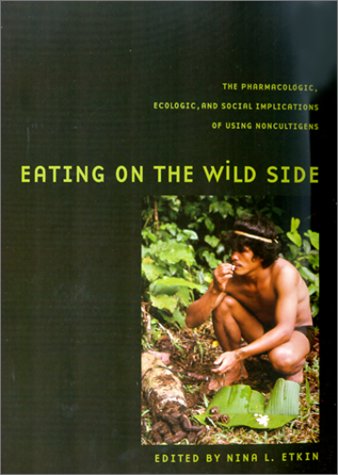
People have long used wild plants as food and medicine, and for a myriad of other important cultural applications. While these plants and the foraging... activities associated with them have been dismissed by some observers as secondary or supplementary—or even backward—their contributions to human survival and well-being are more significant than is often realized. Eating on the Wild Side spans the history of human-plant interactions to examine how wild plants are used to meet medicinal, nutritional, and other human needs. Drawing on nonhuman primate studies, evidence from prehistoric human populations, and field research among contemporary peoples practicing a range of subsistence strategies, the book focuses on the processes and human ecological implications of gathering, semidomestication, and cultivation of plants that are unfamiliar to most of us. Contributions by distinguished cultural and biological anthropologists, paleobotanists, primatologists, and ethnobiologists explore a number of issues such as the consumption of unpalatable and famine foods, the comparative assessment of aboriginal diets with those of colonists and later arrivals, and the apparent self-treatment by sick chimpanzees with leaves shown to be pharmacologically active. Collectively, these articles offer a theoretical framework emphasizing the cultural evolutionary processes that transform plants from wild to domesticated—with many steps in between—while placing wild plant use within current discussions surrounding biodiversity and its conservation. Eating on the Wild Side makes an important contribution to our understanding of the links between biology and culture, describing the interface between diet, medicine, and natural products. By showing how various societies have successfully utilized wild plants, it underscores the growing concern for preserving genetic diversity as it reveals a fascinating chapter in the human ecology. CONTENTS 1. The Cull of the Wild, Nina L. Etkin Selection 2. Agriculture and the Acquisition of Medicinal Plant Knowledge, Michael H. Logan & Anna R. Dixon 3. Ambivalence to the Palatability Factors in Wild Food Plants, Timothy Johns 4. Wild Plants as Cultural Adaptations to Food Stress, Rebecca Huss-Ashmore & Susan L. Johnston Physiologic Implications of Wild Plant Consumption 5. Pharmacologic Implications of "Wild" Plants in Hausa Diet, Nina L. Etkin & Paul J. Ross 6. Wild Plants as Food and Medicine in Polynesia, Paul Alan Cox 7. Characteristics of "Wild" Plant Foods Used by Indigenous Populations in Amazonia, Darna L. Dufour & Warren M. Wilson 8. The Health Significance of Wild Plants for the Siona and Secoya, William T. Vickers 9. North American Food and Drug Plants, Daniel M. Moerman Wild Plants in Prehistory 10. Interpreting Wild Plant Foods in the Archaeological Record, Frances B. King 11. Coprolite Evidence for Prehistoric Foodstuffs, Condiments, and Medicines, Heather B. Trigg, Richard I. Ford, John G. Moore & Louise D. Jessop Plants and Nonhuman Primates 12. Nonhuman Primate Self-Medication with Wild Plant Foods, Kenneth E. Glander 13. Wild Plant Use by Pregnant and Lactating Ringtail Lemurs, with Implications for Early Hominid Foraging, Michelle L. Sauther Epilogue 14. In Search of Keystone Societies, Brien A. Meilleur
Eating Rice from Bamboo Roots: The Social History of a Community of...
Authors:
Jacob Eyferth
Publisher:
Harvard University Asia Center
Publication Date:
Not available
ISBN:
0674032888
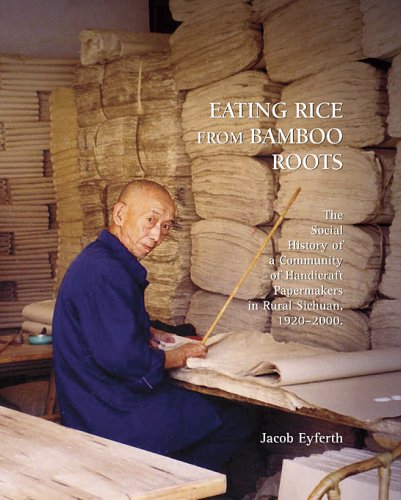
This book charts the vicissitudes of a rural community of papermakers in Sichuan. The process of transforming bamboo into paper involves... production-related and social skills, as well as the everyday skills that allowed these papermakers to survive in an era of tumultuous change. The Chinese revolution—understood as a series of interconnected political, social, and technological transformations—was, Jacob Eyferth argues, as much about the redistribution of skill, knowledge, and technical control as it was about the redistribution of land and political power. The larger context for this study is the “rural-urban divide”: the institutional, social, and economic cleavages that separate rural people from urbanites. This book traces the changes in the distribution of knowledge that led to a massive transfer of technical control from villages to cities, from primary producers to managerial elites, and from women to men. It asks how a vision of rural people as unskilled has affected their place in the body politic and contributed to their disenfranchisement. By viewing skill as a contested resource, subject to distribution struggles, it addresses the issue of how revolution, state-making, and marketization have changed rural China.

Eating Right in the Renaissance
Authors:
Ken Albala
Publisher:
University of California Press
Publication Date:
Not available
ISBN:
0520229479
Eating right has been an obsession for longer than we think. Renaissance Europe had its own flourishing tradition of dietary advice. Then, as now, an... industry of experts churned out diet books for an eager and concerned public. Providing a cornucopia of information on food and an intriguing account of the differences between the nutritional logic of the past and our own time, this inviting book examines the wide-ranging dietary literature of the Renaissance. Ken Albala ultimately reveals the working of the Renaissance mind from a unique perspective: we come to understand a people through their ideas on food.Eating Right in the Renaissance takes us through an array of historical sources in a narrative that is witty and spiced with fascinating details. Why did early Renaissance writers recommend the herbs parsley, arugula, anise, and mint to fortify sexual prowess? Why was there such a strong outcry against melons and cucumbers, even though people continued to eat them in large quantities? Why was wine considered a necessary nutrient? As he explores these and other questions, Albala explains the history behind Renaissance dietary theories; the connections among food, exercise, and sex; the changing relationship between medicine and cuisine; and much more.Whereas modern nutritionists may promise a slimmer waistline, more stamina, or freedom from disease, Renaissance food writers had entirely different ideas about the value of eating right. As he uncovers these ideas from the past, Ken Albala puts our own dietary obsessions in an entirely new light in this elegantly written and often surprising new chapter on the history of food.
 '





