production
/viewbook/list/all/?page=3740
/
/static/
None
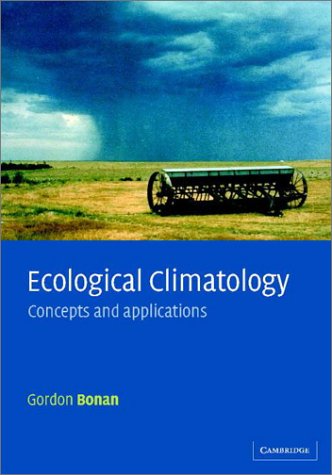
Ecological Climatology: Concepts and Applications
Authors:
Gordon B. Bonan
Publisher:
Cambridge University Press
Publication Date:
Not available
ISBN:
0521804760
Ecological climatology is an interdisciplinary framework to understand the functioning of terrestrial ecosystems in the climate system. It examines the... physical, chemical, and biological processes by which landscapes affect and are affected by climate. The central theme is that terrestrial ecosystems, through their cycling of energy, water, chemical elements, and trace gases, are important determinants of climate. The coupling between climate and vegetation is seen at spatial scales from stomata to vegetation geography and at time scales of near instantaneous to millennia. In particular, natural vegetation dynamics and human land uses and land management are important mechanisms of climate change. The boreal forest-tundra ecotone and the North African Sahel are examples of climate-ecosystem dynamics at the biogeographical spatial and temporal scale. Deforestation, desertification of drylands, cultivation of grasslands, reforestation following farm abandonment, and urbanization are case studies of how human uses of land alter climate.
Ecological Climatology: Concepts and Applications
Authors:
Gordon B. Bonan
Publisher:
Cambridge University Press
Publication Date:
Not available
ISBN:
0521693195
This book introduces an interdisciplinary framework to understand the interaction between terrestrial ecosystems and climate change. It reviews basic... meteorological, hydrological and ecological concepts to examine the physical, chemical and biological processes by which terrestrial ecosystems affect and are affected by climate. The textbook is written for advanced undergraduate and graduate students studying ecology, environmental science, atmospheric science and geography. The central argument is that terrestrial ecosystems become important determinants of climate through their cycling of energy, water, chemical elements and trace gases. This coupling between climate and vegetation is explored at spatial scales from plant cells to global vegetation geography and at timescales of near instantaneous to millennia. The text also considers how human alterations to land become important for climate change. This restructured edition, with updated science and references, chapter summaries and review questions, and over 400 illustrations, including many in color, serves as an essential student guide.
Ecological Counseling: An Innovative Approach to Conceptualizing...
Authors:
Not Available
Publisher:
Amer Counseling Assn
Publication Date:
Not available
ISBN:
1556201990
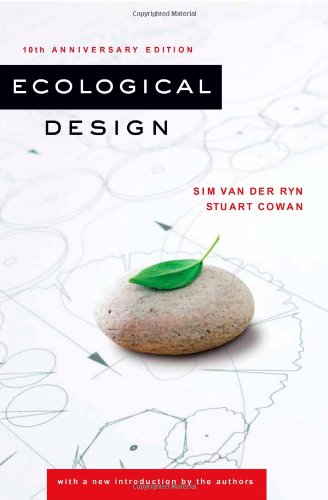
Ecological Design, Tenth Anniversary Edition
Authors:
Sim Van der Ryn
Publisher:
Island Press
Publication Date:
Not available
ISBN:
1597261416
Ecological Design is a landmark volume that helped usher in an exciting new era in green design and sustainability planning. Since its initial... publication in 1996, the book has been critically important in sparking dialogue and triggering collaboration across spatial scales and design professions in pursuit of buildings, products, and landscapes with radically decreased environmental impacts. This 10th anniversary edition makes the work available to a new generation of practitioners and thinkers concerned with moving our society onto a more sustainable path. Using examples from architecture, industrial ecology, sustainable agriculture, ecological wastewater treatment, and many other fields, Ecological Design provides a framework for integrating human design with living systems. Drawing on complex systems, ecology, and early examples of green building and design, the book challenges us to go further, creating buildings, infrastructures, and landscapes that are truly restorative rather than merely diminishing the rate at which things are getting worse.
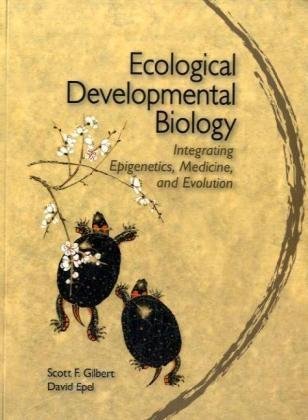
Ecological Developmental Biology
Authors:
Scott F. Gilbert
Publisher:
Sinauer Associates
Publication Date:
Not available
ISBN:
0878932992
When the molecular processes of epigenetics meet the ecological processes of phenotypic plasticity, the result is a revolutionary new field: ecological... developmental biology, or eco-devo. This new science studies development in the real world of predators, pathogens, competitors, symbionts, toxic compounds, temperature changes, and nutritional differences. These environmental agents can result in changes to an individual s phenotype, often implemented when signals from the environment elicit epigenetic changes in gene expression. Ecological developmental biology is a truly integrative biology, detailing the interactions between developing organisms and their environmental contexts. Ecological developmental biology also provides a systems approach to the study of pathology, integrating the studies of diabetes, cancers, obesity, and the aging syndrome into the framework of an ecologically sensitive developmental biology. It looks at examples where the environment provides expected cues for normal development and where the organism develops improperly without such cues. Data from research on teratology, endocrine disruptors, and microbial symbioses, when integrated into a developmental context, may have enormous implications for human health as well as the overall health of Earth s ecosystems. The study of epigenetics changes in gene expression that are not the result of changes in a gene s DNA sequence has recently provided startling insights not only into mechanisms of development, but also into the mechanisms and processes of evolution. The notion that epialleles (changes in chromosome structure that alter gene expression) can be induced by environmental agents and transmitted across generations has altered our notions of evolution, as have new experiments documenting the genetic fixation of environmentally induced changes in development. The widespread use of symbiosis in development provides new targets for natural selection. Ecological developmental biology integrates these new ideas into an extended evolutionary synthesis that retains and enriches the notion of evolution by natural selection.
Ecological Economics: An Introduction
Authors:
Michael Common
Publisher:
Cambridge University Press
Publication Date:
Not available
ISBN:
0521016703
Assuming no prior knowledge of economics, this textbook is intended for interdisciplinary environmental science and management courses. The authors, who... have written extensively on the economics of sustainability, combine insights from mainstream economics as well as ecological sciences. Part I explores the interdependence of the modern economy and its environment, while Part II focuses mainly on the economy and on economics. Part III reviews how national governments set policy targets and the instruments used to pursue those targets. Part IV examines international trade and institutions, and two major global threats to sustainability - climate change and biodiversity loss.
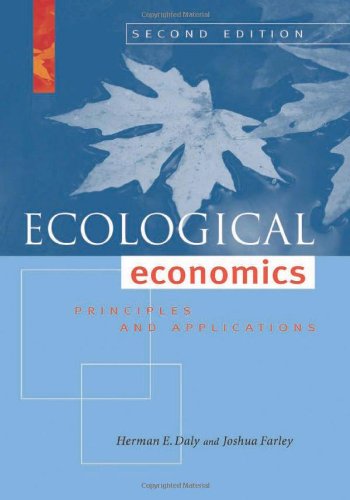
Ecological Economics, Second Edition: Principles and Applications
Authors:
Herman E. Daly
Publisher:
Island Press
Publication Date:
Not available
ISBN:
1597266817
In its first edition, this book helped to define the emerging field of ecological economics. This new edition surveys the field today. It incorporates... all of the latest research findings and grounds economic inquiry in a more robust understanding of human needs and behavior. Humans and ecological systems, it argues, are inextricably bound together in complex and long-misunderstood ways. According to ecological economists, conventional economics does not reflect adequately the value of essential factors like clean air and water, species diversity, and social and generational equity. By excluding biophysical and social systems from their analyses, many conventional economists have overlooked problems of the increasing scale of human impacts and the inequitable distribution of resources. This introductory-level textbook is designed specifically to address this significant flaw in economic thought. The book describes a relatively new transdiscipline” that incorporates insights from the biological, physical, and social sciences. It provides students with a foundation in traditional neoclassical economic thought, but places that foundation within an interdisciplinary framework that embraces the linkages among economic growth, environmental degradation, and social inequity. In doing so, it presents a revolutionary way of viewing the world. The second edition of Ecological Economics provides a clear, readable, and easy-to-understand overview of a field of study that continues to grow in importance. It remains the only stand-alone textbook that offers a complete explanation of theory and practice in the discipline.
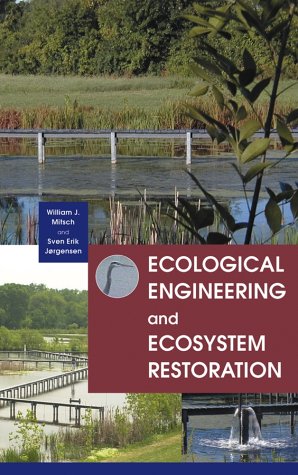
Ecological Engineering and Ecosystem Restoration
Authors:
William J. Mitsch
Publisher:
Wiley
Publication Date:
Not available
ISBN:
047133264X
Completely updated to keep pace with current technology.* Provides a firm grounding the fundamentals, theory, and latest techniques.* Includes... completely updated case studies.
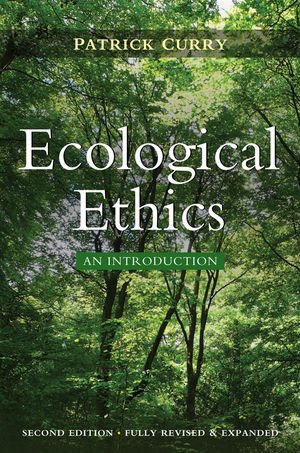
Ecological Ethics
Authors:
Patrick Curry
Publisher:
Polity
Publication Date:
Not available
ISBN:
0745651267
In this thoroughly revised and updated second edition of the highly successful Ecological Ethics, Patrick Curry shows that a new and truly ecological... ethic is both possible and urgently needed. With this distinctive proposition in mind, Curry introduces and discusses all the major concepts needed to understand the full range of ecological ethics.He discusses light green or anthropocentric ethics with the examples of stewardship, lifeboat ethics, and social ecology; the mid-green or intermediate ethics of animal liberation/rights; and dark or deep green ecocentric ethics. Particular attention is given to the Land Ethic, the Gaia Hypothesis and Deep Ecology and its offshoots: Deep Green Theory, Left Biocentrism and the Earth Manifesto. Ecofeminism is also considered and attention is paid to the close relationship between ecocentrism and virtue ethics. Other chapters discuss green ethics as post-secular, moral pluralism and pragmatism, green citizenship, and human population in the light of ecological ethics. In this new edition, all these have been updated and joined by discussions of climate change, sustainable economies, education, and food from an ecocentric perspective.This comprehensive and wide-ranging textbook offers a radical but critical introduction to the subject which puts ecocentrism and the critique of anthropocentrism back at the top of the ethical, intellectual and political agenda. It will be of great interest to students and activists, and to a wider public.
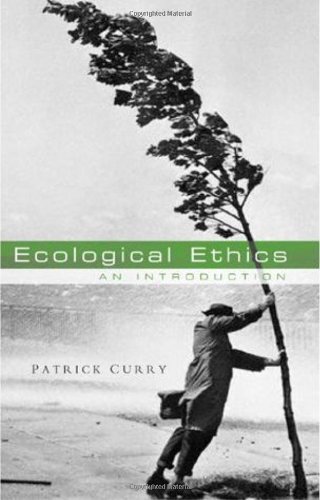
Ecological Ethics: An Introduction
Authors:
Patrick Curry
Publisher:
Polity
Publication Date:
Not available
ISBN:
0745629083
This book is a major new introduction to the field of ecological ethics. Taking issue with the common assumption that existing human ethics can be... 'extended' to meet the demands of the ongoing ecological crisis, Patrick Curry shows that a new and truly ecological ethic is both possible and urgently needed. With this distinctive proposition in mind, Curry introduces and discusses all the major concepts needed to understand the full range of ecological ethics. Focussing first on the major concepts of ethics - religious and secular - and value, Curry then examines the gradations of ecological ethics. He discusses light green, shallow or anthropomorphic ethics with the examples of stewardship, lifeboat ethics, and social ecology; mid-green or intermediate ethics represented by animal liberation/rights and biocentrism; and dark green, deep, or ecocentric ethics. Particular attention is given to the various kinds of ecocentric ethics, such as the Land Ethic, The Gaia Hypothesis, and Deep Ecology and its offshoots: Deep Green Theory, Left Biocentrism and the Earth Manifesto. Ecofeminism is also considered in this context. The concluding chapters discuss green ethics as post-secular, moral pluralism and pragmatism, green citizenship, and human population in the light of ecological ethics. This comprehensive and wide-ranging textbook offers a radical but critical introduction to the subject. It will be of great interest to students, activists, and to a wider public concerned with the ecocrisis, its main theories, debates, and possible solutions.
Ecological Feminist Philosophies (A Hypatia Book)
Authors:
Not Available
Publisher:
Indiana University Press
Publication Date:
Not available
ISBN:
0253210291
Here feminist philosophers and ecofeminist scholars pursue the connections between feminism and environmentalism. Topics include the ecofeminist ethic;... the role of patriarchal concepts in perpetuating the domination of women and nature; the grassroots origins and character of a thoughtful ecofeminism; the "ecofeminism-deep ecology debate" in environmental philosophy; deep ecological treatment of animal rights and the omission of ecofeminist analyses of the domination of animals, abortion, and nuclear deterrence; and ways ecofeminism and the science of ecology are or could be engaged in complementary, supportive projects.The contributors are Carol J. Adams, Carol H. Cantrell, Jim Cheney, Chris Cuomo, Deane Curtin, Victoria Davion, Roger J. H. King, Stephanie Lahar, Patricia Jagentowicz Mills, Patrick D. Murphy, Val Plumwood, Catherine Roach, Robert Sessions, Deborah Slicer, and Karen J. Warren.
Ecological Identity: Becoming a Reflective Environmentalist
Authors:
Mitchell Thomashow
Publisher:
The MIT Press
Publication Date:
Not available
ISBN:
0262700638
Mitchell Thomashow, a preeminent educator, shows how environmental studies can be taught from different perspective, one that is deeply informed by... personal reflection. Through theoretical discussion as well as hands-on participatory learning approaches, Thomashow provides concerned citizens, teachers, and students with the tools needed to become reflective environmentalists.What do I know about the place where I live? Where do things come from? How do I connect to the earth? What is my purpose as a human being? These are the questions that Thomashow identifies as being at the heart of environmental education. Developing a profound sense of oneself in relationship to natural and social ecosystems is necessary grounding for the difficult work of environmental advocacy. In this book he provides a clear and accessible guide to the learning experiences that accompany the construction of an "ecological identity": using the direct experience of nature as a framework for personal decisions, professional choices, political action, and spiritual inquiry.Ecological Identity covers the different types of environmental thought and activism (using John Muir, Henry David Thoreau, and Rachel Carson as environmental archetypes, but branching out into ecofeminism and bioregionalism), issues of personal property and consumption, political identity and citizenship, and integrating ecological identity work into environmental studies programs. Each chapter has accompanying learning activities such as the Sense of Place Map, a Community Network Map, and the Political Genogram, most of which can be carried out on an individual basis.Although people from diverse backgrounds become environmental activists and enroll in environmental studies programs, they are rarely encouraged to examine their own history, motivations, and aspirations. Thomashow's approach is to reveal the depth of personal experience that underlies contemporary environmentalism and to explore, interpret, and nurture the learning spaces made possible when people are moved to contemplate their experience of nature.

Ecological Imperialism: The Biological Expansion of Europe,...
Authors:
Alfred W. Crosby
Publisher:
Cambridge University Press
Publication Date:
Not available
ISBN:
0521837324
People of European descent form the bulk of the population in most of the temperate zones of the world--North America, Australia and New Zealand. The... military successes of European imperialism are easy to explain because in many cases they were achieved by using firearms against spears. Alfred Crosby, however, explains that the Europeans' displacement and replacement of the native peoples in the temperate zones was more a matter of biology than of military conquest. Now in a new edition with a new preface, Crosby revisits his classic work and again evaluates the ecological reasons for European expansion. Alfred W. Crosby is the author of the widely popular and ground-breaking books,The Measure of Reality (Cambridge, 1996), and America's Forgotten Pandemic (Cambridge, 1990). His books have received the Ralph Waldo Emerson Prize, the Medical Writers Association Prize and been named by the Los Angeles Times as among the best books of the year. He taught at the University of Texas, Austin for over 20 years. First Edition Hb (1986): 0-521-32009-7 First Edition Pb (1987): 0-521-33613-9
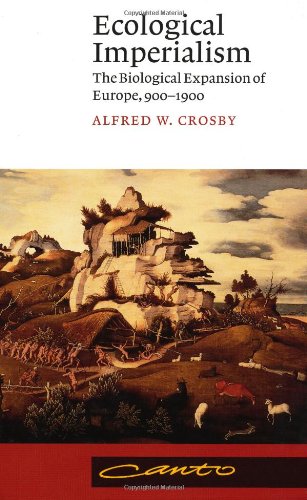
Ecological Imperialism: The Biological Expansion of Europe,...
Authors:
Alfred W. Crosby
Publisher:
Cambridge University Press
Publication Date:
Not available
ISBN:
0521456908
People of European descent form the bulk of the population in most of the temperate zones of the world - North America, Australia and New Zealand. The... military successes of European imperialism are easy to explain; in many cases they were a matter of firearms against spears. But as Alfred Crosby explains in his highly original and fascinating book, the Europeans' displacement and replacement of the native peoples in the temperate zones was more a matter of biology than of military conquest.
Ecological Imperialism: The Biological Expansion of Europe,...
Authors:
Alfred W. Crosby
Publisher:
Cambridge University Press
Publication Date:
Not available
ISBN:
0521546184
People of European descent form the bulk of the population in most of the temperate zones of the world--North America, Australia and New Zealand. The... military successes of European imperialism are easy to explain because in many cases they were achieved by using firearms against spears. Alfred Crosby, however, explains that the Europeans' displacement and replacement of the native peoples in the temperate zones was more a matter of biology than of military conquest. Now in a new edition with a new preface, Crosby revisits his classic work and again evaluates the ecological reasons for European expansion. Alfred W. Crosby is the author of the widely popular and ground-breaking books,The Measure of Reality (Cambridge, 1996), and America's Forgotten Pandemic (Cambridge, 1990). His books have received the Ralph Waldo Emerson Prize, the Medical Writers Association Prize and been named by the Los Angeles Times as among the best books of the year. He taught at the University of Texas, Austin for over 20 years. First Edition Hb (1986): 0-521-32009-7 First Edition Pb (1987): 0-521-33613-9
 '





