production
/viewbook/list/all/?page=3958
/
/static/
None
Empire: A Very Short Introduction
Authors:
Stephen Howe
Publisher:
Oxford University Press
Publication Date:
Not available
ISBN:
0192802232
A great deal of the world's history is the history of empires. Indeed it could be said that all history is colonial history, if one takes a broad enough... definition and goes far enough back. And although the great historic imperial systems--the land-based Russian one as well as the seaborne empires of western European powers--have collapsed during the past half century, their legacies shape almost every aspect of life on a global scale. Meanwhile there is fierce argument, and much speculation, about what has replaced the old territorial empires in world politics. Do the United States and its allies, transnational companies, financial and media institutions, or more broadly the forces of "globalization", constitute a new imperial system? Stephen Howe interprets the meaning of the idea of "empire" through the ages, disentangling the multiple uses and abuses of the labels "empire" and "colonialism", etc., and examines the aftermath of imperialism on the contemporary world.
Empire City: New York Through the Centuries
Authors:
Not Available
Publisher:
Columbia University Press
Publication Date:
Not available
ISBN:
0231109091
As perhaps never before in its extraordinary history, New York has captured the American imagination. This major anthology brings together not only the... best literary writing about New York -- from O. Henry, Theodore Dreiser, F. Scott Fitzgerald, John Steinbeck, Paul Auster, and James Baldwin, among many others -- but also the most revealing essays by politicians, philosophers, city planners, social critics, visitors, immigrants, journalists, and historians. The anthology begins with an account of Henry Hudson's voyage in 1609 and ends with an essay written especially for this book by John P. Avlon, former Mayor Rudolph Guiliani's speechwriter, called "The Resilient City," on the September 11th attack on the World Trade Center as observed from City Hall. The editors have chosen some familiar favorites, such as Washington Irving's A History of New York and Walt Whitman's "Crossing Brooklyn Ferry," as well as lesser-known literary and historical gems, such as Frederick Law Olmsted's plan for Central Park and Cynthia Ozick's "The Synthetic Sublime" -- an updated answer to E. B. White's classic essay Here Is New York, which is also included. The variety and originality of the selections in Empire City offer a captivating account of New York's growth, and reveal often forgotten aspects of its political, literary, and social history.
Empire City: The Making and Meaning of the New York City Landscape...
Authors:
David M. Scobey
Publisher:
Temple University Press
Publication Date:
Not available
ISBN:
1592132359
For generations, New Yorkers have joked about 'The City's' interminable tearing down and building up. The city that the whole world watches seems to be... endlessly remaking itself. When the locals and the rest of the world say 'New York', they mean Manhattan, a crowded island of commercial districts and residential neighborhoods, skyscrapers and tenements, fabulously rich and abjectly poor cheek by jowl. Of course, it was not always so; New York's metamorphosis from compact port to modern metropolis occurred during the mid-nineteenth century. "Empire City" tells the story of the dreams that inspired the changes in the landscape and the problems that eluded solution. Author David Scobey paints a remarkable panorama of New York's uneven development, a city-building process careening between obsessive calculation and speculative excess. Envisioning a new kind of national civilization, 'bourgeois urbanists' attempted to make New York the nation's pre-eminent city. Ultimately, they created a mosaic of grand improvements, dynamic change, and environmental disorder. "Empire City" sets the stories of the city's most celebrated landmarks - Central Park, the Brooklyn Bridge, the downtown commercial center within the context of this new ideal of landscape design and a politics of planned city building. Perhaps such an ambitious project for guiding growth, overcoming spatial problems, and uplifting the public was bound to fail; still, it grips the imagination. Author note: David M. Scobey is Associate Professor of Architecture and Director of the Arts of Citizenship Program at the University of Michigan.
Empire Enslavement and Freedom in the Caribbean
Authors:
Michael Craton
Publisher:
Markus Wiener Publishers
Publication Date:
Not available
ISBN:
1558761594
The author describes and explains the origins of West Indian slave plantations, plantocracies, and the relationship between plantocrats and Amerindians,... then examines the African background of Caribbean slavery, depicts slave lives and behavior, and discusses modern perceptions of slavery and slave societies.
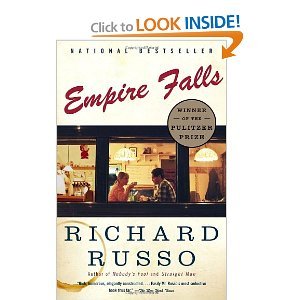
Empire Falls
Authors:
Richard Russo
Publisher:
New York. Alfed A. Knopf. 2001
Publication Date:
Not available
ISBN:
0375726403
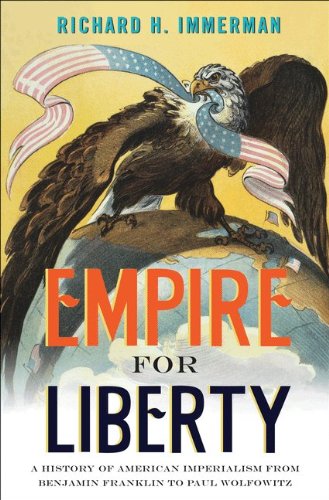
Empire for Liberty: A History of American Imperialism from Benjamin...
Authors:
Richard H. Immerman
Publisher:
Princeton University Press
Publication Date:
Not available
ISBN:
069112762X
How could the United States, a nation founded on the principles of liberty and equality, have produced Abu Ghraib, torture memos, Plamegate, and... warrantless wiretaps? Did America set out to become an empire? And if so, how has it reconciled its imperialism--and in some cases, its crimes--with the idea of liberty so forcefully expressed in the Declaration of Independence? Empire for Liberty tells the story of men who used the rhetoric of liberty to further their imperial ambitions, and reveals that the quest for empire has guided the nation's architects from the very beginning--and continues to do so today. Historian Richard Immerman paints nuanced portraits of six exceptional public figures who manifestly influenced the course of American empire: Benjamin Franklin, John Quincy Adams, William Henry Seward, Henry Cabot Lodge, John Foster Dulles, and Paul Wolfowitz. Each played a pivotal role as empire builder and, with the exception of Adams, did so without occupying the presidency. Taking readers from the founding of the republic to the Global War on Terror, Immerman shows how each individual's influence arose from a keen sensitivity to the concerns of his times; how the trajectory of American empire was relentless if not straight; and how these shrewd and powerful individuals shaped their rhetoric about liberty to suit their needs. But as Immerman demonstrates in this timely and provocative book, liberty and empire were on a collision course. And in the Global War on Terror and the occupation of Iraq, they violently collided.
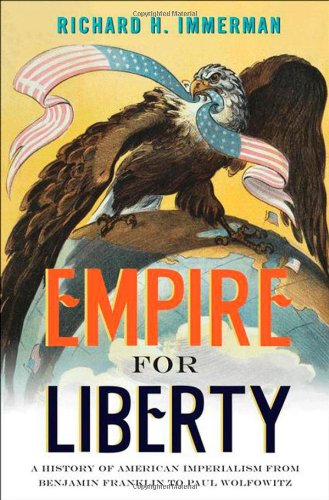
Empire for Liberty: A History of American Imperialism from Benjamin...
Authors:
Richard H. Immerman
Publisher:
Princeton University Press
Publication Date:
Not available
ISBN:
0691156077
How could the United States, a nation founded on the principles of liberty and equality, have produced Abu Ghraib, torture memos, Plamegate, and... warrantless wiretaps? Did America set out to become an empire? And if so, how has it reconciled its imperialism--and in some cases, its crimes--with the idea of liberty so forcefully expressed in the Declaration of Independence? Empire for Liberty tells the story of men who used the rhetoric of liberty to further their imperial ambitions, and reveals that the quest for empire has guided the nation's architects from the very beginning--and continues to do so today. Historian Richard Immerman paints nuanced portraits of six exceptional public figures who manifestly influenced the course of American empire: Benjamin Franklin, John Quincy Adams, William Henry Seward, Henry Cabot Lodge, John Foster Dulles, and Paul Wolfowitz. Each played a pivotal role as empire builder and, with the exception of Adams, did so without occupying the presidency. Taking readers from the founding of the republic to the Global War on Terror, Immerman shows how each individual's influence arose from a keen sensitivity to the concerns of his times; how the trajectory of American empire was relentless if not straight; and how these shrewd and powerful individuals shaped their rhetoric about liberty to suit their needs. But as Immerman demonstrates in this timely and provocative book, liberty and empire were on a collision course. And in the Global War on Terror and the occupation of Iraq, they violently collided.
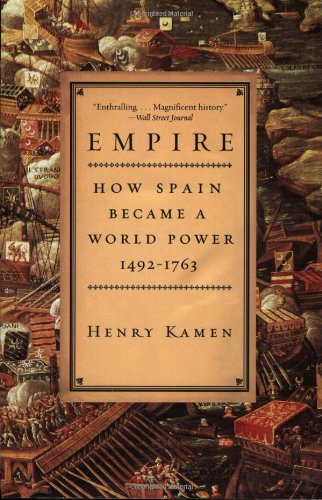
Empire: How Spain Became a World Power, 1492-1763
Authors:
Henry Kamen
Publisher:
Harper Perennial
Publication Date:
Not available
ISBN:
0060932643
From the late-fifteenth to the mid-eighteenth century, Spain was the most extensive empire the world had seen, stretching from Naples and the... Netherlands to the Philippines. This provocative work of history attributes Spain's rise to power to the collaboration of international business interests, including Italian financiers, German technicians, and Dutch traders. At the height of its power, the Spanish Empire was a global enterprise in which non-Spaniards -- Portuguese, Basque, Aztec, Genoese, Chinese, Flemish, West African, Incan, and Neapolitan -- played an essential role. Challenging, persuasive, and unique in its thesis, Henry Kamen's Empire explores Spain's complex impact on world history with admirable clarity and intelligence.
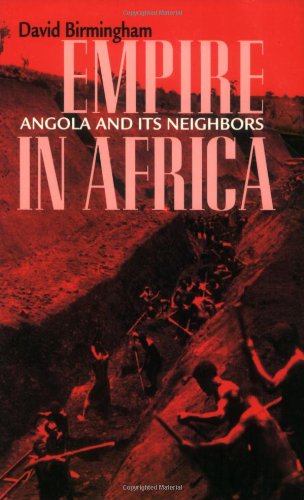
Empire in Africa: Angola and Its Neighbors (Ohio RIS Africa Series)
Authors:
David Birmingham
Publisher:
Ohio University Press
Publication Date:
Not available
ISBN:
0896802485
The dark years of European fascism left their indelible mark on Africa. As late as the 1970s, Angola was still ruled by white autocrats, whose... dictatorship was eventually overthrown by black nationalists who had never experienced either the rule of law or participatory democracy. Empire in Africa takes the long view of history and asks whether the colonizing ventures of the Portuguese can bear comparison with those of the Mediterranean Ottomans or those experienced by Angola’s neighbors in the Belgian Congo, French Equatorial Africa, or the Dutch colonies at the Cape of Good Hope and in the Transvaal. David Birmingham takes the reader through Angola’s troubled past, which included endemic warfare for the first twenty-five years of independence, and examines the fact that in the absence of a viable neocolonial referee such as Britain or France, the warring parties turned to Cold War superpowers for a supply of guns. For a decade Angola replaced Vietnam as a field in which an international war by proxy was conducted. Empire in Africa explains how this African nation went from colony to independence, how in the 1990s the Cold War legacy turned to civil war, and how peace finally dawned in 2002.
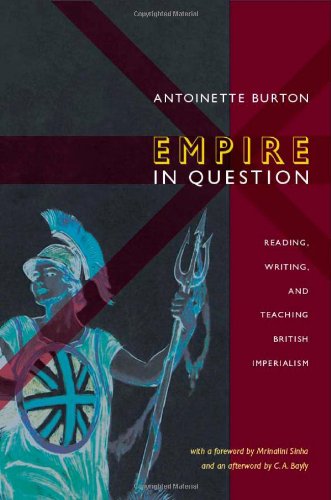
Empire in Question: Reading, Writing, and Teaching British Imperialism
Authors:
Antoinette Burton
Publisher:
Duke University Press Books
Publication Date:
Not available
ISBN:
0822349027
Featuring essays written by the influential historian Antoinette Burton since the mid-1990s, Empire in Question traces the development of a particular,... contentious strand of modern British history, the “new imperial history,” through the eyes of a scholar who helped to shape the field. In her teaching and writing, Burton has insisted that the vectors of imperial power run in multiple directions, argued that race must be incorporated into history writing, and emphasized that gender and sexuality are critical dimensions of imperial history. Empire in Question includes Burton’s groundbreaking critiques of British historiography, as well as essays in which she brings theory to bear on topics from Jane Eyre to nostalgia for colonial India. Burton’s autobiographical introduction describes how her early encounters with feminist and postcolonial critique led to her convictions that we must ask who counts as a subject of imperial history, and that we should maintain a healthy skepticism regarding the claims to objectivity that shape much modern history writing. In the coda, she candidly reflects on shortcomings in her own thinking and in the new imperial history, and she argues that British history must be repositioned in relation to world history. Much of Burton’s writing emerged from her teaching; Empire in Question is meant to engage students and teachers in debates about how to think about British imperialism in light of contemporary events.
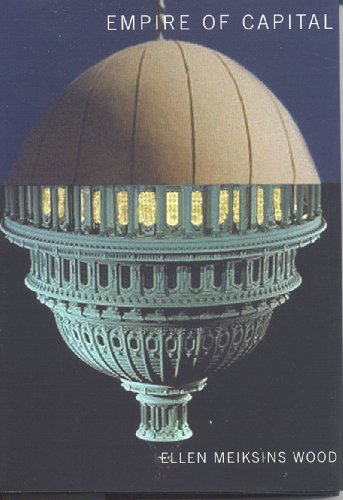
Empire of Capital
Authors:
Ellen Meiksins Wood
Publisher:
Verso
Publication Date:
Not available
ISBN:
1844675181
What does imperialism mean in the absence of colonial conquest and imperial rule?Capitalism makes possible a new form of domination by purely economic... means, argues Ellen Meiksins Wood. So, surely, even the most seasoned White House hawk would prefer to exercise global hegemony in this way, without costly colonial entanglements. Yet, as Wood powerfully demonstrates, the economic empire of capital has also created a new unlimited militarism. By contrasting the new imperialism to historical forms such as the Roman and Spanish empire, and by tracing the development of capitalist imperialism back to the English domination of Ireland and on the British Empire in America and India, Wood shows how today's capitalist empire, a global economy administered by local states, has come tom spawn a new military doctrine of war without end, in purpose or time.
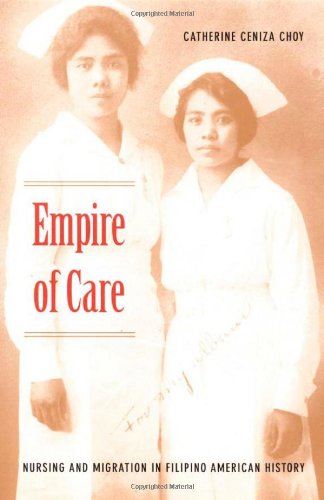
Empire of Care: Nursing and Migration in Filipino American History...
Authors:
Catherine Ceniza Choy
Publisher:
Duke University Press Books
Publication Date:
Not available
ISBN:
082233089X
In western countries, including the United States, foreign-trained nurses constitute a crucial labor supply. Far and away the largest number of these... nurses come from the Philippines. Why is it that a developing nation with a comparatively greater need for trained medical professionals sends so many of its nurses to work in wealthier countries? Catherine Ceniza Choy engages this question through an examination of the unique relationship between the professionalization of nursing and the twentieth-century migration of Filipinos to the United States. The first book-length study of the history of Filipino nurses in the United States, Empire of Care brings to the fore the complicated connections among nursing, American colonialism, and the racialization of Filipinos.Choy conducted extensive interviews with Filipino nurses in New York City and spoke with leading Filipino nurses across the United States. She combines their perspectives with various others—including those of Philippine and American government and health officials—to demonstrate how the desire of Filipino nurses to migrate abroad cannot be reduced to economic logic, but must instead be understood as a fundamentally transnational process. She argues that the origins of Filipino nurse migrations do not lie in the Philippines' independence in 1946 or the relaxation of U.S. immigration rules in 1965, but rather in the creation of an Americanized hospital training system during the period of early-twentieth-century colonial rule. Choy challenges celebratory narratives regarding professional migrants’ mobility by analyzing the scapegoating of Filipino nurses during difficult political times, the absence of professional solidarity between Filipino and American nurses, and the exploitation of foreign-trained nurses through temporary work visas. She shows how the culture of American imperialism persists today, continuing to shape the reception of Filipino nurses in the United States.
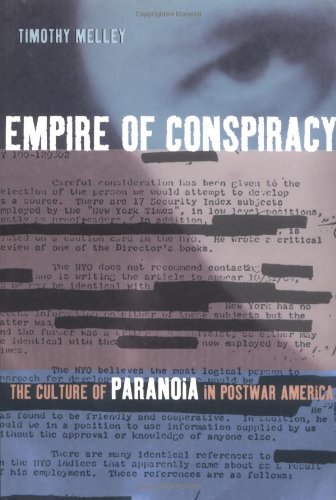
Empire of Conspiracy: The Culture of Paranoia in Postwar America
Authors:
Timothy Melley
Publisher:
Cornell University Press
Publication Date:
Not available
ISBN:
0801486068
Why, Timothy Melley asks, have paranoia and conspiracy theory become such prominent features of postwar American culture? In Empire of Conspiracy,... Melley explores the recent growth of anxieties about thought-control, assassination, political indoctrination, stalking, surveillance, and corporate and government plots. At the heart of these developments, he believes, lies a widespread sense of crisis in the way Americans think about human autonomy and individuality. Nothing reveals this crisis more than the remarkably consistent form of expression that Melley calls "agency panic"-an intense fear that individuals can be shaped or controlled by powerful external forces. Drawing on a broad range of forms that manifest this fear-including fiction, film, television, sociology, political writing, self-help literature, and cultural theory-Melley provides a new understanding of the relation between postwar American literature, popular culture, and cultural theory.Empire of Conspiracy offers insightful new readings of texts ranging from Joseph Heller's Catch-22 to the Unabomber Manifesto, from Vance Packard's Hidden Persuaders to recent addiction discourse, and from the "stalker" novels of Margaret Atwood and Diane Johnson to the conspiracy fictions of Thomas Pynchon, William Burroughs, Don DeLillo, and Kathy Acker. Throughout, Melley finds recurrent anxieties about the power of large organizations to control human beings. These fears, he contends, indicate the continuing appeal of a form of individualism that is no longer wholly accurate or useful, but that still underpins a national fantasy of freedom from social control.
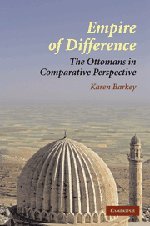
Empire of Difference: The Ottomans in Comparative Perspective
Authors:
Karen Barkey
Publisher:
Cambridge University Press
Publication Date:
Not available
ISBN:
0521715334
This book is a comparative study of imperial organization and longevity that assesses Ottoman successes as well as failures against those of other... empires with similar characteristics. Barkey examines the Ottoman Empire's social organization and mechanisms of rule at key moments of its history, emergence, imperial institutionalization, remodeling, and transition to nation-state, revealing how the empire managed these moments, adapted, and averted crises and what changes made it transform dramatically. The flexible techniques by which the Ottomans maintained their legitimacy, the cooperation of their diverse elites both at the center and in the provinces, as well as their control over economic and human resources were responsible for the longevity of this particular "negotiated empire." Her analysis illuminates topics that include imperial governance, imperial institutions, imperial diversity and multiculturalism, the manner in which dissent is handled and/or internalized, and the nature of state society negotiations.
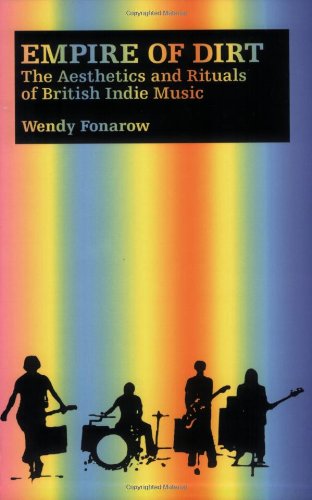
Empire of Dirt: The Aesthetics and Rituals of British Indie Music...
Authors:
Wendy Fonarow
Publisher:
Wesleyan
Publication Date:
Not available
ISBN:
0819568112
Britain is widely considered the cradle of independent music culture. Bands like Radiohead and Belle and Sebastian, which epitomize indie music's sounds... and attitudes, have spawned worldwide fanbases. This in-depth study of the British independent music scene explores how the behavior of fans, artists, and music industry professionals produce a community with a specific aesthetic based on moral values. Author Wendy Fonarow, a scholar with years of experience in the various sectors of the indie music scene, examines the indie music "gig" as a ritual in which all participants are actively involved. This ritual allows participants to play with cultural norms regarding appropriate behavior, especially in the domains of sex and creativity. Her investigation uncovers the motivations of audience members when they first enter the community and how their positions change over time so that the gig functions for most members as a rite of passage. Empire of Dirt sheds new light on music, gender roles, emotion, subjectivity, embodiment, and authenticity.
 '





