production
/viewbook/list/all/?page=3959
/
/static/
None
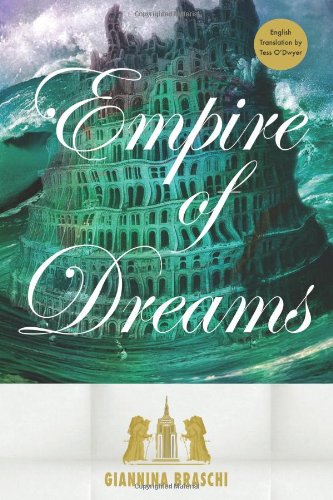
Empire of Dreams
Authors:
Giannina Braschi
Publisher:
AmazonCrossing
Publication Date:
Not available
ISBN:
1611090652
An intriguing and hypnotizing work of postmodern fiction from groundbreaking Hispanic-American writer Giannina Braschi, Empire of Dreams chronicles a... decade-long love affair with 1980s New York and all its contradictions. The city’s perversions and passions, power and marginality, grandeur and squalor come vibrantly to life in each of the book’s three sections. “Book of Clowns and Buffoons” imagines life in the city as a carnival-style spectacle that ultimately ends in chaos. Inspired by the Puerto Rican Day parade, a bucolic celebration reclaims the city in “Pastoral.” And “The Intimate Diary of Solitude” spoofs the magical realism of Latin American novelists such as Gabriel Garcia Marquez with its tale of aspiring actress-writer Mariquita Samper, who records the days of her increasingly outlandish life in a mystical diary. Wildly imaginative, rich and complex, Empire of Dreams has garnered glowing praise for being “an ‘in-your-face assertion’ of the vitality of Latino culture in the US” (New York Daily News).
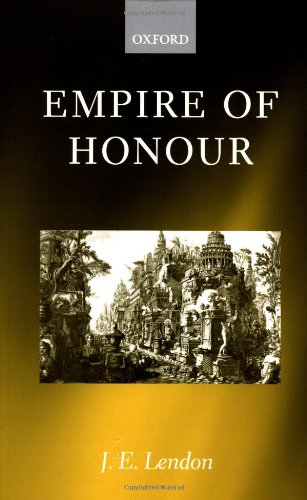
Empire of Honour: The Art of Government in the Roman World
Authors:
J. E. Lendon
Publisher:
Oxford University Press, USA
Publication Date:
Not available
ISBN:
0199247633
Jon Lendon offers a bold new analysis of how Roman government worked in the first four centuries AD. He contends that a despotism rooted in force and... fear enjoyed widespread support among the ruling classes of the provinces on the basis of an aristocratic culture of honor shared by rulers and ruled.
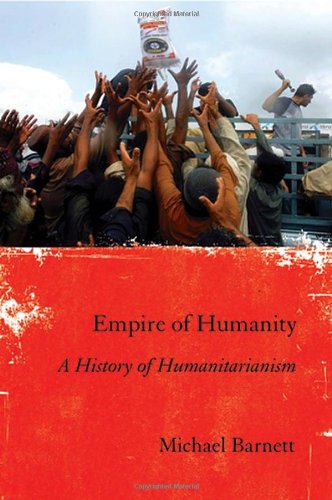
Empire of Humanity: A History of Humanitarianism
Authors:
Michael Barnett
Publisher:
Cornell University Press
Publication Date:
Not available
ISBN:
0801447135
Empire of Humanity explores humanitarianism's remarkable growth from its humble origins in the early nineteenth century to its current prominence in... global life. In contrast to most contemporary accounts of humanitarianism that concentrate on the last two decades, Michael Barnett ties the past to the present, connecting the antislavery and missionary movements of the nineteenth century to today's peacebuilding missions, the Cold War interventions in places like Biafra and Cambodia to post-Cold War humanitarian operations in regions such as the Great Lakes of Africa and the Balkans; and the creation of the International Committee of the Red Cross in 1863 to the emergence of the major international humanitarian organizations of the twentieth century. Based on extensive archival work, close encounters with many of today's leading international agencies, and interviews with dozens of aid workers in the field and at headquarters, Empire of Humanity provides a history that is both global and intimate.Avoiding both romanticism and cynicism, Empire of Humanity explores humanitarianism's enduring themes, trends, and, most strikingly, ethical ambiguities. Humanitarianism hopes to change the world, but the world has left its mark on humanitarianism. Humanitarianism has undergone three distinct global ages-imperial, postcolonial, and liberal-each of which has shaped what humanitarianism can do and what it is. The world has produced not one humanitarianism, but instead varieties of humanitarianism. Furthermore, Barnett observes that the world of humanitarianism is divided between an emergency camp that wants to save lives and nothing else and an alchemist camp that wants to remove the causes of suffering. These camps offer different visions of what are the purpose and principles of humanitarianism, and, accordingly respond differently to the same global challenges and humanitarianism emergencies. Humanitarianism has developed a metropolis of global institutions of care, amounting to a global governance of humanity. This humanitarian governance, Barnett observes, is an empire of humanity: it exercises power over the very individuals it hopes to emancipate.Although many use humanitarianism as a symbol of moral progress, Barnett provocatively argues that humanitarianism has undergone its most impressive gains after moments of radical inhumanity, when the "international community" believes that it must atone for its sins and reduce the breach between what we do and who we think we are. Humanitarianism is not only about the needs of its beneficiaries; it also is about the needs of the compassionate.
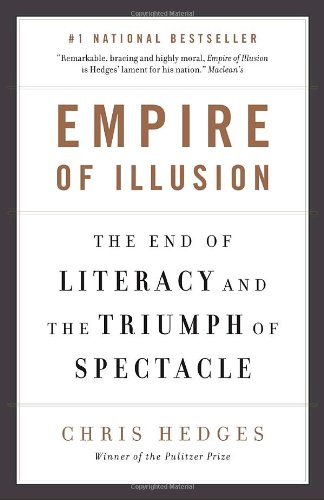
Empire of Illusion: The End of Literacy and the Triumph of Spectacle
Authors:
Chris Hedges
Publisher:
Vintage Canada
Publication Date:
Not available
ISBN:
0307398471
Pulitzer prize–winner Chris Hedges charts the dramatic and disturbing rise of a post-literate society that craves fantasy, ecstasy and illusion.Chris... Hedges argues that we now live in two societies: One, the minority, functions in a print-based, literate world, that can cope with complexity and can separate illusion from truth. The other, a growing majority, is retreating from a reality-based world into one of false certainty and magic. In this “other society,” serious film and theatre, as well as newspapers and books, are being pushed to the margins. In the tradition of Christopher Lasch’s The Culture of Narcissism and Neil Postman’s Amusing Ourselves to Death, Hedges navigates this culture — attending WWF contests as well as Ivy League graduation ceremonies — exposing an age of terrifying decline and heightened self-delusion.From the Hardcover edition.
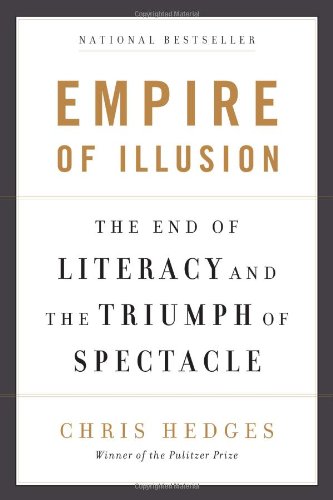
Empire of Illusion: The End of Literacy and the Triumph of Spectacle
Authors:
Chris Hedges
Publisher:
Nation Books
Publication Date:
Not available
ISBN:
1568586132
In this New York Times bestseller, Pulitzer Prizewinning journalist Chris Hedges has written a shattering meditation on American obsession with... celebrity and the epidemic of illiteracy that threatens our cultural integrity. Reporting on such phenomena as professional wrestling, the pornographic film industry, and unchecked casino capitalism, Hedges exposes the mechanisms used to divert us from confronting the economic, political, and moral collapse around us. Empire of Illusion shows us how illiteracy and the embrace of fantasy have impoverished our working class, allowed for the continuance of destructive public policy, and ushered in cultural bankruptcy.
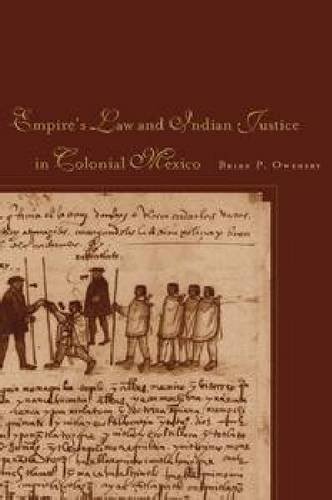
Empire of Law and Indian Justice in Colonial Mexico
Authors:
Brian Owensby
Publisher:
Stanford University Press
Publication Date:
Not available
ISBN:
0804776628
Empire of Law and Indian Justice in Colonial Mexico shows how Indian litigants and petitioners made sense of Spanish legal principles and processes when... the dust of conquest had begun to settle after 1600. By juxtaposing hundreds of case records with written laws and treatises, Owensby reveals how Indians saw the law as a practical and moral resource that allowed them to gain a measure of control over their lives and to forge a relationship to a distant king. Several chapters elucidate central concepts of Indian claimants in their encounter with the law over the seventeenth century—royal protection, possession of property, liberty, notions of guilt, village autonomy and self-rule, and subjecthood. Owensby concludes that Indian engagement with Spanish law was the first early modern experiment in cosmopolitan legality, one that faced the problem of difference head on and sought to bridge the local and the international. In so doing, it enabled indigenous claimants to forge a colonial politics of justice that opened up space for a conversation between colonial rulers and ruled.
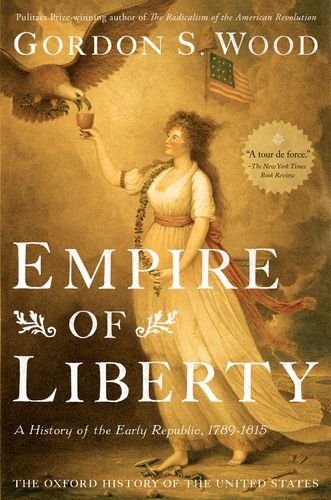
Empire of Liberty: A History of the Early Republic, 1789-1815...
Authors:
Gordon S. Wood
Publisher:
Oxford University Press, USA
Publication Date:
Not available
ISBN:
0199832463
The Oxford History of the United States is by far the most respected multi-volume history of our nation. The series includes three Pulitzer Prize... winners, two New York Times bestsellers, and winners of the Bancroft and Parkman Prizes. Now, in the newest volume in the series, one of America's most esteemed historians, Gordon S. Wood, offers a brilliant account of the early American Republic, ranging from 1789 and the beginning of the national government to the end of the War of 1812. As Wood reveals, the period was marked by tumultuous change in all aspects of American life--in politics, society, economy, and culture. The men who founded the new government had high hopes for the future, but few of their hopes and dreams worked out quite as they expected. They hated political parties but parties nonetheless emerged. Some wanted the United States to become a great fiscal-military state like those of Britain and France; others wanted the country to remain a rural agricultural state very different from the European states. Instead, by 1815 the United States became something neither group anticipated. Many leaders expected American culture to flourish and surpass that of Europe; instead it became popularized and vulgarized. The leaders also hope to see the end of slavery; instead, despite the release of many slaves and the end of slavery in the North, slavery was stronger in 1815 than it had been in 1789. Many wanted to avoid entanglements with Europe, but instead the country became involved in Europe's wars and ended up waging another war with the former mother country. Still, with a new generation emerging by 1815, most Americans were confident and optimistic about the future of their country. Named a New York Times Notable Book, Empire of Liberty offers a marvelous account of this pivotal era when America took its first unsteady steps as a new and rapidly expanding nation.
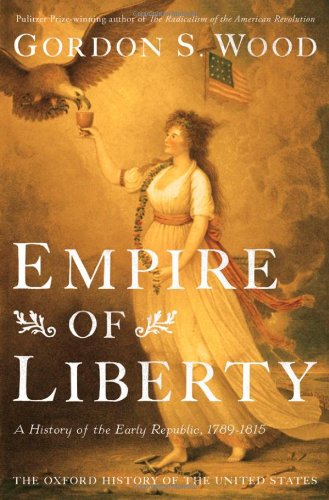
Empire of Liberty: A History of the Early Republic, 1789-1815...
Authors:
Gordon S. Wood
Publisher:
Oxford University Press, USA
Publication Date:
Not available
ISBN:
0195039149
The Oxford History of the United States is by far the most respected multi-volume history of our nation. The series includes three Pulitzer Prize... winners, two New York Times bestsellers, and winners of the Bancroft and Parkman Prizes. Now, in the newest volume in the series, one of America's most esteemed historians, Gordon S. Wood, offers a brilliant account of the early American Republic, ranging from 1789 and the beginning of the national government to the end of the War of 1812. As Wood reveals, the period was marked by tumultuous change in all aspects of American life--in politics, society, economy, and culture. The men who founded the new government had high hopes for the future, but few of their hopes and dreams worked out quite as they expected. They hated political parties but parties nonetheless emerged. Some wanted the United States to become a great fiscal-military state like those of Britain and France; others wanted the country to remain a rural agricultural state very different from the European states. Instead, by 1815 the United States became something neither group anticipated. Many leaders expected American culture to flourish and surpass that of Europe; instead it became popularized and vulgarized. The leaders also hope to see the end of slavery; instead, despite the release of many slaves and the end of slavery in the North, slavery was stronger in 1815 than it had been in 1789. Many wanted to avoid entanglements with Europe, but instead the country became involved in Europe's wars and ended up waging another war with the former mother country. Still, with a new generation emerging by 1815, most Americans were confident and optimistic about the future of their country. Named a New York Times Notable Book, Empire of Liberty offers a marvelous account of this pivotal era when America took its first unsteady steps as a new and rapidly expanding nation.

Empire of Liberty: The Statecraft of Thomas Jefferson
Authors:
Robert W. Tucker
Publisher:
Oxford University Press, USA
Publication Date:
Not available
ISBN:
0195074831
Empire of Liberty takes a new look at the public life, thought, and ambiguous legacy of one of America's most revered statesmen, offering new insight... into the meaning of Jefferson in the American experience. This work examines Jefferson's legacy for American foreign policy in the light of several critical themes which continue to be highly significant today: the struggle between isolationists and interventionists, the historic ambivalence over the nation's role as a crusader for liberty, and the relationship between democracy and peace. Written by two distinguished scholars, this book provides invaluable insight into the classic ideas of American diplomacy.
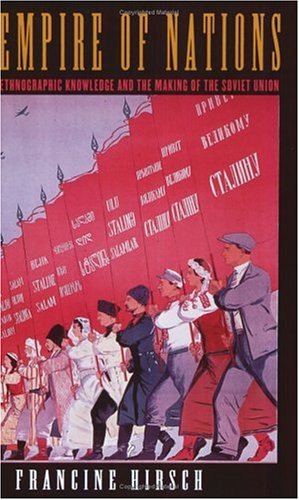
Empire of Nations: Ethnographic Knowledge and the Making of the...
Authors:
Francine Hirsch
Publisher:
Cornell University Press
Publication Date:
Not available
ISBN:
0801489083
When the Bolsheviks seized power in 1917, they set themselves the task of building socialism in the vast landscape of the former Russian Empire, a... territory populated by hundreds of different peoples belonging to a multitude of linguistic, religious, and ethnic groups. Before 1917, the Bolsheviks had called for the national self-determination of all peoples and had condemned all forms of colonization as exploitative. After attaining power, however, they began to express concern that it would not be possible for Soviet Russia to survive without the cotton of Turkestan and the oil of the Caucasus. In an effort to reconcile their anti-imperialist position with their desire to hold on to as much territory as possible, the Bolsheviks integrated the national idea into the administrative-territorial structure of the new Soviet state. In Empire of Nations, Francine Hirsch examines the ways in which former imperial ethnographers and local elites provided the Bolsheviks with ethnographic knowledge that shaped the very formation of the new Soviet Union. The ethnographers-who drew inspiration from the Western European colonial context-produced all-union censuses, assisted government commissions charged with delimiting the USSR's internal borders, led expeditions to study "the human being as a productive force," and created ethnographic exhibits about the "Peoples of the USSR." In the 1930s, they would lead the Soviet campaign against Nazi race theories . Hirsch illuminates the pervasive tension between the colonial-economic and ethnographic definitions of Soviet territory; this tension informed Soviet social, economic, and administrative structures. A major contribution to the history of Russia and the Soviet Union, Empire of Nations also offers new insights into the connection between ethnography and empire.
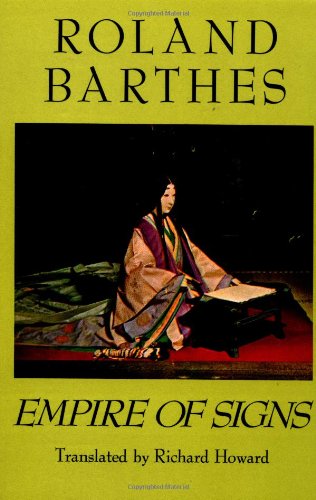
Empire of Signs
Authors:
Roland Barthes
Publisher:
Hill and Wang
Publication Date:
Not available
ISBN:
0374522073
With this book, Barthes offers a broad-ranging meditation on the culture, society, art, literature, language, and iconography--in short, both the... sign-oriented realities and fantasies--of Japan itself.
EMPIRE OF THE CZAR
Authors:
Marquis De Custine
Publisher:
Anchor
Publication Date:
Not available
ISBN:
038541126X
Real Essays with Readings is the essay-level book in Susan Anker’s highly successful series of writing texts that motivate students with their message... that writing is an essential skill in college and in real life — and that this skill is achievable. Anker’s advice, examples, and assignments show the relevance of writing to all aspects of students’ lives, and profiles of former students prove that success is attainable. Like all the books in the Anker series, Real Essays presents writing in logical, manageable increments: step-by-step writing guides and a focus on the "four basics" of each mode of writing keep students from becoming overwhelmed. Real Essays maintains its emphasis on what really matters by focusing on the four most serious errors (fragments, run-ons, subject-verb agreement problems, and verb form problems). Real Essays gives students what they need to succeed in college and become stronger academic writers.

Empire of the Senseless: A Novel (Acker, Kathy)
Authors:
Kathy Acker
Publisher:
Grove Press
Publication Date:
Not available
ISBN:
0802131794
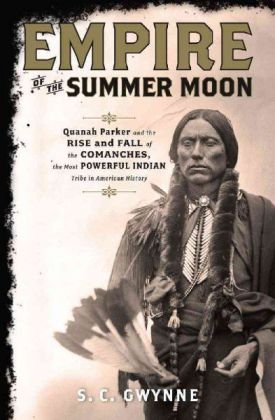
Empire of the Summer Moon: Quanah Parker and the Rise and Fall of...
Authors:
S. C. Gwynne
Publisher:
Scribner
Publication Date:
Not available
ISBN:
1416591052
In the tradition of Bury My Heart at Wounded Knee, a stunningly vivid historical account of the forty-year battle between Comanche Indians and white... settlers for control of the American West, centering on Quanah, the greatest Comanche chief of them all.S. C. Gwynne’s Empire of the Summer Moon spans two astonishing stories. The first traces the rise and fall of the Comanches, the most powerful Indian tribe in American history. The second entails one of the most remarkable narratives ever to come out of the Old West: the epic saga of the pioneer woman Cynthia Ann Parker and her mixed-blood son Quanah, who became the last and greatest chief of the Comanches. Although readers may be more familiar with the tribal names Apache and Sioux, it was in fact the legendary fighting ability of the Comanches that determined just how and when the American West opened up. Comanche boys became adept bareback riders by age six; full Comanche braves were considered the best horsemen who ever rode. They were so masterful at war and so skillful with their arrows and lances that they stopped the northern drive of colonial Spain from Mexico and halted the French expansion westward from Louisiana. White settlers arriving in Texas from the eastern United States were surprised to find the frontier being rolled backward by Comanches incensed by the invasion of their tribal lands. So effective were the Comanches that they forced the creation of the Texas Rangers and account for the advent of the new weapon specifically designed to fight them: the six-gun. The war with the Comanches lasted four decades, in effect holding up the development of the new American nation. Gwynne’s exhilarating account delivers a sweeping narrative that encompasses Spanish colonialism, the Civil War, the destruction of the buffalo herds, and the arrival of the railroads—a historical feast for anyone interested in how the United States came into being. Against this backdrop Gwynne presents the compelling drama of Cynthia Ann Parker, a lovely nine-year-old girl with cornflower-blue eyes who was kidnapped by Comanches from the far Texas frontier in 1836. She grew to love her captors and became infamous as the "White Squaw" who refused to return until her tragic capture by Texas Rangers in 1860. More famous still was her son Quanah, a warrior who was never defeated and whose guerrilla wars in the Texas Panhandle made him a legend. S. C. Gwynne’s account of these events is meticulously researched, intellectually provocative, and, above all, thrillingly told. Empire of the Summer Moon announces him as a major new writer of American history.
Empire of the Summer Moon: Quanah Parker and the Rise and Fall of...
Authors:
S. C. Gwynne
Publisher:
Scribner
Publication Date:
Not available
ISBN:
1416591060
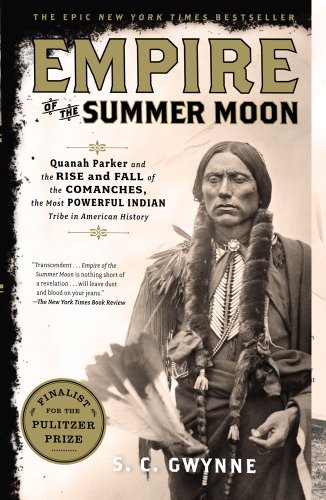
In the tradition of Bury My Heart at Wounded Knee, a stunningly vivid historical account of the forty-year battle between Comanche Indians and white... settlers for control of the American West, centering on Quanah, the greatest Comanche chief of them all. S. C. Gwynne’s Empire of the Summer Moon spans two astonishing stories. The first traces the rise and fall of the Comanches, the most powerful Indian tribe in American history. The second entails one of the most remarkable narratives ever to come out of the Old West: the epic saga of the pioneer woman Cynthia Ann Parker and her mixed-blood son Quanah, who became the last and greatest chief of the Comanches. Although readers may be more familiar with the tribal names Apache and Sioux, it was in fact the legendary fighting ability of the Comanches that determined just how and when the American West opened up. Comanche boys became adept bareback riders by age six; full Comanche braves were considered the best horsemen who ever rode. They were so masterful at war and so skillful with their arrows and lances that they stopped the northern drive of colonial Spain from Mexico and halted the French expansion westward from Louisiana. White settlers arriving in Texas from the eastern United States were surprised to find the frontier being rolled backward by Comanches incensed by the invasion of their tribal lands. So effective were the Comanches that they forced the creation of the Texas Rangers and account for the advent of the new weapon specifically designed to fight them: the six-gun. The war with the Comanches lasted four decades, in effect holding up the development of the new American nation. Gwynne’s exhilarating account delivers a sweeping narrative that encompasses Spanish colonialism, the Civil War, the destruction of the buffalo herds, and the arrival of the railroads—a historical feast for anyone interested in how the United States came into being. Against this backdrop Gwynne presents the compelling drama of Cynthia Ann Parker, a lovely nine-year-old girl with cornflower-blue eyes who was kidnapped by Comanches from the far Texas frontier in 1836. She grew to love her captors and became infamous as the "White Squaw" who refused to return until her tragic capture by Texas Rangers in 1860. More famous still was her son Quanah, a warrior who was never defeated and whose guerrilla wars in the Texas Panhandle made him a legend. S. C. Gwynne’s account of these events is meticulously researched, intellectually provocative, and, above all, thrillingly told. Empire of the Summer Moon announces him as a major new writer of American history.
 '





