production
/viewbook/list/all/?page=4405
/
/static/
None
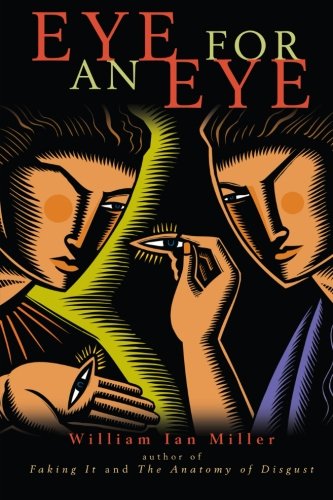
Eye for an Eye
Authors:
William Ian Miller
Publisher:
Cambridge University Press
Publication Date:
Not available
ISBN:
0521704677
Analyzing the law of the talion--an eye for an eye, tooth for a tooth--literally, William Ian Miller presents an original meditation on the concept of... "pay back". Miller's unique theory of justice offers redemption via retaliation. It espouses the view that revenge is a highly structured phenomenon that requires a deep commitment to balance in order to get even in a strict but fair manner. As a result, we find that much of what is assumed to be justice, honor and respect is just a way of providing a means of balancing or measuring valuations. Moreover, according to its biblical roots, the law of the talion implies that the value of an eye can only be matched with another eye, suggesting that body parts are to be considered units of valuation. Pursuing this further, the talion seems to require such parts as a preferred means of payment. Thus body parts have a justified claim not only as money, but as the most valued type of payment as well--by uniquely fulfilling the most demanding (and thus most honorable) means of compensation. Applying this concept to the real world, Miller argues that Shylock's pound of flesh wager can be justified circumstantially in The Merchant of Venice and that blood oaths effectively ensure the most lasting bonds of trust over time. He also analyzes other societies and cultures, comparing the ancient and seemingly more primitive with their modern counterparts, by gauging the role of the talion, as a means of maintaining honor within them. Sadly, the ancient and more primitive seem to have functioned more righteously, for the most part, because the execution of violent retaliation was tightly controlled by the talion and accordingly limited its excesses. William Ian Miller is the Thomas G. Long Professor of Law at the University of Michigan Law School. He has also taught at Harvard, Yale, Chicago, and the Universities of Bergen and of Tel Aviv. The recipient of a J.D. and a Ph.D. in English, both from Yale, Professor Miller has written other books including Faking It CUP (2003), The Mystery of Courage (2000) and The Anatomy of Disgust (1967).

EYEGLASSES S2500C ASTRO
Authors:
Not Available
Publisher:
Not available
Publication Date:
Not available
ISBN:
Not available

Eye Juggling
Authors:
Rodney Frey
Publisher:
University Press Of America
Publication Date:
Not available
ISBN:
0819196371
In our global community, it is critical that we appreciate how our humanity, throughout time in its cultural diversity, has defined its relationship... with the world. This pragmatic workbook provides an accessible methodology, "Eye Juggling," for interpreting the values of others as well as one's own values that have rendered the world meaningful. In doing so, the reader is given an opportunity to explore, discover, and interpret for him or herself, and become an "authority" on the values revealed.Contents: Eye Juggler: An Introduction; Song: A Methodology; Symbols; Values; Interviewing; Interpreting; Stories: The Texts; The Dream Animal; Feathers; The Tower; Soul Food; A Plant; A Flower; The Lesson; The Quest; Three Hots and a Cot; The Give-Away; Choice: An Epilogue; The Great Paradox; The Culture of Consumption; The Mobius Strip; Discussion Questions and Exercises; Appendix: Release Form; Bibliography.
Eye Killers: A Novel (American Indian Literature and Critical...
Authors:
A. A. Carr
Publisher:
University of Oklahoma Press
Publication Date:
Not available
ISBN:
0806128542
Lurking in the caves of eastern New Mexico, Falke, a thousand-year-old vampire, chooses his next bride: Melissa Roanhorse, an Albuquerque teenager. To... regain his granddaughter’s life, Michael Roanhorse, an old Navajo sheepherder wise to the power of myth, must outwit the vampire and his loyal coven. So begins A.A. Carr’s Eye Killers, a novel that combines the Eastern European legend of the vampire with the Navajo tale of the monster slayer.The songs of Michael Roanhorse’s childhood include potent chants passed down through his grandmother, who sang to him of Changing Woman and her Warrior Twins, Monster Slayer and Child of the Water. But Michael’s spiritual strength and his memory have waned with the years. Who is left to help reunite him with his family and his family with their heritage?Michael enlists Diana Logan, Melissa’s young English teacher, to wrestle Melissa from the vampire. But to conquer Falke they must also overpower his coven: Elizabeth, captured by Falke in the 1850s during her family’s journey along the Santa Fe Trail, and Hanna, once a prostitute in Old Albuquerque, who aspires to supplant Falke’s vampire reign.Michael must invoke ancient traditions to bring Melissa home. The elders undertake to teach Diana, but her Irish-American heritage has not prepared her for a fight against shape-shifting vampires who have lived-and murdered-for centuries.In Eye Killers, Carr delivers an imaginative clash of cultures-both a suspenseful thriller and a valid rendering of Navajo and Pueblo tribal life in contemporary New Mexico. His inventiveness, expressed through melodic prose and layers of fine storytelling, weaves new legends of the American Southwest.
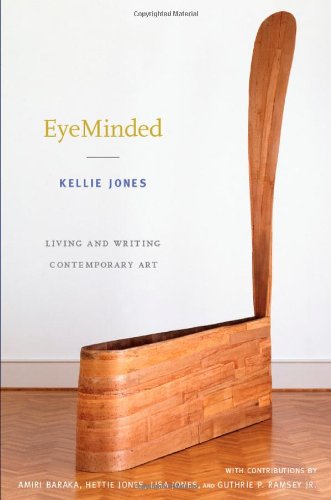
EyeMinded: Living and Writing Contemporary Art
Authors:
Kellie Jones
Publisher:
Duke University Press Books
Publication Date:
Not available
ISBN:
082234873X
A daughter of the poets Hettie Jones and Amiri Baraka, Kellie Jones grew up immersed in a world of artists, musicians, and writers in Manhattan’s East... Village and absorbed in black nationalist ideas about art, politics, and social justice across the river in Newark. The activist vision of art and culture that she learned in those two communities, and especially from her family, has shaped her life and work as an art critic and curator. Featuring selections of her writings from the past twenty years, EyeMinded reveals Jones’s role in bringing attention to the work of African American, African, Latin American, and women artists who have challenged established art practices. Interviews that she conducted with the painter Howardena Pindell, the installation and performance artist David Hammons, and the Cuban sculptor Kcho appear along with pieces on the photographers Dawoud Bey, Lorna Simpson, and Pat Ward Williams; the sculptor Martin Puryear; the assemblage artist Betye Saar; and the painters Jean-Michel Basquiat, Norman Lewis, and Al Loving. Reflecting Jones’s curatorial sensibility, this collection is structured as a dialogue between her writings and works by her parents, her sister Lisa Jones, and her husband Guthrie P. Ramsey Jr. EyeMinded offers a glimpse into the family conversation that has shaped and sustained Jones, insight into the development of her critical and curatorial vision, and a survey of some of the most important figures in contemporary art.
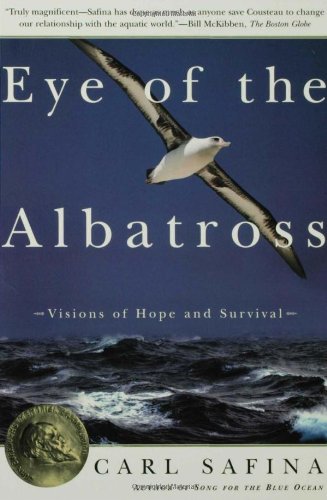
Eye of the Albatross: Visions of Hope and Survival
Authors:
Carl Safina
Publisher:
Holt Paperbacks
Publication Date:
Not available
ISBN:
0805062297
“One of the most delightful natural history studies in decades.” —The Boston GlobeEye of the Albatross takes us soaring to locales where whales,... sea turtles, penguins, and shearwaters flourish in their own quotidian rhythms. Carl Safina’s guide and inspiration is an albatross he calls Amelia, whose life and far-flung flights he describes in fascinating detail. Interwoven with recollections of whalers and famous explorers, Eye of the Albatross probes the unmistakable environmental impact of the encounters between man and marine life. Safina’s perceptive and authoritative portrait results in a transforming ride to the ends of the Earth for the reader, as well as an eye-opening look at the health of our oceans.
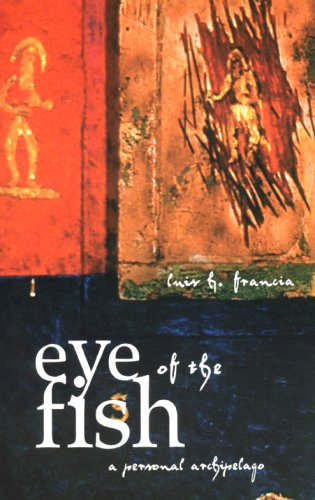
Eye Of The Fish, The
Authors:
Luis Francia
Publisher:
MUAE Publishing
Publication Date:
Not available
ISBN:
1885030312
"The first of Luis H. Francia's books of non-fiction to be published in the United States, The Eye of the Fish paints a vivid and detailed portrait of... the terror, beauty, and insistent humanity of the Philippines of today. Cross-cutting between Francia's recollections of the Philippines of his youth and accounts of his travels through the archipelago over the past two decades, The Eye of the Fish takes us the length of the nation: from Batanes in the north to the Muslim Jolo and Marawi regions of the south, and from the rugged mountain hideaways of revolutionary freedom fighters to the well-appointed salons of the political and cultural elite. Painters and priests, island shamans and small-town politicians, cultists, feminists, and infamous first ladies all make an appearance in this imaginative and idiosyncratic exploration of 'home.' Through their stories, and through his own memories of estrangement and acceptance in the Philippines and in the U.S., Francia reflects on the hybridity that is simultaneously the burden and the benediction of the PhilippinesUand of his own mestizo self."

Eye of the Storm Leadership: 150 Ideas, Stories, Quotes and...
Authors:
PHD Peter S. Adler
Publisher:
Resourceful Internet Solutions, Inc.
Publication Date:
Not available
ISBN:
1933857129

Eye of Water (Pitt Poetry Series)
Authors:
Not Available
Publisher:
University of Pittsburgh Press
Publication Date:
Not available
ISBN:
0822958937
Winner of the 2004 Cave Canem Poetry PrizeThe poems in Eye of Water are derived from the narrator’s experiences in what she calls her “waking.” ... She traces inspiration to “the beginning of myth, to Eve in the Garden of Eden” and states: “We could spend our lives unraveling the mistake and discover that life was one great big ‘chore,’ and inescapable. And the path is full of missteps and accidents because we cannot (or prefer not to) remember all that got us to that moment. My body seems to be a symptom of the past, so no matter who touches me, all the ghosts are waiting there. The ‘chore’ becomes how to survive despite the flaws of our humanness that makes us brutal at times.”
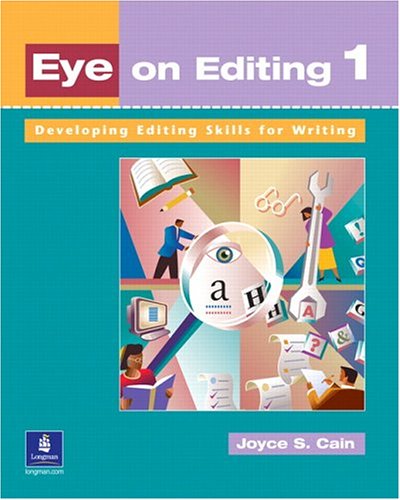
Eye on Editing 1: Developing Editing Skills for Writing (Student...
Authors:
Joyce S. Cain
Publisher:
Pearson Education ESL
Publication Date:
Not available
ISBN:
0201621320
As a main text, a supplement to writing and grammar classes, or as a reference guide, Eye on Editing provides explanations and practice for the most... frequent errors in intermediate and high-intermediate student writing.
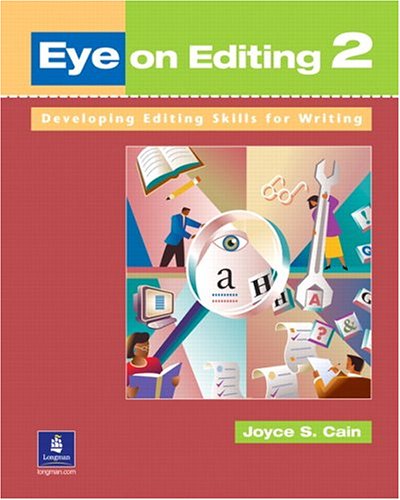
Eye on Editing (Book 2, High-Intermediate)
Authors:
Cain
Publisher:
Pearson Education ESL
Publication Date:
Not available
ISBN:
0201621347
As a main text, a supplement to writing and grammar classes, or as a reference guide, Eye on Editing provides explanations and practice for the most... frequent errors in intermediate and high-intermediate student writing.

Eye on Israel: How America Came to View Israel as an Ally
Authors:
Michelle Mart
Publisher:
SUNY Press
Publication Date:
Not available
ISBN:
0791466884
Examines the image of Israel in American culture before 1960. Eye on Israel shows how the seeds of contemporary U.S.-Israeli relations were sown in the... cultural narratives of the late 1940s and 1950s, long before American policymakers formed a close political and strategic relationship with Israel. Michelle Mart brings together diverse areas of history and examines the cultural antecedents of this much-heralded relationship. She also tackles the difficult question of the relationship between American Jews and U.S. policy toward the Jewish state. Finally, Mart demonstrates that American images of Israel and Jews were shaped by specific cold war concerns—visible in movies, novels, magazines, and newspapers—and reflect American identity and political mythology in the midst of the struggle against communism. The result is a unique examination of the intersections of culture, diplomacy, and ethnic and national identity through the specific case of U.S.-Israeli relations and American Jewish identity in the postwar period. “…Eye on Israel is an intelligent and historically grounded study of the image of Israel in the United States from the mid-1940s to the late 1950s … [it] is a truly valuable book that combines diplomatic and cultural history in innovative ways … It is [a] book that will interest scholars in diplomatic studies, Middle East studies, American Studies, and ethnic studies, as well as readers who are interested in the history of the Israel or the Israeli-Palestinian conflict. One can only hope that Mart continues down this path; I would love to see the book that takes this story through the 1967 war and beyond.” — Melani McAlister, American Jewish History “Mart’s book … adds to the literature and provides a number of enlightening examples and quotes. Read as a cultural-intellectual—and less as a political-strategic—study of evolving attitudes toward Jews in postwar America, this book supplements our understanding of what emerged as a central issue of U.S. foreign policy in later years.” — American Historical Review “…an impressive, well-documented and original effort to impart new insights and significance to a research field that is permeated with simplistic and superficial generalizations.” — The Journal of Israeli History “Historians in a variety of fields will appreciate Mart’s analysis of American popular culture and its influence on political issues. Her documentation is carefully used and impressive in its range. A more general audience will also appreciate this volume for its lively narrative and engaging subject matter.” — The Journal of American History “This is a dazzling combination of social, cultural, intellectual, political, and diplomatic history, relying on a wealth of previously untapped original sources to provide a more nuanced look at the American response to the partition of Palestine and the establishment of the State of Israel.” — David Desser, coauthor of American Jewish Filmmakers, Second Edition

Eyes off the Prize: The United Nations and the African American...
Authors:
Carol Anderson
Publisher:
Cambridge University Press
Publication Date:
Not available
ISBN:
0521531586
As World War II drew to a close and the world awakened to the horrors wrought by white supremacists in Nazi Germany, the NAACP and African-American... leaders sensed an opportunity to launch an offensive against the conditions of segregation and inequality in the United States. The "prize" they sought was not civil rights, but human rights. Only the human rights lexicon, shaped by the Holocaust and articulated by the United Nations, contained the language and the moral power to address not only the political and legal inequality but also the education, health care, housing, and employment needs that haunted the black community. The NAACP understood this and wielded its influence and resources to take its human rights agenda before the United Nations. But the onset of the Cold War and rising anti-communism allowed powerful southerners to cast those rights as Soviet-inspired and a threat to the American "ways of life." Enemies and friends excoriated the movement, and the NAACP retreated to a narrow civil rights agenda that was easier to maintain politically. Thus the Civil Rights Movement was launched with neither the language nor the mission it needed to truly achieve black equality. Carol Anderson is the recipient of major grants from the Ford Foundation and the American Council of Learned Societies, and numerous awards for excellence in teaching. Her scholarly interests are 20th century American, African-American, and diplomatic history, and the impact of the Cold War and U.S. foreign policy on the struggle for black equality in particular. Her publications include "From Hope to Disillusion published in Diplomatic History and reprinted in The African-American Voice in U.S. Foreign Policy.

Eyes Of The Emperor
Authors:
Graham Salisbury
Publisher:
Laurel Leaf
Publication Date:
Not available
ISBN:
0440229561
Eddy Okana lies about his age and joins the Army in his hometown of Honolulu only weeks before the Japanese bomb Pearl Harbor. Suddenly Americans see... him as the enemy-even the U.S. Army doubts the loyalty of Japanese American soldiers. Then the Army sends Eddy and a small band of Japanese American soldiers on a secret mission to a small island off the coast of Mississippi. Here they are given a special job, one that only they can do. Eddy's going to help train attack dogs. He's going to be the bait.
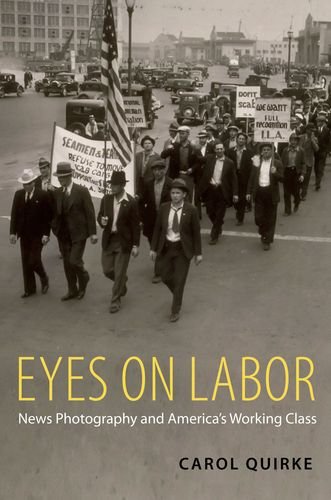
Eyes on Labor: News Photography and America's Working Class
Authors:
Carol Quirke
Publisher:
Oxford University Press, USA
Publication Date:
Not available
ISBN:
0199768234
In the twentieth century's first decades, U.S. workers waged an epic struggle to achieve security through unions; simultaneously Americans came to... interpret current events through newspaper photographs. Eyes on Labor brings these two revolutions together, revealing how news photography brought workers into the nation's mainstream. Carol Quirke focuses on images ignored by scholars but seen by millions of Americans in the news of the day. Part visual analysis, part labor and cultural history, Quirke analyzes over one hundred photographs: stereographs of the Uprising of 1877, tabloid photos of the 1919 strike wave, photo-essays in the nationally popular LIFE Magazine, and even photos taken by a union camera club. Quirke anchors her interpretations in a lively historical narrative that takes readers from Washington D.C. hearings, to small towns in Indiana and Pennsylvania, to local union halls and to New York City boardrooms. Illuminating why unions, employers, and news publishers vied to represent workers with the camera's eye, Eyes on Labor explores how Americans understood the complex and contradictory portrait of labor they produced.
 '





