production
/viewbook/list/all/?page=4530
/
/static/
None

Fighting for Darfur: Public Action and the Struggle to Stop Genocide
Authors:
Rebecca Hamilton
Publisher:
Palgrave Macmillan
Publication Date:
Not available
ISBN:
0230100228
Around the world, millions of people have added their voices to protest marches and demonstrations because they believe that, together, they can make a... difference. When we failed to stop the genocide in Rwanda in 1994, we promised to never let such a thing happen again. But nine years later, as news began to trickle out of killings in western Sudan, an area known as Darfur, the international community again faced the problem of how the United Nations and the United States government could respond to mass atrocity.Rebecca Hamilton passionately narrates the six-year grassroots campaign to draw global attention to the plight of Darfur’s people. From college students who galvanized entire university campuses in the belief that their outcry could save millions of Darfuris still at risk, to celebrities such as Mia Farrow, who spurred politicians to act, to Steven Spielberg, who boycotted the 2008 Summer Olympics in Beijing, Hamilton details how advocacy for Darfur was an exuberant, multibillion-dollar effort. She then does what no one has done to date: she takes us into the corridors of power and the camps of Darfur, and reveals the impact of ordinary people’s fierce determination to uphold the mantra of “never again.” Fighting for Darfur weaves a gripping story that both dramatizes our moral dilemma and shows the promise and perils of citizen engagement in a new era of global compassion.

Fighting For Darla
Authors:
Not Available
Publisher:
Not available
Publication Date:
Not available
ISBN:
0840106947

Fighting Foreclosure: The Blaisdell Case, the Contract Clause, and...
Authors:
John A. Fliter
Publisher:
Univ Pr of Kansas
Publication Date:
Not available
ISBN:
0700618724
In the depths of the Great Depression, when foreclosure rates skyrocketed across the United States, more than two dozen states passed mortgage-extension... or -adjustment laws to help farmers and homeowners keep their properties. One such statute in Minnesota led to the most important property law case of its time and still casts a long shadow upon constitutional debates and our own era’s severe economic downturn.Fighting Foreclosure marks the first book-length study of the landmark 1934 Supreme Court decision in Home Building and Loan Association v. Blaisdell, which, by a 5–4 vote, upheld the Minnesota Mortgage Moratorium Act. Blaisdell validated efforts by states to offer legislative relief to citizens struggling to keep their farms and homes. But it caused an outcry among banking interests and conservative legal theorists, who argued that these laws violated the Contract Clause of the Constitution and interfered with our free market system.In his majority opinion, Chief Justice Charles Evans Hughes argued that the reasonable and limited nature of the law and the unusual severity of the emergency it addressed placed it firmly within the “police powers” of the states to protect the health and safety of the people. In a strongly worded dissent, Justice George Sutherland argued for a consistent and strict interpretation of the Contract Clause regardless of economic exigency.John Fliter and Derek Hoff provide a concise history and analysis of not only this landmark case and the reasoning behind its sharply divided decision but also of the entire history of the Contract Clause. They trace closely the agricultural crisis, political pressures, and farmer-protest movement that produced the Minnesota law. And their study contributes to scholarly debate about the origins of the Constitutional Revolution of 1937, by which the Supreme Court accepted the New Deal, as well as to public debates about constitutional interpretation and the role that government should play in providing relief to distressed citizens. In the midst of our nation’s ongoing suffering from massive foreclosures and bankruptcies, Fighting Foreclosure also offers a potent reminder that the High Court’s decisions often revolve around lives at risk as much as abstract legal debates.This book is part of the Landmark Law Cases and American Society series.

Fighting for Faith and Nation: Dialogues with Sikh Militants...
Authors:
Cynthia Keppley Mahmood
Publisher:
University of Pennsylvania Press
Publication Date:
Not available
ISBN:
0812215923
The ethnic and religious violence that characterized the late twentieth century calls for new ways of thinking and writing about politics. Listening to... the voices of people who experience political violence—either as victims or as perpetrators—gives new insights into both the sources of violent conflict and the potential for its resolution.Drawing on her extensive interviews and conversations with Sikh militants, Cynthia Keppley Mahmood presents their accounts of the human rights abuses inflicted on them by the state of India as well as their explanations of the philosophical tradition of martyrdom and meaningful death in the Sikh faith. While demonstrating how divergent the world views of participants in a conflict can be, Fighting for Faith and Nation gives reason to hope that our essential common humanity may provide grounds for a pragmatic resolution of conflicts such as the one in Punjab which has claimed tens of thousands of lives in the past fifteen years.
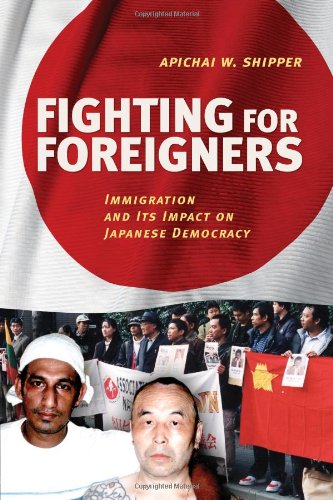
Fighting for Foreigners: Immigration and Its Impact on Japanese...
Authors:
Apichai W. Shipper
Publisher:
Cornell University Press
Publication Date:
Not available
ISBN:
0801447151
Although stereotypically homogenized and hostile to immigrants, Japan has experienced an influx of foreigners from Asia and Latin America in recent... decades. In Fighting for Foreigners, Apichai W. Shipper details how, in response, Japanese citizens have established a variety of local advocacy groups-some faith based, some secular-to help immigrants secure access to social services, economic equity, and political rights.Drawing on his years of ethnographic fieldwork and a pragmatic account of political motivation he calls associative activism, Shipper asserts that institutions that support illegal foreigners make the most dramatic contributions to democratic multiculturalism. The changing demographics of Japan have been stimulating public discussions, the political participation of marginalized groups, and calls for fair treatment of immigrants. Nongovernmental organizations established by the Japanese have been more effective than the ethnically particular associations formed by migrants themselves, Shipper finds. Activists who initially work in concert to solve specific and local problems eventually become more ambitious in terms of political representation and opinion formation.As debates about the costs and benefits of immigration rage across the developed world, Shipper's research offers a refreshing new perspective: rather than undermining democracy in industrialized society, immigrants can make a positive institutional contribution to vibrant forms of democratic multiculturalism.
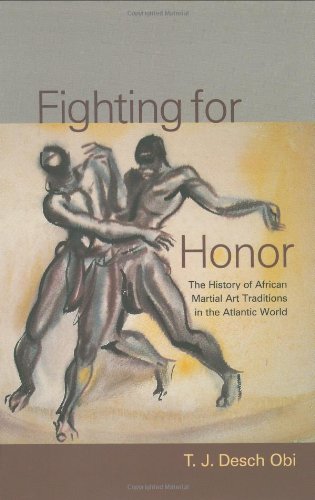
Fighting for Honor: The History of African Martial Art in the...
Authors:
T. J. Desch Obi
Publisher:
University of South Carolina Press
Publication Date:
Not available
ISBN:
1570037183
The presence of African influence and tradition in the Americas has long been recognized in art, music, language, agriculture, and religion. T. J.... Desch Obi explores another cultural continuity that is as old as eighteenth-century slave settlements in South America and as contemporary as hip-hop culture. In this thorough survey of the history of African martial arts techniques, Obi maps the translation of numerous physical combat techniques across three continents and several centuries to illustrate how these practices evolved over time and are still recognizable in American culture today. Some of these art traditions were part of African military training while others were for self-defense and spiritual discipline. Grounded in historical and cultural anthropological methodologies, Obi's investigation traces the influence of well-delineated African traditions on long-observed but misunderstood African and African American cultural activities in North America, Brazil, and the Caribbean. He links the Brazilian martial art capoeira to reports of slave activities recorded in colonial and antebellum North America. Likewise Obi connects images of the kalenda African stick-fighting techniques to the Haitian Revolution. Throughout the study Obi examines the ties between physical mastery of these arts and changing perceptions of honor. Including forty-five illustrations, this rich history of the arrival and dissemination of African martial arts in the Atlantic world offers a new vantage for furthering our understanding of the powerful influence of enslaved populations on our collective social history.

Fighting for the Future of Food: Activists versus Agribusiness in...
Authors:
Rachel Schurman
Publisher:
Univ Of Minnesota Press
Publication Date:
Not available
ISBN:
0816647623
When scientists working in the agricultural biotechnology industry first altered the genetic material of one organism by introducing genes from an... entirely different organism, the reaction was generally enthusiastic. To many, these genetically modified organisms (GMOs) promised to solve the challenges faced by farmers and to relieve world hunger. Yet within a decade, this "gene revolution" had abruptly stalled. Widespread protests against the potential dangers of "Frankenfoods" and the patenting of seed supplies in the developing world forced the industry to change course. As a result, in the late 1990s, some of the world's largest firms reduced their investment in the agricultural sector, narrowed their focus to a few select crops, or sold off their agricultural divisions altogether. Fighting for the Future of Food tells the story of how a small group of social activists, working together across tables, continents, and the Internet, took on the biotech industry and achieved stunning success. Rachel Schurman and William A. Munro detail how the anti-biotech movement managed to alter public perceptions about GMOs and close markets to such products. Drawing strength from an alternative worldview that sustained its members' sense of urgency and commitment, the anti-GMO movement exploited political opportunities created by the organization and culture of the biotechnology industry itself. Fighting for the Future of Food ultimately addresses society's understanding and trust (or mistrust) of technological innovation and the complexities of the global agricultural system that provides our food.
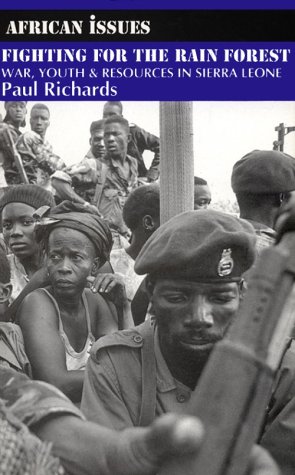
Fighting for the Rain Forest: War, Youth, & Resources in Sierra...
Authors:
Paul Richards
Publisher:
Heinemann
Publication Date:
Not available
ISBN:
0435074067
This important book addresses several misconceptions about war, youth, and resources in Sierra Leone. Paul Richards argues that the war in Sierra Leone... and other small wars in Africa do not manifest a "new barbarism." What appears as random, anarchic violence is no such thing. The terrifying military methods of Sierra Leone's soldiers may not fit Western models of warfare, but they are rational and effective. The war must be understood partly as "performance," in which techniques of terror compensate for lack of equipment. Richards points out that Sierra Leone's war is a crisis of modernity. Sierra Leone's youth belong to a modern, trans-Atlantic culture. In remote diamond-digging camps, young people watch Rambo videos and listen to BBC news. These are part of the cultural resources with which the war is fought. The frustrations of these young people underlie the crisis. Not only the soldiers but most of the commanders are teenagers. Their aspirations are for schools and jobs. Financial stringency and the decay of the patrimonial state led directly to the government's surrender of much of the countryside. The rain forest is also central to the war. The war is fought in the rain forest and can only be understood in the context of old traditions of social and technical management of the forest. There is no evidence that a crisis of deforestation or overpopulation has contributed to the war. Rebuilding the state - and giving young Sierra Leoneans confidence in it - is essential for peace. But in the meantime, many people are learning to live with war, and building limited peace locally. Richards argues that aid agencies must learn from these initiatives to avoid becoming part of the economy of conflict.

Fighting for Time: Shifting Boundaries of Work and Social Life
Authors:
Not Available
Publisher:
Russell Sage Foundation
Publication Date:
Not available
ISBN:
0871542870
Though there are still just twenty-four hours in a day, society’s idea of who should be doing what and when has shifted. Time, the ultimate scarce... resource, has become an increasingly contested battle zone in American life, with work, family, and personal obligations pulling individuals in conflicting directions. In "Fighting for Time," editors Cynthia Fuchs Epstein and Arne Kalleberg bring together a team of distinguished sociologists and management analysts to examine the social construction of time and its importance in American culture. "Fighting for Time" opens with an exploration of changes in time spent at work—both when people are on the job and the number of hours they spend there—and the consequences of those changes for individuals and families. Contributors Jerry Jacobs and Kathleen Gerson find that the relative constancy of the average workweek in America over the last thirty years hides the fact that blue-collar workers are putting in fewer hours while more educated white-collar workers are putting in more. Rudy Fenwick and Mark Tausig look at the effect of nonstandard schedules on workers’ health and family life. They find that working unconventional hours can increase family stress, but that control over one’s work schedule improves family, social, and health outcomes for workers. The book then turns to an examination of how time influences the organization and control of work. The British insurance company studied by David Collinson and Margaret Collinson is an example of a culture where employees are judged on the number of hours they work rather than on their productivity. There, managers are under intense pressure not to take legally guaranteed parental leave, and clocks are banned from the office walls so that employees will work without regard to the time. In the book’s final section, the contributors examine how time can have different meanings for men and women. Cynthia Fuchs Epstein points out that professional women and stay-at-home fathers face social disapproval for spending too much time on activities that do not conform to socially prescribed gender roles—men are mocked by coworkers for taking paternity leave, while working mothers are chastised for leaving their children to the care of others. "Fighting for Time" challenges assumptions about the relationship between time and work, revealing that time is a fluid concept that derives its importance from cultural attitudes, social psychological processes, and the exercise of power. Its insight will be of interest to sociologists, economists, social psychologists, business leaders, and anyone interested in the work-life balance.
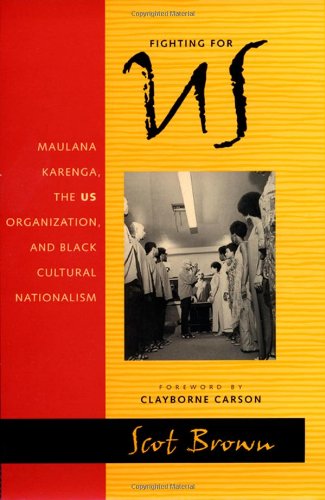
Fighting for Us
Authors:
Scot Brown
Publisher:
NYU Press
Publication Date:
Not available
ISBN:
0814798780
In spite of the ever-growing popularity of Kwanzaa, the story of the influential Black nationalist organization behind the holiday has never been told.... Fighting for Us explores the fascinating history of the US Organization, a Black nationalist group based in California that played a leading role in Black Power politics and culture during the late 1960s and early ‘70s whose influence is still felt today. Advocates of Afrocentric renewal, US unleashed creative and intellectual passions that continue to fuel debate and controversy among scholars and students of the Black Power movement.Founded in 1965 by Maulana Karenga, US established an extensive network of alliances with a diverse body of activists, artists and organizations throughout the United States for the purpose of bringing about an African American cultural revolution. Fighting for US presents the first historical examination of US’ philosophy, internal dynamics, political activism and influence on African American art, making an elaborate use of oral history interviews, organizational archives, Federal Bureau of Investigation files, newspaper accounts, and other primary sources of the period.This book also sheds light on factors contributing to the organization's decline in the early ‘70s—;government repression, authoritarianism, sexism, and elitist vanguard politics. Previous scholarship about US has been shaped by a war of words associated with a feud between US and the Black Panther Party that gave way to a series of violent and deadly clashes in Los Angeles. Venturing beyond the lingering rhetoric of rivalry, this book illuminates the ideological similarities and differences between US's “cultural” nationalism and the Black Panther Party's "revolutionary" nationalism. Today, US’s emphasis on culture has endured as evidenced by the popularity of Kwanzaa and the Afrocentrism in Black art and popular media. Engaging and original, Fighting for US will be the definitive work on Maulana Karenga, the US organization, and Black cultural nationalism in America.

Fighting for Your Marriage: A Deluxe Revised Edition of the Classic...
Authors:
Howard J. Markman
Publisher:
Jossey-Bass
Publication Date:
Not available
ISBN:
0470485914
A thorough revision with a new DVD of couples in action, using the PREP method for strengthening marriage and avoiding divorce courtThe third edition of... the best-selling classic on marriage enhancement and divorce prevention, features the latest research and changes of heart in our culture and society. New and revised, Fighting for Your Marriage is based on the widely acclaimed PREP (Prevention and Relationship Enhancement Program) approach. Groundbreaking studies have found that couples can use the strategies of this approach to handle conflict more constructively, protect their happiness, and reduce the odds of breaking up.The book is based on more than twenty years of university researchExplores how to apply the PREP approach to any marriageShows couples how to talk more and fight less, deepen and protect their friendship, and keep the fun aliveReveals what it takes to have a more intimate, sensual relationship and how to clarify and act on prioritiesThe authors have included a wealth of techniques and down-to-earth guidance for all couples who seek to promote greater character and pleasure in their long-term relationships.
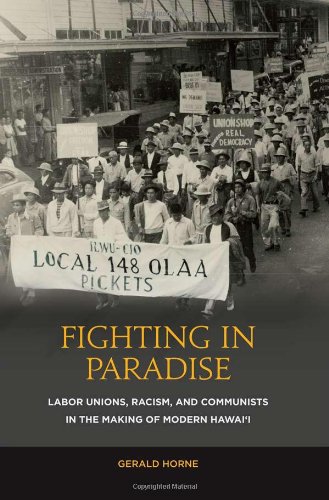
Fighting in Paradise: Labor Unions, Racism, and Communists in the...
Authors:
Gerald Horne
Publisher:
Univ of Hawaii Pr
Publication Date:
Not available
ISBN:
0824835492
Powerful labor movements played a critical role in shaping modern Hawaii, beginning in the 1930s, when International Longshore and Warehousemen's Union... (ILWU) representatives were dispatched to the islands to organize plantation and dock laborers. They were stunned by the feudal conditions they found in Hawaii, where the majority of workers--Hawaiian, Japanese, Chinese, and Filipino in origin--were routinely subjected to repression and racism at the hands of white bosses. The wartime civil liberties crackdown brought union organizing to a halt; but as the war wound down, Hawaii workers' frustrations boiled over, leading to an explosive success in the forming of unions. During the 1950s, just as the ILWU began a series of successful strikes and organizing drives, the union came under McCarthyite attacks and persecution. In the midst of these allegations, Hawaii's bid for statehood was being challenged by powerful voices in Washington who claimed that admitting Hawaii to the union would be tantamount to giving the Kremlin two votes in the U.S. Senate, while Jim Crow advocates worried that Hawaii's representatives would be enthusiastic supporters of pro-civil rights legislation. Hawaii's extensive social welfare system and the continuing power of unions to shape the state politically are a direct result of those troubled times. Based on exhaustive archival research in Hawaii, California, Washington, and elsewhere, Gerald Horne's gripping story of Hawaii workers' struggle to unionize reads like a suspense novel as it details for the first time how radicalism and racism helped shape Hawaii in the twentieth century. 14 illus.

Fighting Like a Community: Andean Civil Society in an Era of Indian...
Authors:
Rudi Colloredo-Mansfeld
Publisher:
University Of Chicago Press
Publication Date:
Not available
ISBN:
0226114031
The indigenous population of the Ecuadorian Andes made substantial political gains during the 1990s in the wake of a dynamic wave of local activism. The... movement renegotiated land development laws, elected indigenous candidates to national office, and successfully fought for the constitutional redefinition of Ecuador as a nation of many cultures. Fighting Like a Community argues that these remarkable achievements paradoxically grew out of the deep differences—in language, class, education, and location—that began to divide native society in the 1960s. Drawing on fifteen years of fieldwork, Rudi Colloredo-Mansfeld explores these differences and the conflicts they engendered in a variety of communities. From protestors confronting the military during a national strike to a migrant family fighting to get a relative released from prison, Colloredo-Mansfeld recounts dramatic events and private struggles alike to demonstrate how indigenous power in Ecuador is energized by disagreements over values and priorities, eloquently contending that the plurality of Andean communities, not their unity, has been the key to their political success.

Fighting Poverty in the US and Europe: A World of Difference...
Authors:
Alberto Alesina
Publisher:
Oxford University Press, USA
Publication Date:
Not available
ISBN:
0199286108
In this timely study of the different approaches of America and Europe to the problems of domestic inequality and poverty, the authors describe just how... different the two continents are in the level of State engagement in the redistribution of income. They discuss various possible economic explanations for the difference, including different levels of pre-tax income, openness, and social mobility; they survey politico-historical differences such as the varying physical size of nations, their electoral and legal systems, and the character of their political parties, as well as their experiences of war; and they examine sociological explanations which include different attitudes to the poor and notions of social responsibility, as well as, most importantly, attitudes to race.

Fighting Terrorism: How Democracies Can Defeat Domestic and...
Authors:
Benjamin Netanyahu
Publisher:
Farrar, Straus and Giroux
Publication Date:
Not available
ISBN:
0374524971
In this innovative and concise work, Israeli politician Benjamin Netanyahu offers a compelling approach to understanding and fighting the increase in... domestic and international terrorism throughout the world. Citing diverse examples from around the globe, Netanyahu demonstrates that domestic terrorist groups are usually no match for an advanced technological society which can successfully roll back terror without any significant curtailment of civil liberties. But Netanyahu sees an even more potent threat from the new international terrorism which is increasingly the product of Islamic militants, who draw their inspiration and directives from Iran and its growing cadre of satellite states. The spread of fundamentalist Islamic terrorism, coupled with the possibility that Iran will acquire nuclear weapons, poses a more frightening threat from an adversary less rational and therefore less controllable than was Soviet Communism. How democracies can defend themselves against this new threat concludes this provocative book.
 '





