production
/viewbook/list/all/?page=4683
/
/static/
None
Food: Ethnographic Encounters (Encounters: Experience and...
Authors:
Leo Coleman
Publisher:
Berg Publishers
Publication Date:
Not available
ISBN:
1847889077
Food preparation, consumption, and exchange are eminently social practices, and experiencing another cuisine often provides our first encounter with a... different culture. This volume presents fascinating essays relating to food by anthropologists working in many parts of the world, exploring their experiences of hunger, pleasure, and disgust, and what they learned by eating with others. From the rich metaphors for social life drawn from eating and drinking in Latin America, to the experience of refugees subsisting on food aid, this book covers a wide range of contemporary issues in anthropology, with a special focus on the experience and challenge of ethnographic fieldwork. Essays address linguistic and social acculturation through eating, the experience of scarcity, industrial food production and the threat of contamination, and ecology, identity, and social differentiation. Food: Ethnographic Encounters offers readers a broad view of the vibrancy of local and global food cultures, and provides an accessible introduction to both food studies and contemporary ethnography.
Food, Farming, and Faith (S U N Y Series on Religion and the...
Authors:
Gary W. Fick
Publisher:
State University of New York Press
Publication Date:
Not available
ISBN:
0791473848
Food, Farming, and Freedom: Sowing the Arab Spring
Authors:
Rami Zurayk
Publisher:
Just World Books
Publication Date:
Not available
ISBN:
1935982192
The wave of anti-government protests that swept through the Arab world from December 2010 on is transforming politics and society in the Middle East. ... The protests came as a surprise to many observers-- but not to Rami Zurayk, an experienced Lebanese agronomist and social activist who had been charting the collapse of traditional agricultural livelihoods in the Middle East since the late 1980s.In 2007, Zurayk started writing the Land and People blog, which charts food-policy and agricultural policy issues throughout the Middle East. Now, Food, Farming, and Freedom: Sowing the Arab Spring presents his choice of the best of the posts in the blog from 2007 through April 2011. The book was almost ready to publish when the uprisings of the "Arab Spring" broke out in late 2010. Just World Books then delayed publication so Zurayk could add in an additional chapter tracking and assessing the Arab Spring's early months.The book's five main chapters address:Issues of food sovereignty and politics,The food-price crisis of 2007-2008 and how it affected Arab countries, Issues at the nexus of environment, resources, and people, including phenomena such as the "Slow Food" movement with which Zurayk has long been affiliated,A critique of many Western-dominated development efforts, andThe story of the Arab Spring, from December 2010 through mid-April, 2011.Interleaved between these chapters is a series of informal travel reports, illustrated with Zurayk's own photos, from trips he took in Lebanon, Syria, Iraq, and Morocco. In these reports he shares some of what he learned (and enjoyed) about these countries' land and people-- and their food!
Food, Farming, and Sustainability: Readings in Agricultural Law
Authors:
Susan A. Schneider
Publisher:
Carolina Academic Press
Publication Date:
Not available
ISBN:
1594605882
Agricultural law is the study of the unique network of laws that apply to the production, marketing, and sale of agricultural products, i.e., the food... we eat, the natural fibers we wear, and increasingly, the bio-fuels that run our vehicles. It is the law as applied to one of the largest and most regulated industries in our economy. In recent years, agricultural law has expanded beyond its traditional scope to include issues of food safety and sustainability. Popular interest in agriculture has increased as consumers seek to know more about their food and where it comes from. This book provides an issues-based study of these complex topics. It is divided into units designed to introduce some of the critical legal issues facing the industry and consumers today including: agricultural commercial law, environmental law, federal farm policy, labor law, food labeling, farm animal welfare, and other topics. Each is presented in the context of a current issue. The book provides a mix of law, policy, and the analysis of both. From its initial discussion of ''agricultural exceptionalism'' to its concluding remarks on the future of our food system, the book is certain to spark thoughtful dialogue.

Food, Fermentation and Micro-organisms
Authors:
Charles W. Bamforth
Publisher:
Wiley-Blackwell
Publication Date:
Not available
ISBN:
0632059877
Fermentation and the use of micro-organisms is one of the most important aspects of food processing, an industry worth billions of US dollars... world-wide. From beer and wine to yoghurt and bread, it is the common denominator between many of our foodstuffs.In his engaging style Professor Charles Bamforth covers all known food applications of fermentation. Beginning with the science underpinning food fermentations, Professor Bamforth looks at the relevant aspects of microbiology and microbial physiology, moving on to cover individual food products, how they are made, what is the role of fermentation and what possibilities exist for future development.* Internationally respected author* Coverage of all major uses of fermentation in the food industry* Practical coverage of food processing in relation to fermentationA comprehensive guide for all food scientists, technologists and microbiologists in the food industry and academia, this book will be an important addition to all libraries in food companies, research establishments and universities where food studies, food science, food technology and microbiology are studied and taught.

FOOD+FIBER MARKETING AGB 301
Authors:
Not Available
Publisher:
Not available
Publication Date:
Not available
ISBN:
Not available
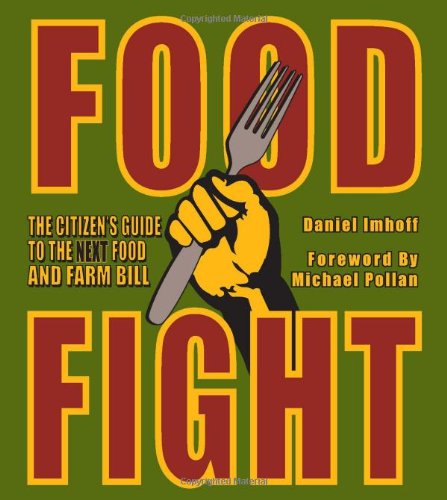
Food Fight: The Citizen's Guide to the Next Food and Farm Bill
Authors:
Daniel Imhoff
Publisher:
Watershed Media
Publication Date:
Not available
ISBN:
0970950071
Every five years, the U.S. Congress passes a little understood piece of legislation called the Farm Bill. Primarily accountable for setting the budgets... and work plans for the U.S. Department of Agriculture, the Farm Bill is anything but bureaucratic trivia. It is an essential economic and policy engine that drives the food and farming system and provides nutritional assistance to tens of millions of Americans--many of them children. In recent years, more and more citizens are realizing just how much is at stake in this political chess game.Originally published in 2007, Food Fight was Daniel Imhoff's highly acclaimed primer on the 2008 Farm Bill. Now in a newly updated and expanded edition, packed with helpful charts and illustrations, Imhoff looks ahead at this important issue, as the debate for 2012 is already underway. With the legislation due to be reauthorized in late 2012, Food Fight offers a critical resource that can help all who live in the U.S. to deconstruct this challenging bill, organize in their communities to gain a seat at the bargaining table, and ultimately vote with their forks.Includes a foreword by Michael Pollan and introduction by Fred Kirschenmann.

Food Fight: The Inside Story of The Food Industry, America's...
Authors:
Kelly Brownell
Publisher:
McGraw-Hill
Publication Date:
Not available
ISBN:
0071438726
"The evergreen subject of American gluttony and sloth brings out the best in scientist-advocates, and the authors, while drawing on a mountain of... statistics and studies, make their indictment both funny and appalling." --Publishers Weekly "Brownell and Horgen uncover some of America's biggest diet hazards and how to avoid them."--Self magazine "This is a fascinating, empowering must-read filled with practical ways to take action."--Shape magazine "Food Fight is . . . an important contribution to the discourse around the obesity epidemic. I highly recommend it to anyone who wishes to learn more about the role of the food industry, and especially to public health advocates looking for clearly presented research and ideas for positive change."--Michele Simon, founder and director of the Center for Informed Food Choices
Food, Film and Culture: A Genre Study
Authors:
James R. Keller
Publisher:
McFarland & Company, Inc., Publishers
Publication Date:
Not available
ISBN:
0786426160
Culinary imagery, much like sexual and violent imagery, is a key cinematic device used to elicit a sensory response from an audience. In many films,... culinary imagery is central enough to constitute a new subgenre, defined by films in which food production, preparation, service, and consumption play a major part in the development of character, structure, or theme. This book defines the food film genre and analyzes the relationship between cinematic food imagery and various cultural constructs, including politics, family, identity, race, ethnicity, nationality, gender, and religion. Chapters examine these themes in several well-known food films, such as The Cook, the Thief, His Wife and Her Lover, Chocolat, Babette’s Feast, and Eat Drink Man Woman, and lesser-known productions, including Felicia’s Journey, Kitchen Stories, Magic Kitchen, and Chinese Feast. The work includes a filmography of movies within the food genre.
Food Food Is Culture (Arts and Traditions of the Table:...
Authors:
Massimo Montanari
Publisher:
Columbia University Press
Publication Date:
Not available
ISBN:
0231137907
Elegantly written by a distinguished culinary historian, Food Is Culture explores the innovative premise that everything having to do with food—its... capture, cultivation, preparation, and consumption—represents a cultural act. Even the "choices" made by primitive hunters and gatherers were determined by a culture of economics (availability) and medicine (digestibility and nutrition) that led to the development of specific social structures and traditions.Massimo Montanari begins with the "invention" of cooking which allowed humans to transform natural, edible objects into cuisine. Cooking led to the creation of the kitchen, the adaptation of raw materials into utensils, and the birth of written and oral guidelines to formalize cooking techniques like roasting, broiling, and frying. The transmission of recipes allowed food to acquire its own language and grow into a complex cultural product shaped by climate, geography, the pursuit of pleasure, and later, the desire for health. In his history, Montanari touches on the spice trade, the first agrarian societies, Renaissance dishes that synthesized different tastes, and the analytical attitude of the Enlightenment, which insisted on the separation of flavors. Brilliantly researched and analyzed, he shows how food, once a practical necessity, evolved into an indicator of social standing and religious and political identity. Whether he is musing on the origins of the fork, the symbolic power of meat, cultural attitudes toward hot and cold foods, the connection between cuisine and class, the symbolic significance of certain foods, or the economical consequences of religious holidays, Montanari's concise yet intellectually rich reflections add another dimension to the history of human civilization. Entertaining and surprising, Food Is Culture is a fascinating look at how food is the ultimate embodiment of our continuing attempts to tame, transform, and reinterpret nature.
Food for Fifty
Authors:
Mary K. Molt
Publisher:
Prentice Hall
Publication Date:
Not available
ISBN:
0136136516
This classic book is the resource for learning how to prepare and serve quality food in quantity. From caterers to food service managers, this book... provides a wide variety of reliable quantity recipes and methods for planning, selecting and preparing menus for all types of food services. With over 100 new recipes, updated tables, and information on the latest techniques, this edition addresses safety and economic concerns, as well as the dining trends and expectations of today's consumer. Some new features include: New! Over 100 new recipes and recipe revisions. New! Updated charts and tables.New! Expanded section on ways to make recipes more healthy. New! Updated information on menu planning for special meals, events and receptions. New! Updated information on recipe modification. For professionals in Quantity Food Production and Foodservice Management.
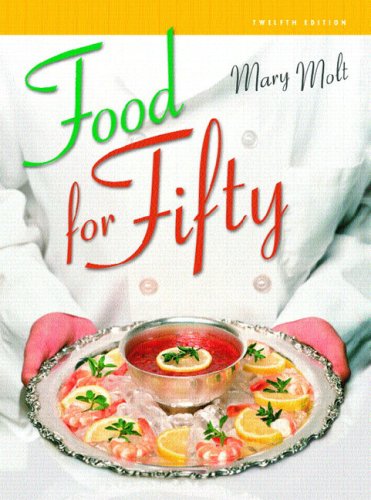
Food for Fifty (12th Edition)
Authors:
Mary K. Molt
Publisher:
Prentice Hall
Publication Date:
Not available
ISBN:
0131138715
THE resource--for nearly 70 years–this exceptionally comprehensive book/reference provides basic technical food production information; offers a... wealth of high-quality, standardized, quantity recipes applicable to most types of foodservices; and clearly explains the full range of generally accepted procedures and techniques involved in quantity food preparation. Very contemporary in perspective, it provides a host of “new tools” for helping food professionals meet quickly changing dining trends and satisfy the expectations of today's customer. Approximately seventy recipes–organized according to menu categories and applicable to all types of foodservices. Recipes are easily adaptable to incorporate new recipe ideas and presentations, and suggestions are given for many variations of the basic recipes. Includes information on menu planning; yield adjustment procedures; marinades, rubs and seasonings; planning and serving special meals (including buffets); temperature guidelines and safe food handling standards; as well as food customs of different religions. For foodservice managers and food production professionals in commercial kitchens.
FOOD FOR FIFTY&MASTERCOOK 11 PKG
Authors:
Not Available
Publisher:
Not available
Publication Date:
Not available
ISBN:
Not available
FOOD FOR FIFTY& SERSAFE ESSN W ANS W 09 PKG
Authors:
Not Available
Publisher:
Not available
Publication Date:
Not available
ISBN:
Not available

Food for Life
Authors:
L. Shannon Jung
Publisher:
Augsburg Fortress Publishers
Publication Date:
Not available
ISBN:
0800636422
Food for Life draws on L. Shannon Jung's gifts as theologian, ethicist, pastor, and eater extraordinaire. In this deeply thoughtful but very lively... book, he encourages us to see our humdrum habits of eating and drinking as a spiritual practice that can renew and transform us and our world. In a fascinating sequence that takes us from the personal to the global, Jung establishes the religious meaning of eating and shows how it dictates a healthy order of eating. He exposes Christians' complicity in the face of widespread eating disorders we experience personally, culturally, and globally, and he argues that these disorders can be reversed through faith, Christian practices, attention to habitual activities like cooking and gardening, the church's ministry, and transforming our cultural policies about food.
 '





