production
/viewbook/list/all/?page=4702
/
/static/
None

Forensic Chemistry
Authors:
Suzanne Bell
Publisher:
Prentice Hall
Publication Date:
Not available
ISBN:
0131478354
As the number of forensic science and forensic chemistry degree programs has increased over the last few years, Forensic Chemistry was the first book to... specifically address this rapidly growing field. It introduces the principal areas of study from the perspective of analytical chemistry, addressing the legal context in which forensic chemistry is conducted, types of samples and matrices, variety of sample types encountered, and extensive use of instrumentation. It offers a solid foundation for basic chemistry, introducing chemical concepts and practices from a forensic perspective — including multivariate statistics, quality assurance/quality control (QA/QC), and protocols used in working forensic laboratories. Introduction; Statistics, Sampling, and Data Quality; Multivariate Statistics, Calibration, and Quality Assurance; Sample Preparation and Chromatography; Instrumentation and Microscopy; Drugs and Pharmacology; Forensic Drug Analysis I — Overview and Acidic Drugs; Forensic Drug Analysis II — Basic Drugs; Chemistry of Combustion I: Arson; Combustion II: Explosives and Gunshot Residue; Chemistry of Color: Inks and Paint; Chemistry of Polymers: Fibers, Paper, Plastics and Adhesives/A useful reference for anyone interested in forensics or for chemistry professionals.

Forensic Chemistry (2nd Edition)
Authors:
Suzanne Bell
Publisher:
Prentice Hall
Publication Date:
Not available
ISBN:
0321765753
The first text to specifically address this growing field, Forensic Chemistry introduces the principal areas of study from the perspective of... analytical chemistry–addressing the legal context in which forensic chemistry is conducted, types of samples and matrices, variety of sample types encountered, and extensive use of instrumentation. It provides a solid foundation for basic chemistry, introducing chemical concepts and practices from a forensic perspective (including multivariate statistics, quality assurance/quality control, and protocols used in working forensic laboratories). The Second Edition has been reorganized significantly, and updated to reflect new developments in the course.

Forensic Communication: Application of COmmunication Research to...
Authors:
Michael Motley
Publisher:
Hampton Press
Publication Date:
Not available
ISBN:
1612890814
In this volume, recognized scholars discuss ways they have applied communication research to court cases as an expert witness or consultant in such... areas as jury selection, pretrial publicity, sexual consent, warning adequacy, hindsight bias, jury decision making, document authorship identification, graphics and simulations and several others. For attorneys, the volume may provide an introduction to ways that communication shcolarship can inform their future cases. For communication scholars-both established and up and coming-it may suggest ways to offer expertise as an expert witness or cunsultant. For casual and serious students of communication it will provide a look into one of the most fascinating applications of our scholarship
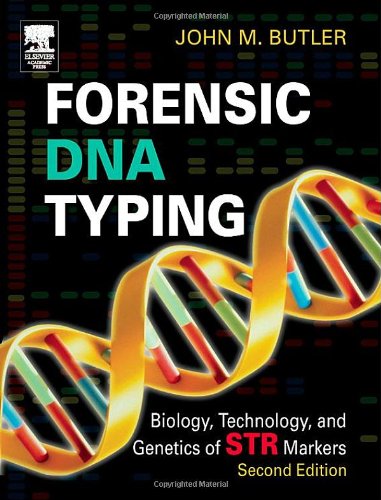
Forensic DNA Typing, Second Edition: Biology, Technology, and...
Authors:
John M. Butler Ph.D. (Analytical Chemistry) University of V
Publisher:
Academic Press
Publication Date:
Not available
ISBN:
0121479528
Since the enormously successful first edition of Forensic DNA Typing was published, the Human Genome Project has published a draft sequence of the human... genome and completed the "finished” reference sequence. The advent of modern DNA technology has resulted in the increased ability to perform human identity testing-desirable in a number of situations including the determination of perpetrators of violent crime such as murder and rape, resolving unestablished paternity, and identifying remains of missing persons or victims of mass disasters. The technology has been utilized in identifying remains from victims of the World Trade Center twin towers collapse following the terrorist attacks of September 11, 2001, the President Clinton-Monica Lewinsky scandal, and the identification of the remains in the Tomb of the Unknown Soldier. Indeed, our perceptions of history have been changed with DNA evidence that revealed Thomas Jefferson fathered a child by one of his slaves. This book examines the science of current forensic DNA typing methods by focusing on the biology, technology, and genetic interpretation of short tandem repeat (STR) markers, which encompass the most common forensic DNA analysis methods used today. Ten new chapters have been added to accommodate the explosion of new information since the turn of the century. *The only book available that specifically covers detailed information on mitochondrial DNA and the Y chromosome*Chapters cover the topic from introductory level right up to "cutting edge" research*High-profile cases are addressed throughout the book, near the sections dealing with the science or issues behind these cases*NEW TO THIS EDITION: D.N.A. Boxes--boxed "Data, Notes & Applications" sections throughout the book offer higher levels of detail on specific questions

Forensic Entomology: An Introduction
Authors:
Dorothy Gennard
Publisher:
Wiley-Blackwell
Publication Date:
Not available
ISBN:
047068903X
Forensic Entomology provides undergraduates with a concise introduction to the subject. The book is written with the clarity necessary for students... starting out in entomology yet authoritative enough to prove useful for more experienced researchers.Worked examples of the necessary mathematics, including how to use excel to process data, coupled with lab protocols and self-assessment questions make the book an essential starting point in the subject.Assuming little prior knowledge of either biology or entomology the book provides information on identification, life cycles and ecology of insects presented in a forensic context. Information is conveyed in an accessible style with practical tasks and suggestions for further reading included in each chapter.Fully revised and updated to include new research in the fieldNew chapter on aquatic forensic entomologyNew pictorial key to aid identification of species contributed by Dr. Krzysztof Szpila, Nicolaus Copernicus University, PolandFurther coverage of civil applications of forensic entomologyPractical tasks and further reading included to aid understandingColour plate section and improved illustrations throughout to assist in the identification of insects associated with the corpseApproaches the topic from the dual perspectives of basic entomology and its forensic applicationsCovers the contributions to forensic investigations of both flies and beetlesProvides information on culturing insects collected from crime scenesGuides students through the processes of writing entomological court reports and presenting in court alongside the scientific topicsExtended coverage of PMI calculations, role of professional associations for forensic entomologists and sampling at the crime sceneNew sections to discuss the identification of traces of explosives found in larvae, puparia and pupae and DNA sampling from insects

Forensic Entomology: An Introduction
Authors:
Dorothy Gennard
Publisher:
Wiley
Publication Date:
Not available
ISBN:
0470014792
This invaluable text provides a concise introduction to entomology in a forensic context and is also a practical guide to collecting entomological... samples at the crime scene.Forensic Entomology: An Introduction:Assumes no prior knowledge of either entomology or biologyProvides background information about the procedures carried out by the professional forensic entomologist in order to determine key information about post-mortem interval presented by insect evidenceIncludes practical tasks and further reading to enhance understanding of the subject and to enable the reader to gain key laboratory skills and a clear understanding of insect life cycles, the identification features of insects, and aspects of their ecologyGlossary, photographs, the style of presentation and numerous illustrations have been designed to assist in the identification of insects associated with the corpse; keys are included to help students make this identificationThis book is an essential resource for undergraduate Forensic Science and Criminology students and those on conversion postgraduate M.Sc. courses in Forensic Science. It is also useful for Scenes of Crime Officers undertaking diploma studies and Scene Investigating Officers.
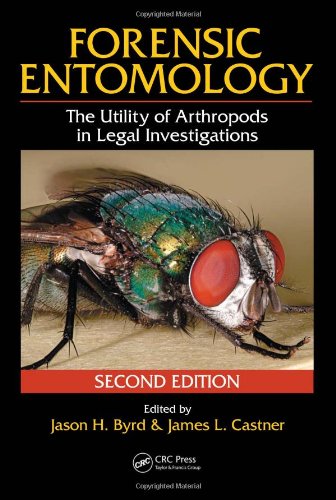
Forensic Entomology: The Utility of Arthropods in Legal...
Authors:
Not Available
Publisher:
CRC Press
Publication Date:
Not available
ISBN:
0849392152
The first edition of Forensic Entomology: The Utility of Arthropods in Legal Investigations broke ground on all levels, from the caliber of information... provided to the inclusion of copious color photographs. With over 100 additional color photographs, an expanded reference appendix, and updated information, the second edition has raised the bar for resources in this field, elucidating the basics on insects of forensic importance. New in the Second Edition: A chapter on insect identification that presents dichotomous keys Updates on DNA molecular techniques and genetic markers Coverage of new standardization in forensic entomological analysis Chapters on climatology and thermoregulation in insects 100 new color photographs, making available a total of 650 color photographs Goes Beyond Dramatics to the Nitty Gritty of Real Practice While many books, movies, and television shows have made forensic entomology popular, this book makes it real. Going beyond dramatics to the nitty gritty of actual practice, it covers what to search for when recovering entomological evidence, how to handle items found at the crime scene, and how to use entomological knowledge in legal investigations.

Forensic Epidemiology: Integrating Public Health and Law Enforcement
Authors:
Sana Loue
Publisher:
Jones & Bartlett Publishers
Publication Date:
Not available
ISBN:
0763738492
Events on local, national, and international levels have highlighted the need for joint investigation and collaboration between public health and law... enforcement. Domestic violence and partner homicide, intentional infection of individuals with HIV, and the anthrax attacks of 2001 are examples that underscore the need for forensic epidemiology in the investigation of criminal acts. Forensic Epidemiology focuses specifically on the integration of the principles and methods of epidemiology with law enforcement functions in the administrative and criminal contexts. Ideal for students and professionals in public health, criminology, and law, this book challenges the reader to examine various policy questions and to contemplate their own values as scientists, legislators, policymakers, and individuals.

Forensic Evidence in Court: A Case Study Approach
Authors:
Christine Lissitzyn
Publisher:
Carolina Academic Press
Publication Date:
Not available
ISBN:
1594603707
The text will cover the use of forensic evidence at trial through expert testimony as well as court challenges to many types of forensic evidence. The... case study is the 1973 murder of Penney Serra in New Haven, Connecticut, which remained a cold case until 1997, when Ed Grant was identified based on a fingerprint match and subsequently convicted. The text examines forensic evidence in the Grant trial, including fingerprint, DNA, blood spatter and eyewitness identification. It also examines trial strategy, handwriting testimony, polygraph, and exonerations based on newly-discovered DNA.
Forensic Evidence: Science and the Criminal Law, Second Edition
Authors:
Terrence F. Kiely
Publisher:
CRC Press
Publication Date:
Not available
ISBN:
0849328586
One of the greatest challenges encountered by those in the forensic sciences is anticipating what the state and federal courts will – or will not –... allow as valid physical evidence. With this in mind, the author of Forensic Evidence: Science and the Criminal Law, Second Edition analyzes and explains the judicial system’s response to the applicability of forensic science in the investigation, prosecution, and defense of criminal activity. Each chapter of this comprehensive yet accessible resource provides an overview and analysis of the scientific and legal aspects of a particular forensic discipline. An important new feature of this second edition is that each chapter focuses on discussions of recent forensics literature reviews from Interpol’s 14th Annual Forensic Science Symposium. This latest edition also updates previously discussed cases and presents the most recent applications of the Frye and Daubert standards, the admissibility of eyewitness identification, the upsurge of cases and statutes that involve post-conviction DNA, and the increased interest in re-examining cold cases. As challenges to forensic evidence become increasingly rigorous, so does the need for intense preparation. Forensic Evidence: Science and the Criminal Law, Second Edition is the book that those in the forensic sciences need to have on hand to successfully prepare for what may await them in the courtroom.
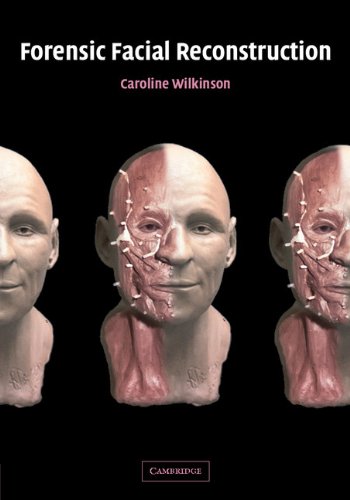
Forensic Facial Reconstruction
Authors:
Caroline Wilkinson
Publisher:
Cambridge University Press
Publication Date:
Not available
ISBN:
0521090121
This book's major contributions include a detailed description of the Manchester method of facial reconstruction, using all the available published data... on tissue depths and variation with age, sex, stature and ethnic origin. Caroline Wilkinson also includes an evaluation of the methods and problems associated with reconstructing the faces of children. Forensic facial reconstruction reproduces an individual's face from skeletal remains. Used when identification is otherwise impossible, it can give a name to the dead in forensic cases, or in archaeological contexts, provide a tangible impression of real individuals from our past.

Forensic Fire Scene Reconstruction (2nd Edition)
Authors:
David J. Icove
Publisher:
Prentice Hall
Publication Date:
Not available
ISBN:
0132228572
Completely updated in a new edition, this book remains the best resource for a thorough understanding of fire dynamics, describing and illustrating a... totally new systematic approach for reconstructing fire scenes. The approach applies the following principles of fire protection engineering along with forensic and behavioral science: identifiable fire pattern damage, human factors, physical forensic evidence of human activity, and application of the scientific method based upon relevant scientific principles and research. Using historical fire cases, the expert authors provide new information and insight into the ignition, growth, development, and outcome of those fires.
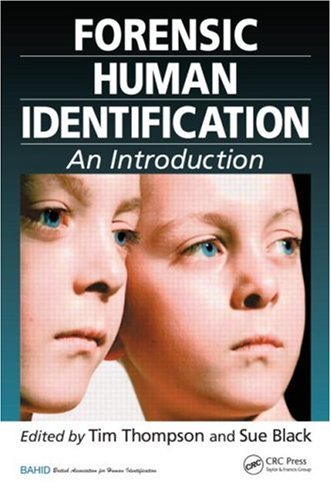
Forensic Human Identification: An Introduction
Authors:
Not Available
Publisher:
CRC Press
Publication Date:
Not available
ISBN:
0849339545
Identity theft, criminal investigations of the dead or missing, mass disasters both by natural causes and by criminal intent – with this as our day to... day reality, the establishment and verification of human identity has never been more important or more prominent in our society. Maintaining and protecting the integrity of out identity has reached levels of unprecedented importance and has led to international legislation to protect our human rights. Forensic Human Identification: An Introduction examines the variety of biological indicators that are available to investigators and illustrates the basic principles of each discipline. While DNA and fingerprints are clearly the favored methods of identification, they require a prior record and verifiable baseline for comparison. When these tools cannot be used it is necessary to employ those biological factors with higher variation and lower diagnostic probability. This reference introduces a number of different specialties such as, foot- and earprinting, dental interventions, skeletal anomalies, tattoos, facial reconstruction, personal effects, and handwriting. While recognizing that no single factor is an absolute indicator of identity, the contributors explain how a multitude of factors taken into summative consideration can establish a probability for confirmation. They discuss the difference between positive and probable identification and the use of exclusion to confirm identity. Using three high profile case studies, the book addresses the context of human identification in today’s society and illustrates the use of techniques described in the text. Heavily referenced and using more than 120 charts, figures, photographs, and tables, Forensic Human Identification: An Introduction provides detailed introductory and extended information to newcomers and experts alike on the wide range of identification techniques in international practice.

FORENSIC KIT PLS 341-F11
Authors:
Not Available
Publisher:
Not available
Publication Date:
Not available
ISBN:
Not available
FORENSIC LAB NOTEBOOK
Authors:
Not Available
Publisher:
Not available
Publication Date:
Not available
ISBN:
Not available
 '





