production
/viewbook/list/all/?page=4703
/
/static/
None

Forensic & Legal Psych
Authors:
Not Available
Publisher:
Not available
Publication Date:
Not available
ISBN:
1429283084
FORENSIC & LEGAL PSYCHOLOGY CUSTOM
Authors:
Not Available
Publisher:
Not available
Publication Date:
Not available
ISBN:
Not available
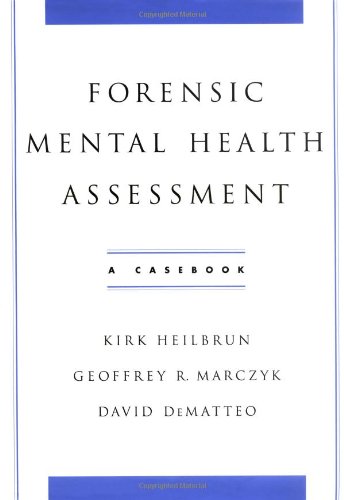
Forensic Mental Health Assessment: A Casebook
Authors:
Kirk Heilbrun
Publisher:
Oxford University Press, USA
Publication Date:
Not available
ISBN:
0195145682
Forensic mental health assessments are evaluations conducted by individuals from different disciplines on a variety of questions in civil, criminal,... and family law. A growing number of mental health professionals, including psychologists, psychiatrists, and social workers, are being called upon to assess everything from an individual's competence to stand trial to the risk or threat of future violence, and asked to weigh in on cases ranging from murder and assault to malpractice and child custody." General principles have emerged to guide professionals conducting forensic mental health assessment. Forensic Mental Health Assessment: A Casebook illustrates those principles using relevant, real-world case material. Built around actual case reports from expert forensic psychologists and psychiatrists, the volume probes a broad range of legal questions through the detailed examination of more than 40 cases. Topics include Miranda rights waiver, competence to act as one's own attorney, competence to stand trial, juvenile commitment, sanity at the time of the offense, child custody, termination of parental rights, guardianship, and malpractice. This is the first casebook focusing specifically on forensic assessment. It contains cases from a broad range of civil, criminal, and family legal questions, described in case reports contributed by expert forensic psychologists and psychiatrists. It will be useful for anyone involved in assessments for the courts and attorneys, including psychologists, psychiatrists, social workers, and attorneys.
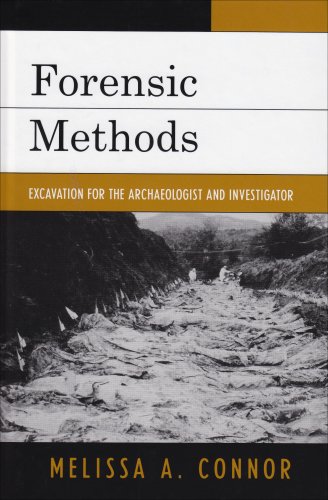
Forensic Methods: Excavation for the Archaeologist and Investigator
Authors:
Melissa A. Connor
Publisher:
AltaMira Press
Publication Date:
Not available
ISBN:
0759109362
Forensic Methods is a practical guide to death scene investigation and excavation technique, i.e., investigation of outdoor crime scenes that may... include human remains. It emphasizes the collection of forensic archaeological data in a manner acceptable not only to the professional archaeologist, but also according to evidence protocols that would be acceptable in U.S. and international jurisdictions. The large number of case examples and illustrations make it particularly useful to either the investigator who wishes to learn archaeological techniques or the archaeologist who wishes to become involved in forensic work. The book is designed for the growing number of classes in the subject, for senior undergraduates, graduate-level students, and practitioners in the field, in courses in Forensic Archaeology or Forensic Anthropology, or Crime Scene Investigation. To facilitate its use as a text, each chapter currently includes a summary, a set of glossary words found in the glossary in the rear of the book, and an annotated list of additional readings. The glossary is useful, as readers include both archaeologists unfamiliar with forensic terminology and law enforcement personnel unfamiliar with archaeological terms.
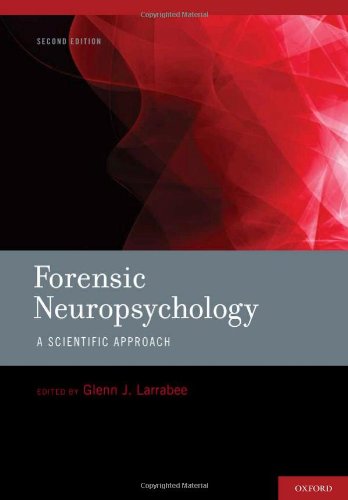
Forensic Neuropsychology: A Scientific Approach
Authors:
Not Available
Publisher:
Oxford University Press, USA
Publication Date:
Not available
ISBN:
0195383524
Neuropsychologists are frequently asked to serve as experts for court cases where judgments must be made as to the cause of, and prognosis for, brain... diseases and injuries, as well as the impact of brain dysfunction on legal competencies and responsibilities. This fully-updated second edition describes the application of neuropsychology to legal issues in both the civil and criminal courts. The book emphasizes the scientific basis of neuropsychology, as well as using a scientific approach in addressing forensic questions. All of the contributors are recognized experts in their fields, and the chapters cover common forensic issues such as appropriate scientific reasoning, the assessment of malingering, productive attorney-neuropsychologist interactions, admissibility of neuropsychological evidence, and ethics. Also covered are functional neuroimaging in forensic neuropsychology and the determination of damages in personal injury litigation, including pediatric brain injury (traumatic injury and perinatal birth injury), mild, moderate, and severe traumatic brain injury in adults, neurotoxic injury, chronic pain, post-traumatic stress disorder, and assessment of medically unexplained symptoms. Civil competencies in elderly persons with dementia are addressed in a separate chapter, and two chapters deal with the assessment of competency and responsibility in criminal forensic neuropsychology. The book closes with a perspective on trends in forensic practice and research. Like the previous edition, this new volume is an invaluable resource for neuropsychologists, attorneys, neurologists, clinical psychologists, psychiatrists, and their students and trainees.
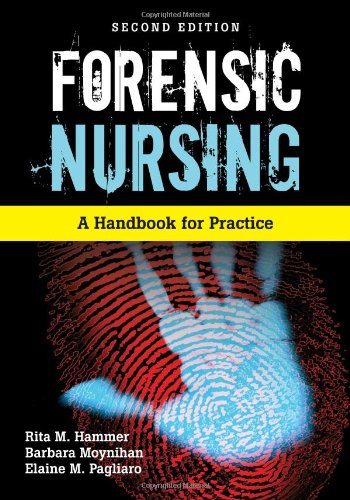
Forensic Nursing
Authors:
Rita Hammer
Publisher:
Jones & Bartlett Learning
Publication Date:
Not available
ISBN:
0763792004
Developed Within A Holistic, Caring Framework, And Well Grounded In Theory And Research, The Second Edition Continues To Provide A Unique And... Comprehensive Look At Forensic Nursing From An Interdisciplinary Perspective, And Addresses The Need For Collaborative Practice And Skill In Caring For Victims Of Violence And Disaster, As Well As In Competently Assisting In Investigations. New Information Has Been Included On Human Trafficking, Sexual Predators And The Internet, And Elder Abuse.
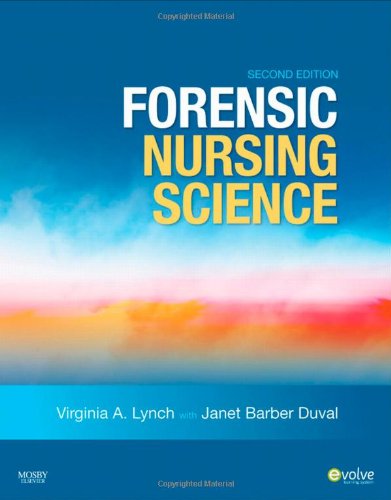
Forensic Nursing Science, 2e
Authors:
Virginia A. Lynch MSN RN FAAN FAAFS
Publisher:
Mosby
Publication Date:
Not available
ISBN:
0323066372
Written and edited by the most respected authorities in forensic nursing and forensic sciences, this new edition provides the tools and concepts you... need to collect evidence that is admissible in court, determine the significance of that evidence, and provide accurate, reliable testimony while administering high-quality patient care. Now in full color throughout, it remains the most comprehensive, highly illustrated text of its kind.Provides a comprehensive, updated guide to forensic nursing science, paying special attention to the International Association of Forensic Nurses's (IAFN) goals for forensic nursing. Retains a focus on assessment skills and the collection and preservation of evidence, following the established guidelines of the forensic sciences. Prepares you to provide testimony as a fact witness or a forensic nursing expert. Includes an illustrated case study in almost every chapter, helping you relate the information to clinical practice. Highlights important recommendations for interventions in Best Practice boxes, including the evidence base for each. Summarizes important points in Key Point boxes, so you can quickly review the most important concepts in each chapter. Explores the evolving role of forensic nurses in today's health care facilities and the community. Edited by Virginia Lynch, founding member and first President of the International Association of Forensic Nurses and Janet Barber Duval, both well-respected pioneers and educators in the field. Contains 300 full-color illustrations integrated throughout the text, so you can view evidence quickly and easily, as it is likely to appear in practice. Presents information on courtroom testimony and depositions in one reorganized, streamlined chapter, giving you a full, organized treatment of this extremely important topic. Includes twelve new chapters: Digital Evidence, Medical Evidence Recovery at the Death Scene, Asphyxia, Electrical and Thermal Injury, Intrafamilial Homicide and Unexplained Childhood Death, Human Trafficking, Credential Development for Forensic Nurses, Gangs and Hate Crimes, Ethics Issues in Forensic Nursing, Forensic Physics and Fracture Analysis, Sexual Deviant Behaviors and Crime and Forensic Epidemiology. Contains heavily revised information on Prehospital Evidence, Forensic Investigation in the Hospital, and Human Abuse and Deaths in Custody. Features critical thinking questions with every case study, so you can thoroughly consider the implications of each clinical scenario.Evolve site will include appendices and additional documentation materials.
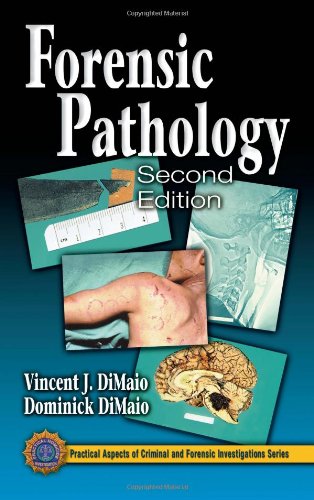
Forensic Pathology, Second Edition (Practical Aspects of Criminal...
Authors:
Dominick DiMaio
Publisher:
CRC Press
Publication Date:
Not available
ISBN:
084930072X
Medicolegal investigation of death is the most crucial and significant function of the medical examiner within the criminal justice system. The medical... examiner is primarily concerned with violent, sudden, unexpected, and suspicious deaths and is responsible for determining the cause and manner of death, identifying the deceased, determining the approximate time of death and injury, collecting evidence from the body, issuing the death certificate, and documenting these events through an official autopsy report. The basis of the medicolegal investigation is forensic pathology.Written for both medical and investigative professionals, Forensic Pathology, Second Edition presents an overview of medicolegal investigative systems. Completely updated, the book examines investigative techniques and procedures that lead to obtaining accurate conclusions of death by homicide, accident, or suicide.
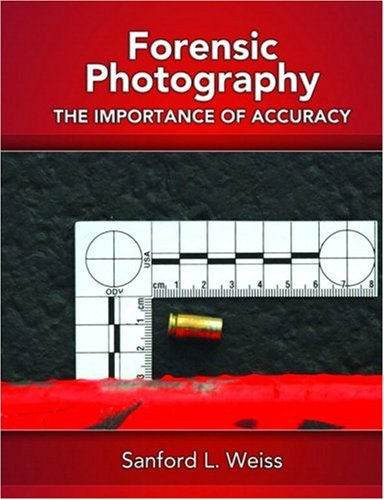
Forensic Photography: Importance of Accuracy
Authors:
Sanford L. Weiss
Publisher:
Prentice Hall
Publication Date:
Not available
ISBN:
0131582860
Designed specifically for the forensic professional, this up-to-date, state-of-the art manual offers a complete look at forensic photography. Its focus... is not only on what to photograph, but also how to use the latest equipment and techniques to capture images that translate to the courtroom. Each chapter includes hands-on exercises and actual case studies that reinforce best practices and protocols. Its emphasis on accuracy reinforces how to overcome common roadblocks and its applications appeal to law enforcement personnel, firefighters, insurance investigators, and private detectives.
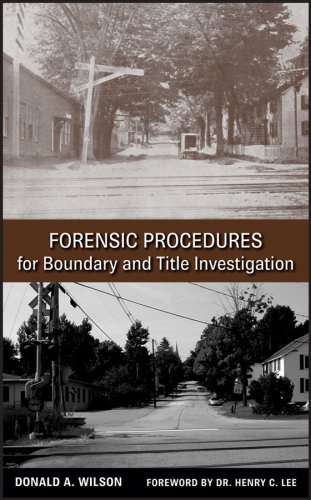
Forensic Procedures for Boundary and Title Investigation
Authors:
Donald A. Wilson
Publisher:
Wiley
Publication Date:
Not available
ISBN:
0470113693
Learn to be a good investigator and a successful retracement surveyorIn the era of CSI, forensic science has taken on an unaccustomed glamor. The fact... is, forensic science plays as crucial a role in the field of land surveying and title investigation as it does in flesh-and-blood criminology. Land location, the stability of property lines, and the sanctity of title documents are of utmost interest to the legal system in general, and the court system in particular.Forensic Procedures for Boundary and Title Investigation is the first book to present the application of investigative forensic techniques to the field of land boundary retracement. Covering basic logic, document research, and the interpretation of physical evidence on site, Forensic Procedures for Boundary and Title Investigation is an indispensable guide for?surveyors faced with a difficult retracement having little or faulty evidence.Demonstrating the techniques that can be applied to boundary location, this fascinating and useful introduction to forensic science:* Covers basic logic with tips for avoiding assumptions during the investigation that might result in error and bad conclusions* Explains the standard operating procedures, common to all forensics fields, for the protection of scenes, evidence collection, and photography* Provides detailed information on records research, reconstructing historical documentation, dealing with damaged documentation, and interpreting historic records containing antiquated measurements and wording* Includes a unique presentation of physical evidence investigation techniques including interpreting stone, wood, and metal evidence found on site* Takes an international approach, presenting universal investigative techniques and methods beyond the specifics of any single country* Includes advice on using the Internet for research and how to draw upon surprising sources of historic information such as postcards, advertisements, and family historiesThis extensive treatment is sure to become a standard reference work for professionals in many fields related to land investigation as well as a practical text for the training of investigators in the evidence recovery and interpretative processes leading to successful property location and ownership.
Forensic Psychology
Authors:
Solomon M. Fulero
Publisher:
Wadsworth Publishing
Publication Date:
Not available
ISBN:
0495506494
Written by two of the leading authorities in the field, FORENSIC PSYCHOLOGY, Third Edition introduces you to the practice of forensic psychology by... showing how psychologists aid the legal system by serving as expert witnesses, criminal profilers, and trial consultants for jury selection and child custody hearings. Wrightsman and Fulero present the roles and responsibilities of forensic psychologists, and address both the opportunities and temptations inherent in those roles. Through this lens, the authors explore the ethical issues facing practicing forensic psychologists, such as promising clients too much, the possibility of becoming advocates rather than objective scientists, and the pitfalls associated with substituting one's values for data. The authors provide an accurate and candid picture of the field, and the range of careers in forensic psychology.
Forensic Psychology
Authors:
Matthew T. Huss
Publisher:
Wiley-Blackwell
Publication Date:
Not available
ISBN:
1405151382
Forensic Psychology provides students with an in-depth and insightful introduction to the clinical practice of forensic psychology, the assessment and... treatment of individuals who interact with the legal system.Focuses on the clinical practice of forensic psychology Integrates research, cases, and theory that provides students with a well-balanced picture of forensic psychologyIncorporates two main themes, scope of practice and therapeutic jurisprudence, that focus on empirically supported clinical practice and expose students to case law and statutory law necessary in the practice of forensic psychologyUtilizes real world examples and cases such as the impact of intelligence testing in the landmark Atkins vs. Virginia case that help students understand the practical role of forensic psychologyEncourages an understanding of the law as a living and breathing entity, examining its ability to be therapeutic or anti-therapeutic for the people most directly affected by itExamines not only the criminal aspects of psychology and law but also civil aspects such as civil competence issues, sexual harassment claims, child custody evaluations, and personal injury cases which are often part of forensic practiceCovers unique challenges that forensic psychologists often face clinically, legally, and ethically Instructor's Resources available at www.blackwellpublishing.com/huss.
Forensic Psychology
Authors:
Jack Kitaeff
Publisher:
Prentice Hall
Publication Date:
Not available
ISBN:
0132352915
FORENSIC PSYCHOLOGY, 1/e presents a clear, complete picture of forensic psychology, covering both psychological and legal principles, and... demonstrating their connections through actual case law and clinical examples. Dr. Jack Kitaeff first reviews the field’s history, and the roles, responsibilities, and obligations of practitioners. Next, he addresses criminological aspects of forensic psychology, examining theories of aggression and violent crime; non-violent crimes; and topics ranging from serial killing to terrorism. He thoroughly reviews forensic psychologists’ roles in law enforcement and the U.S. criminal justice system, and covers crucial issues such as repressed memories, novel syndromes, the workplace, children, families, and treatment.
FORENSIC PSYCHOLOGY
Authors:
CRONIN CHRISTOPHER
Publisher:
Kendall Hunt Publishing
Publication Date:
Not available
ISBN:
0757561748
Forensic Psychology and Law
Authors:
Ronald Roesch
Publisher:
Wiley
Publication Date:
Not available
ISBN:
0470096233
Praise for Forensic Psychology and Law"In Forensic Psychology and Law, three internationally known experts provide exceptional coverage of a wide array... of topics that address both the clinical applications of forensic psychology and the role of psychological science in understanding and evaluating legal assumptions and processes."—Norman Poythress, PhD, Research Director and Professor, Louis de la Parte Florida Mental Health Institute, Dept. of Mental Health Law and Policy"Forensic Psychology and Law is a major contribution to the teaching of law and psychology. Roesch, Zapf, and Hart offer a timely, comprehensive, and succinct overview of the field that will offer widespread appeal to those interested in this vibrant and growing area. Outstanding."—Kirk Heilbrun, PhD, Professor and Head, Department of Psychology, Drexel University"In this volume, three noted experts have managed to capture the basic elements of forensic psychology. It is clearly written, well organized, and provides real world examples to hold the interest of any reader. While clarifying complex issues, the authors also present a very balanced discussion of a number of the most hotly debated topics."—Mary Alice Conroy, PhD, ABPP, Psychological Services Center, Sam Houston State UniversityA Comprehensive, Up-to-Date Discussion of the Interface Between Forensic Psychology and LawForensic Psychology and Law covers the latest theory, research, and practice in the field and provides thought-provoking discussion of topics with chapters on:Forensic assessment in criminal and civil domainsEyewitness identificationPolice investigations, interrogations, and confessionsCorrectional psychologyPsychology, law, and public policyEthics and professional issues
 '





