production
/viewbook/list/all/?page=4712
/
/static/
None
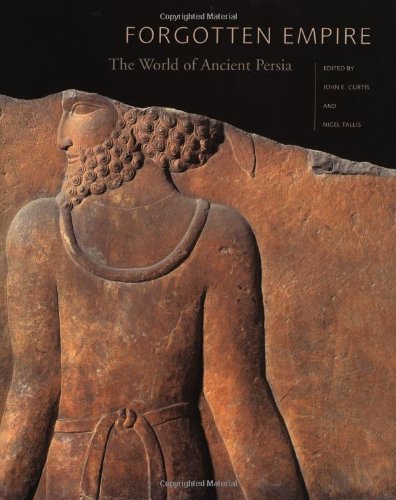
Forgotten Empire: The World of Ancient Persia
Authors:
Not Available
Publisher:
University of California Press
Publication Date:
Not available
ISBN:
0520247310
This sumptuous book traces the rise and fall of one of the ancient world's largest and richest empires. Encompassing a rich diversity of different... peoples and cultures, Persia's Achaeminid Empire flourished between 550 and 331 B.C. The empire originated with Cyrus the Great (559-530 B.C.) and expanded under his successors, who ruled from the royal capitals of Susa and Persepolis, until at its peak it stretched from the Indus Valley to Greece and from the Caspian Sea to Egypt. The Achaeminids acted as a bridge between the earlier Near Eastern cultures and the later Classical world of the Mediterranean and had a profound influence on Greece in political, military, economic, and cultural fields. Forgotten Empire was created in association with the British Museum, which is mounting the most comprehensive exhibit ever staged on the Achaeminids. This book opens a window onto the wealth and splendor of Persian society--its rich palaces, exquisite craftsmanship, and sophisticated learning. Showcasing an unprecedented loan of unique material from the National Museum of Tehran--most of which has never before been presented outside of Iran--this beautifully illustrated and produced book demonstrates why the sculpture, glazed panels, gold vessels, and jewelry of the Achaeminids rank among the finest ever produced.Because the palace was central to imperial life, remains from the royal sites of Susa and Persepolis are a major focus. Forgotten Empire is divided into sections such as the expansion of the Persian Empire, arms and warfare, trade and commerce, writing, luxury dinner services, jewelry, religious and burial customs, and the rediscovery of ancient Persia.Copub: British Museum
Forgotten Families: Ending the Growing Crisis Confronting Children...
Authors:
Jody Heymann
Publisher:
Oxford University Press, USA
Publication Date:
Not available
ISBN:
0195335244
In the last half-century, radical changes have rippled through the workplace and the home from Boston to Mumbai. In the face of rapid globalization,... these changes affect us all, and we can no longer confine ourselves to addressing working and social conditions within our own borders without simultaneously addressing them on a global scale. Based on over a thousand in-depth interviews and survey data from more than 55,000 families spanning five continents, Jody Heymann's Forgotten Families presents the first truly global account of how the changing conditions of work affect us all. Rich in individual stories and deeply human, Forgotten Families proposes innovative and imaginative ideas for solving the problems of the truly belabored together as a global community.

Forgotten Fire
Authors:
Adam Bagdasarian
Publisher:
Laurel Leaf 2002-04-01
Publication Date:
Not available
ISBN:
0440229170
In 1915 Vahan Kenderian is living a life of privilege as the youngest son of a wealthy Armenian family in Turkey. This secure world is shattered when... some family members are whisked away while others are murdered before his eyes. Vahan loses his home and family, and is forced to live a life he would never have dreamed of in order to survive. Somehow Vahan’s incredible strength and spirit help him endure, even knowing that each day could be his last.

Forgotten Franciscans: Works from an Inquisitional Theorist, a...
Authors:
Martin Austin Nesvig
Publisher:
Penn State Press
Publication Date:
Not available
ISBN:
0271048727
The Franciscans were the first missionaries to come to Mexico, and the Franciscans developed important and lucrative ties with the newly rich... conquistador elite and the faction behind Cortes. The order quickly became the wealthiest, having the most dramatic missionary churches, owning prime real estate in Mexico-Tenochtitlan, and being de facto rulers of large indigenous communities. Forgotten Franciscans offers documents and written works by three Spanish Franciscans of the early modern period who, while well known by their contemporaries, have been largely forgotten by modern-day scholars. Alfonso de Castro, an inquisitional theorist, offers a defense of Indian education; Alonso Cabello, convicted of Erasmianism in Mexico City, discusses Christ's humanity in a Nativity sermon; and Diego Mueoz, an inquisitional deputy, investigates witchcraft in Celaya. Together they offer new perspectives on the mythologies and realities of Franciscan thought in the New World.

Forgotten Patriots: The Untold Story of American Prisoners During...
Authors:
Edwin G. Burrows
Publisher:
Basic Books
Publication Date:
Not available
ISBN:
0465020305
Between 1775 and 1783, some 200,000 Americans took up arms against the British Crownof them about 25,000 became prisoners of war. In the British prison... ships of New York, captives were chronically underfed, while multitudes died of disease in fetid, cramped cells. The exact death toll cannot be known, but the evidence suggests that as many as 18,000 Americans died while incarceratedmore than twice as many as died on the battlefield. Drawing on a vast array of diaries, personal narratives, and private correspondence, Pulitzer Prizewinning historian Edwin G. Burrows offers in Forgotten Patriots the first complete history of this ghastly and unacknowledged tragedy of the American Revolution.
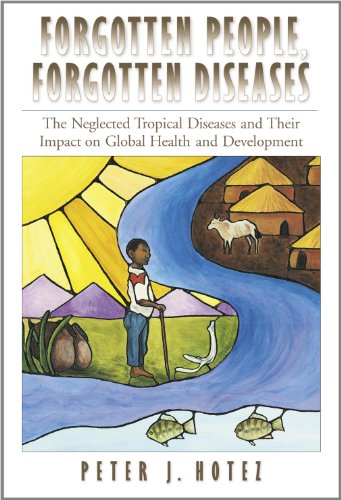
Forgotten People, Forgotten Diseases: The Neglected Tropical...
Authors:
Peter J. Hotez
Publisher:
ASM Press
Publication Date:
Not available
ISBN:
1555816711
Some of the worst tropical diseases in the world have too long been ignored. Parasitic and bacterial diseases such as hookworm, snail fever, river... blindness, guinea worm, elephantiasis, sleeping sickness, and leprosy are the most common infections of third-world populations. These neglected tropical diseases (NTDs) represent one of the most important reasons why populations living in Africa, Asia, and Central and South America remain caught in a vicious cycle of poverty, stigma, and despair. With a lifetime devoted to the subject of tropical diseases, the well-known expert Dr. Peter Hotez provides a comprehensive view of these forgotten diseases. Written in accessible, straightforward language, Forgotten People, Forgotten Diseases thoroughly explains the most significant NTDs, including social and economic aspects, public health concerns, and preventative measures. This volume will raise public awareness about these forgotten diseases and their enormous physical, social, and economic costs to individuals and nations alike, and advocates for the largely voiceless victims living in remote and rural regions. Dr. Hotez also provides a roadmap to coordinate global advocacy and mobilization of resources to combat these conditions. Finally, the book addresses unique opportunities to fight the NTDs through low-cost and highly cost-effective control measures.

Forgotten Promise: Race and Gender Wars on a Small College Campus
Authors:
Gretchen Von LoEwe Kreuter
Publisher:
Knopf
Publication Date:
Not available
ISBN:
0679447008
Kreuter arrived at Middleton College (not its real name) to serve as its interim President after a racial brawl had brought national media attention and... precipitated the retirement of its long-serving president. The intent of the mid-nineteenth century founders of the small Midwest college had been to establish an institution of higher learning open to all races and women and men alike. By the 1990's, however, that promise had been long forgotten.We see Kreuter--under the relentless scrutiny of television cameras and newspaper reporters, agencies of state and federal government, elected officials and a variety of organizations-- dealing with unhappy students and an apprehensive faculty. Amid rising levels of anger, distrust, provocation, and piety, she tries to separate fact from fiction, maintain her sense of fairness and humor, and accomplish three main tasks: curricular change, strategic planning, and responsible management procedures. Racial climate surveys, sensitivity-training sessions, sexual bias complaints, efforts at multiculturalism and diversity, and --always-- damage control are part of the daily routine. Threatened disorder and disruption on the eve of commencement, following a show-down over speakers, indicates how far apart all sides of the debate are and how hard it is to heal campus divisions.There are no miracles or rosy endings to Kreuter's tale-- just some honest and illuminating insight on the state of education and multiculturalism in America today. Yet her story is important because it reveals what happens when the old campus world meets the new head on; it shows too that tensions can be ameliorated and that campuses, with good faith and constructive engagement, can sometimes even move towards the ideals treasured by the founders of Middleton-- justice and equality.
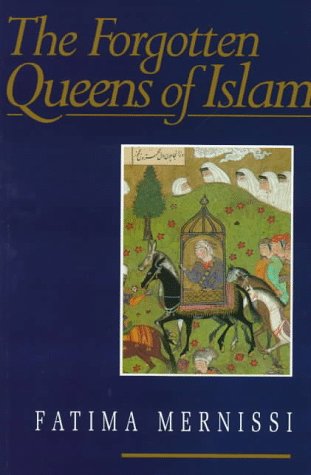
Forgotten Queens Of Islam
Authors:
Fatima Mernissi
Publisher:
Univ Of Minnesota Press
Publication Date:
Not available
ISBN:
0816624399
When Benazir Bhutto became Prime Minister of Pakistan in 1988, there were some who claimed that it was a blasphemous assault on Islamic tradition, since... no Muslim state, they alleged, had ever been governed by a woman. In this extraordinary new book, Fatima Mernissi shows that those proclaimed defenders of Islamic tradition were not only misguided but wrong. She looks back through fifteen centuries of Islam and uncovers a hidden history of women who have held the reins of power, but whose lives and stories, acheivements and failures, have largely been forgotten. Who were the Queens of Islam? How did they accede to the throne and how did their rule come to an end? What kinds of states did they govern and how did they exercise their power? Pursuing these and other questions, Mernissi recounts the stories of fifteen queens, including Sultana Radiyya who reigned in Delhi from 1250 until her violent death at the hand of a peasant; the Island Queens who ruled in the Maldives and Indonesia; and the Arab Queens of Egypt and of the Shi'ite Dynasty of Yemen. It was the Yemenis who bestowed upon queens a title that was theirs alone - balgis al-sughra , or `Young Queen of Sheeba'. Mernissi concludes this absorbing historical inquiry by reflecting on its implications for the ways in which politics is practised in the Islamic world today, a world in which women, while generally more educated than their predecessors, are largely excluded from the political domain. This powerful and engaging book, by one of the most original and distinctive voices in the Islamic world, will be of great interest to anyone concerned with Islamic society and politics.

Forgotten Readers: Recovering the Lost History of African American...
Authors:
Elizabeth McHenry
Publisher:
Duke University Press Books
Publication Date:
Not available
ISBN:
0822329956
Over the past decade the popularity of black writers including E. Lynn Harris and Terry McMillan has been hailed as an indication that an active African... American reading public has come into being. Yet this is not a new trend; there is a vibrant history of African American literacy, literary associations, and book clubs. Forgotten Readers reveals that neglected past, looking at the reading practices of free blacks in the antebellum north and among African Americans following the Civil War. It places the black upper and middle classes within American literary history, illustrating how they used reading and literary conversation as a means to assert their civic identities and intervene in the political and literary cultures of the United States from which they were otherwise excluded.Forgotten Readers expands our definition of literacy and urges us to think of literature as broadly as it was conceived of in the nineteenth century. Elizabeth McHenry delves into archival sources, including the records of past literary societies and the unpublished writings of their members. She examines particular literary associations, including the Saturday Nighters of Washington, D.C., whose members included Jean Toomer and Georgia Douglas Johnson. She shows how black literary societies developed, their relationship to the black press, and the ways that African American women’s clubs—which flourished during the 1890s—encouraged literary activity. In an epilogue, McHenry connects this rich tradition of African American interest in books, reading, and literary conversation to contemporary literary phenomena such as Oprah Winfrey’s book club.Forgotten Readers redirects contemporary thinking about the origins of African American literature and adds a vital element to scholarship on the history of the book.
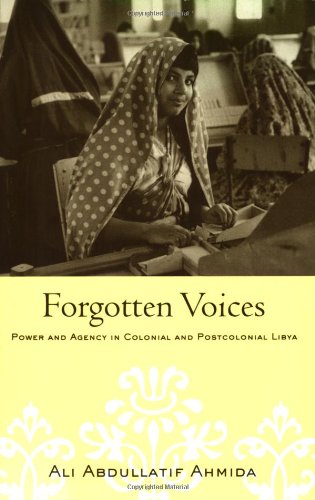
Forgotten Voices: Power and Agency in Colonial and Postcolonial Libya
Authors:
Ali Abdullatif Ahmida
Publisher:
Routledge
Publication Date:
Not available
ISBN:
0415949874
In Forgotten Voices, Ali Abdullatif Ahmida employs archival research, oral interviews and comparative analysis to rethink the history of colonial and... nationalist categories and analyses of modern Libya.
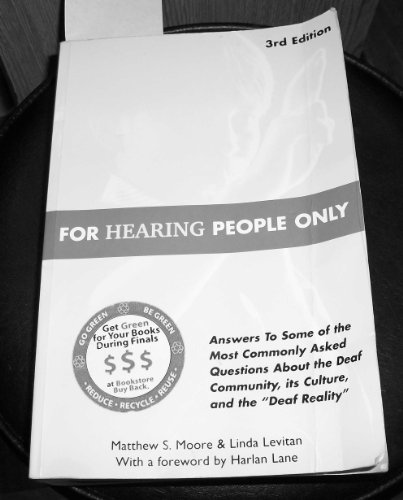
For Hearing People Only: Answers to Some of the Most Commonly Asked...
Authors:
Matthew S. Moore
Publisher:
Deaf Life Press
Publication Date:
Not available
ISBN:
0963401637
Have you ever asked these questions? "Don't all Deaf people read lips?" "Is it OK to say 'deaf-mute' and 'deaf-and-dumb'?" "Do all deaf people benefit... from hearing aids?" "What bothers a deaf person most about hearing people?" Here, in a handy question-and-answer format, are answers to some of the most commonly asked questions about deaf people, their community, and their language. Concise, easy-to-read, designed for those with no prior background, For Hearing People Only makes a formidably complex subject accessible. Each chapter can be read as an independent unit. This is the first book of its kind-written especially for laypeople who are curious about deaf people, and would like to separate truth from stereotype, fact from misconception, reality from myth. "Offers a quick fix without the mishmash of long-winded discourses and scholarly sources. Enlightening to deaf people, including myself. Honest and fair, with sage observations. A practical Handbook on Deaf Life and "The Deaf Reality." Should provoke lively discussions in class." - Dr. Robert F. Panara, Emeritus Professor of English & Drama at National Technical Institute for the Deaf at Rochester Institute of Technology

For Her Own Good: Two Centuries of the Experts Advice to Women
Authors:
Barbara Ehrenreich
Publisher:
Anchor
Publication Date:
Not available
ISBN:
1400078008

For Indigenous Eyes Only: A Decolonization Handbook (School of...
Authors:
Waziyatawin Angela Wilson
Publisher:
School of American Research Press
Publication Date:
Not available
ISBN:
1930618638
Recognizing an urgent need for Indigenous liberation strategies, Indigenous intellectuals met to create a book with hands-on suggestions and activities... to enable Indigenous communities to decolonize themselves. The authors begin with the belief that Indigenous Peoples have the power, strength, and intelligence to develop culturally specific decolonization strategies for their own communities and thereby systematically pursue their own liberation. These scholars and writers demystify the language of colonization and decolonization to help Indigenous communities identify useful concepts, terms, and intellectual frameworks in their struggles toward liberation and self-determination. This handbook covers a wide range of topics, including Indigenous governance, education, language, oral tradition, repatriation, images and stereotypes, and truth-telling. It aims to facilitate critical thinking while offering recommendations for fostering community discussions and plans for meaningful community action.

FOR INVEST NEGOTIATIONS SIMUL VER 7.2
Authors:
Not Available
Publisher:
Not available
Publication Date:
Not available
ISBN:
Not available

For Kin or Country: Xenophobia, Nationalism, and War
Authors:
Stephen M. Saideman
Publisher:
Columbia University Press
Publication Date:
Not available
ISBN:
0231144784
The collapse of an empire can result in the division of families and the redrawing of geographical boundaries. New leaders promise the return of people... and territories that may have been lost in the past, often advocating aggressive foreign policies that can result in costly and devastating wars. The final years of the Austro-Hungarian and Ottoman empires, the end of European colonization in Africa and Asia, and the demise of the Soviet Union were all accompanied by war and atrocity.These efforts to reunite lost kin are known as irredentism — territorial claims based on shared ethnic ties made by one state to a minority population residing within another state. For Kin or Country explores this phenomenon, investigating why the collapse of communism prompted more violence in some instances and less violence in others. Despite the tremendous political and economic difficulties facing all former communist states during their transition to a market democracy, only Armenia, Croatia, and Serbia tried to upset existing boundaries. Hungary, Romania, and Russia practiced much more restraint. The authors examine various explanations for the causes of irredentism and for the pursuit of less antagonistic policies, including the efforts by Western Europe to tame Eastern Europe. Ultimately, the authors find that internal forces drive irredentist policy even at the risk of a country's self-destruction and that xenophobia may have actually worked to stabilize many postcommunist states in Eastern Europe.
 '





