production
/viewbook/list/all/?page=4791
/
/static/
None

FREEDOM + RESPONSIBILITY
Authors:
Not Available
Publisher:
Not available
Publication Date:
Not available
ISBN:
Not available
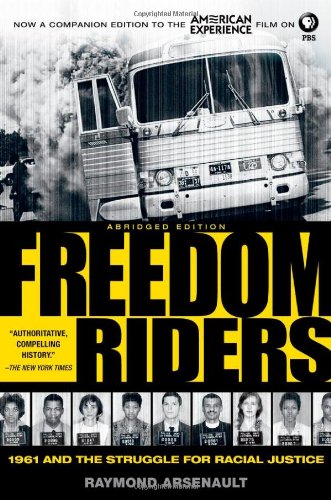
Freedom Riders: 1961 and the Struggle for Racial Justice
Authors:
Raymond Arsenault
Publisher:
Oxford University Press, USA
Publication Date:
Not available
ISBN:
0199754314
The saga of the Freedom Rides is an improbable, almost unbelievable story. In the course of six months in 1961, four hundred and fifty Freedom Riders... expanded the realm of the possible in American politics, redefining the limits of dissent and setting the stage for the civil rights movement. In this new version of his encyclopedic Freedom Riders, Raymond Arsenault offers a significantly condensed and tautly written account. With characters and plot lines rivaling those of the most imaginative fiction, this is a tale of heroic sacrifice and unexpected triumph. Arsenault recounts how a group of volunteers--blacks and whites--came together to travel from Washington DC through the Deep South, defying Jim Crow laws in buses and terminals and putting their lives on the line for racial justice. News photographers captured the violence in Montgomery, shocking the nation and sparking a crisis in the Kennedy administration. Here are the key players--their fears and courage, their determination and second thoughts, and the agonizing choices they faced as they took on Jim Crow--and triumphed.Winner of the Owsley Prize Publication is timed to coincide with the airing of the American Experience miniseries documenting the Freedom Rides"Arsenault brings vividly to life a defining moment in modern American history."--Eric Foner, The New York Times Book Review"Authoritative, compelling history."--William Grimes, The New York Times"For those interested in understanding 20th-century America, this is an essential book."--Roger Wilkins, Washington Post Book World"Arsenault's record of strategy sessions, church vigils, bloody assaults, mass arrests, political maneuverings and personal anguish captures the mood and the turmoil, the excitement and the confusion of the movement and the time."--Michael Kenney, The Boston Globe
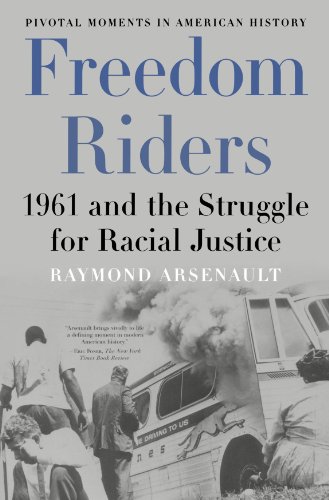
Freedom Riders: 1961 and the Struggle for Racial Justice (Pivotal...
Authors:
Raymond Arsenault
Publisher:
Oxford University Press, USA
Publication Date:
Not available
ISBN:
0195327144
They were black and white, young and old, men and women. In the spring and summer of 1961, they put their lives on the line, riding buses through the... American South to challenge segregation in interstate transport. Their story is one of the most celebrated episodes of the civil rights movement, yet a full-length history has never been written until now. In these pages, acclaimed historian Raymond Arsenault provides a gripping account of six pivotal months that jolted the consciousness of America.The Freedom Riders were greeted with hostility, fear, and violence. They were jailed and beaten, their buses stoned and firebombed. In Alabama, police stood idly by as racist thugs battered them. When Martin Luther King met the Riders in Montgomery, a raging mob besieged them in a church. Arsenault recreates these moments with heart-stopping immediacy. His tightly braided narrative reaches from the White House--where the Kennedys were just awakening to the moral power of the civil rights struggle--to the cells of Mississippi's infamous Parchman Prison, where Riders tormented their jailers with rousing freedom anthems. Along the way, he offers vivid portraits of dynamic figures such as James Farmer, Diane Nash, John Lewis, and Fred Shuttlesworth, recapturing the drama of an improbable, almost unbelievable saga of heroic sacrifice and unexpected triumph.The Riders were widely criticized as reckless provocateurs, or "outside agitators." But indelible images of their courage, broadcast to the world by a newly awakened press, galvanized the movement for racial justice across the nation. Freedom Riders is a stunning achievement, a masterpiece of storytelling that will stand alongside the finest works on the history of civil rights.
Freedom Rights: New Perspectives on the Civil Rights Movement...
Authors:
Not Available
Publisher:
The University Press of Kentucky
Publication Date:
Not available
ISBN:
081313448X
In his seminal article "Freedom Then, Freedom Now," renowned civil rights historian Steven F. Lawson described his vision for the future study of the... civil rights movement. Lawson called for a deeper examination of the social, economic, and political factors that influenced the movement's development and growth. He urged his fellow scholars to connect the "local with the national, the political with the social," and to investigate the ideological origins of the civil rights movement, its internal dynamics, the role of women, and the significance of gender and sexuality. In Freedom Rights: New Perspectives on the Civil Rights Movement, editors Danielle L. McGuire and John Dittmer follow Lawson's example, bringing together the best new scholarship on the modern civil rights movement. The work expands our understanding of the movement by engaging issues of local and national politics, gender and race relations, family, community, and sexuality. The volume addresses cultural, legal, and social developments and also investigates the roots of the movement. Each essay highlights important moments in the history of the struggle, from the impact of the Young Women's Christian Association on integration to the use of the arts as a form of activism. Freedom Rights not only answers Lawson's call for a more dynamic, interactive history of the civil rights movement, but it also helps redefine the field.
Freedom Road: Adult Education of African Americans
Authors:
Not Available
Publisher:
Krieger Pub Co
Publication Date:
Not available
ISBN:
1575242087
Through changing times, from slavery to the present, freedom has meant different things for the African American. Yet, education has always been seen as... crucial to obtaining true freedom and equality for all African American people. This book attempts to look at the African American struggle for racial equality and socio-economic equity from Reconstruction to today, by focusing on African American educators who persevered in this struggle and the philosophy which guided their practices. The book has a special focus on the role of adult education in this struggle. In this updated edition of Freedom Road a new chapter has been added that explores the role that Malcolm X, a minister in the Nation of Islam and civil rights activist, played as an adult educator. Today educators are beginning to recognize that lifelong learning will play a critical role in an ever-changing society. This book, therefore, lends a historical perspective to contemporary issues in education.
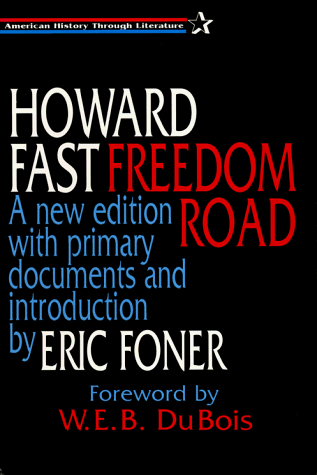
Freedom Road (American History Through Literature)
Authors:
Howard Fast
Publisher:
M.E. Sharpe
Publication Date:
Not available
ISBN:
1563244403
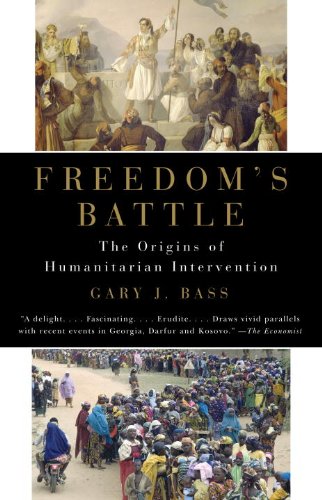
Freedom's Battle: The Origins of Humanitarian Intervention (Vintage)
Authors:
Gary J. Bass
Publisher:
Vintage
Publication Date:
Not available
ISBN:
0307279871
This gripping and important book brings alive over two hundred years of humanitarian interventions. Freedom’s Battle illuminates the passionate... debates between conscience and imperialism ignited by the first human rights activists in the 19th century, and shows how a newly emergent free press galvanized British, American, and French citizens to action by exposing them to distant atrocities. Wildly romantic and full of bizarre enthusiasms, these activists were pioneers of a new political consciousness. And their legacy has much to teach us about today’s human rights crises.
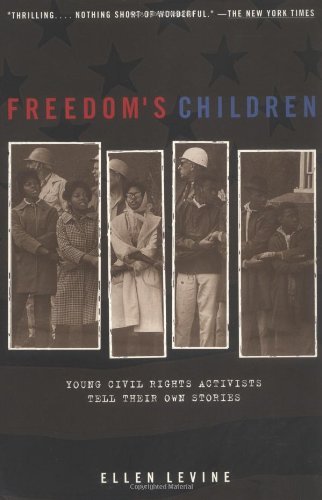
Freedom's Children: Young Civil Rights Activists Tell Their Own...
Authors:
Ellen S. Levine
Publisher:
Puffin
Publication Date:
Not available
ISBN:
0698118707
In this inspiring collection of true stories, thirty African-Americans who were children or teenagers in the 1950s and 1960s talk about what it was like... for them to fight segregation in the South-to sit in an all-white restaurant and demand to be served, to refuse to give up a seat at the front of the bus, to be among the first to integrate the public schools, and to face violence, arrest, and even death for the cause of freedom. "Thrilling...Nothing short of wonderful."-The New York Times Awards:( A School Library Journal Best Book of the Year( A Booklist Editors' Choice

Freedom's Coming: Religious Culture and the Shaping of the South...
Authors:
Paul Harvey
Publisher:
The University of North Carolina Press
Publication Date:
Not available
ISBN:
0807858145
This sweeping portrait of religion in the South puts race and culture at the center of more than a century of spiritual and political strife. Harvey... deploys cultural history in fresh and innovative ways and fills a decades-old need for a comprehensive history of religion and its relationship to the central question of race in the South for the postbellum and twentieth-century period.
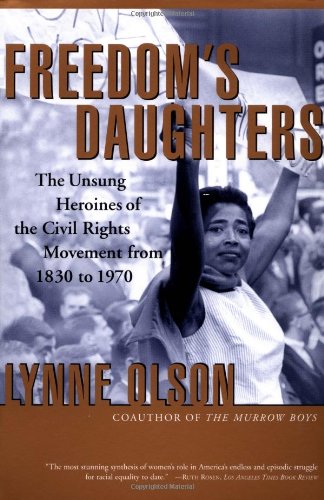
Freedom's Daughters: The Unsung Heroines of the Civil Rights...
Authors:
Lynne Olson
Publisher:
Scribner
Publication Date:
Not available
ISBN:
0684850133
THE FIRST COMPREHENSIVE HISTORY OF THE VITAL ROLE WOMEN -- BOTH BLACK AND WHITE -- PLAYED IN THE CIVIL RIGHTS MOVEMENT In this groundbreaking and... absorbing book, credit finally goes where credit is due -- to the bold women who were crucial to the success of the civil rights movement. From the Montgomery bus boycott to the lunch counter sit-ins to the Freedom Rides, Lynne Olson skillfully tells the long-overlooked story of the extraordinary women who were among the most fearless, resourceful, and tenacious leaders of the civil rights movement. Freedom's Daughters includes portraits of more than sixty women -- many until now forgotten and some never before written about -- from the key figures (Ida B. Wells, Eleanor Roosevelt, Ella Baker, and Septima Clark, among others) to some of the smaller players who represent the hundreds of women who each came forth to do her own small part and who together ultimately formed the mass movements that made the difference. Freedom's Daughters puts a human face on the civil rights struggle -- and shows that that face was often female.

Freedom's Ferment: Phases of American Social History to 1860
Authors:
Alice Felt Tyler
Publisher:
Univ Of Minnesota Press
Publication Date:
Not available
ISBN:
0816658838
Freedom's Ferment was first published in 1944. Minnesota Archive Editions uses digital technology to make long-unavailable books once again accessible,... and are published unaltered from the original University of Minnesota Press editions.In this historical synthesis of men and movements, Alice Felt Tyler shows in action the democratic faith of the young American republic. She tells the stories of the reform movements and social and religious experiments characteristic of the early half of the nineteenth century.The early efforts toward social and economic equality — later engulfed in the urgent issues of the Civil War—are here depicted and interpreted in their relation to the history of American thought and action.Freedom's Ferment divides the movements of the early 1800's into two groups: the cults and utopias of varied origins and the humanitarian crusades. A wave of revivalistic religions swept the country. Here is the story of the Millerites, who believed the end of the world would come on October 22, 1844, of the Spiritualists, Rappites, the Mormons, the Shakers.Many experiments in communal living were instituted by religious groups, but others were entirely social in concept. Life at Brook Farm, in Robert Owen's colony, in the Oneida Community, and a score of others, is interestingly reconstructed.Humanitarian reforms and crusades represent the other phase of the movements. Tyler, "exasperated by all the silly twaddle being written about the eccentricities" of the early American republic, shows these movements and the leaders—event the crackpots—as manifestations of the American creed of perfectibility.Prison and educational reforms, work for delinquents and unfortunates, crusades for world peace, temperance, and women's rights flourished. All to be overshadowed by the antislavery movement and submerged temporarily by the Civil War.Freedom's Ferment pictures the days when the pattern for the American way of life and the fundamentals of the American faith were being set by crusaders who fought for righteousness. The changes in out social picture have altered the form of the humanitarian movements but not the purpose.Interpretative and critical, the book show the ferment of the period and the urge to reform, found in every phase of life, to be the result of the fusion of religious freedom and political democracy.
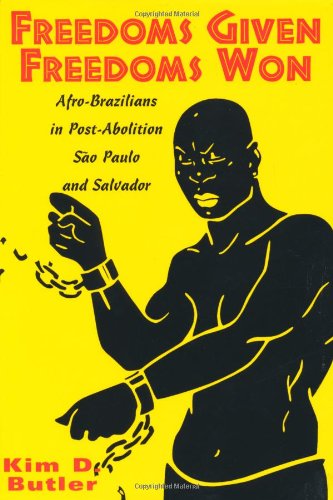
Freedoms Given, Freedoms Won: Afro-Brazilians in Post-Abolition...
Authors:
Kim D. Butler
Publisher:
Rutgers University Press
Publication Date:
Not available
ISBN:
0813525047
Winner of the American Historical Association's Wesley-Logan Prize and the Association of Black Women Historian's Letitia Woods Brown Prize "An... important, original, much-needed comparative study of post-emancipation Brazil." --Joao Jose Reis, Universidade Federal da Bahia "A deftly written analysis that goes well beyond most existing studies of slavery's legacy in the hemisphere. The author's candor is refreshing, and her use of interviews provides a major new source of evidence." --Robert M. Levine, author of Brazilian Legacies and Father of the Poor?: Vargas and His Times Freedoms Given, Freedoms Won is the first book-length study devoted to understanding the political life of urban Afro-Brazilians in the aftermath of abolition. It explores the ways Afro-Brazilians in two major cities adapted to the new conditions of life after slavery and how they confronted limitations placed on their new freedom. The book sets forth new ways of understanding why the abolition of slavery did not yield equitable fruits of citizenship, not only in Brazil, but throughout the Americas and the Caribbean. In Sao Paulo, Afro-Brazilians united against racial discrimination, giving rise to a vocal black press and numerous political groups. One of these became the first national civil rights organization and Brazil's only black political party. In Salvador, African identity prevailed over black identity, and social protest was oriented toward protecting the right to practice African-based cultural expressions such as candomble and capoeira. Of all the eras and issues studied in Afro-Brazilian history, post-abolition social and political action has been the most neglected. Freedoms Given, Freedoms Won sets the Afro-Brazilian experience in a national context as well situating it within the Afro-Atlantic diaspora through a series of explicit parallels, particularly with Cuba and Jamaica. Kim D. Butler is an associate professor of history in the Africana Studies department at Rutgers University.
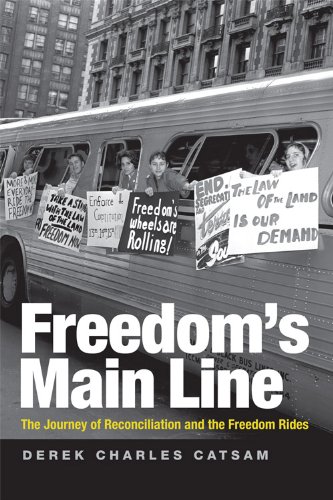
Freedom's Main Line: The Journey of Reconciliation and the Freedom...
Authors:
Derek Charles Catsam
Publisher:
The University Press of Kentucky
Publication Date:
Not available
ISBN:
0813133777
Black Americans in the Jim Crow South could not escape the grim reality of racial segregation, whether enforced by law or by custom. In Freedom's Main... Line: The Journey of Reconciliation and the Freedom Rides, author Derek Charles Catsam shows that courtrooms, classrooms, and cemeteries were not the only front lines in African Americans' prolonged struggle for basic civil rights. Buses, trains, and other modes of public transportation provided the perfect means for civil rights activists to protest the second-class citizenship of African Americans, bringing the reality of the violence of segregation into the consciousness of America and the world. In 1947, nearly a decade before the Supreme Court voided school segregation in Brown v. Board of Education, sixteen black and white activists embarked on a four-state bus tour, called the Journey of Reconciliation, to challenge discrimination in busing and other forms of public transportation. Although the Journey drew little national attention, it set the stage for the more timely and influential 1961 Freedom Rides. After the Supreme Court's 1960 ruling in Boynton v. Virginia that segregated public transportation violated the Interstate Commerce Act, the Congress of Racial Equality (CORE) and other civil rights groups organized the Freedom Rides to test the enforcement of the ruling in buses and bus terminals across the South. Their goal was simple: "to make bus desegregation," as a CORE press release put it, "a reality instead of merely an approved legal doctrine." Freedom's Main Line argues that the Freedom Rides, a turning point in the Civil Rights Movement, were a logical, natural evolution of such earlier efforts as the Journey of Reconciliation, their organizers following models provided by previous challenges to segregation and relying on the principles of nonviolence so common in the larger movement. The impact of the Freedom Rides, however, was unprecedented, fixing the issue of civil rights in the national consciousness. Later activists were often dubbed Freedom Riders even if they never set foot on a bus. With challenges to segregated transportation as his point of departure, Catsam chronicles black Americans' long journey toward increased civil rights. Freedom's Main Line tells the story of bold incursions into the heart of institutional discrimination, journeys undertaken by heroic individuals who forced racial injustice into the national and international spotlight and helped pave the way for the landmark Civil Rights Act of 1964.
Freedom Song: Three Novels
Authors:
Amit Chaudhuri
Publisher:
Vintage
Publication Date:
Not available
ISBN:
0375704000
"An immensely gifted writer....Crammed with breathtaking sentences, sharp characterizations, comic set pieces, and melancholy grace notes." --The New... York Times Book Review Freedom Song--which collects three of Chaudhuri's novels--celebrates the rhythms of modern India. A boy's visit with relatives conjures the melancholy comforts of family. An Indian student at an English university contemplates the conflicted relationship between an immigrant and his homeland. And the task of marrying off a "problem" son illuminates the complex community of cultures that is modern Calcutta. Chaudhuri's novels offer simple plots that unfold into dramas of profound emotional resonance. And in prose that has won Chaudhuri comparisons to the master stylists of this century but that emerges as fiercely his own, Freedom Song announces a young writer of extraordinary gifts.
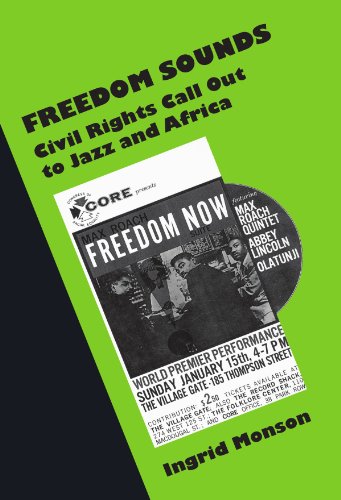
Freedom Sounds: Civil Rights Call out to Jazz and Africa
Authors:
Ingrid Monson
Publisher:
Oxford University Press, USA
Publication Date:
Not available
ISBN:
0199757097
An insightful examination of the impact of the Civil Rights Movement and African Independence on jazz in the 1950s and 60s, Freedom Sounds traces the... complex relationships among music, politics, aesthetics, and activism through the lens of the hot button racial and economic issues of the time. Ingrid Monson illustrates how the contentious and soul-searching debates in the Civil Rights, African Independence, and Black Power movements shaped aesthetic debates and exerted a moral pressure on musicians to take action. Throughout, her arguments show how jazz musicians' quest for self-determination as artists and human beings also led to fascinating and far reaching musical explorations and a lasting ethos of social critique and transcendence.Across a broad body of issues of cultural and political relevance, Freedom Sounds considers the discursive, structural, and practical aspects of life in the jazz world in the 1950s and 1960s. In domestic politics, Monson explores the desegregation of the American Federation of Musicians, the politics of playing to segregated performance venues in the 1950s, the participation of jazz musicians in benefit concerts, and strategies of economic empowerment. Issues of transatlantic importance such as the effects of anti-colonialism and African nationalism on the politics and aesthetics of the music are also examined, from Paul Robeson's interest in Africa, to the State Department jazz tours, to the interaction of jazz musicians such Art Blakey and Randy Weston with African and African diasporic aesthetics.Monson deftly explores musicians' aesthetic agency in synthesizing influential forms of musical expression from a multiplicity of stylistic and cultural influences--African American music, popular song, classical music, African diasporic aesthetics, and other world musics--through examples from cool jazz, hard bop, modal jazz, and the avant-garde. By considering the differences between aesthetic and socio-economic mobility, she presents a fresh interpretation of debates over cultural ownership, racism, reverse racism, and authenticity.Freedom Sounds will be avidly read by students and academics in musicology, ethnomusicology, anthropology, popular music, African American Studies, and African diasporic studies, as well as fans of jazz, hip hop, and African American music.
 '





