production
/viewbook/list/all/?page=4792
/
/static/
None
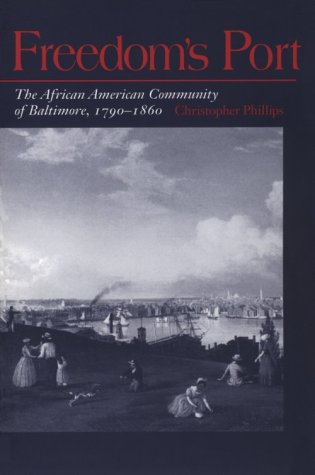
Freedom's Port: The African American Community of Baltimore,...
Authors:
Christopher Phillips
Publisher:
University of Illinois Press
Publication Date:
Not available
ISBN:
0252066189
Regardless of your confidence level in French, BRAVO! is a proven solution for success! The book's unique approach enables you to review first-year... structures independently before you learn to master new material. BRAVO! helps you expand your linguistic and cultural knowledge through readings, audio recordings, specialized vocabulary development, and concise yet thorough grammar explanations. A variety of carefully crafted activities--all designed to build competence and confidence in using spoken French in and out of the classroom--help you along the way.
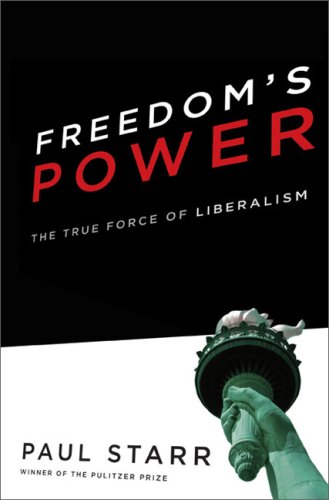
Freedom's Power: The History and Promise of Liberalism
Authors:
Paul Starr
Publisher:
Basic Books
Publication Date:
Not available
ISBN:
0465081878
American politics are as fractured and partisan as they have ever been and liberalism is in greater peril than at any time in recent history.... Conservatives treat it as an epithet, and even some liberals have confused it with sentimentality and socialism. But Paul Starr, Pulitzer Prize-winning author and one of America’s leading intellectuals, claims that, properly understood, liberalism is a sturdy public philosophy, deeply rooted in our traditions, capable of making America a freer and more secure country.
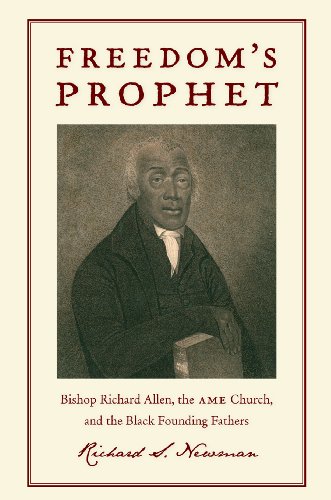
Freedom's Prophet: Bishop Richard Allen, the AME Church, and the...
Authors:
Richard S. Newman
Publisher:
NYU Press
Publication Date:
Not available
ISBN:
0814758576
An Interview with the Author on the History News NetworkA Founding Father with a Vision of Equality: Richard Newman's op-ed in The Philadelphia... InquirerAuthor Spotlight in The Rochester Democrat and Chronicle"Gold" Winner of the 2008 Foreword Magazine Book of the Year Award, Biography CategoryFreedom's Prophet is a long-overdue biography of Richard Allen, founder of the first major African-American church and the leading black activist of the early American republic. A tireless minister, abolitionist, and reformer, Allen inaugurated some of the most important institutions in African-American history and influenced nearly every black leader of the nineteenth century, from Douglass to Du Bois.Allen (1760–1831) was born a slave in colonial Philadelphia, secured his freedom during the American Revolution, and became one of the nations leading black activists before the Civil War. Among his many achievements, Allen helped form the African Methodist Episcopal (AME) Church, co-authored the first copyrighted pamphlet by an African American writer, published the first African American eulogy of George Washington, and convened the first national convention of black reformers. In a time when most black men and women were categorized as slave property, Allen was championed as a black hero. As Richard S. Newman writes, Allen must be considered one of America's black Founding Fathers.In this thoroughly engaging and beautifully written book, Newman describes Allen's continually evolving life and thought, setting both in the context of his times. From Allen's early antislavery struggles and belief in interracial harmony to his later reflections on black democracy and black emigration, Newman traces Allen's impact on American reform and reformers, on racial attitudes during the years of the early republic, and on the black struggle for justice in the age of Adams, Jefferson, Madison, and Washington. Whether serving as Americas first black bishop, challenging slaveholding statesmen in a nation devoted to liberty, or visiting the President's House (the first black activist to do so), this important book makes it clear that Allen belongs in the pantheon of Americas great founding figures. Freedom's Prophet reintroduces Allen to today's readers and restores him to his rightful place in our nation's history.
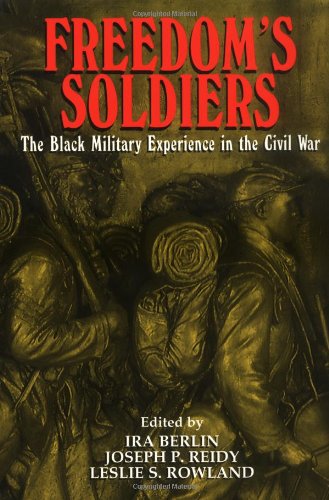
Freedom's Soldiers: The Black Military Experience in the Civil War
Authors:
Ira Berlin
Publisher:
Cambridge University Press
Publication Date:
Not available
ISBN:
0521634490
When nearly 200,000 black men, most of them former slaves, entered the Union army and navy, they transformed the Civil War into a struggle for liberty... and changed the course of American history. Freedom's Soldiers tells the story of those men in their own words and the words of other eyewitnesses. These moving letters, affidavits, and memorials--drawn from the records of the National Archives--reveal the variety and complexity of the African-American experience during the era of emancipation.
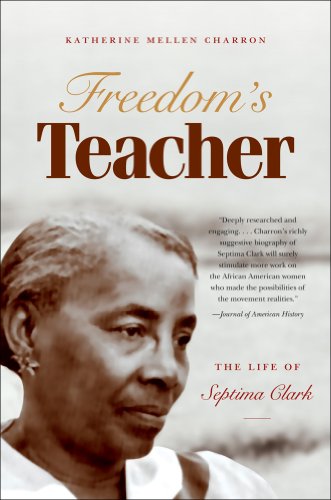
Freedom's Teacher: The Life of Septima Clark
Authors:
Katherine Charron
Publisher:
The University of North Carolina Press
Publication Date:
Not available
ISBN:
0807872229
In the mid-1950s, Septima Poinsette Clark (1898-1987), a former public school teacher, developed a citizenship training program that enabled thousands... of African Americans to register to vote and then to link the power of the ballot to concrete strategies for individual and communal empowerment. In this vibrantly written biography, Katherine Charron demonstrates Clark's crucial role--and the role of many black women teachers--in making education a cornerstone of the twentieth-century freedom struggle. Using Clark's life as a lens, Charron sheds valuable new light on southern black women's activism in national, state, and judicial politics, from the Progressive Era to the civil rights movement and beyond.
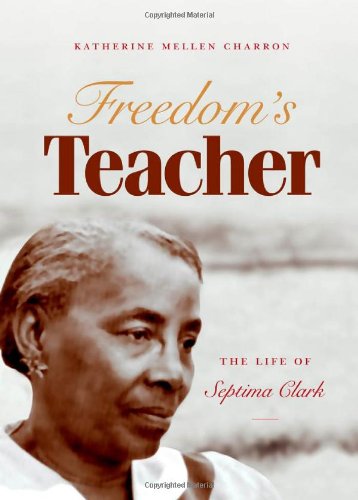
Freedom's Teacher: The Life of Septima Clark
Authors:
Katherine Mellen Charron
Publisher:
The University of North Carolina Press
Publication Date:
Not available
ISBN:
0807833320
Septima Poinsette Clark's gift to the civil rights movement was education. In the mid-1950s, this former public school teacher developed a citizenship... training program that enabled thousands of African Americans to register to vote and then to link the power of the ballot to concrete strategies for individual and communal empowerment. This vibrantly written biography places Clark (1898-1987) in a long tradition of southern African American activist educators, women who spent their lives teaching citizenship by helping people to help themselves. Freedom's Teacher traces Clark's life from her earliest years as a student, teacher, and community member in rural and urban South Carolina to her increasing radicalization as an activist following World War II, highlighting how Clark brought her life's work to bear on the civil rights movement. Katherine Mellen Charron's engaging portrait demonstrates Clark's crucial role--and the role of many black women teachers--in making education a cornerstone of the twentieth-century freedom struggle. Drawing on autobiographies and memoirs by fellow black educators, state educational records, papers from civil rights organizations, and oral histories, Charron argues that the schoolhouse served as an important institutional base for the movement. Clark's program also fostered participation from grassroots southern black women, affording them the opportunity to link their personal concerns to their political involvement on the community's behalf. Using Clark's life as a lens, Charron sheds valuable new light on southern black women's activism in national, state, and judicial politics, from the Progressive Era to the civil rights movement and beyond.
Freedom: Stories Celebrating the Universal Declaration of Human Rights
Authors:
Amnesty International
Publisher:
Broadway
Publication Date:
Not available
ISBN:
0307588831
Sixty years ago, the United Nations took a moral stand against human rights crimes and adopted the Universal Declaration of Human Rights, a proclamation... of thirty rights that belong to us all, starting memorably with Article 1: “All human beings are born free and equal.” Now, an array of internationally acclaimed writers have chosen one of the thirty rights as the inspiration for a short story. Published in association with Amnesty International, the result is a mix of thoughtful, serious, funny, and thrilling stories that harness the power of literature to celebrate—and affirm—our shared humanity.
Freedom's Trail: Springboro and the Underground Railroad
Authors:
Helen Sproat
Publisher:
White Dog Books 2010-04-08
Publication Date:
Not available
ISBN:
0984235140
Krugman/Wells takes a story-driven approach that focuses on real-world economics at work. The book offers the hallmark clarity and engaging writing... style that distinguish Paul Krugman's work, from his best-selling international economics text to his New York Times best-sellers.
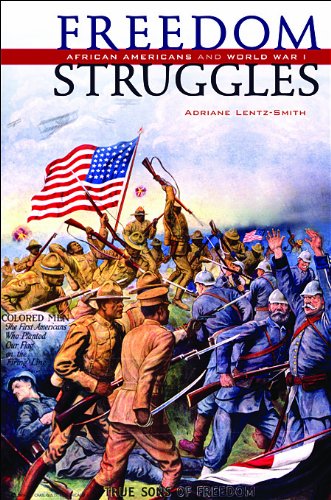
Freedom Struggles: African Americans and World War I
Authors:
Adriane Lentz-Smith
Publisher:
Harvard University Press
Publication Date:
Not available
ISBN:
0674062051
For many of the 200,000 black soldiers sent to Europe with the American Expeditionary Forces in World War I, encounters with French civilians and... colonial African troops led them to imagine a world beyond Jim Crow. They returned home to join activists working to make that world real. In narrating the efforts of African American soldiers and activists to gain full citizenship rights as recompense for military service, Adriane Lentz-Smith illuminates how World War I mobilized a generation. Black and white soldiers clashed as much with one another as they did with external enemies. Race wars within the military and riots across the United States demonstrated the lengths to which white Americans would go to protect a carefully constructed caste system. Inspired by Woodrow Wilson’s rhetoric of self-determination but battered by the harsh realities of segregation, African Americans fought their own “war for democracy,” from the rebellions of black draftees in French and American ports to the mutiny of Army Regulars in Houston, and from the lonely stances of stubborn individuals to organized national campaigns. African Americans abroad and at home reworked notions of nation and belonging, empire and diaspora, manhood and citizenship. By war’s end, they ceased trying to earn equal rights and resolved to demand them. This beautifully written book reclaims World War I as a critical moment in the freedom struggle and places African Americans at the crossroads of social, military, and international history.
Freedom Summer
Authors:
Doug Mcadam
Publisher:
Oxford University Press
Publication Date:
Not available
ISBN:
0195064720
In June 1964, over one thousand volunteers--most of them white, northern college students--arrived in Mississippi to register black voters and staff... "freedom schools" as part of the Freedom Summer campaign organized by the Student Non-Violent Coordinating Committee. Within ten days, three of them were murdered; by the summer's end, another had died and hundreds more had endured bombings, beatings, and arrests. Less dramatically, but no less significantly, the volunteers encountered a "liberating" exposure to new lifestyles, new political ideologies, and a radically new perspective on America and on themselves. Films such as Mississippi Burning have attempted to document this episode in the civil rights era, but Doug McAdam offers the first book to gauge the impact of Freedom Summer on the project volunteers and the period we now call "the turbulent sixties." Tracking down hundreds of the original project applicants, and combining hard data with a wealth of personal recollections, he has produced a riveting portrait of the people, the events, and the era. McAdam discovered that during Freedom Summer, the volunteers' encounters with white supremacist violence and their experiences with interracial relationships, communal living, and a more open sexuality led many of them to "climb aboard a political and cultural wave just as it was forming and beginning to wash forward." Many became activists in subsequent protests--including the antiwar movement and the feminist movement--and, most significantly, many of them have remained activists to this day. Brimming with the reminiscences of the Freedom Summer veterans, the book captures the varied motives that compelled them to make the journey south, the terror that came with the explosions of violence, the camaraderie and conflicts they experienced among themselves, and their assorted feelings about the lessons they learned.
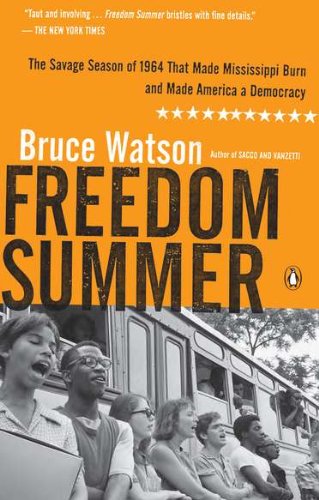
Freedom Summer: The Savage Season of 1964 That Made Mississippi...
Authors:
Bruce Watson
Publisher:
Penguin Books
Publication Date:
Not available
ISBN:
0143119435
A riveting account of one of the most remarkable episodes in American history. In his critically acclaimed history Freedom Summer, award- winning... author Bruce Watson presents powerful testimony about a crucial episode in the American civil rights movement. During the sweltering summer of 1964, more than seven hundred American college students descended upon segregated, reactionary Mississippi to register black voters and educate black children. On the night of their arrival, the worst fears of a race-torn nation were realized when three young men disappeared, thought to have been murdered by the Ku Klux Klan. Taking readers into the heart of these remarkable months, Freedom Summer shines new light on a critical moment of nascent change in America.
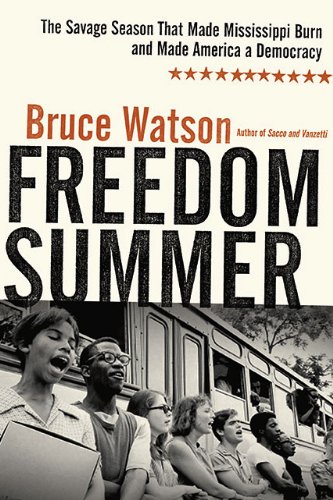
Freedom Summer: The Savage Season That Made Mississippi Burn and...
Authors:
Bruce Watson
Publisher:
Viking Adult
Publication Date:
Not available
ISBN:
0670021709
A majestic history of the summer of '64, which forever changed race relations in America In the summer of 1964, with the civil rights movement... stalled, seven hundred college students descended on Mississippi to register black voters, teach in Freedom Schools, and live in sharecroppers' shacks. But by the time their first night in the state had ended, three volunteers were dead, black churches had burned, and America had a new definition of freedom. This remarkable chapter in American history, the basis for the controversial film Mississippi Burning, is now the subject of Bruce Watson's thoughtful and riveting historical narrative. Using in- depth interviews with participants and residents, Watson brilliantly captures the tottering legacy of Jim Crow in Mississippi and the chaos that brought such national figures as Martin Luther King Jr. and Pete Seeger to the state. Freedom Summer presents finely rendered portraits of the courageous black citizens-and Northern volunteers-who refused to be intimidated in their struggle for justice, and the white Mississippians who would kill to protect a dying way of life. Few books have provided such an intimate look at race relations during the deadliest days of the Civil Rights movement, and Freedom Summer will appeal to readers of Taylor Branch and Doug Blackmon.
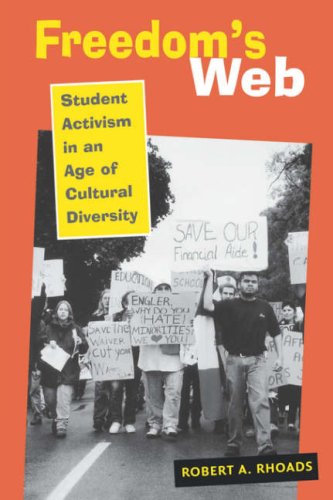
Freedom's Web: Student Activism in an Age of Cultural Diversity
Authors:
Robert A. Rhoads
Publisher:
The Johns Hopkins University Press
Publication Date:
Not available
ISBN:
0801864119
From the Mills College strike of 1990 to the Chicano Studies movement at UCLA, from African-American student unrest at Rutgers University in 1995 to... student protest in California against the passage of propositions 187 and 209, issues of cultural diversity have rocked college campuses for much of this decade. Indeed, Robert Rhoads locates the key to understanding renewed student activism in the 1990s within the struggle over multiculturalism. In Freedom's Web: Student Activism in an Age of Cultural Diversity, he focuses on how students have utilized what many scholars describe, both affectionately and pejoratively, as "identity politics" to advance various concerns tied to diversity issues. While the 1970s and much of the 1980s were relatively quiet decades in comparison to the 1960s, the divestment movement of the mid-1980s served as a catalyst for multicultural reform of the American college campus. Thus, in the 1990s, students once again began to turn to campus demonstration as a means to advance social change. Through illustrative case studies, Rhoads reveals the significant connections between contemporary student activism and the efforts of a previous generation of student activists to advance participatory democracy and civil rights. The author refutes claims such as those made by Arthur Schlesinger and Dinesh D'Souza that the politics of identity and the celebration of cultural diversity have contributed to the balkanization of the academy. Instead, Rhoads builds a convincing argument that identity politics is a response to cultural hegemony reinforced through longstanding monocultural norms of the academy. Balkanization, he concludes, is more the byproduct of traditional academic structures that promote exclusion over inclusion, authoritarianism over democracy, and xenophobia over a concern for others.
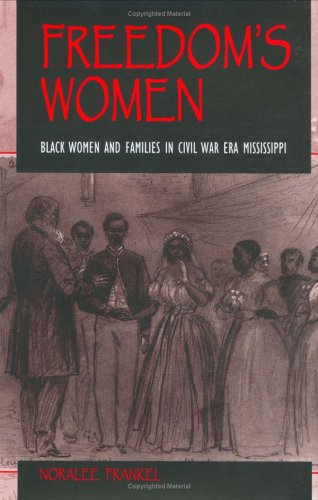
Freedom's Women: Black Women and Families in Civil War Era...
Authors:
Frankel
Publisher:
Indiana University Press
Publication Date:
Not available
ISBN:
0253334950
"Frankel's scholarship in this carefully researched and clearly written study is impressive.... The study is thoroughly documented with 70 pages of... footnotes and a 14-page bibliography, refleccting Frankel's grasp of the secondary literature as well as extensive work in primary documents." —ChoiceFreedom's Women examines African American women's experiences during the Civil War and early Reconstruction years in Mississippi. Exploring issues of family and work, the author shows how African American women's attempts to achieve more control over their lives shaped their attitudes toward work, marriage, family, and community.
Freedom: The Courage to Be Yourself [Insights for a New Way of Living]
Authors:
Osho; Osho (Author)
Publisher:
St. Martin's Griffin/ St. Martin's Press
Publication Date:
Not available
ISBN:
0312320701
In Freedom, Osho outlines three stages of freedom. The first is "freedom from," which is a freedom that comes from breaking out of what he calls the... "psychological slavery" imposed by outside forces such as parents, society, or religion. The next stage is "freedom for," a positive freedom that comes from embracing and creating something---a fulfilling relationship, for example, or an artistic or humanitarian vision. And lastly there is "just freedom," the highest and ultimate freedom. This last freedom is more than being for or against something; it is the freedom of simply being oneself and responding truthfully to each moment.The Insights for a New Way of Living series aims to shine light on beliefs and attitudes that prevent individuals from being their true selves. The text is an artful mix of compassion and humor, and readers are encouraged to confront what they would most like to avoid, which in turn provides the key to true insight and power.Freedom helps readers to identify the obstacles to their freedom, both circumstantial and self-imposed, to choose their battles wisely, and to find the courage to be true to themselves.
 '





