production
/viewbook/list/all/?page=5332
/
/static/
None

H250 LOCAL ANESTH SKILL ASSESS ]CUSTOM[
Authors:
Not Available
Publisher:
Not available
Publication Date:
Not available
ISBN:
Not available
H250 LOC ANESTHESIA NOTES F10 ]CUSTOM[
Authors:
Not Available
Publisher:
Not available
Publication Date:
Not available
ISBN:
Not available
H250 LOC ANESTHESIA SKILLS F10 ]CUSTOM[
Authors:
Not Available
Publisher:
Not available
Publication Date:
Not available
ISBN:
Not available
H304 ORAL PATHOLOGY NOTES ]CUSTOM[
Authors:
Not Available
Publisher:
Not available
Publication Date:
Not available
ISBN:
Not available
H304 ORAL PATHOLOGY NOTES F10 ]CUSTOM[
Authors:
Not Available
Publisher:
Not available
Publication Date:
Not available
ISBN:
Not available
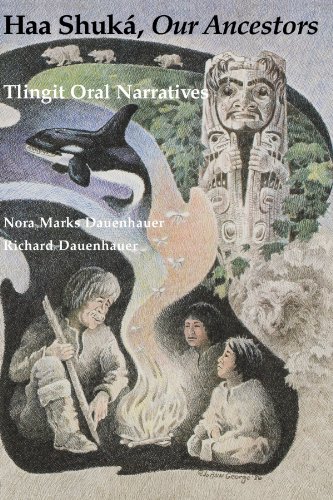
Haa Shuká, Our Ancestors: Tlingit Oral Narratives (Classics of...
Authors:
Not Available
Publisher:
University of Washington Press
Publication Date:
Not available
ISBN:
0295964952
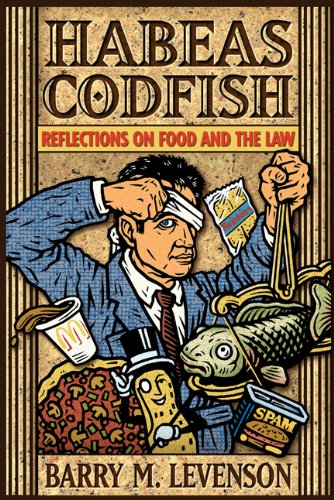
Habeas Codfish: Reflections on Food and the Law
Authors:
Barry M. Levenson
Publisher:
University of Wisconsin Press
Publication Date:
Not available
ISBN:
0299175103
From the McDonald’s hot coffee case to the cattle ranchers’ beef with Oprah Winfrey, from the old English "Assize of Bread" to current... nutrition labeling laws, what we eat and how we eat are shaped as much by legal regulations as by personal taste. Barry M. Levenson, the curator of the world-famous (really!) Mount Horeb Mustard Museum and a self-proclaimed "recovering lawyer," offers in Habeas Codfish an entertaining and expert overview of the frustrating, frightening, and funny intersections of food and the law. Discover how Mr. Peanut shaped the law of trademark infringement for the entire food industry. Consider the plight of the restaurant owner besmirched by a journalist’s negative review. Find out how traditional Jewish laws of kashrut ran afoul of the First Amendment. Prison meals, butter vs. margarine, definitions of organic food, undercover ABC reporters at the Food Lion, the Massachusetts Supreme Court case that saved fish chowder, even recipes—it’s all in here, so tuck in!
Habeas Corpus after 9/11: Confronting America's New Global...
Authors:
Jonathan Hafetz
Publisher:
NYU Press
Publication Date:
Not available
ISBN:
081472440X
The U.S. detention center at Guantánamo Bay has long been synonymous with torture, secrecy, and the abuse of executive power. It has come to epitomize... lawlessness and has sparked protracted legal battles and political debate. For too long, however, Guantánamo has been viewed in isolation and has overshadowed a larger, interconnected global detention system that includes other military prisons such as Bagram Air Base in Afghanistan, secret CIA jails, and the transfer of prisoners to other countries for torture. Guantánamo is simply—and alarmingly—the most visible example of a much larger prison system designed to operate outside the law. Habeas Corpus after 9/11 examines the rise of the U.S.-run global detention system that emerged after 9/11 and the efforts to challenge it through habeas corpus (a petition to appear in court to claim unlawful imprisonment). Habeas expert and litigator Jonathan Hafetz gives us an insider’s view of the detention of “enemy combatants” and an accessible explanation of the complex forces that keep these systems running. In the age of terrorism, some argue that habeas corpus is impractical and unwise. Hafetz advocates that it remains the single most important check against arbitrary and unlawful detention, torture, and the abuse of executive power.
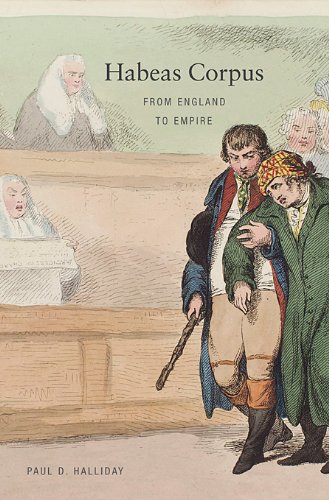
Habeas Corpus: From England to Empire
Authors:
Paul D. Halliday
Publisher:
Belknap Press of Harvard University Press
Publication Date:
Not available
ISBN:
0674064208
We call habeas corpus the Great Writ of Liberty. But it was actually a writ of power. In a work based on an unprecedented study of thousands of cases... across more than five hundred years, Paul Halliday provides a sweeping revisionist account of the world's most revered legal device. In the decades around 1600, English judges used ideas about royal power to empower themselves to protect the king's subjects. The key was not the prisoner's "right" to "liberty"—these are modern idioms—but the possible wrongs committed by a jailer or anyone who ordered a prisoner detained. This focus on wrongs gave the writ the force necessary to protect ideas about rights as they developed outside of law. This judicial power carried the writ across the world, from Quebec to Bengal. Paradoxically, the representative impulse, most often expressed through legislative action, did more to undermine the writ than anything else. And the need to control imperial subjects would increasingly constrain judges. The imperial experience is thus crucial for making sense of the broader sweep of the writ's history and of English law. Halliday's work informed the 2008 U.S. Supreme Court ruling in Boumediene v. Bush on prisoners in the Guantánamo detention camps. His eagerly anticipated book is certain to be acclaimed the definitive history of habeas corpus.
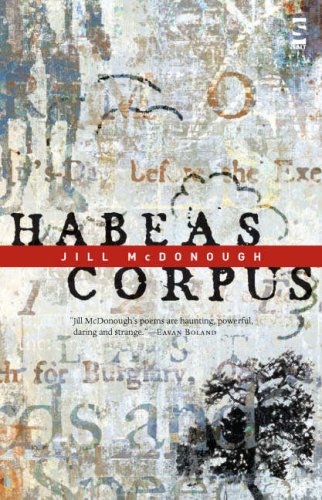
Habeas Corpus (Salt Modern Poets S.)
Authors:
Jill McDonough
Publisher:
Salt Publishing
Publication Date:
Not available
ISBN:
1844714241
Jill McDonough's first book gives us fifty sonnets, each about a historical execution. Headed meticulously with name, date, place, they are poignant... with the factual, with eyewitness reports and the words of the condemned - so limpidly framed that one forgets the skill that crystallizes all this into authentic poetry.
Habermas and the Public Sphere (Studies in Contemporary German...
Authors:
Not Available
Publisher:
The MIT Press
Publication Date:
Not available
ISBN:
0262531143
The relationship between civil society and public life is in the forefront of contemporary discussion. No single scholarly voice informs this discussion... more than that of Jürgen Habermas. His contributions have shaped the nature of debates over critical theory, feminism, cultural studies, and democratic politics. In this book, scholars from a wide range of disciplines respond to Habermas's most directly relevant work, The Structural Transformation of the Public Sphere. From political theory to cultural criticism, from ethics to gender studies, from history to media studies, these essays challenge, refine, and extend our understanding of the social foundations and changing character of democracy and public discourse.Craig Calhoun is Professor of Sociology and History and Director of the Program of Social Theory and CrossCultural Studies at the University of North Carolina at Chapel Hill.Contributors: Hannah Arendt. Keith Baker. Seyla Benhabib. Harry C. Boyte. Craig Calhoun. Geoff Eley. Nancy Fraser. Nicholas Garnham. Jürgen Habermas. Peter Hohendahl. Lloyd Kramer. Benjamin Lee. Thomas McCarthy. Moishe Postone. Mary P. Ryan. Michael Schudson. Michael Warner. David Zaret.

Habibi
Authors:
Naomi Shihab Nye
Publisher:
Simon Pulse 1999-06-01
Publication Date:
Not available
ISBN:
0689825234

From the internationally acclaimed author of Blankets (“A triumph for the genre.”—Library Journal), a highly anticipated new graphic... novel. Sprawling across an epic landscape of deserts, harems, and modern industrial clutter, Habibi tells the tale of Dodola and Zam, refugee child slaves bound to each other by chance, by circumstance, and by the love that grows between them. We follow them as their lives unfold together and apart; as they struggle to make a place for themselves in a world (not unlike our own) fueled by fear, lust, and greed; and as they discover the extraordinary depth—and frailty—of their connection. At once contemporary and timeless, Habibi gives us a love story of astounding resonance: a parable about our relationship to the natural world, the cultural divide between the first and third worlds, the common heritage of Christianity and Islam, and, most potently, the magic of storytelling.
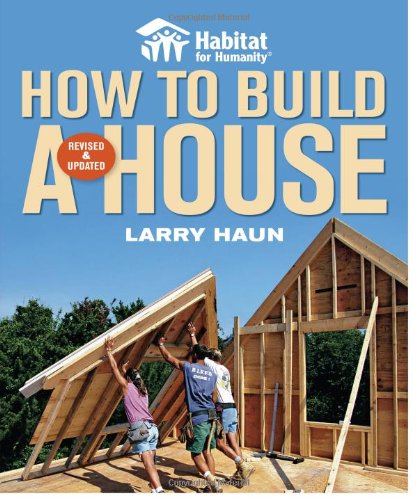
Habitat for Humanity How to Build a House Revised &...
Authors:
Larry Haun
Publisher:
Taunton Press
Publication Date:
Not available
ISBN:
1561589675
Since its founding in 1976, the non-profit Habitat for Humanity International has built more than 255,000 houses for more than one million people and... families in need world wide. First published in 2002, "Habitat for Humanity How to Build a House "has helped thousands more build simple, energy-efficient homes of their own by helping guide them from foundation to roof, through all interior finishes and fixtures. Written by long-time carpenter and Habitat volunteer, Larry Haun, this extensive revision features up-to-date information on residential codes, construction methods, and materials -- as well as an updated design inside and out. Haun also provides new sections on tools, siding, ventilation, and landscaping. With Clear information on everything from obtaining a site and permit to finishing touches like installing door locks and cabinets, this is the best single-volume resource for the beginning homebuilder.
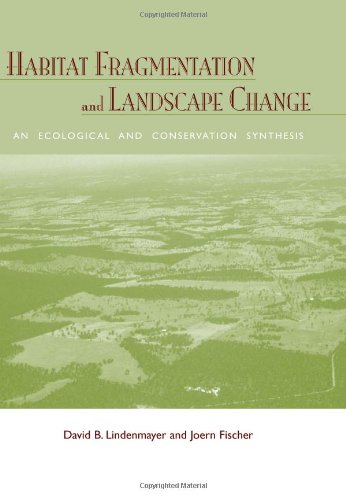
Habitat Fragmentation and Landscape Change: An Ecological and...
Authors:
David B. Lindenmayer
Publisher:
Island Press
Publication Date:
Not available
ISBN:
1597260215
Habitat loss and degradation that comes as a result of human activity is the single biggest threat to biodiversity in the world today. Habitat... Fragmentation and Landscape Change is a groundbreaking work that brings together a wealth of information from a wide range of sources to define the ecological problems caused by landscape change and to highlight the relationships among landscape change, habitat fragmentation, and biodiversity conservation. The book:synthesizes a large body of information from the scientific literature considers key theoretical principles for examining and predicting effects examines the range of effects that can arise explores ways of mitigating impacts reviews approaches to studying the problem discusses knowledge gaps and future areas for research and managementHabitat Fragmentation and Landscape Change offers a unique mix of theoretical and practical information, outlining general principles and approaches and illustrating those principles with case studies from around the world. It represents a definitive overview and synthesis on the full range of topics that fall under the widely used but often vaguely defined term "habitat fragmentation."
 '





