production
/viewbook/list/all/?page=5624
/
/static/
None

How Children Learn the Meanings of Words (Learning, Development,...
Authors:
Paul Bloom
Publisher:
A Bradford Book
Publication Date:
Not available
ISBN:
0262523299
How do children learn that the word "dog" refers not to all four-legged animals, and not just to Ralph, but to all members of a particular species? How... do they learn the meanings of verbs like "think," adjectives like "good," and words for abstract entities such as "mortgage" and "story"? The acquisition of word meaning is one of the fundamental issues in the study of mind.According to Paul Bloom, children learn words through sophisticated cognitive abilities that exist for other purposes. These include the ability to infer others' intentions, the ability to acquire concepts, an appreciation of syntactic structure, and certain general learning and memory abilities. Although other researchers have associated word learning with some of these capacities, Bloom is the first to show how a complete explanation requires all of them. The acquisition of even simple nouns requires rich conceptual, social, and linguistic capacities interacting in complex ways.This book requires no background in psychology or linguistics and is written in a clear, engaging style. Topics include the effects of language on spatial reasoning, the origin of essentialist beliefs, and the young child's understanding of representational art. The book should appeal to general readers interested in language and cognition as well as to researchers in the field.
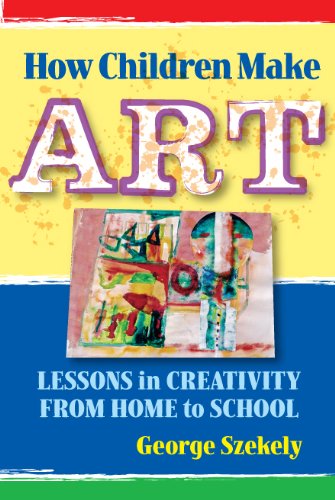
How Children Make Art: Lessons in Creativity from Home to School
Authors:
George Szekely
Publisher:
Teachers College Press
Publication Date:
Not available
ISBN:
080774719X
With his unique and refreshing perspective, George Szekely shows educators how to use ideas from home art and play activities as the basis for a school... art program that is meaningful to children. The author presents memorable descriptions and inspiring moments from a lifetime of studying children's home art -- all to introduce readers to a wealth of teaching possibilities. In these pages we learn what happens when children entering the art room are treated as colleagues, bringing their own ideas to an art curriculum that doesn't overshadow them with adult art plans and teachings about adult artists. Book Features: * An approach that presents a clear alternative to the traditional art classroom, one that emphasizes the uniqueness of children's art materials, creative spaces, and art processes. * Short, easy-to-read segments designed to fit the curriculum needs of a wide range of teacher education settings. * Examples of public school art classes where child artists are nurtured and challenged.

How Christianity Changed the World
Authors:
Alvin J. Schmidt
Publisher:
Zondervan
Publication Date:
Not available
ISBN:
0310264499
Western civilization is becoming increasingly pluralistic, secularized, and biblically illiterate. Many people today have little sense of how their... lives have benefited from Christianity's influence, often viewing the church with hostility or resentment. How Christianity Changed the World is a topically arranged Christian history for Christians and non- Christians. Grounded in solid research and written in a popular style, this book is both a helpful apologetic tool in talking with unbelievers and a source of evidence for why Christianity deserves credit for many of the humane, social, scientific, and cultural advances in the Western world in the last two thousand years. Photographs, timelines, and charts enhance each chapter. This edition features questions for reflection and discussion for each chapter.

How Cities Won the West: Four Centuries of Urban Change in Western...
Authors:
Carl Abbott
Publisher:
University of New Mexico Press
Publication Date:
Not available
ISBN:
0826333133
Cities rather than individual pioneers have been the driving force in the settlement and economic development of the western half of North America.... Throughout the seventeenth, eighteenth, and nineteenth centuries, western urban centers served as starting points for conquest and settlement. As these frontier cities matured into metropolitan centers, they grew from imitators of eastern culture and outposts of eastern capital into independent sources of economic, cultural, and intellectual change.From the Gulf of Alaska to the Mississippi River and from the binational metropolis of San Diego-Tijuana to the Prairie Province capitals of Canada, Carl Abbott explores the complex urban history of western Canada and the United States. The evolution of western cities from stations for exploration and military occupation to contemporary entry points for migration and components of a global economy reminds us that it is cities that "won the West." And today, as cultural change increasingly moves from west to east, Abbott argues that the urban West represents a new center from which emerging patterns of behavior and changing customs will help to shape North America in the twenty-first century.

How Cities Work : Suburbs, Sprawl, and the Roads Not Taken
Authors:
Alex Marshall
Publisher:
University of Texas Press
Publication Date:
Not available
ISBN:
0292752407
Do cities work anymore? How did they get to be such sprawling conglomerations of lookalike subdivisions, megafreeways, and "big box" superstores... surrounded by acres of parking lots? And why, most of all, don't they feel like real communities? These are the questions that Alex Marshall tackles in this hard-hitting, highly readable look at what makes cities work.Marshall argues that urban life has broken down because of our basic ignorance of the real forces that shape cities-transportation systems, industry and business, and political decision making. He explores how these forces have built four very different urban environments-the decentralized sprawl of California's Silicon Valley, the crowded streets of New York City's Jackson Heights neighborhood, the controlled growth of Portland, Oregon, and the stage-set facades of Disney's planned community, Celebration, Florida.To build better cities, Marshall asserts, we must understand and intelligently direct the forces that shape them. Without prescribing any one solution, he defines the key issues facing all concerned citizens who are trying to control urban sprawl and build real communities. His timely book will be important reading for a wide public and professional audience.

How College Affects Students: A Third Decade of Research...
Authors:
Ernest T. Pascarella
Publisher:
Jossey-Bass
Publication Date:
Not available
ISBN:
0787910449
This is the long-awaited second volume of Pascarella and Terenzini's 1991 award-winning review of the research on the impacts of college on students. ... The authors review their earlier findings and then synthesize what has been learned since 1990 about college's influences on students’ learning. The book also discusses the implications of the findings for research, practice, and public policy. This authoritative and comprehensive analysis of the literature on college-impact is required reading for anyone interested in higher education practice, policy, and promise¾faculty, administrators, researchers, policy analysts, and decision-makers at every level.
How Colleges Work: The Cybernetics of Academic Organization and...
Authors:
Robert Birnbaum
Publisher:
Jossey-Bass
Publication Date:
Not available
ISBN:
155542354X
One of the best theoretical and applied analyses of university academic organization and leadership in print. This book is significant because it is not... only thoughtfully developed and based on careful reading of the extensive literature on leadership and governance, but it is also deliberately intAnded to enable the author to bridge the gap between theories of organization, on one hand, and practical application, on the other.?Journal of Higher Education
How Colonialism Preempted Modernity in Africa
Authors:
Táíwò
Publisher:
Indiana University Press
Publication Date:
Not available
ISBN:
0253221307
Why hasn't Africa been able to respond to the challenges of modernity and globalization? Going against the conventional wisdom that colonialism brought... modernity to Africa, Olúfémi Táíwò claims that Africa was already becoming modern and that colonialism was an unfinished project. Africans aspired to liberal democracy and the rule of law, but colonial officials aborted those efforts when they established indirect rule in the service of the European powers. Táíwò looks closely at modern institutions, such as church missionary societies, to recognize African agency and the impulse toward progress. He insists that Africa can get back on track and advocates a renewed engagement with modernity. Immigration, capitalism, democracy, and globalization, if done right this time, can be tools that shape a positive future for Africa.

How Come No One Knows About Us? The Ultimate Public Relations...
Authors:
Robert Deigh
Publisher:
Wbusiness Books
Publication Date:
Not available
ISBN:
0832950173
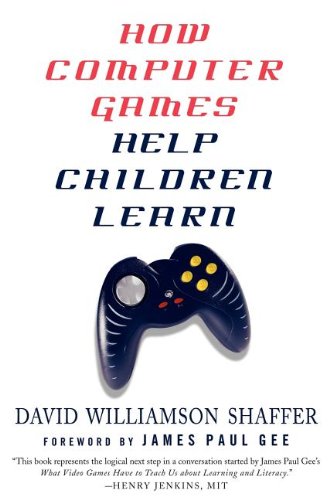
How Computer Games Help Children Learn
Authors:
David Williamson Shaffer
Publisher:
Palgrave Macmillan
Publication Date:
Not available
ISBN:
0230602525
This book looks at how particular video and computer games--such as Digital Zoo, The Pandora Project, SodaConstructor, and more--can help teach our... children and students to think like doctors, lawyers, engineers, urban planners, journalists, and other professionals. In the process, new "smart games" will give them the knowledge and skills they need to succeed in a changing world.
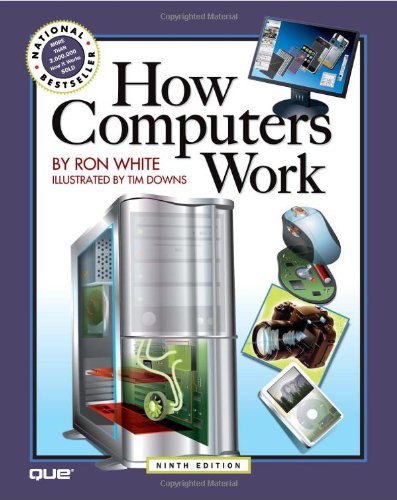
How Computers Work (9th Edition)
Authors:
Ron White
Publisher:
Que Publishing
Publication Date:
Not available
ISBN:
0789736136
Having sold more than 2 million copies over its lifetime, How Computers Work is the definitive illustrated guide to the world of PCs and technology. In... this new edition, you’ll find detailed information not just about every last component of hardware found inside your PC, but also in-depth explanations about home networking, the Internet, PC security, and even how cell phone networks operate. Whether you’re interested in how the latest graphics cards power today’s most demanding games or how a digital camera turns light into data, you’ll find your answers right here. Ron White is a former executive editor and columnist for PC Computing, where he developed the visual concept behind How Computers Work. Founder of one of the earliest PC user groups, he has been writing about computers for 25 years and is known for building wildly extreme computers. Timothy Edward Downs is an award-winning magazine designer, illustrator, and photographer. He has directed and designed several national consumer, business, technology, and lifestyle magazines, always infusing a sense of “how it works” into every project. A full-color, illustrated adventure into the wonders of TECHNOLOOGY This full-color, fully illustrated guide to the world of technology assumes nothing and explains everything. Only the accomplished Ron White and award-winning Tim Downs have the unique ability to meld descriptive text with one-of-a-kind visuals to fully explain how the electronic gear we depend on every day is made possible. In addition to all the content you’ve come to expect from prior editions, this newly revised edition includes all-new coverage of topics such as: • How tablet PCs put the power of a PC quite literally in your hands • How Windows Vista makes your Windows desktop translucent and makes your PC more secure • How advances in optical disc technology such as dual-layer DVD, HD-DVD, and Blu-Ray discs continue to push the envelope • How Apple’s new iPhone is revolutionizing what cell phones can do • How BitTorrent technology enables anyone to share information with everyone For a decade, How Computers Work has helped newbies understand new technology, while at the same time hackers and IT pros have treasured it for the depth of knowledge it contains. This is the perfect book about computing to capture your imagination, delight your eyes, and expand your mind, no matter what your technical level! Category: General Computing Covers: PCs/Hardware User Level: Beginning–Intermediate
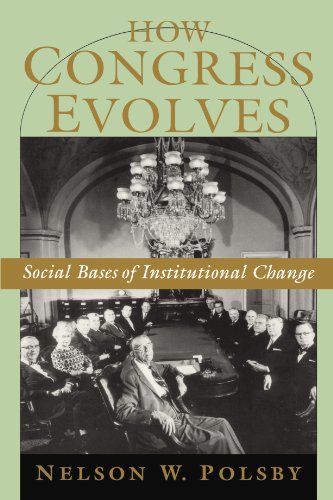
How Congress Evolves: Social Bases of Institutional Change
Authors:
Nelson W. Polsby
Publisher:
Oxford University Press, USA
Publication Date:
Not available
ISBN:
0195182960
In this greatly entertaining tale of one of our most august institutions, Nelson Polsby argues that among other things, from the 50's to the 90's,... Congress evolved. In short, Polsby argues that air conditioning altered the demography of the southern states, which in turn changed the political parties of the South, which transformed the composition and in due course the performance of the US House of Representatives. This evolutionary process led to the House's liberalization and later to its transformation into an arena of sharp partisanship, visible among both Democrats and Republicans. How Congress Evolves breathes new life into the dusty corners of institutional history, and offers a unique explanation for important transformations in the congressional environment.
How Congress Works, 4th Edition
Authors:
Not Available
Publisher:
CQ Press
Publication Date:
Not available
ISBN:
0872899551
In simple, clear language, the new edition of this classic CQ reference presents basic explanations of the procedures and rules that govern the Senate... and the House. Highlighted sidebars further detail the impact of congressional action with interesting narrative examples from history, along with charts and tables that provide a complete overview of congressional procedures. This edition has been thoroughly updated to reflect the substantial changes on Capitol Hill since the last edition was published a decade ago. How Congress Works helps readers place recent events in the context of the entire picture of how Congress operates. Chapters include:Party Leadership in CongressThe Legislative ProcessThe Committee SystemCongressional Staff A detailed index rounds out this accessible and affordable introduction to the real Congress.
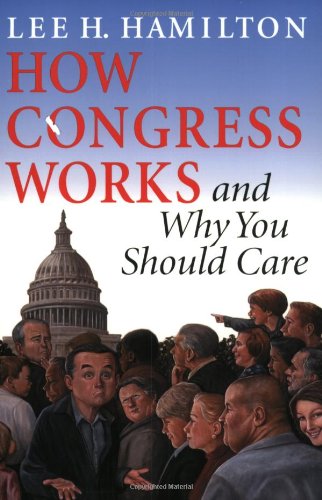
How Congress Works and Why You Should Care
Authors:
Hamilton
Publisher:
Indiana University Press
Publication Date:
Not available
ISBN:
0253216958
How Congress Works and Why You Should Care is a concise introduction to the functions and vital role of the U.S. Congress by eminent former Congressman... Lee H. Hamilton. Drawing on 34 years as a U.S. Representative, Hamilton explains how Congress reflects the diversity of the American people, serves as a forum for finding consensus, and provides balance within the federal government. Addressing widespread public misperceptions, he outlines areas where Congress can work better and ways for citizens to become more engaged in public affairs through their representatives in Washington. How Congress Works and Why You Should Care is essential reading for anyone who wants to understand the inner workings of Congress, and how all citizens can participate in its unique mission.
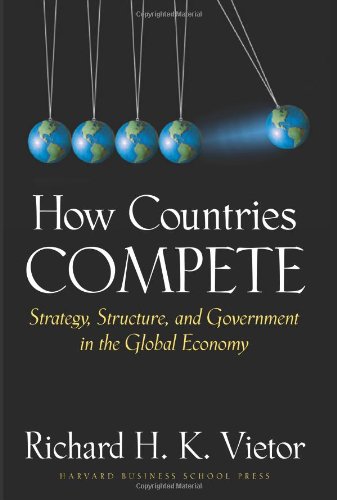
How Countries Compete: Strategy, Structure, and Government in the...
Authors:
Richard H. K. Vietor
Publisher:
Harvard Business Review Press
Publication Date:
Not available
ISBN:
1422110354
Business and political leaders often talk about what their respective countries must do to compete in the world economy. But what does it really mean... for a country to compete, and how do they do this successfully? As the world has globalized, countries develop strategies to compete for the markets, technologies, and skills that will raise their standards of living. These government strategies can make - or break - a nation's efforts to drive and sustain growth. In "How Countries Compete: Strategy, Structure and Government in the Global Economy", Richard Vietor shows how governments set direction and create the climate for a nation's economic development and profitable private enterprise. Drawing on history, economic analysis, and interviews with executives and officials around the globe, Vietor provides rich and insightful examinations of different government approaches to growth and development - leading to both success and failure. Individual chapters focus on the unique social, economic, cultural, and historical forces that shape governments' approach to economic growth. The countries discussed include: China, India, Japan, Singapore, the United States Mexico, Russia, Saudi Arabia, and South Africa. Vietor challenges the widespread notion that, in market-driven economies such as the United States, a strong government can only hinder business success. A provocative account and a rich resource, "How Countries Compete" offers potent insights into how the business environment has evolved in crucial nations - and what its trajectory might look like in the future.
 '





