production
/viewbook/list/all/?page=5634
/
/static/
None

How Nature Speaks: The Dynamics of the Human Ecological Condition...
Authors:
Not Available
Publisher:
Duke University Press Books
Publication Date:
Not available
ISBN:
0822336960
How Nature Speaks illustrates the convergence of complexity theory in the biophysical and social sciences and the implications of the science of... complexity for environmental politics and practice. This collection of essays focuses on uncertainty, surprise, and positionality—situated rather than absolute knowledge—in studies of nature by people embedded within the very thing they purport to study from the outside. The contributors address the complicated relationship between scientists and nature as part of a broader reassessment of how we conceive of ourselves, knowledge, and the world that we both inhabit and shape.Exploring ways of conceiving the complexity and multiplicity of humans’ many interactive relationships with the environment, the contributors provide in-depth case studies of the interweaving of culture and nature in socio-historical processes. The case studies focus on the origin of environmental movements, the politicization of environmental issues in city politics, the development of a local energy production system, and the convergence of forest management practices toward a dominant scheme. They are supported by explorations of big-picture issues: recurring themes in studies of social and environmental dynamics, the difficulties of deliberative democracy, and the potential gains for socio-ecological research offered by developmental systems theory and Pierre Bourdieu’s theory of intentionality.How Nature Speaks includes a helpful primer, “On Thinking Dynamically about the Human Ecological Condition,” which explains the basic principles of complexity and nonlinear thinking.Contributors. Chuck Dyke, Yrjö Haila, Ari Jokinen, Ville Lähde, Markus Laine, Iordanis Marcoulatos, John O’Neill, Susan Oyama, Taru Peltola, Lasse Peltonen, John Shotter, Peter Taylor
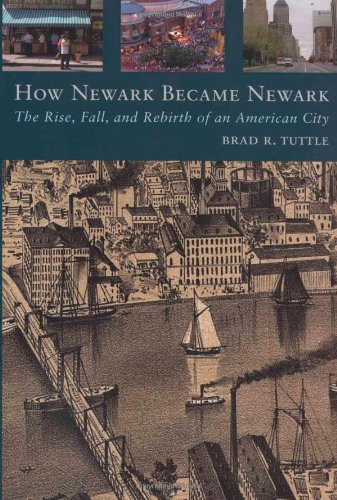
How Newark Became NewarkThe Rise, Fall, and Rebirth of an American...
Authors:
Mr. Brad Tuttle
Publisher:
Rutgers University Press
Publication Date:
Not available
ISBN:
0813544904
This sweeping popular history is the unflinching story of one of America s most fascinating cities. Brad R. Tuttle's illustrated account is fresh and... honest a critical tale that does not shy away from Newark's sometime seedy past. From its abrupt and steady decline following WWII to today's more hopeful future spurned on by a new real estate market and a growing population, How Newark Became Newark follows well-known and long-forgotten characters and significant events embodying the overall rise, fall, and rebirth of New Jersey's biggest city.

How Nonviolence Protects the State
Authors:
Peter Gelderloos
Publisher:
South End Press
Publication Date:
Not available
ISBN:
0896087727
Since the civil rights era, the doctrine of nonviolence has enjoyed near-universal acceptance by the US Left. Today protest is often shaped by... cooperation with state authorities—even organizers of rallies against police brutality apply for police permits, and anti-imperialists usually stop short of supporting self-defense and armed resistance. How Nonviolence Protects the State challenges the belief that nonviolence is the only way to fight for a better world. In a call bound to stir controversy and lively debate, Peter Gelderloos invites activists to consider diverse tactics, passionately arguing that exclusive nonviolence often acts to reinforce the same structures of oppression that activists seek to overthrow.Contemporary movements for social change face plenty of difficult questions, but sometimes matters of strategy and tactics receive low priority. Many North American activists fail to scrutinize the role of nonviolence, never posing essential questions:• Is nonviolence effective at ending systems of oppression?• Does nonviolence intersect with white privilege and the dominance of North over South?• How does pacifism reinforce the same power dynamic as patriarchy?• Ultimately, does nonviolence protect the state? Peter Gelderloos is a radical community organizer. He is the author of Consensus: A New Handbook for Grassroots Political, Social, and Environmental Groups and a contributor to Letters From Young Activists. He is the co-facilitator of a workshop on the prison system, and is also involved in independent media, copwatching, anti-oppression work, and anarchist organizing.
How Not to Audition: Avoiding the Common Mistakes Most Actors Make
Authors:
Ellie Kanner
Publisher:
Lone Eagle
Publication Date:
Not available
ISBN:
158065049X
This book gives details on proper etiquette during auditions and cold readings and includes strategies and techniques that will help any actor nail that... part.
How Not to Make a Short Film: Secrets from a Sundance Programmer
Authors:
Roberta Marie Munroe
Publisher:
Hyperion
Publication Date:
Not available
ISBN:
1401309542
"Roberta Munroe is that rare person in the film world who can not only recognize an inspired, great film, but she can actually help you make one."--Mark... Duplass, Sundance and SXSW award-winning filmmaker."Roberta Munroe is brilliant. Her advice and insights on our project, The Tribe, from rough cut to completed film were instrumental and invaluable to its success. It is exciting to think that all filmmakers will have access to her incredible mind and experience through this book."--Tiffany Shlain, award-winning filmmakerAnyone can make a short film, right Just grab some friends and your handheld and you can do it in a weekend or two before being accepted to a slew of film festivals, rightWrong.Roberta Munroe screened short film submissions at Sundance for five years, and is an award-winning short filmmaker in her own right. So she knows a thing or two about how not to make a short film. From the first draft of your script to casting, production, editing, and distribution, this is your one-stop primer for breaking into the business. Featuring interviews with many of today's most talented writers, producers, and directors, as well as revealing stories (e.g., what to do when the skinhead crack addict next door begins screaming obscenities as soon as you call "action") from the sets of her own short films, Roberta walks you through the minefield of mistakes that an aspiring filmmaker can make--so that you don't have to make them yourself.
How Not to Write a Screenplay: 101 Common Mistakes Most...
Authors:
Denny Martin Flinn
Publisher:
Lone Eagle
Publication Date:
Not available
ISBN:
1580650155
All good screenplays are unique, but all bad screenplays are the same. Flinn's book will teach the reader how to avoid the pitfalls of bad screenwriting... and arrive at one's own destination intact.
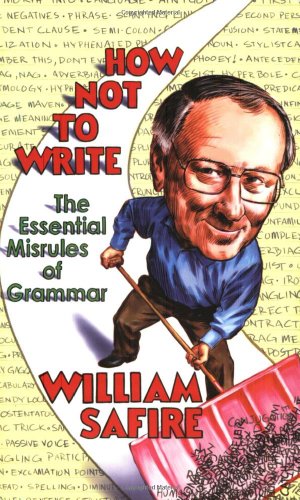
How Not to Write: The Essential Misrules of Grammar
Authors:
William Safire
Publisher:
W. W. Norton & Company
Publication Date:
Not available
ISBN:
039332723X
These fifty humorous misrules of grammar will open the eyes of writers of all levels to fine style.How Not to Write is a wickedly witty book about... grammar, usage, and style. William Safire, the author of the New York Times Magazine column "On Language," homes in on the "essential misrules of grammar," those mistakes that call attention to the major rules and regulations of writing. He tells you the correct way to write and then tells you when it is all right to break the rules. In this lighthearted guide, he chooses the most common and perplexing concerns of writers new and old. Each mini-chapter starts by stating a misrule like "Don't use Capital letters without good REASON." Safire then follows up with solid and entertaining advice on language, grammar, and life. He covers a vast territory from capitalization, split infinitives (it turns out you can split one if done meaningfully), run-on sentences, and semi-colons to contractions, the double negative, dangling participles, and even onomatopoeia. Originally published under the title Fumblerules.
How Now Shall We Live?
Authors:
Charles Colson
Publisher:
Tyndale House Publishers, Inc.
Publication Date:
Not available
ISBN:
084235588X
2000 Gold Medallion Award winner! Christianity is more than a personal relationship with Jesus Christ. It is also a worldview that answers life's basic... questions and shows us how we should live as a result of those answers. How Now Shall We Live? equips Christians to confront false worldviews and live redemptively in contemporary culture.
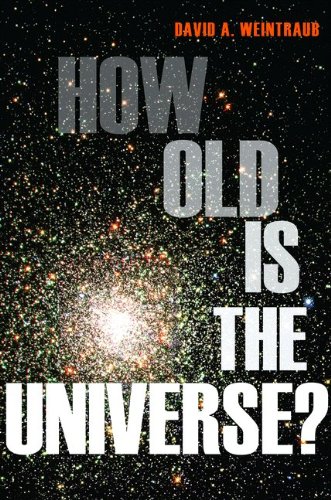
How Old Is the Universe?
Authors:
David A. Weintraub
Publisher:
Princeton University Press
Publication Date:
Not available
ISBN:
0691147310
Astronomers have determined that our universe is 13.7 billion years old. How exactly did they come to this precise conclusion? How Old Is the Universe?... tells the incredible story of how astronomers solved one of the most compelling mysteries in science and, along the way, introduces readers to fundamental concepts and cutting-edge advances in modern astronomy. The age of our universe poses a deceptively simple question, and its answer carries profound implications for science, religion, and philosophy. David Weintraub traces the centuries-old quest by astronomers to fathom the secrets of the nighttime sky. Describing the achievements of the visionaries whose discoveries collectively unveiled a fundamental mystery, he shows how many independent lines of inquiry and much painstakingly gathered evidence, when fitted together like pieces in a cosmic puzzle, led to the long-sought answer. Astronomers don't believe the universe is 13.7 billion years old--they know it. You will too after reading this book. By focusing on one of the most crucial questions about the universe and challenging readers to understand the answer, Weintraub familiarizes readers with the ideas and phenomena at the heart of modern astronomy, including red giants and white dwarfs, cepheid variable stars and supernovae, clusters of galaxies, gravitational lensing, dark matter, dark energy and the accelerating universe--and much more. Offering a unique historical approach to astronomy, How Old Is the Universe? sheds light on the inner workings of scientific inquiry and reveals how astronomers grapple with deep questions about the physical nature of our universe.
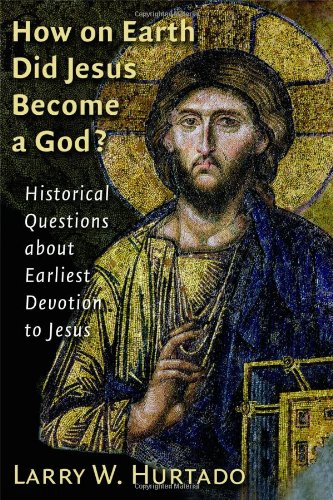
How on Earth Did Jesus Become a God?: Historical Questions about...
Authors:
Larry W. Hurtado
Publisher:
Wm. B. Eerdmans Publishing Company
Publication Date:
Not available
ISBN:
0802828612
In "How on Earth Did Jesus Become a God?" Larry Hurtado investigates the keen devotion to Jesus that emerged with surprising speed after his death.... Reverence for Jesus among early Christians, notes Hurtado, included both grand claims about Jesus' significance and a pattern of devotional practices that effectively treated him as divine. Directed at readers across religious lines, this book argues that whatever one makes of such devotion to Jesus, the subject at least deserves serious historical consideration. Mapping out the lively current debate about Jesus for interested newcomers, Hurtado explains the evidence, issues, and positions at stake. His clear and learned treatment of such matters as persecution of Jesus worshipers and Christianity's development out of Judaism will also catch the interest of students and specialists.
How Ottawa Spends, 2011-2012: Trimming Fat or Slicing Pork?
Authors:
Christopher Stoney
Publisher:
McGill-Queen's University Press
Publication Date:
Not available
ISBN:
0773539182
Continuing its tradition of timely and exemplary scholarship, the 2011-2012 edition of How Ottawa Spends examines national politics, priorities, and... policies, with an emphasis on the austerity measures and budget-cutting strategy of the Harper Conservative government; it also includes an analysis of the outcome of the federal election in May 2011. Leading scholars from across Canada examine a new era of "life under the knife" in the context of the Harper agenda after five years in power, the partisan calculus of a minority Parliament, and a deep global recession still in crisis mode. Given the budget-related pressure for an election, the book poses questions about the degree to which the budget agenda involves the political arts of "trimming fat" versus "slicing the pork" of partisan spending. Several closely linked political, policy, and spending realms are examined, including economic stimulus, environmental assessment, energy and climate change, health care, science and technology, immigration, and northern strategy (including affordable housing). Related governance issues such as the use of new media, regulatory budget cuts, Industry Canada as an economic regulator, and federal compensation costs are also discussed in detail.

How Pathogenic Viruses Work
Authors:
Lauren Sompayrac
Publisher:
Jones & Bartlett Learning
Publication Date:
Not available
ISBN:
0763720828
More than 50 viruses can cause human disease, and textbooks are packed with facts about these viruses and the diseases they cause. Indeed, digesting... this wealth of information can be daunting both for students and for professors. In How Pathogenic Viruses Work, the author reveals that the key to understanding this complex subject is to recognize that every virus must solve three basic problems: how to reproduce within the cells of its infected host, how to evade host defenses, and how to spread to a new host. Moreover, once the way a virus solves these problems is known, the pathological consequences of the viral infection can be predicted. To demonstrate the power of this approach, the author analyzes a dozen common human viruses, how they solve these problems, and what the resultant pathological consequences are for their human hosts. How Pathogenic Viruses Work offers unique insights into the mind of the virus. But more importantly, this book provides an antidote to information overload by presenting a paradigm for extracting essential information from voluminous virology texts.
How People Change
Authors:
Allen Wheelis
Publisher:
William Morrow Paperbacks
Publication Date:
Not available
ISBN:
006090447X
"At a time when slick, superficial, psychological works are foisted on the lay-public, Allen Wheelis has written a serious treatise."--San Francisco... Sunday Examiner-Chronicle
How People Grow: What the Bible Reveals About Personal Growth
Authors:
Henry Cloud
Publisher:
Zondervan
Publication Date:
Not available
ISBN:
0310257379
All growth is spiritual growth. Authors Drs. Cloud and Townsend unlock age-old keys to growth from Scripture to help people resolve issues of... relationships, maturity, emotional problems, and overall spiritual growth. They shatter popular misconceptions about how God operates and show that growth is not about self-actualization, but about God's sanctification. In this theological foundation to their best-selling book Boundaries, they discuss: *What the essential processes are that make people grow *How those processes fit into a biblical understanding of spiritual growth and theology *How spiritual growth and real-life issues are one and the same *What the responsibilities are of pastors, counselors, and others who assist people in growing---and what your own responsibilities are in your personal growth
How People Learn: Brain, Mind, Experience, and School: Expanded...
Authors:
Committee on Developments in the Science of Learning with ad
Publisher:
National Academies Press
Publication Date:
Not available
ISBN:
0309070368
This popular trade book, originally released in hardcover in the Spring of 1999, has been newly expanded to show how the theories and insights from the... original book can translate into actions and practice, now making a real connection between classroom activities and learning behavior. This paperback edition includes far-reaching suggestions for research that could increase the impact that classroom teaching has on actual learning. Like the original hardcover edition, this book offers exciting new research about the mind and the brain that provides answers to a number of compelling questions. When do infants begin to learn? How do experts learn and how is this different from non-experts? What can teachers and schools do-with curricula, classroom settings, and teaching methods - to help children learn most effectively? New evidence from many branches of science has significantly added to our understanding of what it means to know, from the neural processes that occur during learning to the influence of culture on what people see and absorb. "How People Learn" examines these findings and their implications for what we teach, how we teach it, and how we assess what our children learn. The book uses exemplary teaching to illustrate how approaches based on what we now know result in in-depth learning. This new knowledge calls into question concepts and practices firmly entrenched in our current education system. The topics include: how learning actually changes the physical structure of the brain; how existing knowledge affects what people notice and how they learn; what the thought processes of experts tell us about how to teach; the amazing learning potential of infants; the relationship of classroom learning and everyday settings of community and workplace; learning needs and opportunities for teachers; and a realistic look at the role of technology in education.
 '





