production
/viewbook/list/all/?page=5635
/
/static/
None
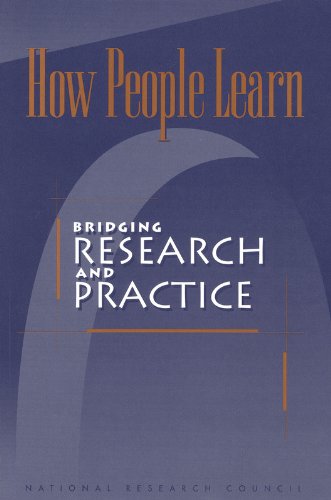
How People Learn: Bridging Research and Practice
Authors:
National Research Council
Publisher:
National Academies Press
Publication Date:
Not available
ISBN:
0309065364
What can teachers and schools do -- with curricula, classroom settings, and teaching methods -- to help children learn most effectively? New evidence... from many branches of science has significantly added to our understanding of what it means to know, from the neural processes that occur during learning to the influence of culture on what people see and absorb. This book examines these findings and their implications for what we teach, how we teach it, and how we assess what our children learn.
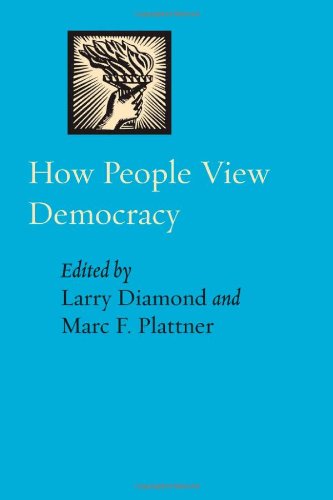
How People View Democracy (A Journal of Democracy Book)
Authors:
Not Available
Publisher:
The Johns Hopkins University Press
Publication Date:
Not available
ISBN:
0801890616
This volume gathers essays by leading scholars and principals of regional public-opinion surveys, known as "barometers," which are making possible the... first systematic, worldwide study of how citizens think about democracy and weigh it against other forms of government.Originally published in the Journal of Democracy, the essays cover topics from Arab opinion about democracy to the nostalgia for authoritarianism found in East Asia. Other contributions shed light on the rise of populism in Latin America, and explain why postcommunist regimes in Europe have won broad public support. Additional chapters invite reflection on the role of ordinary people in democratization through the rise of "expressive" social values, and ask whether political or economic factors more decisively influence how people evaluate democracy in their own countries. No serious student of democracy can afford to be without this book. It offers an original and comprehensive view of what citizens around the world think as democracy’s global "third wave" prepares to enter its fourth and perhaps most challenging decade.Contributors: Michael Bratton, Yu-tzung Chang, Yun-han Chu, Russell J. Dalton, Peter R. deSouza, Ronald Inglehart, Amaney Jamal, Willy Jou, Marta Lagos, Suhas Palshikar, Chong-Min Park, Richard Rose, Mitchell A. Seligson, Sandeep Shastri, Doh C. Shin, Mark Tessler, Christian Welzel, Yogendra Yadav
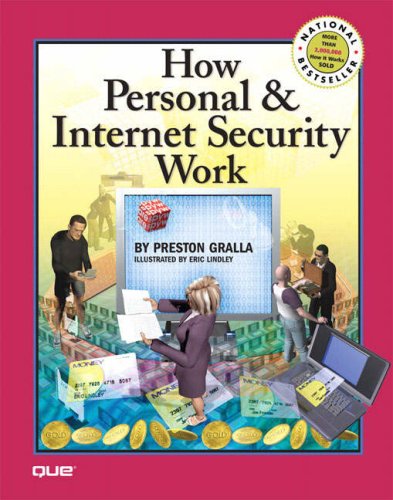
How Personal & Internet Security Works
Authors:
Preston Gralla
Publisher:
Que Publishing
Publication Date:
Not available
ISBN:
0789735539
In 2003, fraud and identity theft cost consumers at least $437 million dollars. In 2004, the U.S. Federal Trade Commission received 247,000 consumer... complaints in 2004 (up 15% from 2003), from individuals whose identity was stolen, and according to Reuters.com (2/2005), Americans lost $548 million dollars to identity theft and consumer fraud in 2004. Don't allow yourself to become a part of the statistics! How Personal and Internet Security Works illustrates in vivid detail the many dangers faced by those who use the Internet to send or receive email, surf the Web, conduct personal business, use a credit card, or even travel to airports and how those dangers can be solved. You'll also get detailed explanations of Internet privacy issues such as spyware, phishing, identity theft, data mining, biometrics, and security cameras, as well as Homeland Security issues such as airport scanning and terrorist screening.
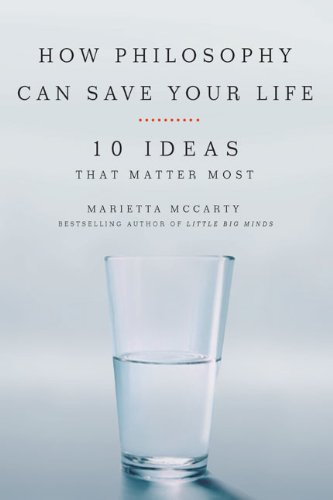
How Philosophy Can Save Your Life: 10 Ideas That Matter Most
Authors:
Marietta McCarty
Publisher:
Tarcher
Publication Date:
Not available
ISBN:
1585427462
Discover how great philosophers can help you live a more purposeful and peaceful life. This inspiring new book from the bestselling author of Little Big... Minds reveals how the heartbeats of philosophy- clear thinking, quiet reflection, and good conversation- are essential ingredients in a well-lived life. Full of great discussion ideas and activities you can do with a group, How Philosophy Can Save Your Life is framed around ten "big ideas"-themes that, according to McCarty, are necessary to grasp if one wants to live a truly fulfilling life. They are: 1. Simplicity (philosophers include Epicurus and Charlotte Joko Beck) 2. Communication (philosophers include bell hooks and Karl Jaspers) 3. Perspective (philosophers include Bertrand Russell and Mary Wollstonecraft) 4. Flexibility (philosophers include Socrates, Plato and Alan Watts) 5. Empathy (philosophers include the Dalai Lama and Martin Luther King, Jr.) 6. Individuality (philosophers include Jean-Paul Sartre and Elizabeth Spelman) 7. Belonging (philosophers include Albert Camus and Rita Manning) 8. Serenity (philosophers include Epictetus and Lao Tzu) 9. Possibility (philosophers include John Stuart Mill and Simone de Beauvoir) 10. Joy (philosophers include Shunryu Suzuki and Jane Addams) So join the greatest thinkers of all time to discover the ideas that will help you live a happier, healthier life!
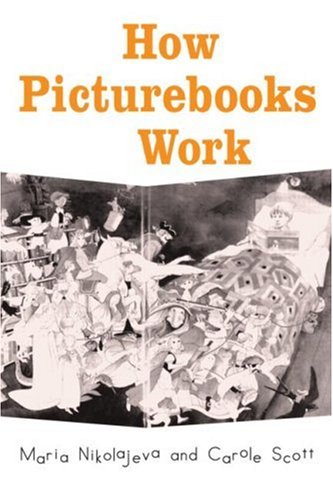
How Picturebooks Work (Children's Literature and Culture)
Authors:
Maria Nikolajeva
Publisher:
Routledge
Publication Date:
Not available
ISBN:
0415979684
How Picturebooks Work is an innovative and engaging look at the interplay between text and image in picturebooks. The authors explore picturebooks as a... specific medium or genre in literature and culture, one that prepares children for other media of communication, and they argue that picturebooks may be the most influential media of all in the socialization and representation of children. Spanning an international range of children's books, this book examine such favorites as Curious George and Frog and Toad Are Friends, along with the works of authors and illustrators including Maurice Sendak and Tove Jansson, among others. With 116 illustrations, How Picturebooks Work offers the student of children's literature a new methodology, new theories, and a new set of critical tools for examining the picturebook form.
How Plays Work (Nick Hern Books)
Authors:
David Edgar
Publisher:
Nick Hern Books
Publication Date:
Not available
ISBN:
1854593714
How Plays Work has grown out of David Edgar’s teaching in the University of Birmingham’s MA course in playwriting studies, which he founded twenty... years ago. Through historical and modern examples, the book analyzes the basic elements of dramatic structure, action, plot, character, dialogue, and genre.
How Pleasure Works: The New Science of Why We Like What We Like
Authors:
Paul Bloom
Publisher:
W. W. Norton & Company
Publication Date:
Not available
ISBN:
0393340007
“Engaging, evocative. . . . [Bloom] is a supple, clear writer, and his parade of counterintuitive claims about pleasure is beguiling.”—NPRWhy is... an artistic masterpiece worth millions more than a convincing forgery? Pleasure works in mysterious ways, as Paul Bloom reveals in this investigation of what we desire and why. Drawing on a wealth of surprising studies, Bloom investigates pleasures noble and seamy, lofty and mundane, to reveal that our enjoyment of a given thing is determined not by what we can see and touch but by our beliefs about that thing’s history, origin, and deeper nature.

How Policies Make Citizens: Senior Political Activism and the...
Authors:
Andrea Louise Campbell
Publisher:
Princeton University Press
Publication Date:
Not available
ISBN:
0691122504
Some groups participate in politics more than others. Why? And does it matter for policy outcomes? In this richly detailed and fluidly written book,... Andrea Campbell argues that democratic participation and public policy powerfully reinforce each other. Through a case study of senior citizens in the United States and their political activity around Social Security, she shows how highly participatory groups get their policy preferences fulfilled, and how public policy itself helps create political inequality.Using a wealth of unique survey and historical data, Campbell shows how the development of Social Security helped transform seniors from the most beleaguered to the most politically active age group. Thus empowered, seniors actively defend their programs from proposed threats, shaping policy outcomes. The participatory effects are strongest for low-income seniors, who are most dependent on Social Security. The program thus reduces political inequality within the senior population--a laudable effect--while increasing inequality between seniors and younger citizens.A brief look across policies shows that program effects are not always positive. Welfare recipients are even less participatory than their modest socioeconomic backgrounds would imply, because of the demeaning and disenfranchising process of proving eligibility. Campbell concludes that program design profoundly shapes the nature of democratic citizenship. And proposed policies--such as Social Security privatization--must be evaluated for both their economic and political effects, because the very quality of democratic government is influenced by the kinds of policies it chooses.
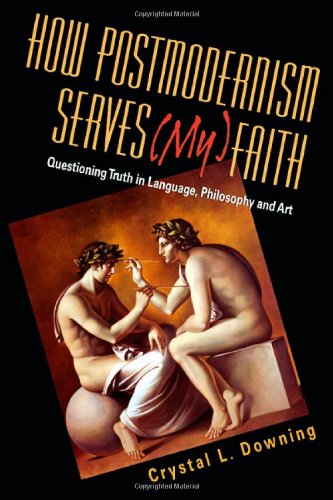
How Postmodernism Serves (My) Faith: Questioning Truth in Language,...
Authors:
Crystal L. Downing
Publisher:
IVP Academic
Publication Date:
Not available
ISBN:
0830827587
Thinking that postmodernism is a threat, many Christians take a duck-and-cover approach to dealing with it. But that will not make postmodernism go... away. Can Christians learn from postmodern thinkers and their critique of modernism? Yes, says author Crystal L. Downing. Postmodernism should not be judged by some of the problematic practices carried out in its name. In a lively engagement with literature, philosophy and art, Downing introduces readers to what postmodernism is and where it came from, aiming to show how Christians can best understand, critique and even benefit from its insights. She draws on her own experiences as a graduate student and her careful research into this worldview's modernist and artistic origins, the challenges of foundationalism and poststructuralism, and the complexity of relativism. She ends with a challenge to Christians: that they not be postmodern in their attitudes towards postmodernism, but instead to "be in the world and not of it" and to extend grace where it is most needed. Downing believes that the challenges, questions and insights of postmodernism can contribute to a deeper and clearer grasp of our faith, as well as providing unique paradigms for sharing the truth of Christ.
How Presidents Test Reality: Decisions on Vietnam 1954 and 1965
Authors:
John P. Burke
Publisher:
Russell Sage Foundation
Publication Date:
Not available
ISBN:
0871541769
First Paperback Edition (1991) by The Russell Sage Foundation. APSA NEUSTADT Book Award 1990 (American Political Science Award) for the best book on... the American Presidency. "....an owner's manual for operating the National Security Council..."
How Prints Look: Photographs With A Commentary
Authors:
William Ivins
Publisher:
Beacon Press
Publication Date:
Not available
ISBN:
0807066478
"The most famous introduction to prints. Through a series of enlarged details of prints in various media, Ivins makes clear the stylistic qualities... peculiar to each technique." — Choice
How Professors Think: Inside the Curious World of Academic Judgment
Authors:
Prof. Michèle Lamont
Publisher:
Harvard University Press
Publication Date:
Not available
ISBN:
0674057333
Excellence. Originality. Intelligence. Everyone in academia stresses quality. But what exactly is it, and how do professors identify it? In the... academic evaluation system known as “peer review,” highly respected professors pass judgment, usually confidentially, on the work of others. But only those present in the deliberative chambers know exactly what is said. Michèle Lamont observed deliberations for fellowships and research grants, and interviewed panel members at length. In How Professors Think, she reveals what she discovered about this secretive, powerful, peculiar world. Anthropologists, political scientists, literary scholars, economists, historians, and philosophers don’t share the same standards. Economists prefer mathematical models, historians favor different kinds of evidence, and philosophers don’t care much if only other philosophers understand them. But when they come together for peer assessment, academics are expected to explain their criteria, respect each other’s expertise, and guard against admiring only work that resembles their own. They must decide: Is the research original and important? Brave, or glib? Timely, or merely trendy? Pro-diversity or interdisciplinary enough? Judging quality isn’t robotically rational; it’s emotional, cognitive, and social, too. Yet most academics’ self-respect is rooted in their ability to analyze complexity and recognize quality, in order to come to the fairest decisions about that elusive god, “excellence.” In How Professors Think, Lamont aims to illuminate the confidential process of evaluation and to push the gatekeepers to both better understand and perform their role.
How Progressives Rewrote the Constitution
Authors:
Richard A. Epstein
Publisher:
Cato Institute
Publication Date:
Not available
ISBN:
1930865872
Richard A. Epstein traces the Old Court's treatment of federalism and economic liberty and shows how early 20th-century progressives prevailed... eventually in undermining those principles, supplanting competitive markets with government-created cartels and monopolies
How Proteins Work
Authors:
Mike Williamson
Publisher:
Garland Science
Publication Date:
Not available
ISBN:
0815344465
How Proteins Work is an up-to-date and authoritative account of protein function in living systems, explained within the governing parameters of... physics, chemistry, and evolution. This text will enable advanced undergraduate students in biochemistry and biophysics to understand the relationships among protein function, structure, and dynamics. It will also serve as a valuable resource for graduate students and researchers looking for a reference on the fundamentals underlying protein function. By providing an integrated view of proteins at both a cellular and systemic level, this textbook shows how evolution drives proteins to adopt domain structures that combine to achieve biological outcomes. The association of proteins into dimers, molecular machines, and multi-enzymatic complexes enables them to achieve catalytic and functional efficiency.
How Proust Can Change Your Life
Authors:
Alain De Botton
Publisher:
Vintage
Publication Date:
Not available
ISBN:
0679779159
Alain de Botton combines two unlikely genres--literary biography and self-help manual--in the hilarious and unexpectedly practical How Proust Can Change... Your Life.Who would have thought that Marcel Proust, one of the most important writers of our century, could provide us with such a rich source of insight into how best to live life? Proust understood that the essence and value of life was the sum of its everyday parts. As relevant today as they were at the turn of the century, Proust's life and work are transformed here into a no-nonsense guide to, among other things, enjoying your vacation, reviving a relationship, achieving original and unclichéd articulation, being a good host, recognizing love, and understanding why you should never sleep with someone on a first date. It took de Botton to find the inspirational in Proust's essays, letters and fiction and, perhaps even more surprising, to draw out a vivid and clarifying portrait of the master from between the lines of his work.Here is Proust as we have never seen or read him before: witty, intelligent, pragmatic. He might well change your life.
 '





