production
/viewbook/list/all/?page=5639
/
/static/
None

How Teachers Learn (Educational Psychology: Critical Pedagogical...
Authors:
Michael D. Andrew
Publisher:
Peter Lang Publishing
Publication Date:
Not available
ISBN:
1433108429
The essential goal for teacher education seems clear: to provide our nation's schools with the best possible teacher candidates. This statement is a... basic one, yet the ramifications for our nation's children and our country's future are critical. In the words of award-winning editor Michael D. Andrew, "Good teachers are at the heart of good schools, and to produce better teachers is to proportionately produce better education." This book shows us how to provide the best possible preparation for our nation's teachers. Through a case study of the Five-Year Teacher Education Program at the University of New Hampshire (UNH) and selected research articles and convention presentations related to the program, How Teachers Learn documents the evolution and achievements of a program that is a model of the best practices for teacher preparation.
How Teachers Taught: Constancy and Change in American Classrooms...
Authors:
Larry Cuban
Publisher:
Teachers College Press
Publication Date:
Not available
ISBN:
0807732265
In this new edition, Cuban returns to his inquiry into the history of teaching practice in the US, responds to criticisms, and incorporates the... scholarship of the last decade. He also investigates socioeconomic contexts, the evolution of curriculum content and the implications for policymakers.
How Technical Analysis Works (New York Institute of Finance)
Authors:
Bruce M. Kamich
Publisher:
Prentice Hall Press
Publication Date:
Not available
ISBN:
0735202702
For newcomer professionals and sophisticated investors, this book offers a tested approach to making the right investment decisions. 40 charts &... graphs.

How Terrorism Ends: Understanding the Decline and Demise of...
Authors:
Audrey Kurth Cronin
Publisher:
Princeton University Press
Publication Date:
Not available
ISBN:
069115239X
Amid the fear following 9/11 and other recent terror attacks, it is easy to forget the most important fact about terrorist campaigns: they always come... to an end--and often far more quickly than expected. Contrary to what many assume, when it comes to dealing with terrorism it may be more important to understand how it ends than how it begins. Only by understanding the common ways in which terrorist movements have died out or been eradicated in the past can we hope to figure out how to speed the decline of today's terrorist groups, while avoiding unnecessary fears and costly overreactions. In How Terrorism Ends, Audrey Kurth Cronin examines how terrorist campaigns have met their demise over the past two centuries, and applies these enduring lessons to outline a new strategy against al-Qaeda. This book answers questions such as: How long do terrorist campaigns last? When does targeting the leadership finish a group? When do negotiations lead to the end? Under what conditions do groups transition to other forms of violence, such as insurgency or civil war? How and when do they succeed or fail, and then disappear? Examining a wide range of historical examples--including the anti-tsarist Narodnaya Volya, the Provisional IRA, Peru's Shining Path, Japan's Aum Shinrikyo, and various Palestinian groups--Cronin identifies the ways in which almost all terrorist groups die out, including decapitation (catching or killing the leader), negotiation, repression, and implosion. How Terrorism Ends is the only comprehensive book on its subject and a rarity among all the books on terrorism--at once practical, optimistic, rigorous, and historical.

How Terrorism is Wrong: Morality and Political Violence
Authors:
Virginia Held
Publisher:
Oxford University Press, USA
Publication Date:
Not available
ISBN:
0199778531
What is terrorism? How is it different from other kinds of political violence? Why exactly is it wrong? Why is war often thought capable of being... justified? On what grounds should we judge when the use of violence is morally acceptable? It is often thought that using violence to uphold and enforce the rule of law can be justified, that violence used in self-defense is acceptable, and that some liberation movements can be excused for using violence--but that terrorism is always wrong. How persuasive are these arguments, and on what bases should we judge them?How Terrorism is Wrong collects articles by Virginia Held along with much new material. It offers a moral assessment of various forms of political violence, with terrorism the focus of much of the discussion. Here and throughout, Held examines possible causes discussed, including the connection between terrorism and humiliation. Held also considers military intervention, conventional war, intervention to protect human rights, violence to prevent political change, and the status and requirements of international law. She looks at the cases of Rwanda, Kosovo, Iraq, and the Israeli/Palestinian conflict. Finally, she explores questions of who has legitimate authority to engage in justifiable uses of violence, whether groups can be responsible for ethnic violence, and how the media should cover terrorism.Held discusses appropriate ways of engaging in moral evaluation and improving our moral recommendations concerning the uses of violence. Just war theory has been developed for violence between the military forces of conflicting states, but much contemporary political violence is not of this kind. Held considers the guidance offered by such traditional moral theories as Kantian ethics and utilitarianism, and also examines what the newer approach of the ethics of care can contribute to our evaluations of violence. Care is obviously antithetical to violence since violence destroys what care takes pains to build; but the ethics of care recognizes that violence is not likely to disappear from human affairs, and can offer realistic understandings of how best to reduce it.
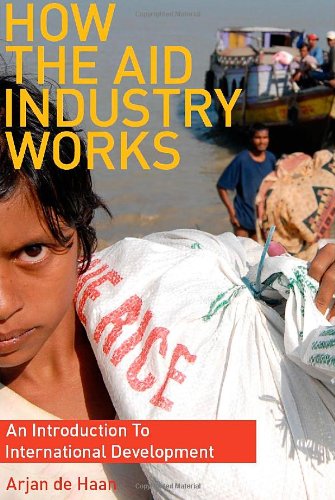
How the Aid Industry Works: An Introduction to International...
Authors:
Arjan de Haan
Publisher:
Kumarian Press
Publication Date:
Not available
ISBN:
1565492870
International development is big business. Official global aid flows from North to South are over $100 billion annually. China and India, former aid... recipients, are rapidly entering the field as aid providers themselves, and international charity is being redefined with the resources of private donors like the Gates Foundation, for example, outstripping the annual budget of long-time donors like the UK, Canada or the World Health Organization.Lacking in the literature on international development is an introductory text that provides an overview of the practices of the “business” of development. How the Aid Industry Works provides a basic description of what aid practices are and how they evolved. The arguments of both proponents and opponents of aid are presented and analyzed, along with real-life examples of projects and programs in context. Ideal for undergraduate and graduate students encountering the subject of development for the first time, the book also serves as an overview for development practitioners who want a handy reference covering the universe they inhabit.

How The Beatles Destroyed Rock 'n' Roll: An Alternative History of...
Authors:
Elijah Wald
Publisher:
Oxford University Press, USA
Publication Date:
Not available
ISBN:
019975697X
Overthrowing the conventional pieties of mainstream jazz and rock history, Elijah Wald traces the evolution of popular music through developing tastes,... trends and technologies--including the role of records, radio, jukeboxes and television--to give a fuller, more balanced account of the broad variety of music that captivated listeners over the course of the twentieth century. Wald revisits original sources--recordings, period articles, memoirs, and interviews--to highlight how music was actually heard and experienced over the years. In a refreshing departure from more typical histories, he focuses on the world of working musicians and ordinary listeners rather than stars and specialists. He looks at the evolution of jazz as dance music, and rock 'n' roll through the eyes of the screaming, twisting teenage girls who made up the bulk of its early audience. Duke Ellington, Benny Goodman, Frank Sinatra, Elvis Presley, Chuck Berry, and the Beatles are all here, but Wald also discusses less familiar names like Paul Whiteman, Guy Lombardo, Mitch Miller, Jo Stafford, Frankie Avalon, and the Shirelles, who in some cases were far more popular than those bright stars we all know today, and who more accurately represent the mainstream of their times. "Wald's book is suave, soulful, ebullient and will blow out your speakers."--Tom Waits"Wald is a meticulous researcher, a graceful writer and a committed contrarian.... An impressive accomplishment."--Peter Keepnews, New York Times Book Review"One of those rare books that aims to upend received wisdom and actually succeeds."--Kirkus Reviews"It is as an alternative, corrective history of American music that Wald's book is invaluable. It forces us to see that only by studying the good with the bad--and by seeing that the good and bad can't be pulled apart--can we truly grasp the greatness of our cultural legacy."--Malcolm Jones, Newsweek"Wald wears his scholarship lightly, but his ideas and insights are substantial.... The attention-grabbing title, for all its counterintuitive appeal, gives scant indication of the book's ambitions and achievements."--David Suisman, The Sixties
How the Best Leaders Lead: Proven Secrets to Getting the Most Out...
Authors:
Brian Tracy
Publisher:
AMACOM
Publication Date:
Not available
ISBN:
0814414346
In "How the Best Leaders Lead", Brian Tracy reveals the strategies used by top executives and business owners everywhere to achieve astounding results... in difficult markets against determined competition. Readers will learn how to set clear goals and objectives for themselves and others, set priorities and focus on key tasks, solve problems faster and make better decisions, determine the ideal leadership style for any situation, motivate their people and develop an exciting future vision for their business.

HOW THE BEST OF THE BEST GET BETTER
Authors:
Not Available
Publisher:
Not available
Publication Date:
Not available
ISBN:
Not available
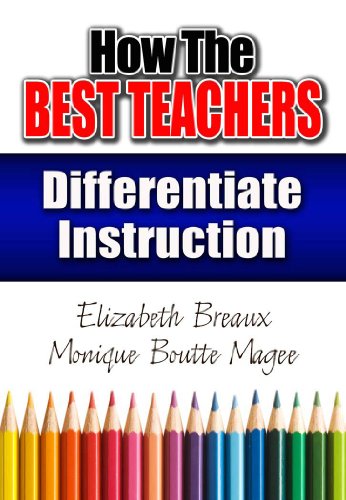
How the Best Teachers Differentiate Instruction
Authors:
Elizabeth Breaux
Publisher:
Eye on Education
Publication Date:
Not available
ISBN:
1596671408
This accessible and practical guide shows teachers how to provide their students with a variety of ways to strengthen their understanding of new... material. A selection of assessments is also available to ensure that students have mastered classroom content, regardless of their individual learning styles, abilities, and needs. Contents include:-What is differentiated instruction and why do we differentiate?-Know your students-Management for differentiated instruction-12 ways to differentiate-And more!

How the Bible Became a Book: The Textualization of Ancient Israel
Authors:
William M. Schniedewind
Publisher:
Cambridge University Press
Publication Date:
Not available
ISBN:
0521536227
How the Bible Became a Book combines recent archaeological discoveries in the Middle East with insights culled from the history of writing to address... how the Bible was written and evolved into sacred Scripture. Written for general readers as well as scholars, the book provides rich insight into how these texts came to possess the authority of Scripture and explores why Ancient Israel, an oral culture, began to write literature. It describes an emerging literate society in ancient Israel that challenges the assertion that literacy first arose in Greece during the fifth century BCE. Hb ISBN (2004) 0-521-82946-1

How the Bible Works: An Anthropological Study of Evangelical...
Authors:
Brian Malley
Publisher:
AltaMira Press
Publication Date:
Not available
ISBN:
0759106657
What do evangelicals believe when they 'believe in the Bible?' Despite hundreds of English versions that differ in their texts, evangelicals continue to... believe that there is a stable text—'the Bible'—which is the authoritative word of God and an essential guide to their everyday lives. To understand this phenomenon of evangelical Biblicism, anthropologist and biblical scholar Brian Malley looks not to the words of the Bible but to the Bible-believing communities. For as Malley demonstrates, it is less the meaning of the words of the Bible itself than how 'the Bible' provides a proper ground for beliefs that matters to evangelicals. Drawing on recent cognitive and social theory and extensive fieldwork in an evangelical church, Malley's book is an invaluable guide for seminarians, social scientists of religion, or for anyone who wants to understand just how the Bible works for American evangelicals.
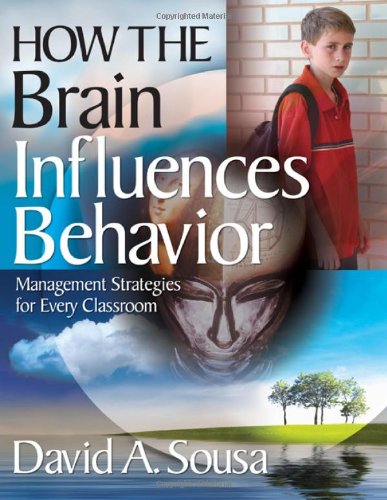
How the Brain Influences Behavior: Management Strategies for Every...
Authors:
David A. Sousa
Publisher:
Corwin Press
Publication Date:
Not available
ISBN:
1412958709
Combining theory and practice, this user-friendly guide translates current brain research into practical, effective strategies for controlling or... minimizing disruptive behaviors in K–12 classrooms.
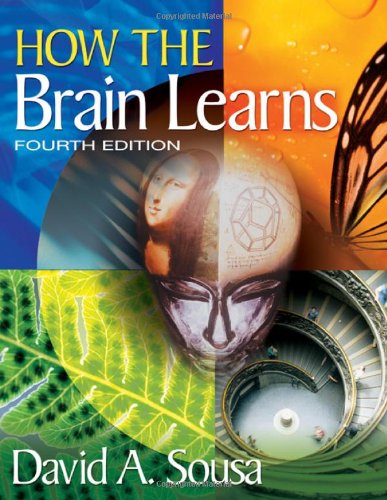
How the Brain Learns
Authors:
David A. Sousa
Publisher:
Corwin Press
Publication Date:
Not available
ISBN:
1412997976
David A. Sousa continues his successful tradition of translating current research findings into effective classroom strategies and activities in this... newest version of the bestseller.

How the Brain Learns Mathematics
Authors:
Not Available
Publisher:
Corwin Press
Publication Date:
Not available
ISBN:
1412953057
Discusses cognitive mechanisms for learning mathematics and factors that contribute to mathematics difficulties, examines how the brain develops an... understanding of number relationships, and connects to NCTM curriculum focal points.
 '





