production
/viewbook/list/all/?page=5640
/
/static/
None

How the Brain Learns Mathematics
Authors:
Not Available
Publisher:
Corwin Press
Publication Date:
Not available
ISBN:
1412953065
Discusses cognitive mechanisms for learning mathematics and factors that contribute to mathematics difficulties, examines how the brain develops an... understanding of number relationships, and connects to NCTM curriculum focal points.
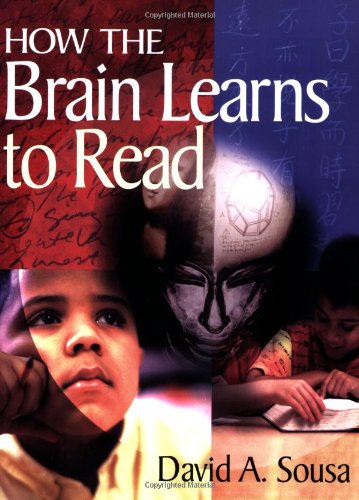
How the Brain Learns to Read
Authors:
Not Available
Publisher:
Corwin Press
Publication Date:
Not available
ISBN:
1412906016
Arm educators with the most current neuroscientific information available on reading and effective learning and start students down a lifelong path as... successful readers.

How The Catholic Church Built Western Civilization
Authors:
Thomas E. Woods Jr
Publisher:
Regnery History
Publication Date:
Not available
ISBN:
0895260387
From modern economics to Western art and m usic, the Catholic Church has contributed more to the development of Western civilization than any other... institution--but rarely gets credit for it.

How the Cold War Ended: Debating and Doing History (Issues in the...
Authors:
John Prados
Publisher:
Potomac Books Inc.
Publication Date:
Not available
ISBN:
1597971758
The Cold War continues to shape international relations almost twenty years after being acknowledged as the central event of the last half of the... twentieth century. Interpretations of how it ended thus remain crucial to an accurate understanding of global events and foreign policy. The reasons for the Cold War’s conclusion, and the timing of its ending, are disputed to this day.In this concise introduction to the Cold War and its enduring legacy, John Prados recognizes the debate between those who argue the United States was the key player in bringing it to a close and those who maintain that American actions were secondary factors. Like a crime scene investigator meticulously dissecting evidence, he applies a succession of different methods of historical analysis to illuminate the key cataclysmic events of the 1980s and early 1990s from a range of perspectives. He also incorporates evidence from European and Soviet intelligence sources into the study. The result is a stunning narrative that redefines the era, embraces debate, and deconstructs history, providing a coherent explanation for the upheavals that ended the conflict.How the Cold War Ended also provides an in-depth guide to conducting historical inquiries: how to choose a subject, how to frame a narrative, and how to conduct research and draw conclusions. Prados does this for a variety of methods of historical analysis, furnishing a how-to guide for “doing history” even as it explores a crucialcase study.
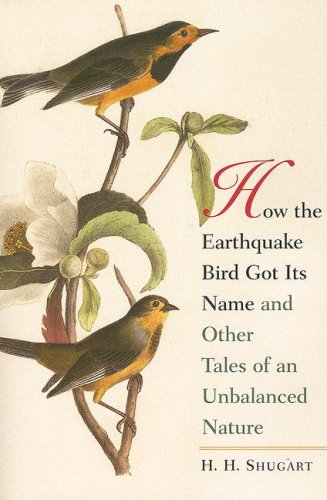
How the Earthquake Bird Got Its Name and Other Tales of an...
Authors:
H.H. Shugart
Publisher:
Yale University Press
Publication Date:
Not available
ISBN:
0300122705
Although people have been altering earth’s landscapes to some extent for tens of thousands of years, humankind today is causing massive changes to the... planet. Such widespread environmental change is accompanied by accelerating rates of species extinction. In this book, noted ecologist H. H. Shugart presents important ecological concepts through entertaining animal parables. He tells the stories of particular birds and mammalsthe packrat, ivory-billed woodpecker, penguin, dingo, European rabbit, and othersand what their fates reveal about the interactions between environmental change and the extinctions or explosions of species populations.Change is the root of many planetary problems, but it is also an intrinsic feature of our living planet. Shugart explores past environmental change, discusses the non-existence of a balance of Nature,” and documents how human alterations have affected plants, soils, and animals. He looks with hope toward a future in which thoughtful people learnand useecological science to protect the landscapes upon which terrestrial creatures depend.
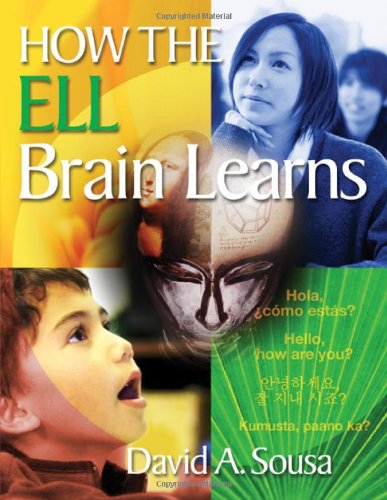
How the ELL Brain Learns
Authors:
David A. Sousa
Publisher:
Corwin Press
Publication Date:
Not available
ISBN:
1412988349
Award-winning brain research expert David A. Sousa explains current research on how the brain learns language and provides strategies for teaching... English language learners.

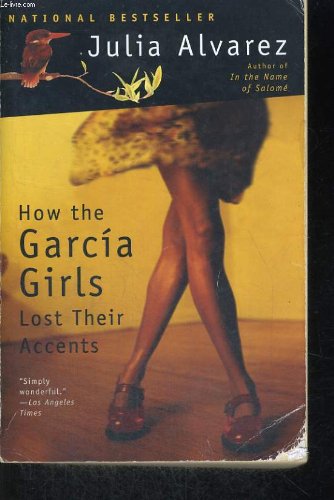
How the Garcia Girls Lost Their Accents
Authors:
Julia Alvarez
Publisher:
Algonquin Books
Publication Date:
Not available
ISBN:
156512975X
The Garcías—Dr. Carlos (Papi), his wife Laura (Mami), and their four daughters, Carla, Sandra, Yolanda, and Sofía—belong to the uppermost echelon... of Spanish Caribbean society, descended from the conquistadores. Their family compound adjoins the palacio of the dictator’s daughter. So when Dr. García’s part in a coup attempt is discovered, the family must flee. They arrive in New York City in 1960 to a life far removed from their existence in the Dominican Republic. Papi has to find new patients in the Bronx. Mami, far from the compound and the family retainers, must find herself. Meanwhile, the girls try to lose themselves—by forgetting their Spanish, by straightening their hair and wearing fringed bell bottoms. For them, it is at once liberating and excruciating being caught between the old world and the new, trying to live up to their father’s version of honor while accommodating the expectations of their American boyfriends. Acclaimed writer Julia Alvarez’s brilliant and buoyant first novel sets the García girls free to tell their most intimate stories about how they came to be at home—and not at home—in America.
How the Garcia Girls Lost Their Accents (Plume Contemporary Fiction)
Authors:
Julia Alvarez
Publisher:
Plum/Penguin
Publication Date:
Not available
ISBN:
0452268060
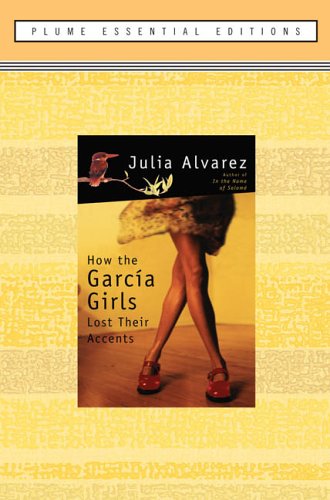
How the Garcia Girls Lost Their Accents: (Plume Essential Edition)
Authors:
Julia Alvarez
Publisher:
Plume
Publication Date:
Not available
ISBN:
0452287073
FOR USE IN SCHOOLS AND LIBRARIES ONLY. Eagerly embracing their new American culture in Miami, the four Garcia women iron their hair, smoke cigarettes,... date American men, forget their Spanish, and lose their accents, all in their journey toward adulthood.

How the Government Got in Your Backyard: Superweeds, Frankenfoods,...
Authors:
Jeff Gillman
Publisher:
Timber Press
Publication Date:
Not available
ISBN:
1604690011
Biotechnology — the future or a genetic time bomb? Renewable fuels — the key to cleaner air or just corporate welfare? Greenhouse gasses — baking... the earth to death or just a needless worry? Plant patents — improving gardens and farms or just profiteering? When you stop to think about it, the government has its hand in every important environmental issue. And with the left and the right raucously disagreeing about whether the government’s policies are for good or for evil, it’s impossible for a concerned citizen to know what to think. How the Government Got in Your Backyard distills the science, the politics, and the unbiased, nonpartisan truth behind hot-button environmental issues from pesticides to global warming. By clearly representing what the left says, what the right says, what the science is, and what the facts are, Gillman and Heberlig don’t set out to provide the answer — they light the path so concerned citizens can uncover their own true and informed opinion. In this season of political discontent, the unbiased truth about environmental policies — free of political agendas — is as refreshing as it is fascinating. How the Government Got in Your Backyard is not for Republicans or Democrats, liberals or conservatives. It’s for anyone who is ready to get to the bottom line.

How the Greeks Built Cities: The Relationships of Architecture and...
Authors:
R. E. Wycherley
Publisher:
W. W. Norton & Company
Publication Date:
Not available
ISBN:
0393008142
"This is a very important book. It could be the most important of this new century if it were to get the mindfulness it deserves."—Gloria Steinem,... from the introduction In this rare and intimate glimpse at the resilience and perseverance of Native women, twenty indigenous female leaders—educators, healers, attorneys, artists, elders, and activists—come together to discuss issues facing modern Native communities. This illuminating book found its genesis with Wilma Mankiller (1945–2010), first female chief of the Cherokee Nation. Over a period of several years, Mankiller engaged indigenous women in conversation about spirituality, traditions and culture, tribal governance, female role models, love, and community. Their common life experiences, patterns of thought, and shared values gave them the freedom to be frank and open, and a place of community from which to explore powerful influences on Native life. Wilma Mankiller spent most of her life in the rural community of Mankiller Flats in Adair County, Oklahoma. Her lifetime of activism began in 1969, when she took part in the Native American occupation of Alcatraz Island. She became the first female principal chief of the Cherokee Nation in 1985, a position she held for ten years. Mankiller has been honored with many awards, including the Presidential Medal of Freedom and honorary doctorate degrees from Yale University, Dartmouth College, and Smith College. She passed away April 6, 2010, at her home on the Mankiller family allotment.
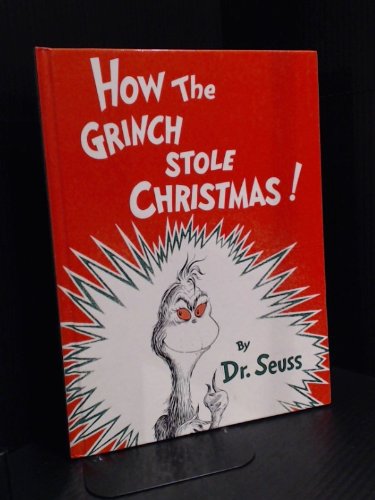
How The Grinch Stole Christmas
Authors:
Dr. Seuss
Publisher:
Random House
Publication Date:
Not available
ISBN:
0394800796
The ghastly Grinch refuses to be moved by the Christmas spirit in this must-have paperback version of Dr Seuss's classic tale. When he spies the... citizens of Who-ville enjoying their Christmas preparations, the Grinch comes down from his cave and makes a dastardly attempt to take all the joy out of the occasion by actually stealing Christmas. With hilarious rhymes and distinctive, original illustrations, this classic seasonal story has become a favourite for good reason and teaches readers the true meaning of Christmas.

How the Hippies Saved Physics: Science, Counterculture, and the...
Authors:
David Kaiser
Publisher:
W. W. Norton & Company
Publication Date:
Not available
ISBN:
0393076369
The surprising story of eccentric young scientists who stood up to convention—and changed the face of modern physics.Today, quantum information theory... is among the most exciting scientific frontiers, attracting billions of dollars in funding and thousands of talented researchers. But as MIT physicist and historian David Kaiser reveals, this cutting-edge field has a surprisingly psychedelic past. How the Hippies Saved Physics introduces us to a band of freewheeling physicists who defied the imperative to “shut up and calculate” and helped to rejuvenate modern physics. For physicists, the 1970s were a time of stagnation. Jobs became scarce, and conformity was encouraged, sometimes stifling exploration of the mysteries of the physical world. Dissatisfied, underemployed, and eternally curious, an eccentric group of physicists in Berkeley, California, banded together to throw off the constraints of the physics mainstream and explore the wilder side of science. Dubbing themselves the “Fundamental Fysiks Group,” they pursued an audacious, speculative approach to physics. They studied quantum entanglement and Bell’s Theorem through the lens of Eastern mysticism and psychic mind-reading, discussing the latest research while lounging in hot tubs. Some even dabbled with LSD to enhance their creativity. Unlikely as it may seem, these iconoclasts spun modern physics in a new direction, forcing mainstream physicists to pay attention to the strange but exciting underpinnings of quantum theory. A lively, entertaining story that illuminates the relationship between creativity and scientific progress, How the Hippies Saved Physics takes us to a time when only the unlikeliest heroes could break the science world out of its rut. 46 black-and-white illustrations

How the Human Genome Works
Authors:
Edwin H. McConkey
Publisher:
Jones and Bartlett Publishers, Inc.
Publication Date:
Not available
ISBN:
0763723843
This book covers the exxential principles of genetics in a readable, accessible format using real-life examples of the way genes affect human behavior,... health and illness, development and evolution.

How the Idea of Religious Toleration Came to the West
Authors:
Perez Zagorin
Publisher:
Princeton University Press
Publication Date:
Not available
ISBN:
0691121427
Religious intolerance, so terrible and deadly in its recent manifestations, is nothing new. In fact, until after the eighteenth century, Christianity... was perhaps the most intolerant of all the great world religions. How Christian Europe and the West went from this extreme to their present universal belief in religious toleration is the momentous story fully told for the first time in this timely and important book by a leading historian of early modern Europe.Perez Zagorin takes readers to a time when both the Catholic Church and the main new Protestant denominations embraced a policy of endorsing religious persecution, coercing unity, and, with the state's help, mercilessly crushing dissent and heresy. This position had its roots in certain intellectual and religious traditions, which Zagorin traces before showing how out of the same traditions came the beginnings of pluralism in the West. Here we see how sixteenth- and seventeenth-century thinkers--writing from religious, theological, and philosophical perspectives--contributed far more than did political expediency or the growth of religious skepticism to advance the cause of toleration. Reading these thinkers--from Erasmus and Sir Thomas More to John Milton and John Locke, among others--Zagorin brings to light a common, if unexpected, thread: concern for the spiritual welfare of religion itself weighed more in the defense of toleration than did any secular or pragmatic arguments. His book--which ranges from England through the Netherlands, the post-1685 Huguenot Diaspora, and the American Colonies--also exposes a close connection between toleration and religious freedom.A far-reaching and incisive discussion of the major writers, thinkers, and controversies responsible for the emergence of religious tolerance in Western society--from the Enlightenment through the United Nations' Universal Declaration of Human Rights--this original and richly nuanced work constitutes an essential chapter in the intellectual history of the modern world.
 '





