production
/viewbook/list/all/?page=5663
/
/static/
None
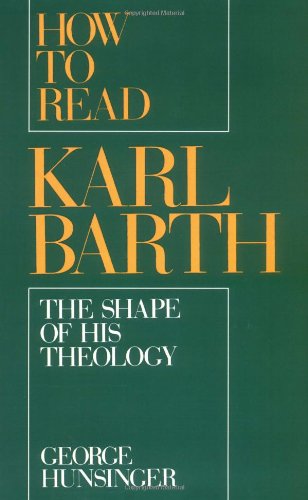
How to Read Karl Barth: The Shape of His Theology
Authors:
George Hunsinger
Publisher:
Oxford University Press, USA
Publication Date:
Not available
ISBN:
0195083695
This critical study decodes the most cryptic and elusive patterns of Karl Barth's dialectic. Hunsinger not only offers a new and authoritative... interpretation of Barth's mature theology, but also places Barth's work in relation to contemporary discussions of truth, justified belief, double agency, and religious pluralism. Through a fresh and compelling reading of Church Dogmatics, Hunsinger offers a new account of the coherence of that work as a whole.
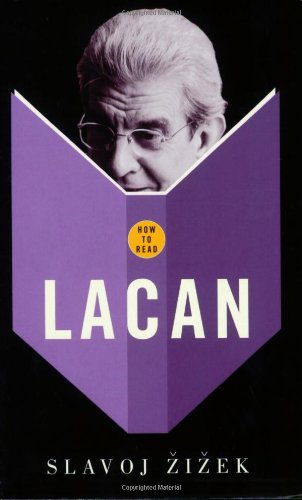
How To Read Lacan
Authors:
S Zizek
Publisher:
Granta Books
Publication Date:
Not available
ISBN:
1862078947
Jacques Lacan's ideas are as influential in the field of psychoanalysis as those of Freud have ever been. Introducing Lacan guides the reader through... Lacanian theory, exploring the central pillars of his thought and his bearing on literature, art, philosophy, and feminism.
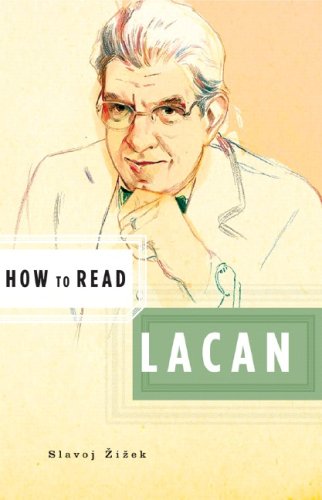
How to Read Lacan (How to Read)
Authors:
Slavoj Zizek
Publisher:
W. W. Norton & Company
Publication Date:
Not available
ISBN:
0393329550
“The only thing of which one can be guilty of is having given ground relative to one’s desire.”—Jacques LacanThe How to Read series provides a... context and an explanation that will facilitate and enrich your understanding of texts vital to the canon. These books use excerpts from the major texts to explain essential topics, such as Jacques Lacan's core ideas about enjoyment, which re-created our concept of psychoanalysis. Lacan’s motto of the ethics of psychoanalysis involves a profound paradox. Traditionally, psychoanalysis was expected to allow the patient to overcome the obstacles which prevented access to "normal" sexual enjoyment; today, however, we are bombarded by different versions of the injunction "Enjoy!" Psychoanalysis is the only discourse in which you are allowed not to enjoy. Slavoj Žižek’s passionate defense of Lacan reasserts Lacan’s ethical urgency. For Lacan, psychoanalysis is a procedure of reading and each chapter reads a passage from Lacan as a tool to interpret another text from philosophy, art or popular ideology.
How to Read Literature Like a Professor: A Lively and Entertaining...
Authors:
Thomas C. Foster
Publisher:
Quill
Publication Date:
Not available
ISBN:
006000942X
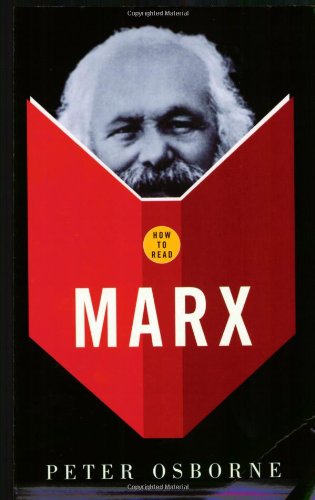
How To Read Marx
Authors:
P Osborne
Publisher:
Granta Books
Publication Date:
Not available
ISBN:
1862077711
Emphasizing the Romantic heritage and modernist legacy of Karl Marx's writings, Peter Osborne presents Marx's thought as a developing investigation into... what it means, concretely, for humans to be practical historical beings. Drawing upon passages from a wide range of Marx's writings, and showing the links between them, Osborne refutes the myth of Marx as a reductively economistic thinker. What Marx meant by 'materialism', 'communism' and the 'critique of political economy' was much richer and more original, philosophically, than is generally recognized. With the renewed globalization of capitalism since 1989, Osborne argues, Marx's analyses of the consequences of commodification are more relevant today than ever before. Extracts are taken from the full breadth of Marx's writings, from his student Notebooks on Epicurean Philosophy, via the Economic and Philosophical Manuscripts and The Communist Manifesto to Capital.
How to Read Marx's Capital
Authors:
Stephen Shapiro
Publisher:
Pluto Press
Publication Date:
Not available
ISBN:
0745325610
Capital Volume I is essential reading on many undergraduate courses, but the structure and style of the book can be confusing for students, leading them... to abandon the text. This book is a clear guide to reading Marx's classic text, which explains the reasoning behind the book's structure and provides help with the more technical aspects that non-economists may find taxing.Students are urged to think for themselves and engage with Marx's powerful methods of argument and explanation. Shapiro shows that Capital is key to understanding critical theory and cultural production.This highly focused book will prove invaluable to students of politics, cultural studies and literary theory.
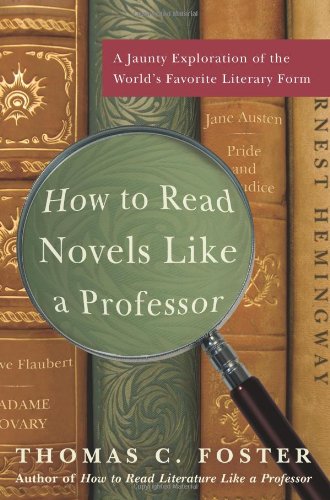
How to Read Novels Like a Professor: A Jaunty Exploration of the...
Authors:
Thomas C. Foster
Publisher:
Harper Perennial
Publication Date:
Not available
ISBN:
0061340405
Of all the literary forms, the novel is arguably the most discussed . . . and fretted over. From Miguel de Cervantes's Don Quixote to the works of Jane... Austen, F. Scott Fitzgerald, Ernest Hemingway, and today's masters, the novel has grown with and adapted to changing societies and technologies, mixing tradition and innovation in every age throughout history. Thomas C. Foster—the sage and scholar who ingeniously led readers through the fascinating symbolic codes of great literature in his first book, How to Read Literature Like a Professor—now examines the grammar of the popular novel. Exploring how authors' choices about structure—point of view, narrative voice, first page, chapter construction, character emblems, and narrative (dis)continuity—create meaning and a special literary language, How to Read Novels Like a Professor shares the keys to this language with readers who want to get more insight, more understanding, and more pleasure from their reading.
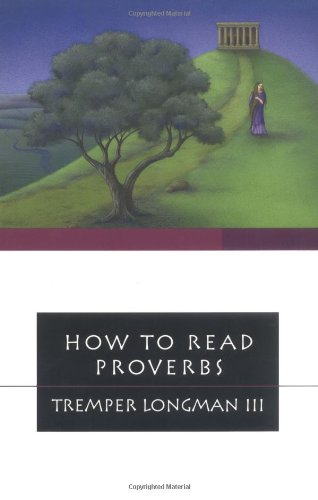
How to Read Proverbs (How to Read Series How to Read)
Authors:
Tremper Longman III
Publisher:
InterVarsity Press
Publication Date:
Not available
ISBN:
0877849420
Everyday we make choices on the path of life. Proverbs are memorable capsules of wisdom, chiseled in words and polished through use by those who have... traveled that path ahead of us. But the proverbs of the Bible make a greater claim than "a penny saved is a penny earned." They are woven into the web of divine revelation, rooted in the "fear of the Lord" that is the beginning of wisdom. While many proverbs speak to us directly, we can gain much greater insight by studying the book of Proverbs as a whole, understanding its relationship to ancient non-Israelite wisdom and listening to its conversation with the other great voices of wisdom in Scripture--Job and Ecclesiastes. In Tremper Longman III provides a welcome guide to reading and studying, understanding and savoring the Proverbs for all their wisdom. Most important for Christian readers, we gain insight into how Christ is the climax and embodiment of wisdom.
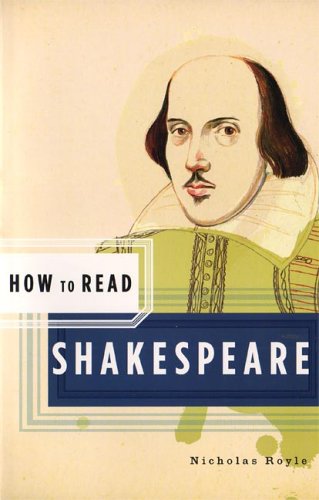
How to Read Shakespeare
Authors:
Nicholas Royle
Publisher:
W. W. Norton
Publication Date:
Not available
ISBN:
0393328392
Intent upon letting the reader experience the pleasure and intellectual stimulation in reading these classic authors, the How to Read series provides a... context and an explanation that will facilitate and enrich your understanding of texts vital to the canon.Approaching the writing of major intellectuals, artists, and philosophers need no longer be daunting. How to Read is a new sort of introduction--a personal master class in reading--that brings you face to face with the work of some of the most influential and challenging writers in history. In lucid, accessible language, these books explain essential topics such as Shakespeare's passion for complexity and his enduring ability to portray the power of love. Nicholas Royle conveys the richness and complexity of Shakespeare's work by focusing, above all, on how to read and enjoy short passages and interpret specific words from the plays and poems themselves. Discussing poetry and the question of reading, to the nature of memory and forgetting, to the power of love, Royle covers many of Shakespeare's most prevalent themes. Attention is also given to important aspects of historical context and critical reception and debate, as well as to the effects of different interpretations and different media (stage, film, the Internet, and more). Royle's primary concern, however, is with letting the reader experience—anew or for the first time—the extraordinary pleasure and stimulation of reading Shakespeare. Extracts are taken from a range of Shakespeare's works including Romeo and Juliet, A Midsummer Night's Dream, Hamlet, Twelfth Night, Othello, The Winter's Tale, and the Sonnets.
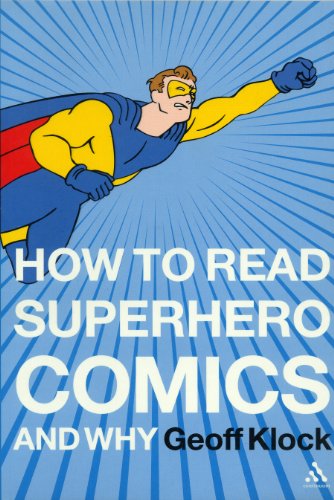
How to Read Superhero Comics and Why
Authors:
Geoff Klock
Publisher:
Continuum
Publication Date:
Not available
ISBN:
0826414192
Superhero comic books are traditionally thought to have two distinct periods, two major waves of creativity: the Golden Age and the Silver Age. In... simple terms, the Golden Age was the birth of the superhero proper out of the pulp novel characters of the early 1930s, and was primarily associated with the DC Comics Group. Superman, Batman, Green Lantern, and Wonder Woman are the most famous creations of this period. In the early 1960s, Marvel Comics launched a completely new line of heroes, the primary figures of the Silver Age: the Fantastic Four, Spider-Man, the Incredible Hulk, the X-Men, the Avengers, Iron Man, and Daredevil. In this book, Geoff Klock presents a study of the Third Movement of superhero comic books. He avoids, at all costs, the temptation to refer to this movement as "Postmodern," "Deconstructionist," or something equally tedious. Analyzing the works of Frank Miller, Alan Moore, Warren Ellis, and Grant Morrison among others, and taking his cue from Harold Bloom, Klock unearths the birth of self-consciousness in the superhero narrative and guides us through an intricate world of traditions, influences, nostalgia and innovations - a world where comic books do indeed become literature.

How to Read the Air
Authors:
Dinaw Mengestu
Publisher:
Riverhead Trade
Publication Date:
Not available
ISBN:
1594485399
A "beautifully written"* (New York Times Book Review) novel of redemption by a prize-winning international literary star.From the acclaimed author of... The Beautiful Things that Heaven Bears comes a heartbreaking literary masterwork about love, family, and the power of imagination.Following the death of his father Yosef, Jonas Woldemariam feels compelled to make sense of the volatile generational and cultural ties that have forged him. Leaving behind his marriage and job in New York, he sets out to retrace his mother and father's honeymoon as young Ethiopian immigrants and weave together a family history that will take him from the war-torn country of his parents' youth to a brighter vision of his life in America today. In so doing, he crafts a story- real or invented-that holds the possibility of reconciliation and redemption.
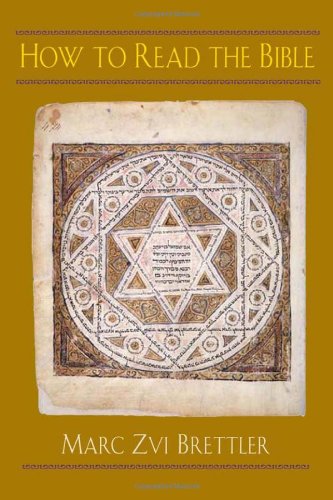
How to Read the Bible
Authors:
Marc Zvi Brettler PhD
Publisher:
The Jewish Publication Society
Publication Date:
Not available
ISBN:
082760775X
Master Bible scholar and teacher Marc Brettler argues that today’s contemporary readers can only understand the ancient Hebrew Scripture by knowing... more about the culture that produced it. And so Brettler unpacks the literary conventions, ideological assumptions, and historical conditions that inform the biblical text and demonstrates how modern critical scholarship and archaeological discoveries shed light on this fascinating and complex literature.Brettler surveys representative biblical texts from different genres to illustrate how modern scholars have taught us to “read” these texts. Using the “historical-critical method” long popular in academia, he guides us in reading the Bible as it was read in the biblical period, independent of later religious norms and interpretive traditions. Understanding the Bible this way lets us appreciate it as an interesting text that speaks in multiple voices on profound issues.This book is the first “Jewishly sensitive” introduction to the historical-critical method. Unlike other introductory texts, the Bible that this book speaks about is the Jewish one—with the three-part TANAKH arrangement, the sequence of books found in modern printed Hebrew editions, and the chapter and verse enumerations used in most modern Jewish versions of the Bible. In an afterword, the author discusses how the historical-critical method can help contemporary Jews relate to the Bible as a religious text in a more meaningful way.
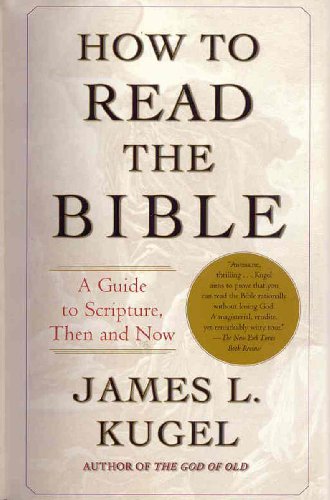
How to Read the Bible: A Guide to Scripture, Then and Now
Authors:
James L. Kugel
Publisher:
Free Press
Publication Date:
Not available
ISBN:
0743235878
Scholars from different fields have joined forces to reexamine every aspect of the Hebrew Bible. Their research, carried out in universities and... seminaries in Europe and America, has revolutionized our understanding of almost every chapter and verse. But have they killed the Bible in the process? In How to Read the Bible, Harvard professor James Kugel leads the reader chapter by chapter through the "quiet revolution" of recent biblical scholarship, showing time and again how radically the interpretations of today's researchers differ from what people have always thought. The story of Adam and Eve, it turns out, was not originally about the "Fall of Man," but about the move from a primitive, hunter-gatherer society to a settled, agricultural one. As for the stories of Cain and Abel, Abraham and Sarah, and Jacob and Esau, these narratives were not, at their origin, about individual people at all but, rather, explanations of some feature of Israelite society as it existed centuries after these figures were said to have lived. Dinah was never raped -- her story was created by an editor to solve a certain problem in Genesis. In the earliest version of the Exodus story, Moses probably did not divide the Red Sea in half; instead, the Egyptians perished in a storm at sea. Whatever the original Ten Commandments might have been, scholars are quite sure they were different from the ones we have today. What's more, the people long supposed to have written various books of the Bible were not, in the current consensus, their real authors: David did not write the Psalms, Solomon did not write Proverbs or Ecclesiastes; indeed, there is scarcely a book in the Bible that is not the product of different, anonymous authors and editors working in different periods. Such findings pose a serious problem for adherents of traditional, Bible-based faiths. Hiding from the discoveries of modern scholars seems dishonest, but accepting them means undermining much of the Bible's reliability and authority as the word of God. What to do? In his search for a solution, Kugel leads the reader back to a group of ancient biblical interpreters who flourished at the end of the biblical period. Far from naïve, these interpreters consciously set out to depart from the original meaning of the Bible's various stories, laws, and prophecies -- and they, Kugel argues, hold the key to solving the dilemma of reading the Bible today. How to Read the Bible is, quite simply, the best, most original book about the Bible in decades. It offers an unflinching, insider's look at the work of today's scholars, together with a sustained consideration of what the Bible was for most of its history -- before the rise of modern scholarship. Readable, clear, often funny but deeply serious in its purpose, this is a book for Christians and Jews, believers and secularists alike. It offers nothing less than a whole new way of thinking about sacred Scripture.
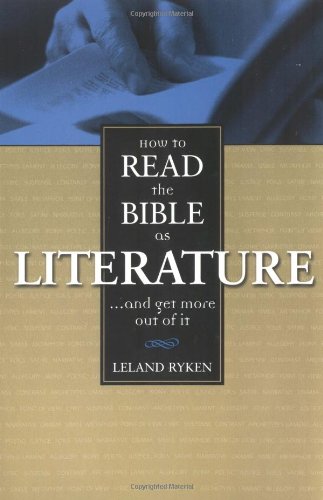
How to Read the Bible as Literature
Authors:
Leland Ryken
Publisher:
Zondervan
Publication Date:
Not available
ISBN:
0310390214
Why the Good Book Is a Great Read If you want to rightly understand the Bible, you must begin by recognizing what it is: a composite of literary... styles. It is meant to be read, not just interpreted. The Bible's truths are embedded like jewels in the rich strata of story and poetry, metaphor and proverb, parable and letter, satire and symbolism. Paying attention to the literary form of a passage will help you understand the meaning and truth of that passage. How to Read the Bible as Literature takes you through the various literary forms used by the biblical authors. This book will help you read the Bible with renewed appreciation and excitement and gain a more profound grasp of its truths. Designed for maximum clarity and usefulness, How to Read the Bible as Literature includes * sidebar captions to enhance organization * wide margins ideal for note taking * suggestions for further reading * appendix: 'The Allegorical Nature of the Parables' * indexes of persons and subjects
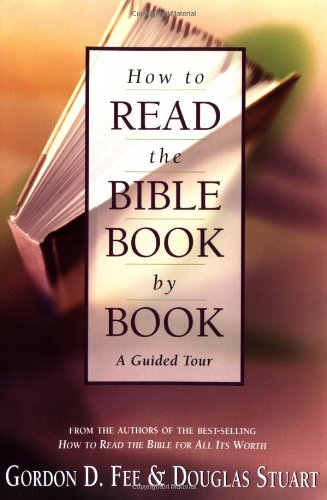
HOW TO READ THE BIBLE BOOK BY BOOK A Guided Tour
Authors:
Gordon D & Stuart, Douglas Fee
Publisher:
Zondervan
Publication Date:
Not available
ISBN:
0310211182
A Guided Tour from Genesis through Revelation Reading the Bible need not be a haphazard journey through strange and bewildering territory. Like an... experienced tour guide, How to Read the Bible Book by Book takes you by the hand and walks you through the Scriptures. For each book of the Bible, the authors start with a quick snapshot, then expand the view to help you better understand its key elements and how it fits into the grand narrative of the Bible. Written by two top evangelical scholars, this survey is designed to get you actually reading the Bible knowledgeably and understanding it accurately. In an engaging, conversational style, Gordon Fee and Douglas Stuart take you through a given book of the Bible using their unique, progressive approach: * Orienting Data---Concise info bytes that form a thumbnail of the book * Overview---A brief panorama that introduces key concepts and themes and important landmarks in the book * Specific Advice for Reading---Pointers for accurately understanding the details and message of the book in context with the circumstances surrounding its writing * A Walk Through---The actual section-by-section tour that helps you see both the larger landscape of the book and how its various parts work together to form the whole. Here you are taken by the hand and told, 'Look at this!' How to Read the Bible Book by Book can be used as a companion to How to Read the Bible for All Its Worth. It also stands on its own as a reliable guide to reading and understanding the Bible for yourself.
 '





