production
/viewbook/list/all/?page=5680
/
/static/
None

How to Write the History of the New World: Histories,...
Authors:
Jorge Canizares-Esguerra
Publisher:
Stanford University Press
Publication Date:
Not available
ISBN:
0804746931
In the mid-eighteenth century, the French naturalist Buffon contended that the New World was in fact geologically new—that it had recently emerged... from the waters—and that dangerous miasmas had caused all organic life on the continents to degenerate. In the “dispute of the New World” many historians, naturalists, and moral philosophers from Europe and the Americas (including Thomas Jefferson) sought either to confirm or refute Buffon’s views. This book maintains that the “dispute” was also a debate over historical authority: upon whose sources and facts should naturalists and historians reconstruct the history of the continent and its peoples?The author traces the cultural processes that led early-modern intellectuals on both sides of the Atlantic to question primary sources that had long been considered authoritative: Mesoamerican codices, early colonial Spanish chronicles, and travel accounts. In the process, he demonstrates how the writings of these critics led to the rise of the genre of conjectural history. The book also adds to the literature on nation formation by exploring the creation of specific identities in Spain and Spanish America by means of particular historical narratives and institutions. Finally, it demonstrates that colonial intellectuals went beyond mirroring or contesting European ideas and put forth daring and original critiques of European epistemologies that resulted in substantially new historiographical concepts.
How to Write with Flair
Authors:
Heather Holleman Ph.D.
Publisher:
CreateSpace Independent Publishing Platform
Publication Date:
Not available
ISBN:
1453721207
How to Write Your Life Story
Authors:
Ralph Fletcher
Publisher:
Collins
Publication Date:
Not available
ISBN:
0060507691
Lies About Writing Your Life Story You have to be a famous celebrity. You must have an amazing life. You can't write your life story until you're old... and gray. Nobody will read it, so what's the point?
How Users Matter: The Co-Construction of Users and Technology...
Authors:
Not Available
Publisher:
The MIT Press
Publication Date:
Not available
ISBN:
0262651092
Users have become an integral part of technology studies. The essays in this volume look at the creative capacity of users to shape technology in all... phases, from design to implementation. Using a variety of theoretical approaches, including a feminist focus on users and use (in place of the traditional emphasis on men and machines), concepts from semiotics, and the cultural studies view of consumption as a cultural activity, these essays examine what users do with technology and, in turn, what technology does to users. The contributors consider how users consume, modify, domesticate, design, reconfigure, and resist technological development--and how users are defined and transformed by technology.The essays in part I show that resistance to and non-use of a technology can be a crucial factor in the eventual modification and improvement of that technology; examples considered include the introduction of the telephone into rural America and the influence of non-users of the Internet. The essays in part II look at advocacy groups and the many kinds of users they represent, particularly in the context of health care and clinical testing. The essays in part III examine the role of users in different phases of the design, testing, and selling of technology. Included here is an enlightening account of one company's design process for men's and women's shavers, which resulted in a "Ladyshave" for users assumed to be technophobes.Taken together, the essays in How Users Mattershow that any understanding of users must take into consideration the multiplicity of roles they play--and that the conventional distinction between users and producers is largely artificial.

How Very Young Children Explore Writing (Pathways to Early...
Authors:
Marie Clay
Publisher:
Heinemann
Publication Date:
Not available
ISBN:
0325034052
Pathways to Early Literacy Series - Discoveries in Writing and Reading This book is one in a series of three written for parents, caregivers, early... childhood teachers, and teachers of children in their first year at school. No set order is intended. Each book offers unique discussions and suggestions, and each is complete in itself. How Very Young Children Explore Writing introduces the reader to the fascinating writing attempts of preschool children. What Changes in Writing Can I See? introduces ways of keeping records of early writing. It describes how easy it is for parents and teachers to assess the changes taking place in children's writing by using everyday observations and by making more formal assessments. The Puzzling Code discusses how puzzling the written code is for young learners beginning formal reading instruction and offers instructional recommendations for supporting the child's complex learning.

How Video Works, Second Edition: From Analog to High Definition
Authors:
Marcus Weise
Publisher:
Not available
Publication Date:
Not available
ISBN:
Not available
How Video Works, Second Edition: From Analog to High Definition
Authors:
Marcus Weise
Publisher:
Focal Press
Publication Date:
Not available
ISBN:
0240809335
How Video Works has been a bible for professionals in the video world since 1985. It offers easy to understand explanations of the entire world of... video. A complete guide from analog video to all the new digital technologies, including HD, compression, and encoding. This book is a must-have for any broadcast or video production department. It is also perfect for the new video technician or non-tech creative professional who is just beginning to discover the digital world. Update your library with the brand new version of an industry standard.
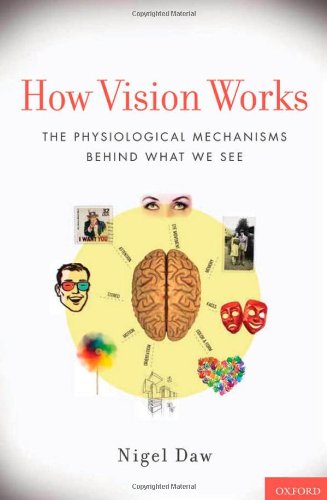
How Vision Works: The Physiological Mechanisms Behind What We See
Authors:
Nigel Daw
Publisher:
Oxford University Press, USA
Publication Date:
Not available
ISBN:
0199751617
This book covers all aspects of the visual system from sensory aspects to eye movements, attention, and visual memory. There are many books that cover... the psychology and physiology of a single aspect of vision, such as color vision or eye movements. Other larger texts may offer encyclopedic coverage of the psychology of all aspects of vision. However, this is the only book on the market covering the psychology, anatomy, and physiology of all aspects of the visual system in 300 pages. Each chapter addresses a separate aspect of vision, describing the basic phenomena, where in the brain this aspect of vision occurs, the properties of the cells in those areas, and the deficits that result from a lesion or stroke in those areas. In addition to extensive illustrations, the book contains the author's selection of the literature, from the classic 19th century papers to the present. This text is designed for graduate students and advanced undergraduates in psychology, optometry, physiology, anatomy, and medicine who want to get a broad view rather than one confined to their particular discipline.

How Voters Decide: Information Processing in Election Campaigns...
Authors:
Richard R. Lau
Publisher:
Cambridge University Press
Publication Date:
Not available
ISBN:
052161306X
This 2006 book attempts to redirect the field of voting behavior research by proposing a paradigm-shifting framework for studying voter decision making.... An innovative experimental methodology is presented for getting 'inside the heads' of citizens as they confront the overwhelming rush of information from modern presidential election campaigns. Four broad theoretically-defined types of decision strategies that voters employ to help decide which candidate to support are described and operationally-defined. Individual and campaign-related factors that lead voters to adopt one or another of these strategies are examined. Most importantly, this research proposes a new normative focus for the scientific study of voting behavior: we should care about not just which candidate received the most votes, but also how many citizens voted correctly - that is, in accordance with their own fully-informed preferences.

How Wars End
Authors:
Dan Reiter
Publisher:
Princeton University Press
Publication Date:
Not available
ISBN:
069114060X
Why do some countries choose to end wars short of total victory while others fight on, sometimes in the face of appalling odds? How Wars End argues that... two central factors shape war-termination decision making: information about the balance of power and the resolve of one's enemy, and fears that the other side's commitment to abide by a war-ending peace settlement may not be credible.Dan Reiter explains how information about combat outcomes and other factors may persuade a warring nation to demand more or less in peace negotiations, and why a country might refuse to negotiate limited terms and instead tenaciously pursue absolute victory if it fears that its enemy might renege on a peace deal. He fully lays out the theory and then tests it on more than twenty cases of war-termination behavior, including decisions during the American Civil War, the two world wars, and the Korean War. Reiter helps solve some of the most enduring puzzles in military history, such as why Abraham Lincoln issued the Emancipation Proclamation, why Germany in 1918 renewed its attack in the West after securing peace with Russia in the East, and why Britain refused to seek peace terms with Germany after France fell in 1940.How Wars End concludes with a timely discussion of twentieth-century American foreign policy, framing the Bush Doctrine's emphasis on preventive war in the context of the theory.
How Wars End: Why We Always Fight the Last Battle
Authors:
Gideon Rose
Publisher:
Simon & Schuster
Publication Date:
Not available
ISBN:
1416590552
IN 1991 THE UNITED STATES trounced the Iraqi army in battle only to stumble blindly into postwar turmoil. Then in 2003 the United States did it again.... How could this happen? How could the strongest power in modern history fight two wars against the same opponent in just over a decade, win lightning victories both times, and yet still be woefully unprepared for the aftermath? Because Americans always forget the political aspects of war. Time and again, argues Gideon Rose in this penetrating look at American wars over the last century, our leaders have focused more on beating up the enemy than on creating a stable postwar environment. What happened in Iraq was only the most prominent example of this phenomenon, not an exception to the rule. Woodrow Wilson fought a war to make the world safe for democracy but never asked himself what democracy actually meant and then dithered as Germany slipped into chaos. Franklin Roosevelt resolved not to repeat Wilson’s mistakes but never considered what would happen to his own elaborate postwar arrangements should America’s wartime marriage of convenience with Stalin break up after the shooting stopped. The Truman administration casually established voluntary prisoner repatriation as a key American war aim in Korea without exploring whether it would block an armistice—which it did for almost a year and a half. The Kennedy and Johnson administrations dug themselves deeper and deeper into Vietnam without any plans for how to get out, making it impossible for Nixon and Ford to escape unscathed. And the list goes on. Drawing on vast research, including extensive interviews with participants in recent wars, Rose re-creates the choices that presidents and their advisers have confronted during the final stages of each major conflict from World War I through Iraq. He puts readers in the room with U.S. officials as they make decisions that affect millions of lives and shape the modern world—seeing what they saw, hearing what they heard, feeling what they felt. American leaders, Rose argues, have repeatedly ignored the need for careful postwar planning. But they can and must do a better job next time around—making the creation of a stable and sustainable local political outcome the goal of all wartime plans, rather than an afterthought to be dealt with once the "real" military work is over.
How Washington Really Works
Authors:
Charles Peters
Publisher:
Basic Books
Publication Date:
Not available
ISBN:
0201624702
Brought up to the minute in this new edition, How Washington Really Works exposes the Washington insiders know and hope you don’t find out about. From... the lobbyist and the bureaucrat straight up to the Congress and the President, Peters turns his sharp eye and ironic wit on the foibles and follies of the people running our country, and uncovers one basic fact: The present system is designed to protect those within it, not to serve those outside. This book will not only explain this system of make-believeit will make you want to change it.
How Was It Humanly Possible? A Study of Perpetrators and Bystanders...
Authors:
Irena Steinfeld
Publisher:
Yad Vashem
Publication Date:
Not available
ISBN:
9653081446
The topic of this book deals with the human beings who participated in what is considered by many to be the most evil of all evils: the deliberate,... planned, total murder of the Jewish people by Nazi Germany. Were these people abberations with nothing in common with normal human beings or were they ordinary people simply reacting to extraordinary circumstances? The fact that these very ordinary-seeming people were responsible for such evil leaves us with troubling question: What was it that allowed them to unleash such enormous cruelty and carnage? This book consists of several case studies, representing actual historical events. They are presented through documents, testimonies, photographs and representations in literature and art. Using an interdisciplinary approach, the case studies have been chosen to present a variety of perpetrators and bystanders, and to tell the story of the few men and women who did not accept the evil of mass murder and chose to act differently. This exploration enables the reader to identify both the unique circumstances and the universal features in these people's conduct. However, the questions raised in this volume cannot provide definitive or clear-cut answers. It should both be the beginning of an ongoing process and aim at providing some initial insights into the complexities of human behaviour during the Holocaust. --- The volume is accompanied by a teacher's guide ("Pedagogical Guidebook"), as well as a CD-ROM containing computerized copies of photographs and other materials.
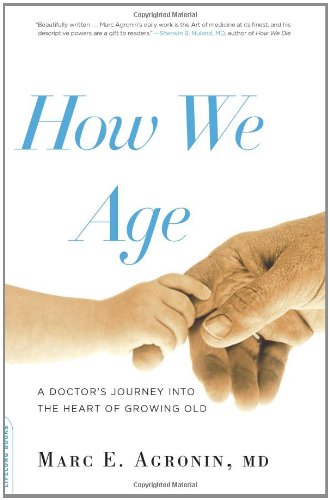
How We Age: A Doctor's Journey into the Heart of Growing Old
Authors:
Marc Agronin
Publisher:
Da Capo Lifelong Books
Publication Date:
Not available
ISBN:
0738215589
Marc Agronin writes luminously of life as he sees it as a doctor. His beat? A nursing home in Miami. Drawing on moving personal experiences--those of... his patients and their families, as well as his own--and on in-depth interviews with pioneers in the field, Agronin conjures an unforgettable look at what aging means today: how our bodies and brains change over time—and how even the very way we understand aging is changing too.

How We Became Human: New and Selected Poems 1975-2001
Authors:
Joy Harjo
Publisher:
W. W. Norton & Company
Publication Date:
Not available
ISBN:
0393325342
Over a quarter-century's work from the 2003 winner of the Arrell Gibson Award for Lifetime Achievement.This collection gathers poems from throughout Joy... Harjo's twenty-eight-year career, beginning in 1973 in the age marked by the takeover at Wounded Knee and the rejuvenation of indigenous cultures in the world through poetry and music. How We Became Human explores its title question in poems of sustaining grace.
 '





