production
/viewbook/list/all/?page=5681
/
/static/
None
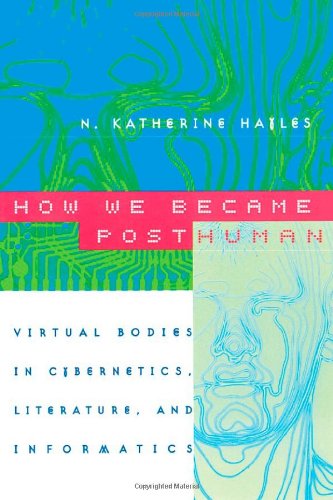
How We Became Posthuman: Virtual Bodies in Cybernetics, Literature,...
Authors:
N. Katherine Hayles
Publisher:
University Of Chicago Press
Publication Date:
Not available
ISBN:
0226321460
In this age of DNA computers and artificial intelligence, information is becoming disembodied even as the "bodies" that once carried it vanish into... virtuality. While some marvel at these changes, envisioning consciousness downloaded into a computer or humans "beamed" Star Trek-style, others view them with horror, seeing monsters brooding in the machines. In How We Became Posthuman, N. Katherine Hayles separates hype from fact, investigating the fate of embodiment in an information age.Hayles relates three interwoven stories: how information lost its body, that is, how it came to be conceptualized as an entity separate from the material forms that carry it; the cultural and technological construction of the cyborg; and the dismantling of the liberal humanist "subject" in cybernetic discourse, along with the emergence of the "posthuman."Ranging widely across the history of technology, cultural studies, and literary criticism, Hayles shows what had to be erased, forgotten, and elided to conceive of information as a disembodied entity. Thus she moves from the post-World War II Macy Conferences on cybernetics to the 1952 novel Limbo by cybernetics aficionado Bernard Wolfe; from the concept of self-making to Philip K. Dick's literary explorations of hallucination and reality; and from artificial life to postmodern novels exploring the implications of seeing humans as cybernetic systems.Although becoming posthuman can be nightmarish, Hayles shows how it can also be liberating. From the birth of cybernetics to artificial life, How We Became Posthuman provides an indispensable account of how we arrived in our virtual age, and of where we might go from here.
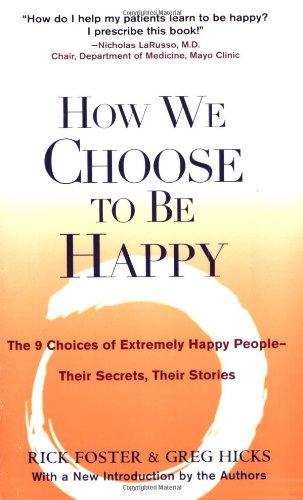
How We Choose to Be Happy: The 9 Choices of Extremely Happy...
Authors:
Rick Foster
Publisher:
Perigee Trade
Publication Date:
Not available
ISBN:
039952990X
Now featuring new research and the most current information on the science of happiness, this book presents an outline of the nine choices happy people... consistently make. Also included are tools for self-assessment to allow readers to measure happiness-and to find out what might be holding them back from having more of it. Insightful, intimate, and inspiring, How We Choose to Be Happy lets readers learn by example, and take substantial steps toward joining the ranks of the extremely happy.
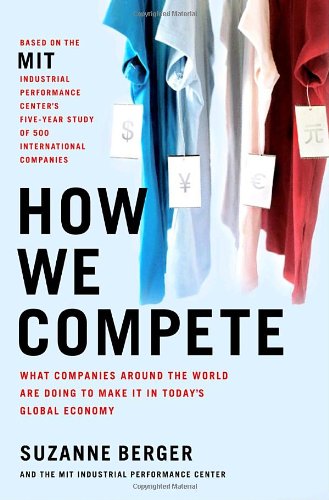
How We Compete: What Companies Around the World Are Doing to Make...
Authors:
Suzanne Berger
Publisher:
Crown Business
Publication Date:
Not available
ISBN:
0385513593
"Impressive... This is an evidence-based bottom-up account of the realities of globalisation. It is more varied, more subtle, and more substantial than... many of the popular works available on the subject." -- Financial Times Based on a five-year study by the MIT Industrial Performance Center, How We Compete goes into the trenches of over 500 international companies to discover which practices are succeeding in today’s global economy, which are failing –and why.There is a rising fear in America that no job is safe. In industry after industry, jobs seem to be moving to low-wage countries in Asia, Central America, and Eastern Europe. Production once handled entirely in U.S. factories is now broken into pieces and farmed out to locations around the world. To discover whether our current fears about globalization are justified, Suzanne Berger and a group of MIT researchers went to the front lines, visiting workplaces and factories around the world. They conducted interviews with managers at more than 500 companies, asking questions about which parts of the manufacturing process are carried out in their own plants and which are outsourced, who their biggest competitors are, and how they plan to grow their businesses. How We Compete presents their fascinating, and often surprising, conclusions. Berger and her team examined businesses where technology changes rapidly–such as electronics and software–as well as more traditional sectors, like the automobile industry, clothing, and textile industries. They compared the strategies and success of high-tech companies like Intel and Sony, who manufacture their products in their own plants, and Cisco and Dell, who rely primarily on outsourcing. They looked closely at textile and clothing to uncover why some companies, including the Gap and Liz Claiborne, choose to outsource production to foreign countries, while others, such as Zara and Benetton, base most operations at home. What emerged was far more complicated than the black-and-white picture presented by promoters and opponents of globalization. Contrary to popular belief, cheap labor is not the answer, and the world is not flat, as Thomas Friedman would have it. How We Compete shows that there are many different ways to win in the global economy, and that the avenues open to American companies are much wider than we ever imagined. SUZANNE BERGER is the Raphael Dorman and Helen Starbuck Professor of Political Science at MIT and director of the MIT International Science and Technology Initiative. She was a member of the MIT Commission on Industrial Productivity, whose report Made in America analyzed weaknesses and strengths in U.S. industry in the 1980s. She lives in Boston , Massachusetts.
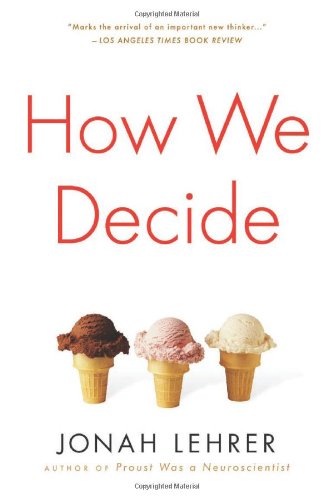
How We Decide
Authors:
Jonah Lehrer
Publisher:
Houghton Mifflin Co
Publication Date:
Not available
ISBN:
0618620117
Since Plato, philosophers have described the decision-making process as either rational or emotional: we carefully deliberate or we "blink" and go with... our gut. But as scientists break open the mind's black box with the latest tools of neuroscience, they're discovering that this is not how the mind works. Our best decisions are a finely tuned blend of both feeling and reason—and the precise mix depends on the situation. When buying a house, for example, it's best to let our unconscious mull over the many variables. But when we're picking a stock, intuition often leads us astray. The trick is to determine when to lean on which part of the brain, and to do this, we need to think harder (and smarter) about how we think. Jonah Lehrer arms us with the tools we need, drawing on cutting-edge research by Daniel Kahneman, Colin Camerer, and others, as well as the real-world experiences of a wide range of "deciders"—from airplane pilots and hedge fund investors to serial killers and poker players. Lehrer shows how people are taking advantage of the new science to make better television shows, win more football games, and improve military intelligence. His goal is to answer two questions that are of interest to just about anyone, from CEOs to firefighters: How does the human mind make decisions? And how can we make those decisions better?
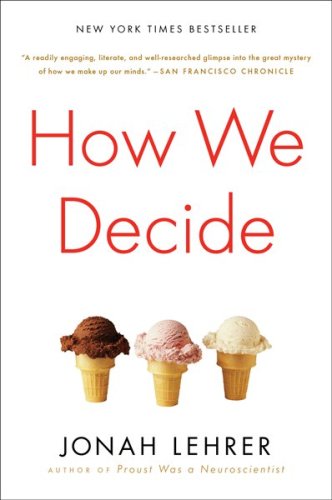
How We Decide
Authors:
Jonah Lehrer
Publisher:
Mariner Books
Publication Date:
Not available
ISBN:
0547247990
The first book to use the unexpected discoveries of neuroscience to help us make the best decisions Since Plato, philosophers have described the... decision-making process as either rational or emotional: we carefully deliberate, or we “blink” and go with our gut. But as scientists break open the mind’s black box with the latest tools of neuroscience, they’re discovering that this is not how the mind works. Our best decisions are a finely tuned blend of both feeling and reason—and the precise mix depends on the situation. When buying a house, for example, it’s best to let our unconscious mull over the many variables. But when we’re picking a stock, intuition often leads us astray. The trick is to determine when to use the different parts of the brain, and to do this, we need to think harder (and smarter) about how we think. Jonah Lehrer arms us with the tools we need, drawing on cutting-edge research as well as the real-world experiences of a wide range of “deciders”—from airplane pilots and hedge fund investors to serial killers and poker players. Lehrer shows how people are taking advantage of the new science to make better television shows, win more football games, and improve military intelligence. His goal is to answer two questions that are of interest to just about anyone, from CEOs to firefighters: How does the human mind make decisions? And how can we make those decisions better?
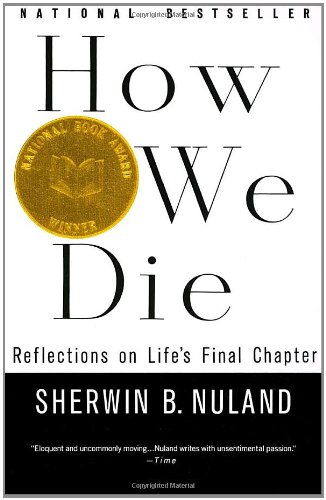
How We Die: Reflections of Life's Final Chapter, New Edition
Authors:
Sherwin B. Nuland
Publisher:
Vintage
Publication Date:
Not available
ISBN:
0679742441
New Edition: With a new chapter addressing contemporary issues in end-of-life careA runaway bestseller and National Book Award winner, Sherwin Nuland's... How We Die has become the definitive text on perhaps the single most universal human concern: death. This new edition includes an all-embracing and incisive afterword that examines the current state of health care and our relationship with life as it approaches its terminus. It also discusses how we can take control of our own final days and those of our loved ones.Shewin Nuland's masterful How We Die is even more relevant than when it was first published.
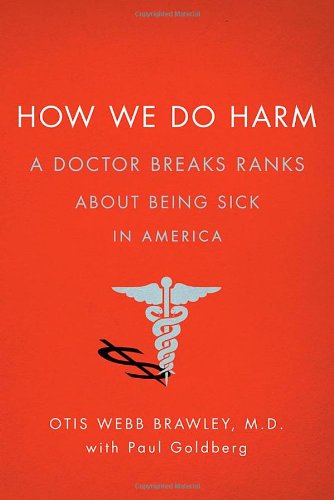
How We Do Harm: A Doctor Breaks Ranks About Being Sick in America
Authors:
Otis Webb Brawley
Publisher:
St. Martin's Press
Publication Date:
Not available
ISBN:
0312672977
How We Do Harm exposes the underbelly of healthcare today—the overtreatment of the rich, the under treatment of the poor, the financial conflicts of... interest that determine the care that physicians’ provide, insurance companies that don’t demand the best (or even the least expensive) care, and pharmaceutical companies concerned with selling drugs, regardless of whether they improve health or do harm. Dr. Otis Brawley is the chief medical and scientific officer of The American Cancer Society, an oncologist with a dazzling clinical, research, and policy career. How We Do Harm pulls back the curtain on how medicine is really practiced in America. Brawley tells of doctors who select treatment based on payment they will receive, rather than on demonstrated scientific results; hospitals and pharmaceutical companies that seek out patients to treat even if they are not actually ill (but as long as their insurance will pay); a public primed to swallow the latest pill, no matter the cost; and rising healthcare costs for unnecessary—and often unproven—treatments that we all pay for. Brawley calls for rational healthcare, healthcare drawn from results-based, scientifically justifiable treatments, and not just the peddling of hot new drugs.Brawley’s personal history – from a childhood in the gang-ridden streets of black Detroit, to the green hallways of Grady Memorial Hospital, the largest public hospital in the U.S., to the boardrooms of The American Cancer Society—results in a passionate view of medicine and the politics of illness in America - and a deep understanding of healthcare today. How We Do Harm is his well-reasoned manifesto for change.
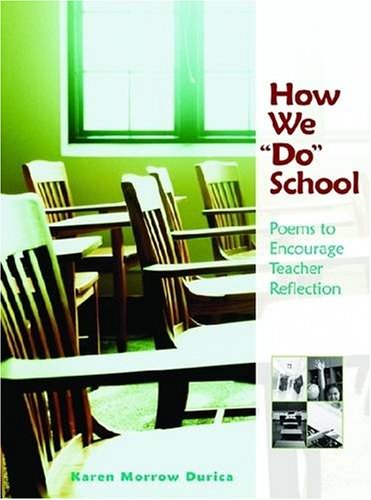
How We "Do" School: Poems to Encourage Teacher Reflection
Authors:
Karen Morrow Durica
Publisher:
International Reading Association
Publication Date:
Not available
ISBN:
0872076105
The 20 thought-provoking poems in this collection are meant to promote reflective conversation about how educators do school. Each poem, on its own... merit, will say something to the teachers who read it, but that message may differ depending on knowledge and past experiences. By stimulating your beliefs and feelings about school, you can begin to examine and reflect on your own classroom practices in order to grow as a professional. Included with each poem is a discussion of the impetus for the poem and its connection to current educational practice, as well as reflection questions, a suggested activity, and additional resources for further in-depth reading on the topic. This structure will enable you to move from discussion to concrete changes.
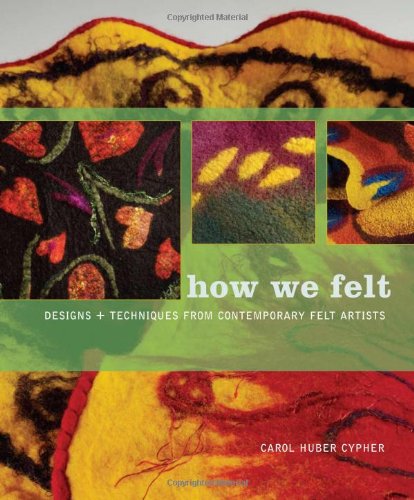
How We Felt
Authors:
Carol Cypher
Publisher:
Interweave Press
Publication Date:
Not available
ISBN:
1596680318
In this beautifully photographed collection, images of signature works by admired fiber artists complement in-depth information on creating their unique... felting effects. Highlighting more than 20 artists and numerous projects, including hats, capes, bags, slippers, jewelry, rugs, pillows, curtains, an ottoman, and a felted chess set, the book excites the advanced, beginner, and intermediate felter alike. A gallery section showcases other artists’ work and further sparks the imagination. The combination of images, ideas, and information make this book a must-have for feltmakers who want to deepen their repertoire of techniques, aspiring fiber artists seeking new directions for their work, and any reader wanting to be dazzled with breathtaking images of inventive artwork.

How We Get Along
Authors:
J. David Velleman
Publisher:
Cambridge University Press
Publication Date:
Not available
ISBN:
0521043409
In How We Get Along, philosopher David Velleman compares our social interactions to the interactions among improvisational actors on stage. He argues... that we play ourselves-not artificially but authentically, by doing what would make sense coming from us as we really are. And like improvisational actors, we deal with one another in dual capacities: both as characters within the social drama and as players contributing to the shared performance. In this conception of social intercourse, Velleman finds rational grounds for morality, though not a rational guarantee. He maps a middle course between skepticism and rationalism, arguing that practical reasoning is "pro-moral' without requiring moral action. The result is what he calls a "Kinda Kantian metaethics". Written in an accessible and engaging style, How We Get Along is the summation of Velleman's thinking to date, incorporating and unifying previous work on agency, the self, the emotions, narrative, and Kantian moral theory.
How We Got Here: The 70's: The Decade That Brought You Modern...
Authors:
David Frum
Publisher:
Basic Books
Publication Date:
Not available
ISBN:
0465041965
For many, the 1970s evoke the Brady Bunch and the birth of disco. In this first, thematic popular history of the decade, David Frum argues that it was... the 1970s, not the 1960s, that created modern America and altered the American personality forever. A society that had valued faith, self-reliance, self-sacrifice, and family loyalty evolved in little more than a decade into one characterized by superstition, self-interest, narcissism, and guilt. Frum examines this metamorphosis through the rise to cultural dominance of faddish psychology, astrology, drugs, religious cults, and consumer debt, and profiles such prominent players of the decade as Werner Erhard, Alex Comfort, and Jerry Brown. How We Got Here is lively and provocative reading.
How We Got the Bible
Authors:
John H. Sailhamer
Publisher:
Zondervan
Publication Date:
Not available
ISBN:
0310203910
When busy people want to know more about the Bible and the Christian faith, the Zondervan Quick-Reference Library offers an instant information... alternative. Covering the basics of the faith and Bible knowledge in an easy-to-use format, this series helps new Christians and seasoned believers find answers to their questions about Christianity and the Bible. The information is presented in units of one or two pages, so that each section can be read in a few minutes. The Zondervan Quick-Reference Library makes important knowledge affordable, accessible, and easy to understand for busy people who don't have a lot of time to read or study.
How We Got the Bible
Authors:
Neil R. Lightfoot
Publisher:
Baker Books
Publication Date:
Not available
ISBN:
0801072611
How We Got the Bible provides factual, accessible answers to questions such asHow and when did the books of the Bible originate? In what sense are these... books different from other books? How have these books been preserved and transmitted to us? Why do we have so many different translations of the Bible?A popular guide for Bible students, it has sold more than 1 million copies during its forty years in print. This trade paper edition of the well-loved classic offers readers an even more affordable way to learn about the development of the most important book in history.
How We Grieve: Relearning the World
Authors:
Thomas Attig
Publisher:
Oxford University Press, USA
Publication Date:
Not available
ISBN:
0195074564
What do we do when a friend, relative, or loved one dies? If we wish to understand loss experience, we must learn details of survivors' stories. In How... We Grieve, Thomas Attig tells real-life tales to illustrate the poignant disruption of life and suffering that loss entails. He shows how through grieving we meet daunting challenges, make critical choices, and reshape our lives. These intimate treatments of coping hold valuable lessons that address the needs of grieving people and those who hope to support and comfort them. The accounts promote understanding of grief itself, encourage respect for individuality and the uniqueness of loss experiences, show how to deal with helplessness in the face of "choiceless" events, and offers much priceless guidance for caregivers. Grieving is not a process of passively living through stages. Nor is it a clinical problem to be solved or managed by others. How We Grieve shows that grieving is an active, coping process of relearning how to be and act in a world where loss transforms the fabric of our lives. Loss challenges us to relearn things and places; relationships with others, including fellow survivors, the deceased, and even God; and most of all ourselves, including our daily life patterns and the meanings of our own life stories.
How We Grieve: Relearning the World
Authors:
Thomas Attig PhD
Publisher:
Oxford University Press, USA
Publication Date:
Not available
ISBN:
019539769X
If we wish to understand loss experiences we must learn details of survivors' stories. The new version of How We Grieve: Relearning the World tells... in-depth tales of survival to illustrate the poignant disruption of life and suffering that loss entails. It shows how through grieving we overcome challenges, make choices, and reshape our lives. These intimate treatments of coping with loss address the needs of grieving people and those who hope to support and comfort them. The accounts promote understanding of grieving itself, encourage respect for individuality and the uniqueness of loss experiences, show how to deal with helplessness in the face of "choiceless" events, and offer guidance for caregivers.The stories make it clear that grieving is not about living passively through stages or phases. We are not so alike when we grieve; our experiences are complex and richly textured. Nor is grieving about coming down with "grief symptoms". No one can treat us to make things better. No one can grieve for us.Grieving is instead an active process of coping and relearning how to be and how to act in a world where loss transforms our lives. Loss forces us to relearn things and places; relationships with others, including fellow survivors, the deceased, even God; and our selves, our daily life patterns, and the meanings of our life stories. This revision adds an introductory essay about developments in the author's thinking about grieving as "relearning the world." It highlights and clarifies its most distinctive and still salient themes. It elaborates on how his thinking about these themes has expanded and deepened since the first edition. And it places his treatment of those themes in the broader context of current writings on grief and loss.
 '





