production
/viewbook/list/all/?page=5733
/
/static/
None

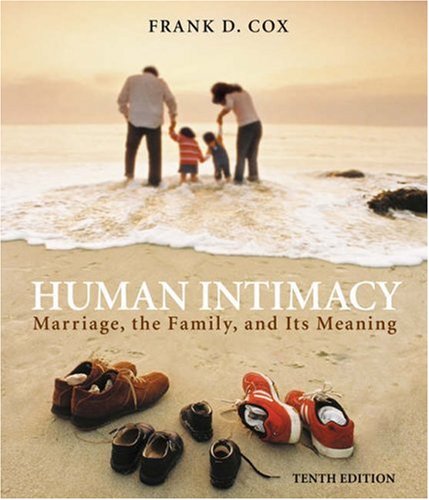
Human Intimacy: Marriage, the Family, and Its Meaning, Research Update
Authors:
Frank D. Cox
Publisher:
Wadsworth Publishing
Publication Date:
Not available
ISBN:
0495504335
Offering a positive view of the family, Cox's MARRIAGE, THE FAMILY, AND ITS MEANING, 10th Edition discusses the characteristics of successful intimate... relationships, and teaches the decision-making skills that lead to strong marriages and families. In this "research update" edition, you'll find coverage of such topics as diversity within the American family (including rural and military families), gay marriage, singles, cohabitation, gender roles, theories of love, date rape and courtship violence, and parenting and life stages.
Human Intimacy: Marriage, the Family, and Its Meaning (with...
Authors:
Frank D. Cox
Publisher:
Wadsworth Publishing
Publication Date:
Not available
ISBN:
0534625320

Humanism and Democratic Criticism (Columbia Themes in Philosophy)
Authors:
Edward W. Said
Publisher:
Columbia University Press
Publication Date:
Not available
ISBN:
0231122640
In the radically changed and highly charged political atmosphere that has overtaken the United States -- and to varying degrees the rest of the world --... since September 11, 2001, the notion that cultures can harmoniously and productively coexist has come to seem like little more than a quaint fiction. In this time of heightened animosity and aggression, have humanistic values and democratic principles become irrelevant? Are they merely utopian fantasies? Or are they now more urgent and necessary than ever before?Ever since the ascendancy of critical theory and multicultural studies in the 1960s and 1970s, traditional humanistic education has been under assault. Often condemned as the intolerant voice of the masculine establishment and regularly associated with Eurocentrism and even imperialism, the once-sacred literary canon is now more likely to be ridiculed than revered. While this seismic shift -- brought on by advances in technological communication, intellectual specialization, and cultural sensitivity -- has eroded the former primacy of the humanities, Edward Said argues that a more democratic form of humanism -- one that aims to incorporate, emancipate, and enlighten -- is still possible. A lifelong humanist, Said believed that self-knowledge is the highest form of human achievement and the true goal of humanistic education. But he also believed that self-knowledge is unattainable without an equal degree of self-criticism, or the awareness that comes from studying and experiencing other peoples, traditions, and ideas.Proposing a return to philology and a more expansive literary canon as strategies for revitalizing the humanities, Said contends that words are not merely passive figures but vital agents in historical and political change. Intellectuals must reclaim an active role in public life, but at the same time, insularity and parochialism, as well as the academic trend toward needless jargon and obscurantism, must be combated. The "humanities crisis," according to Said, is based on the misperception that there is an inexorable conflict between established traditions and our increasingly complex and diversified world. Yet this position fails to recognize that the canonized thinkers of today were the revolutionaries of yesterday and that the nature of human progress is to question, upset, and reform. By considering the emerging social responsibilities of writers and intellectuals in an ever more interdependent world and exploring the enduring influence of Eric Auerbach's critical masterpiece, Mimesis, Said not only makes a persuasive case for humanistic education but provides his own captivating and deeply personal perspective on our shared intellectual heritage.
Humanism and Environmentalism (American University Studies Series...
Authors:
James E. Nowlin
Publisher:
Peter Lang Publishing
Publication Date:
Not available
ISBN:
0820411094
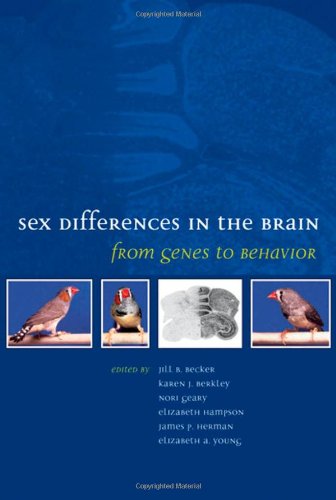
Sex is a fundamentally important biological variable. Recent years have seen significant progress in the integration of sex in many aspects of basic and... clinical research, including analyses of sex differences in brain function. Significant advances in the technology available for studying the endocrine and nervous systems are now coupled with a more sophisticated awareness of the interconnections of these two communication systems of the body. A thorough understanding of the current knowledge, conceptual approaches, methodological capabilities, and challenges is a prerequisite to continued progress in research and therapeutics in this interdisciplinary area. Sex Differences in the Brain provides scientists with the basic tools for investigating sex differences in brain and behavior and insight into areas where important progress in understanding physiologically relevant sex differences has already been made. This book was edited and co-authored by members of the Isis Fund Network on Sex, Gender, Drugs and the Brain, sponsored by the Society for Womens Health Research.The book is arranged in three parts. The first part of the book introduces the study of sex differences in the brain, with an overview of how the brain, stress systems, and pharmacogenetics differ in males and females and how this information is important for the study of behavior and neurobiology of both genders. The second part presents examples of sex differences in neurobiology and behavior from both basic and clinical research perspectives, covering both humans and nonhuman animals. The final part discusses sex differences in the neurobiology of disease and neurological disorders.For interested individuals as well as those who are considering conducting research at the intersections of endocrinology, neuroscience, and other areas of biomedicine, the study of sex differences offers exciting and challenging questions and perspectives. This book is intended as a guide and resource for clinicians, scientists, and students.
Humanism and Terror: An Essay on the Communist Problem
Authors:
Maurice Merleau-Ponty
Publisher:
Beacon Press
Publication Date:
Not available
ISBN:
0807002771
First published in France In 1947, Merleau-Ponty's essay was in part a response to Arthur Koestler's novel, Darkness at Noon, and in a larger sense a... contribution to the political and moral debates of a postwar world suddenly divided into two armed camps. For Merleau-Ponty, the basic question was: given the violence in Communism, is Communism still equal to its humanist intentions?Starting with the assumption that a society is not a "temple of value-idols that figure on the front of its monuments or in its constitutional scrolls; the value of a society is the value It places upon man's relation to man," Merleau-ponty examines not only the Moscow trials of the late thirties but also Koestler's re-creation of them. And Merleau-Ponty makes it clear that the Moscow trials—and violence in general in the Communist world—can be understood only In the context of revolutionary violence. He demonstrates that it is pointless to begin an examination of Communist violence by asking whether Communism respects the rules of liberal thought; it is evident that Communism does not. The question that should be asked is whether the violence Communism exercises is revolutionary violence, capable of building humane relations among men.At a time when many are addressing similar questions to societies both in the East and in the West, Merleau-Ponty's investigations and speculations are of prime importance; they stand as a major and provocative contribution to the argument surrounding the use of violence.
Humanism and the Culture of Renaissance Europe (New Approaches to...
Authors:
Charles G. Nauert
Publisher:
Cambridge University Press
Publication Date:
Not available
ISBN:
0521547814
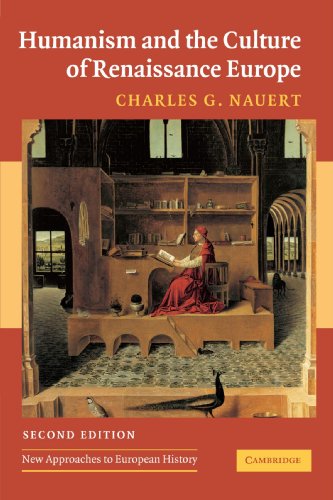
In this updated edition of his classic account, Charles Nauert charts the rise of humanism as the distinctive culture of the social, political and... intellectual elites in Renaissance Europe. He traces humanism's emergence in the unique social and cultural conditions of fourteenth-century Italy and its gradual diffusion throughout the rest of Europe. He shows how, despite its elitist origins, humanism became a major force in the popular culture and fine arts of the fifteenth and sixteenth centuries, and the powerful impact it had on both the Protestant and Catholic Reformations. He uses art and biographical sketches of key figures to illuminate the narrative and concludes with an account of the limitations of humanism at the end of the Renaissance. The revised edition includes a section dealing with the place of women in humanistic culture and an updated bibliography. It will be essential reading for all students of Renaissance Europe.
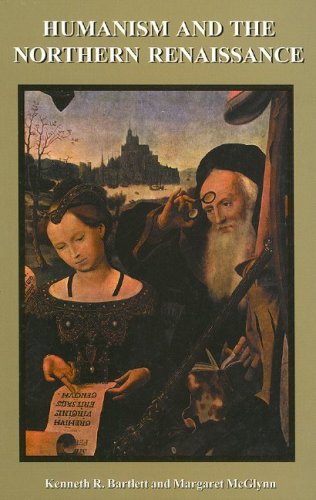
Humanism and the Northern Renaissance
Authors:
Not Available
Publisher:
Canadian Scholars Press
Publication Date:
Not available
ISBN:
1551301784
This is a selection of primary source documents tracing the development of the culture, thought, politics, and religion of Northern Europe, from the... Council of Constance to William Harvey's description of the circulation of the blood. The book will prove an excellent reader for any course of Early Modern Europe. Its wide selection of documents, covering most of Northern Europe from the late fourteenth to the early seventeenth century, will introduce students to the complexity of the cultures that defined the work of the Northern Renaissance and the coming of the Reformation. Writers include: John Calvin, Conrad Celtis, Cervantes, Charles V of Spain, Erasmus, Guillaume Filastre, William Harvey, Thomas a Kempis, Ignatius Loyala, Martin Luther, Peter of Mladonovice, Sir Thomas More, Marguerite de Navarre, Nostradamus, Aeneas Silvius Piccolomini (Puis II), Francois Rabelais, William Roper, St. Teresa of Avila, Juan Luis Vives, John Wyclif.
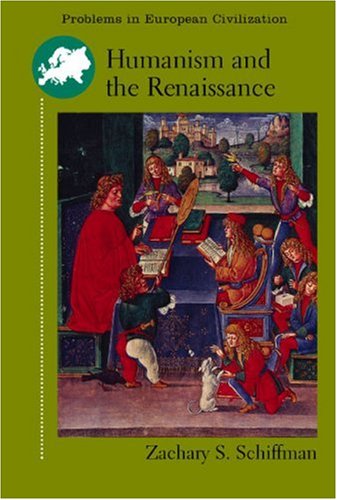
Humanism and the Renaissance (Problems in European Civilization)
Authors:
Zachary S. Schiffman
Publisher:
Wadsworth Publishing
Publication Date:
Not available
ISBN:
0618116257
A volume in the Problems in European Civilization series, this book features a collection of secondary source essays focusing on aspects of the... Renaissance and humanist beliefs. The proven PEC format features key scholarship, chapter and essay introductions, and extensive, up-to-date suggestions for further reading. All selections in the text are edited for both content and length.
Humanism of the Other
Authors:
Emmanuel Levinas
Publisher:
University of Illinois Press
Publication Date:
Not available
ISBN:
0252073266
In "Humanism of the Other", Emmanuel Levinas argues that it is not only possible but of the highest exigency to understand one's humanity through the... humanity of others. In paperback for the first time, Levinas's work here is based in a new appreciation for ethics and takes new distances from phenomenology, idealism, and skepticism to rehabilitate humanism and restore its promises. Painfully aware of the long history of dehumanization that reached its apotheosis in Hitler and Nazism, Levinas does not underestimate the difficulty of reconciling oneself with another. The humanity of the human, Levinas argues, is not discoverable through mathematics, rational metaphysics, or introspection. Rather, it is found in the recognition that the other person comes first, that the suffering and mortality of others are the obligations and morality of the self.
Humanism (The New Critical Idiom)
Authors:
Tony Davies
Publisher:
Routledge
Publication Date:
Not available
ISBN:
0415420652
Definitions of humanism have evolved throughout the centuries as the term has been adopted for a variety of purposes – literary, cultural and... political – and reactions against humanism have contributed to movements such as postmodernism and anti-humanism. Tony Davies offers a clear introduction to the many uses of this influential yet complex concept and this second edition extends his discussion to include: a comprehensive history of the development of the term and its influences theories of post-humanism, cybernetics and artificial intelligence implications of concepts of humanism and post-humanism on political and religious activism discussion of the key figures in humanist debate from Erasmus and Milton to Chomsky, Heidegger and Foucault a new glossary and further reading section. With clear explanations and poignant discussions, this volume is essential reading for anyone approaching the study of humanism, post-humanism or critical theory.

Humanistic and Transpersonal Psychology: A Historical and...
Authors:
Donald Moss
Publisher:
Greenwood
Publication Date:
Not available
ISBN:
0313291586
An examination of four decades of research and practice in humanistic psychology, this work highlights the lasting contributions of humanistic... psychology to the science of psychology and to the pursuit of personal and spiritual development. It explores the passions and goals of the founders and their vital legacy for the 21st century.Humanistic Psychology began as a movement of creative individuals who sought to remake psychology in the image of a fully alive and aware human being. Humanistic psychology emphasizes liberation from personal and social oppression and the pursuit of higher levels of human potential. Humanistic psychologists criticize scientific psychology for their emphasis on the measurement, prediction, and control of behavior, and protest the exclusion of such basic aspects of humanness as consciousness, values, freedom, love, and spirit from psychological investigation. This book will be of interest to undergraduate and graduate students and faculty in psychology as well as professionals in the field.
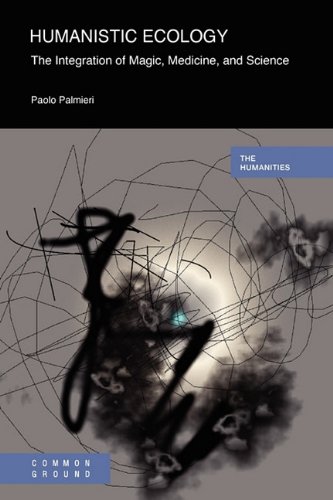
Humanistic Ecology: The Integration of Magic, Medicine, and Science
Authors:
Paolo Palmieri
Publisher:
Common Ground Publishing
Publication Date:
Not available
ISBN:
1863358633
This book is a work of cultural, pedagogical, and social advocacy. It sketches the project of humanistic ecology, the idea that cultural, social, and... educational renewal can and should be pursued within a humanistic framework. Humanistic ecology builds on the interrelatedness of traditions such as magic, medicine, and science, as exemplified in the history of Western civilization. Humanistic ecology aims at integrating forgotten or marginalized pathways to knowledge and wellbeing. It emphasizes their transformative power for the betterment of our lives. The book looks at the future but is informed with the spirit the past. Knowledge, happiness, and health are not inscribed in our genes, or in the social institutions of industrialized societies. In a nutshell, humanistic ecology envisions holistic forms of inquiry, learning, and healing, beyond the sectarian divisions of contemporary social and intellectual life.
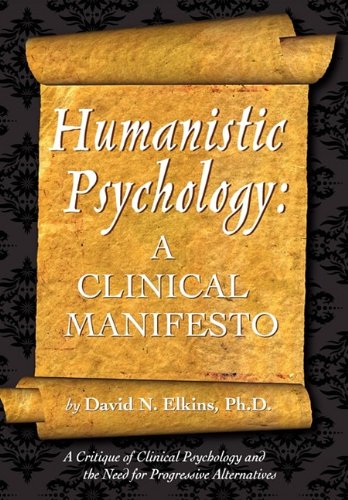
Humanistic Psychology: A Clinical Manifesto. A Critique of Clinical...
Authors:
David N Elkins
Publisher:
Universities of the Rockies Press
Publication Date:
Not available
ISBN:
0976463881
Humanistic Psychology: A Clinical Manifesto is destined to impact not only the face of humanistic psychology, but the field of psychotherapy in general.... David N. Elkins, a long time leading voice in humanistic psychology, presents a compelling case about what is wrong with contemporary psychotherapy and how, through a re-envisioned humanistic psychology, it needs to change. The book challenges the medical model in psychotherapy and summarizes contemporary analyses and meta-analyses of psychotherapy research that make it clear that "contextual factors" -- not techniques -- are the primary determinants of therapeutic effectiveness. With a foreword written by Natalie Rogers, daughter of Carl Rogers, one of the most influential clinical psychologists of the past century, Elkins is already receiving the praise from many leading figures in the humanistic psychology movement.

HUMANISTIC TRADITION PKG BKS 2-4 W/2CD'S
Authors:
Not Available
Publisher:
Not available
Publication Date:
Not available
ISBN:
Not available
HUMANISTIC TRADITION PKG BKS2-5 W/2CD'S
Authors:
Not Available
Publisher:
Not available
Publication Date:
Not available
ISBN:
Not available
 '





