production
/viewbook/list/all/?page=5868
/
/static/
None
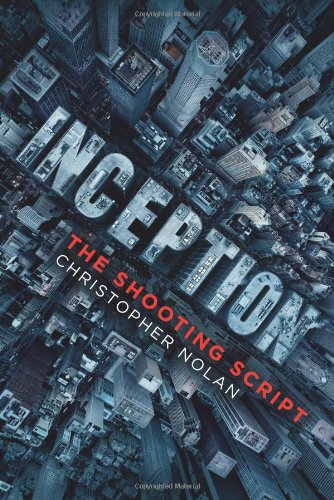
Inception: The Shooting Script
Authors:
Christopher Nolan
Publisher:
Insight Editions
Publication Date:
Not available
ISBN:
1608870154
Inception, writer-director Christopher Nolan’s seventh feature film, joins the epic scope of The Dark Knight with the narrative sophistication of... Memento. The story of a group of thieves who specialize in invading the mind through one’s dreams, Inception explores the Nolan’s signature psychological themes of memory, paranoia, and self-doubt as the protagonist, Dom Cobb, is pitted against a hostile subconscious spurred on by personal demons and regrets from the past. In a conversational preface, Nolan discusses with brother and frequent collaborator, Jonah, the genesis of the idea for the film and the decade-long process it took to write it. Detailing the results of Nolan’s efforts, Inception: The Shooting Script includes key storyboard sequences, full-color concept art, and an appendix on the workings of the mysterious Pasiv Device that Cobb and his fellow extractors use to initiate the dream-share. An exclusive exploration of a highly original concept, Inception: The Shooting Script is the record of a writer-director at the height of his craft.
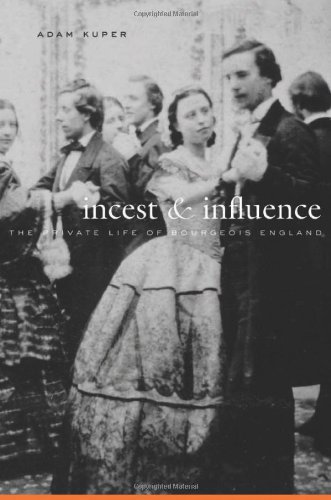
Incest and Influence: The Private Life of Bourgeois England
Authors:
Adam Kuper
Publisher:
Harvard University Press
Publication Date:
Not available
ISBN:
0674035895
Like many gentlemen of his time, Charles Darwin married his first cousin. In fact, marriages between close relatives were commonplace in... nineteenth-century England, and Adam Kuper argues that they played a crucial role in the rise of the bourgeoisie. Incest and Influence shows us just how the political networks of the eighteenth-century aristocracy were succeeded by hundreds of in-married bourgeois clans—in finance and industry, in local and national politics, in the church, and in intellectual life. In a richly detailed narrative, Kuper deploys his expertise as an anthropologist to analyze kin marriages among the Darwins and Wedgwoods, in Quaker and Jewish banking families, and in the Clapham Sect and their descendants over four generations, ending with a revealing account of the Bloomsbury Group, the most eccentric product of English bourgeois endogamy. These marriage strategies were the staple of novels, and contemporaries were obsessed with them. But there were concerns. Ideas about incest were in flux as theological doctrines were challenged. For forty years Victorian parliaments debated whether a man could marry his deceased wife’s sister. Cousin marriage troubled scientists, including Charles Darwin and his cousin Francis Galton, provoking revolutionary ideas about breeding and heredity. This groundbreaking study brings out the connection between private lives, public fortunes, and the history of imperial Britain.

Inch Allah, j'arrive
Authors:
Farid Bouarour
Publisher:
IMAGO
Publication Date:
Not available
ISBN:
284952025X

In Chambers: A Guide for Judicial Clerks & Externs (Aspen...
Authors:
Jennifer Sheppard
Publisher:
Aspen Publishers
Publication Date:
Not available
ISBN:
1454802898
In Chambers is a refreshingly brief and focused book that addresses the key concepts and basic skills clerks and externs need to have on day one. It... explains rudimentary tasks, such as reading a docket sheet and working with a case file, and offers detailed instructions on drafting jury instructions. Sources of authority commonly relied upon by the courts are identified for specific topics, and a helpful note-taking system is provided. Standards of review are covered in detail, including the standard for mixed questions of fact and law. Useful checklists are provided as well for drafting documents. Exercises at the end of chapters evaluate the reader s comprehension and application of the materials. The text of In Chambers is informed by the author's own experience as a judicial clerk as well as her involvement with the externship programs at Appalachian School of Law and Mercer University School of Law. Features: Addresses key concepts and basic skills that clerks and externs need to have on day one Explains rudimentary tasks reading a docket sheet working with a case file Offers detailed instructions on drafting jury instructions Identifies sources of authority commonly relied upon by the courts in specific areas Provides a helpful note-taking system Explains standards of review in detail includes standard for mixed questions of fact and law Includes checklists for drafting documents Features chapter-ending exercises evaluate the reader's comprehension apply materials to real situations Informed by author's experience served as a judicial clerk involved in the externship programs at Appalachian School of Law and Mercer University School of Law
In Character: An Actor's Workbook for Character Development
Authors:
Christopher Vened
Publisher:
Heinemann Drama
Publication Date:
Not available
ISBN:
0325002088
To portray a character, the actor needs craft; to fully express him or herself in the character, the actor needs talent. Combining the two is what makes... a great actor, and here, Christopher Vened guides the actor, step by step, in how to explore and develop the character in all its aspects.In this concise manual, Vened describes the necessary methods, principles, directions, exercises, and examples needed for the mastery of the actor's craft and art of portraying character, and offers guidance on such topics as conflict, internal and external circumstances of a character, thought patterns, and character traits in the body. This book is a major exploration of a major part of the actor's job.

Incident at San Bajo
Authors:
Brad Korbesmeyer
Publisher:
S. French
Publication Date:
Not available
ISBN:
0573691304

Incident at the Edge of Bayonet Woods: Poems
Authors:
Paula Bohince
Publisher:
Sarabande Books
Publication Date:
Not available
ISBN:
1932511628
“[Paula] Bohince is more naturalist than romantic, meaning that her poems above all honor their dark side, their realism, their edge.”—Stanley... PlumlySpanning decades and set on a decrepit farm, Incident at the Edge of Bayonet Woods begins with a speaker invoking her dead father. As details are gradually uncovered, we learn the father was murdered by a trusted laborer.Paula Bohince has received a “Discovery”/The Nation Award in 2007, the Grolier Poetry Prize, and grants from the Puffin and the Ludwig Vogelstein foundations. In 2008, Bohince will be the Amy Clampitt Resident Fellow in Massachusetts. She lives in Pennsylvania.
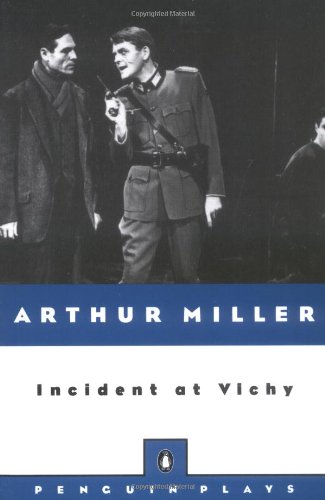
Incident at Vichy: A Play (Plays, Penguin)
Authors:
Arthur Miller
Publisher:
Penguin Books
Publication Date:
Not available
ISBN:
0140481931
In Vichy France in 1942, eight men and a boy are seized by the collaborationist authorities and made to wait in a building that may be a police station.... Some of them are Jews. All of them have something to hide—if not from the Nazis, then from their fellow detainees and, inevitably, from themselves. For in this claustrophobic antechamber to the death camps, everyone is guilty. And perhaps none more so than those who can walk away alive. In Incident at Vichy, Arthur Miller re-creates Dante's hell inside the gaping pit that is our history and populates it with sinners whose crimes are all the more fearful because they are so recognizable. "One of the most important plays of our time . . . Incident at Vichy returns the theater to greatness." —The New York Times
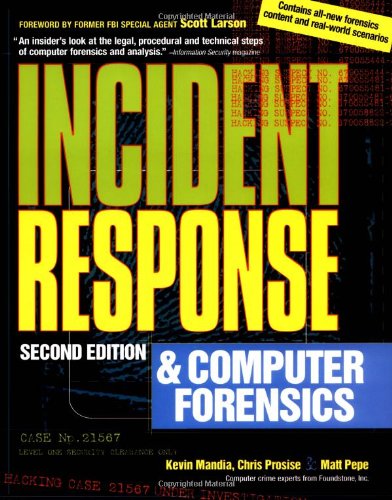
Incident Response and Computer Forensics, Second Edition
Authors:
Chris Prosise
Publisher:
McGraw-Hill/Osborne
Publication Date:
Not available
ISBN:
007222696X
Written by FBI insiders, this updated best-seller offers a look at the legal, procedural, and technical steps of incident response and computer... forensics. Including new chapters on forensic analysis and remediation, and real-world case studies, this revealing book shows how to counteract and conquer today’s hack attacks.
INCIDENT RESPONSE POCKET GUIDE
Authors:
Not Available
Publisher:
Not available
Publication Date:
Not available
ISBN:
Not available
Incidents in the Life of a Slave Girl
Authors:
Harriet Ann Jacobs
Publisher:
Simon & Brown
Publication Date:
Not available
ISBN:
1613822618
Published in 1861, “Incidents in the Life of a Slave Girl” was one of the first personal narratives by a slave and one of the few written by a... woman. Jacobs (1813-97) was a slave in North Carolina and suffered terribly, along with her family, at the hands of a ruthless owner. She made several failed attempts to escape before successfully making her way North, though it took years of hiding and slow progress. Eventually, she was reunited with her children. For all biography and history collections. "Slavery is terrible for men, but it is far more terrible for women," Harriet Jacobs wrote in 1861. At that time she was an escaped slave living in the north, but the Fugitive Slave Law of 1850 meant that she could no longer consider being in the northern states a guarantee of freedom or safety. Her book is an eloquent recital of the suffering that is slavery. Families broken apart; promises of freedom made but never kept; whippings, beatings, and burnings; masters selling their own children - all are recounted with precise detail and a blazing indignation. Harriet Jacobs' master started pursuing her when she was fifteen; in disgust she continually refused and avoided him. Her first attempt at revenge and escape failed: she became the lover of a local unmarried white man and had several children, but even then her master refused to sell her. Finally, in desperation, she ran away and hid in an uninsulated garret, three feet high at its tallest point with almost no air or light. She stayed there for seven years, enduring cold, heat, and a crippling lack of movement, always hoping to catch a glimpse of her children through a crack in the walls as they walked by on the road below her. At last she had a chance to escape to the North. Her story is a remarkable testimony to her strength and courage, and an unrelenting attack upon the institution of slavery.
Incidents in the Life of a Slave Girl
Authors:
Harriet Ann Jacobs
Publisher:
Simon & Brown
Publication Date:
Not available
ISBN:
1613820127
Published in 1861, “Incidents in the Life of a Slave Girl” was one of the first personal narratives by a slave and one of the few written by a... woman. Jacobs (1813-97) was a slave in North Carolina and suffered terribly, along with her family, at the hands of a ruthless owner. She made several failed attempts to escape before successfully making her way North, though it took years of hiding and slow progress. Eventually, she was reunited with her children. For all biography and history collections. "Slavery is terrible for men, but it is far more terrible for women," Harriet Jacobs wrote in 1861. At that time she was an escaped slave living in the north, but the Fugitive Slave Law of 1850 meant that she could no longer consider being in the northern states a guarantee of freedom or safety. Her book is an eloquent recital of the suffering that is slavery. Families broken apart; promises of freedom made but never kept; whippings, beatings, and burnings; masters selling their own children - all are recounted with precise detail and a blazing indignation. Harriet Jacobs' master started pursuing her when she was fifteen; in disgust she continually refused and avoided him. Her first attempt at revenge and escape failed: she became the lover of a local unmarried white man and had several children, but even then her master refused to sell her. Finally, in desperation, she ran away and hid in an uninsulated garret, three feet high at its tallest point with almost no air or light. She stayed there for seven years, enduring cold, heat, and a crippling lack of movement, always hoping to catch a glimpse of her children through a crack in the walls as they walked by on the road below her. At last she had a chance to escape to the North. Her story is a remarkable testimony to her strength and courage, and an unrelenting attack upon the institution of slavery.
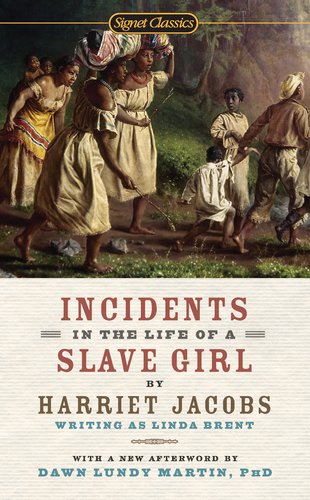
Incidents in the Life of a Slave Girl
Authors:
Harriet Jacobs
Publisher:
Signet Classics
Publication Date:
Not available
ISBN:
0451531469
Harriet Jacobs, under the name Linda Brent, illustrates here the evil and depravity of slavery. From Jacob's seven years of hiding in a garret three... feet high, to her harrowing escape north, to reunion with her children and freedom, it remains an outstanding example of a woman's extraordinary courage in the face of almost unbeatable odds, as well as one of the most significant testimonials in American history.
Incidents in the Life of a Slave Girl
Authors:
Linda; Edited By Maria L. Brent
Publisher:
Harvest/Harcourt Brace & Co.
Publication Date:
Not available
ISBN:
0156443503
An authentic autobiographical account of slave life in the South from the 1820s to the 1840s. To escape sexual exploitation by her master, Brent ran... away and hid in an attic crawl space that became her home for seven years of unbelievable physical hardship. Edited by L. Maria Child; Introduction by Walter Teller.
Incidents in the Life of a Slave Girl
Authors:
Harriet Ann Jacobs
Publisher:
Simon & Brown
Publication Date:
Not available
ISBN:
1613821239
A haunting, evocative recounting of her life as a slave in North Carolina, and her final escape and emancipation, Jacobs' narrative, written between... 1853 and 1858 and published in 1861, is one of the most important books ever written documenting the traumas and horrors of slavery in the antebellum South.
 '





