production
/viewbook/list/all/?page=5890
/
/static/
None

India Song (French Edition)
Authors:
Duras
Publisher:
Gallimard-Jeunesse
Publication Date:
Not available
ISBN:
2070723860
This access code card gives you access to all of MyFrenchLab’s grade-boosting resources… PLUS a complete e-book of your textbook! You can also buy... immediate access to MyFrenchLab online with a credit card at www.myfrenchlab.com.
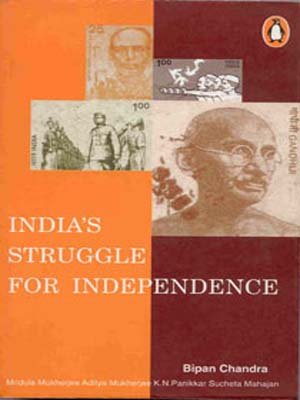
India's Struggle for Independence
Authors:
Bipan Chandra
Publisher:
Penguin Books India
Publication Date:
Not available
ISBN:
0140107819
India: The Definitive History
Authors:
D. R. SarDesai
Publisher:
Westview Press
Publication Date:
Not available
ISBN:
0813343526
D. R. SarDesai presents the history of India in its entire civilizational depth. Using an Indiacentric approach, (as opposed to the Eurocentric or... Anglocentric) the book covers the process of change in India through the centuries affecting different segments of the society, including the subalterns. He deals with the sweep of traditional Indian history as well as with the post-independence events, judicially balancing narrative and analysis in the conceptual framework of postcolonial and postmodernist approaches. This is the first major survey which deals with the entire Indian history along the lines of tradition and modernity instead of the old and largely inapplicable divisions of ancient, medieval and modern time frames. In adopting such a periodization, the book supports what is followed by most instructors in their courses on India.
India: The Emerging Giant
Authors:
Arvind Panagariya
Publisher:
Oxford University Press, USA
Publication Date:
Not available
ISBN:
0199751560
India is not only the world's largest and fiercely independent democracy, but also an emerging economic giant. But to date there has been no... comprehensive account of India's remarkable growth or the role policy has played in fueling this expansion. India: The Emerging Giant fills this gap, shedding light on one of the most successful experiments in economic development in modern history.Why did the early promise of the Indian economy not materialize and what led to its eventual turnaround? What policy initiatives have been undertaken in the last twenty years and how do they relate to the upward shift in the growth rate? What must be done to push the growth rate to double-digit levels? To answer these crucial questions, Arvind Panagariya offers a brilliant analysis of India's economy over the last fifty years--from the promising start in the 1950s, to the near debacle of the 1970s (when India came to be regarded as a "basket case"), to the phenomenal about face of the last two decades. The author illuminates the ways that government policies have promoted economic growth (or, in the case of Indira Gandhi's policies, economic stagnation), and offers insightful discussions of such key topics as poverty and inequality, tax reform, telecommunications (perhaps the single most important success story), agriculture and transportation, and the government's role in health, education, and sanitation.The dramatic change in the fortunes of 1.1 billion people has, not surprisingly, generated tremendous interest in the economy of India. Arvind Panagariya offers the first major account of how this has come about and what more India must do to sustain its rapid growth and alleviate poverty. It will be must reading for everyone interested in modern India, foreign affairs, or the world economy.
India: The Emerging Giant
Authors:
Arvind Panagariya
Publisher:
Oxford University Press, USA
Publication Date:
Not available
ISBN:
0195315030
India is not only the world's largest and fiercely independent democracy, but also an emerging economic giant. But to date there has been no... comprehensive account of India's remarkable growth or the role policy has played in fueling this expansion. India: The Emerging Giant fills this gap, shedding light on one of the most successful experiments in economic development in modern history.Why did the early promise of the Indian economy not materialize and what led to its eventual turnaround? What policy initiatives have been undertaken in the last twenty years and how do they relate to the upward shift in the growth rate? What must be done to push the growth rate to double-digit levels? To answer these crucial questions, Arvind Panagariya offers a brilliant analysis of India's economy over the last fifty years--from the promising start in the 1950s, to the near debacle of the 1970s (when India came to be regarded as a "basket case"), to the phenomenal about face of the last two decades. The author illuminates the ways that government policies have promoted economic growth (or, in the case of Indira Gandhi's policies, economic stagnation), and offers insightful discussions of such key topics as poverty and inequality, tax reform, telecommunications (perhaps the single most important success story), agriculture and transportation, and the government's role in health, education, and sanitation.The dramatic change in the fortunes of 1.1 billion people has, not surprisingly, generated tremendous interest in the economy of India. Arvind Panagariya offers the first major account of how this has come about and what more India must do to sustain its rapid growth and alleviate poverty. It will be must reading for everyone interested in modern India, foreign affairs, or the world economy.An Economist Best Book of 2008.
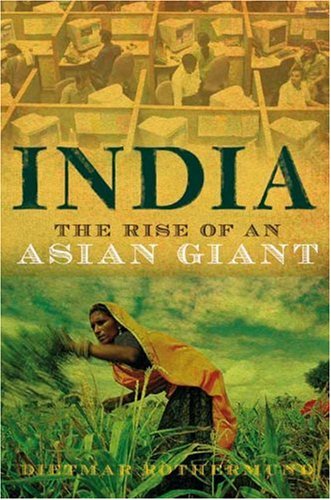
India: The Rise of an Asian Giant
Authors:
Dietmar Rothermund
Publisher:
Yale University Press
Publication Date:
Not available
ISBN:
0300158270
With growing economic might, new political influence, and changing social dynamics, India has emerged as a major world power in the twenty-first... century. This book charts the important features of India’s development since its independence in 1947, assessing those forces that have contributed to the nation’s growth as well as those that have impeded it. Through the lens of India’s past, Dietmar Rothermund offers a new perspective on India today and a fascinating look into the nation’s future. The author explores the diverse roots of India’s economic robustness, from agriculture to the export boom. He looks closely at the country’s democratic system, nuclear decisions, and alliance with the U.S. against terror. In his review of social changes, Rothermund discusses the institution of caste, the rise of a new middle class, the persistence of poverty, the media and Bollywood, and the significance of the global diaspora of twenty million Indians. In sum, he offers an impressive profile of India, an Asian giant whose role in the world’s future will surely be unique and important.
India Unbound
Authors:
Gurcharan Das
Publisher:
Viking
Publication Date:
Not available
ISBN:
0143063014
India Unbound is the riveting story of a nation s rise from poverty to prosperity and the clash of ideas that occurred along the way. Today s India is a... vibrant free-market democracy, and it has begun to flex its muscles in the global information economy. The old centralized, bureaucratic state, which stifled industrial growth, is on the decline; the lower castes have risen confidently through the ballot box; and the middle class has tripled in the last two decades. This economic and social transformation is one of the major themes of this book. Gurcharan Das recounts the hope and despair of the last fifty years. The Licence Raj created a work environment in which a cousin of the author, on his first day at work in the railways, could precipiate a strike just because he was honest. And on one occasion, the author, even though a seasoned executive, was driven to sit by the polluted Yamuna and weep after a fruitless meeting with a bureaucrat. The transformation began in the golden summer of 1991, when a reticent reformer, Prime Minister P.V. Narasimha Rao, finally changed the nation s course through sweeping economic reforms. A restrictive regime, in which the state dictated everything, from a woman s choice of lipstick to the programmes on television, gave way to the optimism of a rising middle class eager to compete with the rest of the world. It was a quiet revolution, one that has not been chronicled before. Gurcharan Das examines the highs and lows of independent India through the prism of history and his own experiences and those of numerous others he has met following the reforms, from young people in sleepy UP villages to the chiefs of software companies in Bangalore. Defining and exploring the new mindset of the nation, India Unbound is the perfect introduction to contemporary India. The powerful story of a nation's transition from poverty to prosperity. Examining the highs and lows of independent India through the prism of history and his own experiences, Gurcharan Das defines the new mindset of the nation in riveting prose.

Indication in Architectural Design: A Natural Method of Studying...
Authors:
David Jacob Varon
Publisher:
Nabu Press
Publication Date:
Not available
ISBN:
1146406312
This is an EXACT reproduction of a book published before 1923. This IS NOT an OCR'd book with strange characters, introduced typographical errors, and... jumbled words. This book may have occasional imperfections such as missing or blurred pages, poor pictures, errant marks, etc. that were either part of the original artifact, or were introduced by the scanning process. We believe this work is culturally important, and despite the imperfections, have elected to bring it back into print as part of our continuing commitment to the preservation of printed works worldwide. We appreciate your understanding of the imperfections in the preservation process, and hope you enjoy this valuable book.

Indie: An American Film Culture (Film and Culture Series)
Authors:
Michael Z. Newman
Publisher:
Columbia University Press
Publication Date:
Not available
ISBN:
0231144652
America's independent films often seem to defy classification. Their strategies of storytelling and representation range from raw, no-budget projects to... more polished releases of Hollywood's "specialty" divisions. Yet understanding American indies involves more than just considering films. Filmmakers, distributors, exhibitors, festivals, critics, and audiences all shape the art's identity, which is always understood in relation to the Hollywood mainstream.By locating the American indie film in the historical context of the "Sundance-Miramax" era (the mid-1980s to the end of the 2000s), Michael Z. Newman considers indie cinema as an alternative American film culture. His work isolates patterns of character and realism, formal play, and oppositionality and the functions of the festivals, art houses, and critical media promoting them. He also accounts for the power of audiences to identify indie films in distinction to mainstream Hollywood and to seek socially emblematic characters and playful form in their narratives. Analyzing films such as Welcome to the Dollhouse (1996), Lost in Translation (2003), Pulp Fiction (1994), and Juno (2007), along with the work of Nicole Holofcener, Jim Jarmusch, John Sayles, Steven Soderbergh, and the Coen brothers, Newman investigates the conventions that cast indies as culturally legitimate works of art. He binds these diverse works together within a cluster of distinct viewing strategies and invites a reevaluation of the difference of independent cinema and its relationship to class and taste culture.

Indie Producers Handbook : Creative Producing From A to Z
Authors:
Myrl A. Schreibman
Publisher:
Lone Eagle
Publication Date:
Not available
ISBN:
1580650376
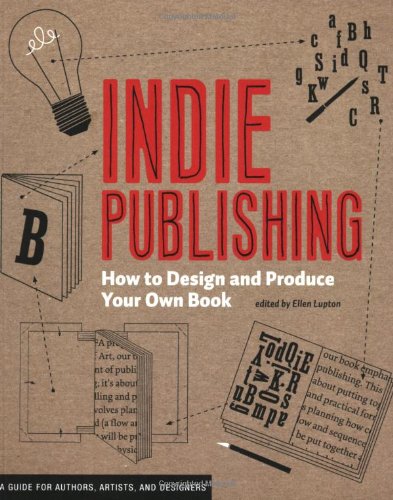
Indie Publishing: How to Design and Publish Your Own Book (Design...
Authors:
Ellen Lupton
Publisher:
Princeton Architectural Press
Publication Date:
Not available
ISBN:
1568987609
Once referred to derisively as "vanity publishing," self-published books are finally taking their place alongside moreaccepted indie categories such as... music, film, and theater. Indie Publishing is a practical guide to creating and distributing printed books regardless of your background, skill set, or ambition. It will help you realize projects of every scale and budget, from the traditional bookmaking techniques used to create zines to the more ambitious industrial production methods required to produce hardcover books in large quantity.Indie Publishing's special focus on the visual design of books makes it unique among publish-it-yourself manuals. Readers are taken step-by-step through the process of designing a book to give it personal style as well as visual coherence and authority. Design principles such as scale, cropping, pacing, and typography are explored in relation to each example, along with commentary on how to create effective title pages, tables of contents, captions, and more. Indie Publishing aims to inspire readers with examples of print projects similar to those they might undertake on their own. Sample designs include a picture book, artist's portfolio, exhibition catalog, poetry chapbook, novel, and zine. Indie Publishing addresses the important business aspects of independentpublishingfrom how and why you should get an isbn number to creating promotional materials and using the internet to market your book. This comprehensive, illustrated guide concludes with a curated portfolio of the most exciting examples of independent publishing from the contemporary scene, reproduced in full color. If you have content to share and you want to give it a fresh and orderly form, this book will kick-start your project and keep you motivated until the ink dries. Indie Publishing is the eighth title in our best-selling Design Briefs series, which has sold more than 100,000 copies worldwide.

Indigenism: Ethnic Politics In Brazil
Authors:
Alcida Rita Ramos
Publisher:
University of Wisconsin Press
Publication Date:
Not available
ISBN:
0299160440
Indigenous people comprise only 0.2% of Brazil's population, yet occupy a prominent role in the nation's consciousness. In her important and passionate... new book, anthropologist Alcida Ramos explains this irony, exploring Indian and non-Indian attitudes about interethnic relations. Ramos contends that imagery about indigenous people reflects an ambivalence Brazil has about itself as a nation, for Indians reveal Brazilians’ contradiction between their pride in ethnic pluralism and desire for national homogeneity. Based on her more than thirty years of fieldwork and activism on behalf of the Yanomami Indians, Ramos explains the complex ideology called indigenism. She evaluates its meaning through the relations of Brazilian Indians with religious and lay institutions, non-governmental organizations, official agencies such as the National Indian Foundation as well as the very discipline of anthropology. Ramos not only examines the imagery created by Brazilians of European descent—members of the Catholic church, government officials, the army and the state agency for Indian affairs—she also scrutinizes Indians' own self portrayals used in defending their ethnic rights against the Brazilian state. Ramos’ thoughtful and complete analysis of the relation between indigenous people of Brazil and the state will be of great interest to lawmakers and political theorists, environmental and civil rights activists, developmental specialists and policymakers, and those concerned with human rights in Latin America.

Indigenous Albuquerque (Plains Histories)
Authors:
Myla Vicenti Carpio
Publisher:
Texas Tech University Press
Publication Date:
Not available
ISBN:
0896726789
Some 30,000 American Indians call Albuquerque, New Mexico, home, and twelve Indigenous nations, mostly Pueblo, live within a fifty-mile radius of it.... Yet no study until now has focused on the complexities of urban American Indian experience in the state’s largest city.Indigenous Albuquerque examines the dilemmas confronting urban Indians as a result of a colonized past—and present—and the relationship between the City of Albuquerque and its Native residents. Treating not only issues of identity but also education, welfare, health care, community organizations, and community efforts to counter colonization, Myla Vicenti Carpio explores every aspect of Indigenous life in the city.“Urban” as a lived experience, she suggests, does not occur in isolation from either Indigenous communities’ survival or the legacies of Euroamerican colonization. This experience is integrally connected not only through cultural, religious, political, and economic spheres, but also through the legacy of federal reservation police, and thus cannot be understood as distinct from reservation life. By specifically considering the intersection of city and citizen, Vicenti Carpio expresses the dilemmas confronting urban Indians as a result of their colonized past.While Indigenous Albuquerque reflects the discipline of American Indian Studies, it is also relevant to American Indian history, ethnic studies, public policy, and urban history.

Indigenous American Women: Decolonization, Empowerment, Activism...
Authors:
Devon Abbott Mihesuah
Publisher:
University of Nebraska Press
Publication Date:
Not available
ISBN:
0803282869
Oklahoma Choctaw scholar Devon Abbott Mihesuah offers a frank and absorbing look at the complex, evolving identities of American Indigenous women today,... their ongoing struggles against a centuries-old legacy of colonial disempowerment, and how they are seen and portrayed by themselves and others. Mihesuah first examines how American Indigenous women have been perceived and depicted by non-Natives, including scholars, and by themselves. She then illuminates the pervasive impact of colonialism and patriarchal thought on Native women’s traditional tribal roles and on their participation in academia. Mihesuah considers how relations between Indigenous women and men across North America continue to be altered by Christianity and Euro-American ideologies. Sexism and violence against Indigenous women has escalated; economic disparities and intratribal factionalism and “culturalism” threaten connections among women and with men; and many women suffer from psychological stress because their economic, religious, political, and social positions are devalued. In the last section, Mihesuah explores how modern American Indigenous women have empowered themselves tribally, nationally, or academically. Additionally, she examines the overlooked role that Native women played in the Red Power movement as well as some key differences between Native women "feminists" and "activists."

Indigenous and Cultural Psychology: Understanding People in Context...
Authors:
Not Available
Publisher:
Springer
Publication Date:
Not available
ISBN:
0387286616
Indigenous psychology is an emerging new field in psychology, focusing on psychological universals in social, cultural, and ecological contexts -... Starting point for psychologists who wish to understand various cultures from their own ecological, historial, philosophical, and religious perspectives
 '





