production
/viewbook/list/all/?page=6000
/
/static/
None
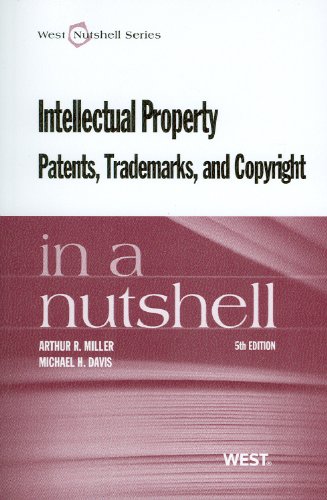
Intellectual Property, Patents,Trademarks, and Copyright in a...
Authors:
Arthur R. Miller
Publisher:
West
Publication Date:
Not available
ISBN:
0314278346
Authors Michael Davis and famed Harvard professor Arthur Miller provide authoritative coverage on the foundations of patent protection, patentability,... and the patenting process. Presents the fundamentals of trademarks and copyright laws. Text further addresses torts and property, antitrust and government regulation, concepts of federalism and state, and federal conflicts.
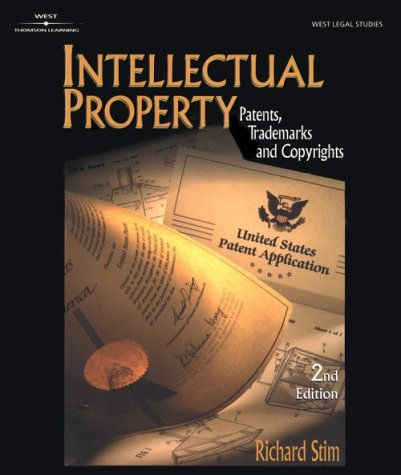
Intellectual Property: Patents, Trademarks, and Copyrights
Authors:
Richard W. Stim
Publisher:
Delmar Cengage Learning
Publication Date:
Not available
ISBN:
0766826651
This text introduces students to the origins of copyright law, the extent of trademark rights, and what is patentable. It covers such topics as rights... granted under copyright, principles of fair use, the first sale doctrine, issues of ownership, copyright registration, and securing Internet domains. It is written for students preparing to work in the intellectual property field. It includes step-by-step information to use and register the various forms required in intellectual property law, including trademark and copyright applications as well as supporting documentation such as assignments and declarations. It also includes the basics of trade secrecy and patent law. An instructor's manual and test bank supplement are available.
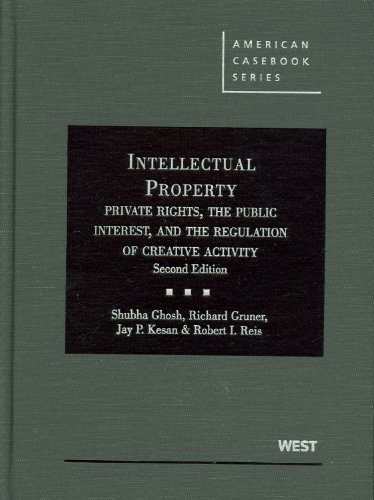
Intellectual Property, Private Rights, the Public Interest, and the...
Authors:
Shubha Ghosh
Publisher:
West
Publication Date:
Not available
ISBN:
0314265058
This book provides an overview of trademark, patent, and copyright doctrine and offers a foray into more advanced topics, such as digital rights... management, international law, and state doctrinal developments in both civil and criminal law. Particularly unique is a final chapter that develops the "new horizons" of intellectual property, covering topics like open source, intellectual property and development, intellectual property as a business asset, and competition policy. This casebook is targeted to a wide range of law students, including both those who are scientifically inclined and those who are interested in creativity and invention. The New edition expands on the strengths of the first edition. Chapters on copyright and trademark reorganized to make more readable and include more on digital rights management Covers recent IP issues in biotechnology, search engines, the Google book project and the Google vs. Viacom case. The role of economic incentive in copyright and patent law is more extensively discussed, including such contemporary ideas as the role of YouTube and the decision in Eldred.
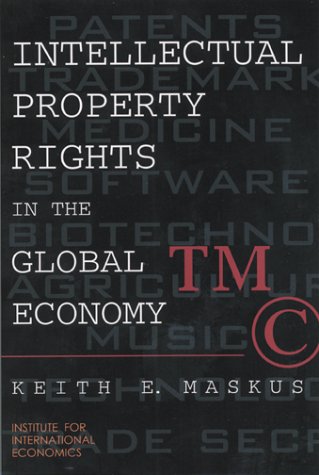
Intellectual Property Rights in the Global Economy
Authors:
Keith E. Maskus
Publisher:
Institute for International Economics
Publication Date:
Not available
ISBN:
0881322822
The problem of pirating and counterfeiting has grown from small-scale imitations of Levi’s jeans and Zippo lighters to a phenomenon that costs the... United States an estimated $200 billion dollars per year. Pirated DVDs, computer software, designer clothes, and machinery flood global markets, inflicting heavy losses on U.S. businesses, while counterfeit medicines, auto and aircraft parts, and baby formula regularly cause fatalities around the world. The theft of artistic and scientific creation is draining our economy. It is the great economic crime of the twenty-first century.Pat Choate, the author of the best-selling Agents of Influence, examines the roots of conflicts over intellectual property and how the establishment of patent and copyright protections helped propel the American economy. He interweaves the stories of Eli Whitney, Alexander Graham Bell, and Thomas Edison to illustrate how the United States transformed itself from a largely agricultural society into a manufacturing, scientific, and technological superpower, giving rise to further copyright and patent protection laws. He traces the emergence of Germany, Japan, and China as rivals to American primacy through copying, counterfeiting, and underpricing American products and media. He reveals the shockingly meager effectiveness of current efforts to defend American businesses, inventors, and artists from corporate espionage. And he sounds a powerfully convincing warning that the general indifference of our government toward the security of American intellectual property is already affecting job security and the economy in general (an estimated $24 billion is lost each year to pirated films, music recordings, books, and other merchandise in China alone). Hot Property is an impassioned, clear-eyed, and sound assessment of one of the most serious problems facing the American economy today, certain to be one of the most widely discussed books of the year.
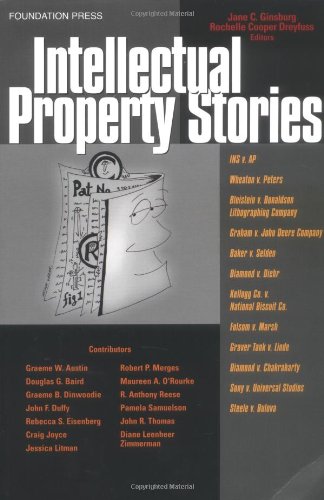
Intellectual Property Stories 2005 (Law Stories)
Authors:
Jane C. Ginsburg
Publisher:
Foundation Press
Publication Date:
Not available
ISBN:
158778727X
Intellectual Property Stories brings famous cases to life by telling the true, never-heard-before stories behind landmark Intellectual Property cases.... Intellectual Property Stories is organized into six chapters, each drawing on cases in patents, copyrights, trademarks, or unfair competition, to illustrate the problems intellectual property law encounters. The works, inventions, and marks at issue in these cases vary widely.
Intellectual Property Strategy (MIT Press Essential Knowledge)
Authors:
John Palfrey
Publisher:
The MIT Press
Publication Date:
Not available
ISBN:
0262516799
Most managers leave intellectual property issues to the legal department, unaware that an organization's intellectual property can help accomplish a... range of management goals, from accessing new markets to improving existing products to generating new revenue streams. In this book, intellectual property expert and Harvard Law School professor John Palfrey offers a short briefing on intellectual property strategy for corporate managers and nonprofit administrators. Palfrey argues for strategies that go beyond the traditional highly restrictive "sword and shield" approach, suggesting that flexibility and creativity are essential to a profitable long-term intellectual property strategy--especially in an era of changing attitudes about media. Intellectual property, writes Palfrey, should be considered a key strategic asset class. Almost every organization has an intellectual property portfolio of some value and therefore the need for an intellectual property strategy. A brand, for example, is an important form of intellectual property, as is any information managed and produced by an organization. Palfrey identifies the essential areas of intellectual property--patent, copyright, trademark, and trade secret--and describes strategic approaches to each in a variety of organizational contexts, based on four basic steps. The most innovative organizations employ multiple intellectual property approaches, depending on the situation, asking hard, context-specific questions. By doing so, they achieve both short- and long-term benefits while positioning themselves for success in the global information economy.
Intellectual Property: The Law of Copyrights, Patents and...
Authors:
Roger Schechter
Publisher:
West Publishing Company
Publication Date:
Not available
ISBN:
0314065997
This work provides a comprehensive treatment of all three major branches of intellectual property law, surveying basic principles and emerging issues.... The book summarizes what is clear, identifies what is unsettled, and offers concise views on how some open issues might be sensibly resolved. This text also deals with a variety of related intellectual property topics, including state laws governing the misappropriation of intangibles, state protection for the right of publicity and for trade secrets, and both federal and state rules concerning false advertising and deceptive trade practices. The authors use numerous examples to guide you through various technical areas.
Intellectual Property: The Law of Trademarks, Copyrights, Patents,...
Authors:
Deborah E. Bouchoux
Publisher:
Delmar Cengage Learning
Publication Date:
Not available
ISBN:
1428318364
Intellectual Property, third edition is a thorough guide to the four fields of intellectual property law; trademarks, copyrights, patents, and trade... secrets, covering topics such as the duration of rights, protection from infringement, and new and international developments in each field. Intellectual Property, third edition is on the forefront of Intellectual Property law, covering new and cutting edge issues in the field, such as proposals for patent reform, the rise of patent trolls, copyright pre-registration, and Section 337 ITC investigations. The comprehensive overview of each field is complemented by sample agreements, checklists, and other practical guides throughout the book. Each chapter contains realistic case studies and trivia to engage students and provide real world insight into the field of intellectual property law. Intellectual Property, third edition also includes invaluable resources that students will refer to throughout their careers, such as useful intellectual property Web sites, internet research questions and an "Ethics Edge" section that relates to ethical issues raised in the chapter.
Intellectual Property: The Law of Trademarks, Copyrights, Patents,...
Authors:
Deborah E. Bouchoux
Publisher:
Delmar Cengage Learning
Publication Date:
Not available
ISBN:
1111648573
INTELLECTUAL PROPERTY: THE LAW OF TRADEMARKS, COPYRIGHTS, PATENTS, AND TRADE SECRETS, Fourth Edition, is a thorough guide to the four fields of... intellectual property law: trademarks, copyrights, patents, and trade secrets. This comprehensive, yet reader-friendly book helps you master the complexities of modern intellectual property law, including topics such as registration procedures, duration of rights, protection from infringement, current concerns in each field, and international trends and developments. Now updated in a new Fourth Edition, this wide-ranging book features coverage of cutting-edge issues such as technological innovations, intellectual property in the digital age, the role of the Internet, and evolving business law. In addition to an in-depth overview of each field, the book features abundant practical material, such as sample agreements, forms, checklists of paralegal tasks, charts, citations, statutes, realistic case studies, excerpts of real cases, and interesting trivia to capture your interest and provide valuable insights into real-world paralegal practice. Additional useful features include references to intellectual property websites, questions to encourage targeted Internet research, Case Illustrations, Case Study and Activities, Role of Paralegal element, and "Ethics Edge" boxes that explore ethical issues related to chapter content.

Intellectuals a Critical Bibliography
Authors:
Detlef Borchers
Publisher:
Intl General
Publication Date:
Not available
ISBN:
0884770370
The Global Industrial Complex: Systems of Domination is a groundbreaking collection of essays by a diverse set of leading scholars who examine the... entangled and evolving global array of corporate-state structures of hegemonic power—what the editors refer to as “the power complex”—that was first analyzed by C. Wright Mills in his 1956 classic work, The Power Elite. In this new volume edited by Steven Best, Richard Kahn, Anthony J. Nocella II, and Peter McLaren, the power complex is conceived as co-constituted, interdependent and imbricated systems of domination. Spreading insidiously on a global level, the transnational institutional relationships of the power complex combine the logics of capitalist exploitation and profits and industrialist norms of efficiency, control, and mass production, While some have begun to analyze these institutional complexes as separate entities, this book is unique in analyzing them as overlapping, mutually-enforcing systems that operate globally and which will undoubtedly frame the macro-narrative of the 21st century (and perhaps beyond). The global industrial complex—a grand power complex of complexes—thus poses one of the most formidable challenges to the sustainability of planetary democracy, freedom and peace today. But there can be no serious talk of opposition to it until it is more popularly named and understood. The Global Industrial Complex aims to be a foundational contribution to this emerging educational and political project.
Intellectuals: Aesthetics, Politics, Academics (Studies in...
Authors:
Bruce Robbins
Publisher:
Univ Of Minnesota Press
Publication Date:
Not available
ISBN:
0816618313
Intellectuals and Society: Revised and Expanded Edition
Authors:
Thomas Sowell
Publisher:
Basic Books
Publication Date:
Not available
ISBN:
0465025226
This title offers a withering and clear-eyed critique about (but not for) intellectuals that explores their impact on public opinion, policy, and... society at large. It has not been by shaping the opinions or directing the actions of the holders of power that modern intellectuals have most influenced the course of events, but by shaping public opinion in ways that affect the actions of power holders in democratic societies, whether or not those power holders accept the general vision or the particular policies favored by intellectuals. In "Intellectuals and Society", Thomas Sowell not only examines the track record of intellectuals in the things they have advocated but also analyzes the incentives and constraints under which their views and visions have emerged. Ultimately, he shows how often intellectuals have been proved not only wrong, but grossly and disastrously wrong in their prescriptions for the ills of society.
Intellectuals and the Articulation of the Nation
Authors:
Not Available
Publisher:
University of Michigan Press
Publication Date:
Not available
ISBN:
0472088289
What kinds of intellectual practices are influential in the making and remaking of nations? How do literary texts shape nation-making? When are... intellectuals most and least relevant to developing the nation? How do liberal, socialist, and nationalist intellectuals shape national ideologies?One of the principal debates in the study of nations concerns the relative significance of elites, specifically intellectuals, in inventing the nation. Intellectuals and the Articulation of the Nation delimits the capacities of intellectuals for shaping nations, as well as the ways in which the development of nations shapes intellectual practices. The introductory chapter presents the principal debates around nation-making and the identity and practices of intellectuals. Contributors from anthropology, history, literature, political science and sociology then explore the capacities and limits of intellectuals in the formation and restructuring of national identities in general, and in Eastern Europe and the former Soviet Union in particular.Each essay is followed by a brief intellectual autobiography in which the author's own relationship to nations is explored. The editors conclude the volume by developing a general theory of national intellectual practice.The principal focus of this book--the mutual articulation of intellectuals and nations--is a key subject for students and scholars of history, cultural studies, political science, anthropology, and sociology.Ronald Grigor Suny is Professor of Political Science, University of Chicago. Michael D. Kennedy is Associate Professor of Sociology, University of Michigan.

Intellectual Virtues: An Essay in Regulative Epistemology (Advances...
Authors:
Robert C. Roberts
Publisher:
Oxford University Press, USA
Publication Date:
Not available
ISBN:
0199575703
Out of the ferment of recent debates about the intellectual virtues, Roberts and Wood have developed an approach they call "regulative epistemology."... This is partly a return to classical and medieval traditions, partly in the spirit of Locke's and Descartes's concern for intellectual formation, partly an exploration of connections between epistemology and ethics, and partly an approach that has never been tried before. Standing on the shoulders of recent epistemologists--including William Alston, Alvin Plantinga, Ernest Sosa, and Linda Zagzebski--Roberts and Wood pursue epistemological questions by looking closely and deeply at particular traits of intellectual character such as love of knowledge, intellectual autonomy, intellectual generosity, and intellectual humility. Central to their vision is an account of intellectual goods that includes not just knowledge as properly grounded belief, but understanding and personal acquaintance, acquired and shared through the many social practices of actual intellectual life. This approach to intellectual virtue infuses the discipline of epistemology with new life, and makes it interesting to people outside the circle of professional epistemologists. It is epistemology for the whole intellectual community, as Roberts and Wood carefully sketch the ways in which virtues that would have been categorized earlier as moral make for agents who can better acquire, refine, and communicate important kinds of knowledge.

Intellectual Warfare (English and English Edition)
Authors:
Jacob H. Carruthers
Publisher:
Third World Press
Publication Date:
Not available
ISBN:
0883781808
Testifying that the foundation of modern Western thought, theory, and practice can be traced back to ancient African thought, theory, and practice, this... book exposes the African influence on Greek and Roman thought and its influence on the development of modern Western society. It then establishes the urgency to defend and honor the role of Ancient African civilizations on this major event. Exposing fallacies and reestablishing new and undistorted ways of viewing the formation of Western society, the book shows how classic literature shaped the contemporary world in intricate and sometimes startlingly and brutally honest detail. Not satisfied with simply challenging the reader to think about things differently, the volume goes further, citing specific examples and offering instruction on how to begin to retrain oneself to think about the origins of modern society in other terms. The book is also separated from other such critical efforts by expanding the text with instruction for implementing new ways of looking at the educational curriculum—to ensure that the task of improving education can be taken up by future generations.
 '





