production
/viewbook/list/all/?page=630
/
/static/
None

American Indian Health: Innovations in Health Care, Promotion, and...
Authors:
Not Available
Publisher:
The Johns Hopkins University Press
Publication Date:
Not available
ISBN:
0801869048
Disease processes among American Indians and Alaska Natives often have distinct manifestations that need to be considered by clinicians and health... policy makers involved with these populations. Equally important, all aspects of Indian life—including health—are governed by the special relationship between Indian tribes and the U.S. federal government. For American Indian Health, Everett R. Rhoades has gathered a distinguished group of scholars and practitioners to present a comprehensive assessment of the health of American Indian peoples today and the delivery of health services to them.
American Indian History: A Documentary Reader (Uncovering the Past:...
Authors:
Not Available
Publisher:
Wiley-Blackwell
Publication Date:
Not available
ISBN:
1405159081
This Reader from the Uncovering the Past series provides a comprehensive introduction to American Indian history.Over 60 primary documents allow the... voices of natives to illuminate the American pastIncludes samples of native languages just above the full translations of particular textsProvides comprehensive introductions and headnotes, as well as images, an extensive bibliography, and suggestions for further researchIncludes such texts as a decoded Maya inscription, letters written during the French and Indian War on the distribution of small pox blankets, and a diatribe by General George Armstrong Custer shortly before he was killed at the Battle of the Little Big Horn
American Indian History, Vol 1: Conquest of a Continent, 1492-1783
Authors:
Robert W. Venables
Publisher:
Clear Light Pub
Publication Date:
Not available
ISBN:
1574160745
"American Indian History" chronicles the dynamic process of interaction among Indian nations, Europeans and the United States during the past five... centuries. Through his meticulous research and excellent narrative style, Robert Venables, Ph.D., makes this history come alive. Starting with the early period of contact, "discovery" and conquest, this two-volume set presents a detailed study of all sides of many complex issues, allowing the reader to look at American history from a new perspective and presenting, often for the first time, the Native sides of these issues. The work also provides insights into the cultural misunderstandings between Indian nations and the Eurocentric-thinking U.S. government. The survival of both cultures despite their conflicts has brought about an alliance between the two, both still struggling to shape their identities while sharing the same lands, as well as the values of freedom and individual liberties. Volume I begins by comparing and contrasting the different worldviews held by Indian and European nations as reflected in their philosophies and religions. It progresses to comprehensively document the contact, conflict and alliances that shaped and influenced their histories. During the initial conflicts in the 1500s, the Europeans debated the morality of conquest, then set the legal precedents that continue to affect Indian nations down to the present day. The Doctrine of Discovery and the Papal Bulls shaped these policies of conquest for both the Europeans and later the colonists. Indian nations developed political philosophies to cope with the pressures of colonial governments. Some adapted to European ideas and technologies as a means of survival. Some went to war with the Europeans, and others made alliances with them. Often these alliances were against other Indian nations, making the frontier far more complicated than red versus white. During these times, the descendants of the Europeans, believing the entire North American continent was their destiny, began the long process of coercing the Indian nations from their lands, a practice that continues today.
American Indian History, Vols 1 & 2: Five Centuries of Conflict...
Authors:
Robert W. Venables
Publisher:
Clear Light Pub
Publication Date:
Not available
ISBN:
157416077X
American Indian History chronicles the dynamic process of interaction among Indian nations, Europeans and the United States during the past five... centuries. Through his meticulous research and excellent narrative style, Robert Venables, Ph.D., makes this history come alive. Starting with the early period of contact, "discovery" and conquest, this two-volume set presents a detailed study of all sides of many complex issues, allowing the reader to look at American history from a new perspective and presenting, often for the first time, the Native sides of these issues. This work also provides insights into the cultural misunderstandings between Indian nations and the Eurocentric-thinking U.S. government. The survival of both cultures despite their conflicts has brought about an alliance between the two, both still struggling to shape their identities while sharing the same lands, as well as the values of freedom and individual liberties. Every American who cares about the future of our nation should read this two-volume set. Volume I: Conquest of a Continent, 1492-1783 begins by comparing and contrasting the different worldviews held by Indian and European nations as reflected in their philosophies and religions. It progresses to comprehensively document the contact, conflict and alliances that shaped and influenced their histories. During the initial conflicts in the 1500s, the Europeans debated the morality of conquest, then set the legal precedents that continue to affect Indian nations down to the present day. The Doctrine of Discovery and the Papal Bulls shaped these policies of conquest for both the Europeans and later the colonists. Indian nations developed political philosophies to cope with the pressures of colonial governments. Some adapted to European ideas and technologies as a means of survival. Some went to war with the Europeans, and others made alliances with them. Often these alliances were against other Indian nations, making the frontier far more complicated than red versus white. During these times, the descendants of the Europeans, believing the entire North American continent was their destiny, began the long process of coercing the Indian nations from their lands, a practice that continues today. Volume II: Confrontation, Adaptation & Assimilation, 1783-Present continues the saga of Indian-U.S. government relations, beginning after the Revolutionary War, when the United States turned on both its former Indian enemies and allies. The Policy of Removal forced most Indian peoples to lands west of the Mississippi. New policies such as the Dawes Act of 1887 succeeded in breaking up the communal land holdings of many Indian nations. The tragic end of the era’s struggles occurred at Wounded Knee, where Lakota followers of the Ghost Dance religion were slaughtered by the Army. During the first half of the 20th century different Indian programs reflected the goals of their United States government and eras more than they recognized the variety of Indian perspectives. After World War ii, U.S. policies such as the relocation of thousands of Indians to urban areas and the attempted "termination" of treaty rights and reservations eventually forced a choice between assimilation and political resistance. Treaty rights and land claims demonstrate how the present day continues past history, even as new controversies, such as casino gambling on Indian reservations, arise. Because Indian America remains diverse, all the issues remain complex.
American Indian Lacrosse: Little Brother of War
Authors:
Thomas Vennum
Publisher:
The Johns Hopkins University Press
Publication Date:
Not available
ISBN:
080188764X
To understand the aboriginal roots of lacrosse, one must enter a world of spiritual belief and magic where players sewed inchworms into the innards of... lacrosse balls and medicine men gazed at miniature lacrosse sticks to predict future events, where bits of bat wings were twisted into the stick's netting, and where famous players were—and are still—buried with their sticks. Here Thomas Vennum brings this world to life.
American Indian Languages: Cultural and Social Contexts
Authors:
Shirley Silver
Publisher:
University of Arizona Press
Publication Date:
Not available
ISBN:
0816521395
This comprehensive survey of indigenous languages of the New World introduces students and general readers to the mosaic of American Indian languages... and cultures and offers an approach to grasping their subtleties. Authors Silver and Miller demonstrate the complexity and diversity of these languages while dispelling popular misconceptions. Their text reveals the linguistic richness of languages found throughout the Americas, emphasizing those located in the western United States and Mexico, while drawing on a wide range of other examples found from Canada to the Andes. It introduces readers to such varied aspects of communicating as directionals and counting systems, storytelling, expressive speech, Mexican Kickapoo whistle speech, and Plains sign language. The authors have included basics of grammar and historical linguistics, while emphasizing such issues as speech genres and other sociolinguistic issues and the relation between language and worldview. They have incorporated a variety of data that have rarely or never received attention in nontechnical literature in order to underscore the linguistic diversity of the Americas, and have provided more extensive language classification lists than are found in most other texts. American Indian Languages: Cultural and Social Contexts is a comprehensive resource that will serve as a text in undergraduate and lower-level graduate courses on Native American languages and provide a useful reference for students of American Indian literature or general linguistics. It also introduces general readers interested in Native Americans to the amazing diversity and richness of indigenous American languages. Coverage includes: Achumawi, Acoma, Algonquin, Apache, Araucanian, Arawakan, Athapascan, Atsugewi, Ayamara, Bacairi, Bella Coola, Beothuk, Biloxi, Blackfoot, Caddoan, Cahto, Cahuilla, Cakchiquel, Carib, Cayuga, Chemehuevi, Cherokee, Chibchan, Chichimec, Chimakuan, Chimariko, Chinook, Chipewyan, Choctaw-Chickasaw, Chol, Cocopa, Coeur d'Alene, Comanche, Coos, Cora, Cree, Creek, Crow, Cubeo, Cupeño, Dakota, Delaware, Diegueño, Eskimo-Aleut, Esselen, Eyak, Fox, Gros Ventre, GuaranÃ, GuarijÃo, Haida, Havasupai, Hill Patwin, Hopi, Huastec, Huave, Hupa, Inuit-Inupiaq, Iroquois, Jaqaru, Je, Jicaque, Kalapuyan, Kamia, Karankawas, Karuk, Kashaya, Keres, Kickapoo, Kiliwa, Kiowa-Tanoan, Koasati, Konkow, Kuna, Kwakiutl, Kwalhioqua-Tlatskanai, Lakota, Lenca, Luiseño, Maidu, Mapuche, Markoosie, Mayan, Mazahua, Mazatec, Métis, Mexica, Micmac, Misumalpan, Mitchif, Miwok, Mixe-Zoquean, Mixtec, Mobilian, Mohave, Mohawk, Muskogean, Nahuatl, Natchez, Navajo, Nez Perce, Nheengatú, Nicola, Nomlaki, Nootka, Ojibwa, Oneida, O'odham, OtomÃ, Paiute, Palaihnihan, Panamint, Panoan, Paya, Pima, Pipil, Pomo, Poplocan, Pueblo, Puquina, Purpecha, Quechua, Quiché, Quileute, Sahaptian, Salish, Seneca, Sequoyah, Seri, Serrano, Shasta, Shoshoni, Sioux, Sirenikski, Slavey, Subtiaba-Tlapanec, TaÃno, Takelma, Tanaina, Tarahumara, Tequistlatecan, Tewa, Tlingit, Toba, Toltec, Totonac, Tsimshian, Tubatulabal, Tukano, Tunica, TupÃ, Ute, Uto-Aztecan, Vaupés, Venture¤o, Wakashan, Walapai, Wappo, Washo, Wintu, Wiyot, Xinca, Yahi, Yana, Yokuts, Yucatec, Yuchi, Yuki, Yuma, Yurok, Zapotec, Zoquean, Zuni
American Indian Law, Cases and Commentary, 2d (American Casebooks)
Authors:
Robert T. Anderson
Publisher:
West
Publication Date:
Not available
ISBN:
0314908153
This casebook provides an introduction to the legal relationships between American Indian tribes, the federal government and the individual states. The... foundational cases are incorporated with statutory text, background material, hypothetical questions, and discussion problems to enliven the classroom experience and enhance student engagement. The second edition includes expanded materials on gaming, international and comparative law, and more photographs, images, and suggestions for links to external sources.
American Indian Law in a Nutshell (In a Nutshell (West Publishing))
Authors:
William C. Canby Jr.
Publisher:
West
Publication Date:
Not available
ISBN:
031419519X
This guide provides a reliable resource on American Indian law. This authoritative text covers the essentials of this complex body of law with emphasis... on the governmental policies underlying it. It includes chapters on Indian gaming and Alaska native law, but does not include specialized problems of Oklahoma and New York Indians, urban Indians, or native Hawaiians. This guide provides a reliable resource on American Indian law. This authoritative text covers the essentials of this complex body of law with emphasis on the governmental policies underlying it. It includes chapters on Indian gaming and Alaska native law, but does not include specialized problems of Oklahoma and New York Indians, urban Indians, or native Hawaiians. This guide provides a reliable resource on American Indian law. This authoritative text covers the essentials of this complex body of law with emphasis on the governmental policies underlying it. It includes chapters on Indian gaming and Alaska native law, but does not include specialized problems of Oklahoma and New York Indians, urban Indians, or native Hawaiians. This guide provides a reliable resource on American Indian law. This authoritative text covers the essentials of this complex body of law with emphasis on the governmental policies underlying it. It includes chapters on Indian gaming and Alaska native law, but does not include specialized problems of Oklahoma and New York Indians, urban Indians, or native Hawaiians.

American Indian Law: Native Nations and the Federal System
Authors:
Carole E. Goldberg
Publisher:
LEXISNEXIS
Publication Date:
Not available
ISBN:
1422476472
From its inception, American Indian Law: Native Nations and the Federal System has merged jurisprudence, history, comparative law, ethnology, and... sociology to bring meaning to the tribal-federal relationship. The purposes of the book are to: Survey the major doctrines in the field of Indian law Provide a wide-ranging inquiry into the role of law and legal processes, both domestic and international, in protecting or frustrating the desires for political and cultural autonomy of various racial, cultural, religious, or national subgroups within a society, and Accurately portray Indian tribal perspectives and voices on questions of federal Indian lawThe Sixth Edition of American Indian Law maintains continuity with the prior edition in the focus on tribal as well as non-Indian perspectives on Native nations in the federal system. The authors focused on updating the material, reducing the heft of the volume, and reorganizing the topics to eliminate duplication and enhancing “teachability.” While developed primarily as a teaching tool and learning tool, this book is also a rich research sourcebook that purchasers can use long after they have completed their law school studies. Statutory and regulatory language has been omitted from the casebook. Instead, it is included in a companion statutory supplement, Selected Federal Indian Law Provisions.
American Indian Law: Native Nations and the Federal System:...
Authors:
Robert N. Clinton
Publisher:
LEXISNEXIS
Publication Date:
Not available
ISBN:
1422426580
The statutory and regulatory language omitted from the American Indian Law casebook is included in this companion statutory supplement. In addition to... treaties, Constitutional provisions, U.S.C. sections, C.F.R. sections, and Executive Orders, relevant state constitutional provisions and statutes are also provided in this edition.Cases may be included in future editions.

American Indian Law: Native Nations and the Federal System...
Authors:
Carole E. Goldberg
Publisher:
LEXISNEXIS
Publication Date:
Not available
ISBN:
1422476480
This three-hole punched, alternative loose-leaf version of the hardbound book is printed on 8 ½ x 11 inch paper with wider margins and the same... pagination – offered at a substantially lower price than the hardbound book. From its inception, American Indian Law: Native Nations and the Federal System has merged jurisprudence, history, comparative law, ethnology, and sociology to bring meaning to the tribal-federal relationship. The purposes of the book are to: Survey the major doctrines in the field of Indian law Provide a wide-ranging inquiry into the role of law and legal processes, both domestic and international, in protecting or frustrating the desires for political and cultural autonomy of various racial, cultural, religious, or national subgroups within a society, and Accurately portray Indian tribal perspectives and voices on questions of federal Indian lawThe Sixth Edition of American Indian Law maintains continuity with the prior edition in the focus on tribal as well as non-Indian perspectives on Native nations in the federal system. The authors focused on updating the material, reducing the heft of the volume, and reorganizing the topics to eliminate duplication and enhancing teachability. While developed primarily as a teaching tool and learning tool, this book is also a rich research sourcebook that purchasers can use long after they have completed their law school studies. Statutory and regulatory language has been omitted from the casebook. Instead, it is included in a companion statutory supplement, Selected Federal Indian Law Provisions.
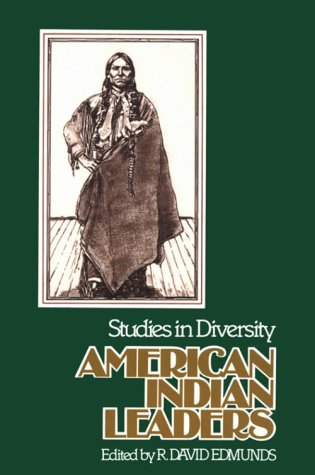
American Indian Leaders: Studies in Diversity
Authors:
Not Available
Publisher:
University of Nebraska Press
Publication Date:
Not available
ISBN:
0803267053
Throughout history, Indian leaders and their methods of leadership have both perplexed and fascinated other Americans. Because war chiefs played leading... roles in the confrontations with whites, it is they who most often emerge from the pages of history. But there were many other leaders who sought security for their tribesmen in accommodation or friendship with the Anglo-Americans. Indeed, as the twelve subjects whose careers are examined in this collection illustrate, Indian political leadership has manifested itself in a wide variety of patterns.Spanning the period from colonial times to the present, the essays are devoted to Old Briton, Joseph Brant (or, Thayendenegea), Alexander McGillivray, Red Bird, John Ross, Satanta, Washakie, Sitting Bull, Quanah Parker, Dennis Bushyhead, Carlos Montezuma, and Peter MacDonald.
American Indian Literary Nationalism
Authors:
Jace Weaver
Publisher:
University of New Mexico Press
Publication Date:
Not available
ISBN:
0826340733
In a contentious field characterized by divergence of opinion, American Indian Literary Nationalism intervenes in recent controversial debates on the... role of hybridity, suggesting common sense strategies rooted in the material realities of various communities. These essays deal with issues the authors have been wrestling with throughout their careers.Jace Weaver, Craig Womack, and Robert Warrior, assert being a "nationalist" is a legitimate perspective from which to approach Native American literature and criticism. They consider such a methodology not only defensible but also crucial to supporting Native national sovereignty and self-determination, an important goal of Native American studies, generally.However, the authors do not believe the nationalism suggested in American Indian Literary Nationalism is the only possible approach to Native literature. Each invites Natives and non-Native allies who support tribal national sovereignty and nationalist readings of Native literature to join the discussion.With this writing, each author acknowledges and honors the foundational contribution of Simon Ortiz in his 1981 MELUS essay, "Towards a National Indian Literature: Cultural Authenticity in Nationalism." It has been over thirty-five years since academe has accepted the legitimacy of American Indian literature. Weaver, Warrior, and Womack now call for more Native voices to articulate literary criticism and for clearer thinking about what links the literature to Native communities.

American Indian Literature: An Anthology
Authors:
Alan R. Velie
Publisher:
University of Oklahoma Press
Publication Date:
Not available
ISBN:
0806123451
Along with the traditional, primarily oral, literature of tales, songs, memoirs, and oratory, this revised anthology offers a large selection of poetry... and fiction by American Indian women, including an excerpt from Louise Erdrich’s Love Medicine and poetry by Paula Gunn Allen, Rayna Green, Joy Harjo, nila northSun, and others. There is also a rich array of works by contemporary Indian men from different regions, such as N. Scott Momaday, James Welch, Gerald Vizenor, and Maurice Kenny.
American Indian Myths and Legends (Pantheon Fairy Tale &...
Authors:
Not Available
Publisher:
Pantheon
Publication Date:
Not available
ISBN:
0394740181
 '
'