production
/viewbook/list/all/?page=663
/
/static/
None

America's Architectural Roots: Ethnic Groups that Built America...
Authors:
Not Available
Publisher:
Wiley
Publication Date:
Not available
ISBN:
0471143499
"American Ethnic Building Traditions Blend Memory and Experience in Varying Proportions." Dell Upton Which ethnic groups introduced the log cabin as a... lasting symbol of the American frontier? Who helped turn the front porch into an American institution? Which immigrants built saunas to recall Old World traditions? Where did we get neat, whitewashed row houses, barn paintings and stuccoed arches that now tell us where to find tacos and tortillas? All of these pieces in America's architectural mosaic came from the varied and industrious ethnic groups that built America. Native peoples, settlers before the Revolution and 19th-century immigrants each contributed their own building patterns to help create what we call American architecture. But each ethnic tradition was changed by the experience of building in America -- adapted to new terrains and materials, different climates, existing forms and styles. In the process, a distinctive new architecture developed, one whose multifaceted origins can be traced just as clearly as can ethnic customs in language and food. America's Architectural Roots is the first book to explore the ethnic derivations of American buildings with such a broad scope. The contributions of 22 groups are highlighted in this fascinating overview that provides an important new way of looking at the buildings that surround us. Groups covered include: Afro-Americans Belgians Chinese Czechs Danes Dutch English Finns French German-Russians Germans Hawaiians Irish Japanese Mexicans Native Americans Norwegians Russians Spanish Swedes Swiss Ukrainians
America's Armed Forces: A History (2nd Edition)
Authors:
James M. Morris
Publisher:
Pearson
Publication Date:
Not available
ISBN:
0133107809
Well-received in its first edition, this candid and popular study provides an interesting, readable account of American military history from the... late fifteenth-century British-French Wars in Colonial America to the recent Gulf War. Written in an easy-to-understand manner void of extraneous detail, the book integrates innovative and fascinating mini-biographies of key figures in U.S. military history, giving readers added insight and the opportunity to gain an appreciation of these remarkable people throughout their careers. It examines the impact of technology on warfare with descriptions and photographs of weapons of war from earliest times to the present; adds a final chapter to update coverage of American military developments; reflects the changes that have taken place in the world, the nation, and the military services since 1990; and supplements material with approximately 50 quality illustrations and 20 informative maps. For service academy historians; military history departments.

America's Army: Making the All-Volunteer Force
Authors:
Beth Bailey
Publisher:
Belknap Press of Harvard University Press
Publication Date:
Not available
ISBN:
0674035364
In 1973, not long after the last American combat troops returned from Vietnam, President Nixon fulfilled his campaign promise and ended the draft. No... longer would young men find their futures determined by the selective service system; nor would the U.S. military have a guaranteed source of recruits. America’s Army is the story of the all-volunteer force, from the draft protests and policy proposals of the 1960s through the Iraq War. It is also a history of America in the post-Vietnam era. In the Army, America directly confronted the legacies of civil rights and black power, the women’s movement, and gay rights. The volunteer force raised questions about the meaning of citizenship and the rights and obligations it carries; about whether liberty or equality is the more central American value; what role the military should play in American society not only in time of war, but in time of peace. And as the Army tried to create a volunteer force that could respond effectively to complex international situations, it had to compete with other “employers” in a national labor market and sell military service alongside soap and soft drinks. Based on exhaustive archival research, as well as interviews with Army officers and recruiters, advertising executives, and policy makers, America’s Army confronts the political, moral, and social issues a volunteer force raises for a democratic society as well as for the defense of our nation.
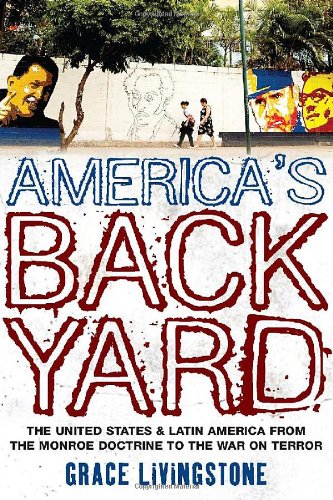
America's Backyard: The United States and Latin America from the...
Authors:
Grace Livingstone
Publisher:
Zed Books
Publication Date:
Not available
ISBN:
184813214X
Using newly-declassified documents, Grace Livingstone reveals the U.S. role in the darkest periods of Latin American history including Pinochet's coup... in Chile, the Contra War in Nicaragua and the death squads in El Salvador. She shows how the U.S. administration used the War on Terror as a new pretext for intervention and how it tried to destabilize leftwing governments and push back the 'pink tide' washing across the Americas. America's Backyard also has chapters on drugs, economy and culture. It explains why U.S. drug policy has caused widespread environmental damage, yet failed to reduce the supply of cocaine and looks at the U.S. economic stake in Latin America and the strategies of the big corporations. Today Latin Americans are demanding respect and an end to the Washington Consensus. Will the White House listen?

America's Battle for God
Authors:
Muller-Fahrenholz
Publisher:
Wm. B. Eerdmans Publishing Company
Publication Date:
Not available
ISBN:
0802844189
Much has been written about the profound impact the post-World War II baby boomers had on American religion. But the lifestyles and beliefs of the... generation that has followed--and the influence these younger Americans in their twenties and thirties are having on the face of religion--are not so well understood. It is this next wave of post-boomers that Robert Wuthnow examines in this illuminating book. What are their churchgoing habits and spiritual interests and needs? How does their faith affect their families, their communities, and their politics? Interpreting new evidence from scores of in-depth interviews and surveys, Wuthnow reveals a generation of younger adults who, unlike the baby boomers that preceded them, are taking their time establishing themselves in careers, getting married, starting families of their own, and settling down--resulting in an estimated six million fewer regular churchgoers. He shows how the recent growth in evangelicalism is tapering off, and traces how biblical literalism, while still popular, is becoming less dogmatic and more preoccupied with practical guidance. At the same time, Wuthnow explains how conflicts between religious liberals and conservatives continue--including among new immigrant groups such as Hispanics and Asians--and how in the absence of institutional support many post-boomers have taken a more individualistic, improvised approach to spirituality. Wuthnow's fascinating analysis also explores the impacts of the Internet and so-called virtual churches, and the appeal of megachurches. After the Baby Boomers offers us a tantalizing look at the future of American religion for decades to come.

America's Best Newspaper Writing: A Collection of ASNE Prizewinners
Authors:
Roy Peter Clark
Publisher:
Bedford/St. Martin's
Publication Date:
Not available
ISBN:
0312443676
America's Best Newspaper Writing represents the "best-of-the-best" from 25 years of the American Society of Newspaper Editors (ASNE) Distinguished... Writing Awards competition. With an emphasis on local reporting, new stories including more on crisis coverage, and pedagogical tools to help students become better writers, the second edition is the most useful and up-to-date anthology available for feature writing and introduction to journalism classes.
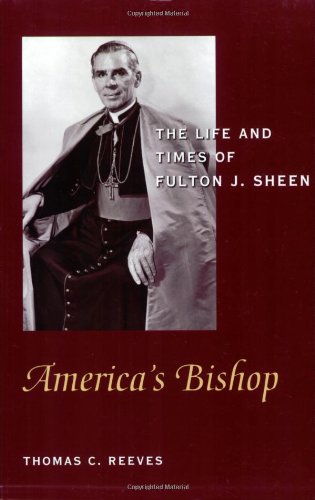
America's Bishop: The Life and Times of Fulton J. Sheen
Authors:
Thomas C. Reeves
Publisher:
Encounter Books
Publication Date:
Not available
ISBN:
1893554619
Among Fulton J. Sheen's thousands of converts were celebrities such as Clare Booth Luce and Henry Ford II, and former communists Louis Budenz and... Elizabeth Bentley. Reeves discusses these conversions and Sheen's close friendship with J. Edgar Hoover, and details for the first time the struggle between Sheen and his chief rival, Francis Cardinal Spellman, a battle of ecclesiastical titans that led all the way to the Pope and to Sheen's final humiliation and exile.

America's Challenge: Engaging a Rising China in the Twenty-First...
Authors:
Michael D. Swaine
Publisher:
Carnegie Endowment for International Peace
Publication Date:
Not available
ISBN:
0870032577
The emergence of the People's Republic of China on the world scene constitutes the most significant event in world politics since the end of World War... II. As the world s predominant political, economic, and military power, the United States faces a particularly significant challenge in responding to China's rising power and influence, especially in Asia. Offering a fresh perspective on current and future U.S. policy toward China, Michael Swaine examines the basic interests and beliefs behind U.S.-China relations, recent U.S. and Chinese policy practices in seven key areas, and future trends most likely to affect U.S. policy. American leaders, he concludes, must reexamine certain basic assumptions and approaches regarding America's position in the Western Pacific, integrate China policy more effectively into a broader Asian strategy, and recalibrate the U.S. balance between cooperative engagement and deterrence toward Beijing.
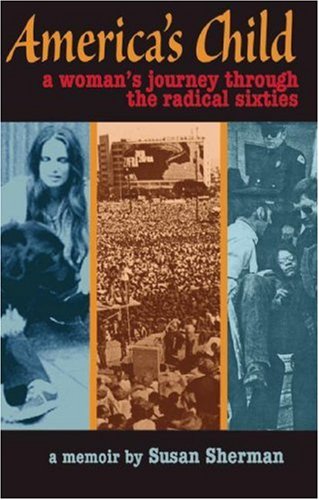
America's Child: A Woman's Journey Through the Radical Sixties
Authors:
Susan Sherman
Publisher:
Curbstone Books
Publication Date:
Not available
ISBN:
1931896356
America's Child is the story of the journey of a child of first-generation immigrant parents from a working-class neighborhood in Philadelphia to the... mythic avenues of 1940s Hollywood, through the transformative years of Berkeley, to the avant-garde art world of New York, to a Cuban movie theater filled with Vietnamese students and the turbulence of the sixties. Susan Sherman's journey, during a period in which the world was in ferment and large sections of the population were engaged in active self-examination and agitating for social change, is one of discovery and introspection. From the cultural renaissance of the late 1950s, through the sexual revolution, to political activism that starts with world issues and ends with struggles around sexism and homophobia, America's Child is simultaneously cultural history, social discourse, and a deeply personal narrative.

America's Church: The National Shrine and Catholic Presence in the...
Authors:
Thomas A. Tweed
Publisher:
Oxford University Press, USA
Publication Date:
Not available
ISBN:
0199782989
The National Shrine in Washington, DC has been deeply loved, blithely ignored, and passionately criticized. It has been praised as a "dazzling jewel"... and dismissed as a "towering Byzantine beach ball." In this intriguing and inventive book, Thomas Tweed shows that the Shrine is also an illuminating site from which to tell the story of twentieth-century Catholicism. He organizes his narrative around six themes that characterize U.S. Catholicism, and he ties these themes to the Shrine's material culture--to images, artifacts, or devotional spaces. Thus he begins with the Basilica's foundation stone, weaving it into a discussion of "brick and mortar" Catholicism, the drive to build institutions. To highlight the Church's inclination to appeal to women, he looks at fund-raising for the Mary Memorial Altar, and he focuses on the Filipino oratory to Our Lady of Antipolo to illustrate the Church's outreach to immigrants. Throughout, he employs painstaking detective work to shine a light on the many facets of American Catholicism reflected in the shrine.

America's Civil War (American History Series) (The American History...
Authors:
Brooks D. Simpson
Publisher:
Harlan Davidson
Publication Date:
Not available
ISBN:
0882959298
"Such is the continuing volume of work on the Civil War that we are regularly in need of an authoritative and accessible brief synthesis to keep us up... to date with this endlessly fascinating subject. Brooks Simpson meets that need for the 1990s in America's Civil War, a wonderful feat of compression in which he addresses all the great issues of the war in 200 pages of clear and readable prose. Rightly, he puts the military history of the conflict at the center of the picture, but he excels in relating the drama of the war itself to the politics of both Union and Confederacy, to the stresses and strains--and opportunities--of the home front, and to the great issues of emancipation and reconstruction. This book is a fine achievement, and it will be invaluable not only to students but to many other readers--and even Civil War specialists will benefit from its fresh insights."--Peter J. Parish, Cambridge University
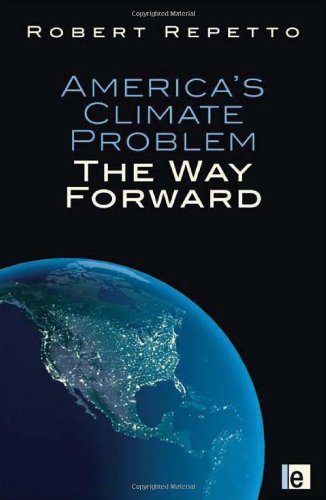
America's Climate Problem: The Way Forward
Authors:
Robert Repetto
Publisher:
Routledge
Publication Date:
Not available
ISBN:
184971214X
What America does – or fails to do – in the next few years to solve the problem of climate change will largely determine the fate of the earth and... humanity for centuries to come. Despite the efforts by some states, local governments and individual citizens to respond, controversy still embroils national efforts to come up with a solution. This book by Robert Repetto, a leading environmental economist, lets the reader cut through the confusion and political rhetoric and understand the way to resolve the climate problem. It explains in clear, accessible language how a sensible national policy to reduce greenhouse gas emissions can bring about a transition to clean energy sources while preserving healthy economic growth and high standards of living. It shows where the pitfalls are in developing a climate solution, how they can be avoided, and how to bring resistant interest groups on board. America cannot act alone but other nations will not take action if the United States does not lead, and this book explains how America can successfully promote international cooperation on climate solutions. Never has there been an environmental problem of such importance. Every citizen will benefit from the insight this book provides in solving it successfully.
America's Cold War: The Politics of Insecurity
Authors:
Campbell Craig
Publisher:
Belknap Press of Harvard University Press
Publication Date:
Not available
ISBN:
0674035534
The Cold War dominated world affairs during the half century following World War II. It ended in victory for the United States, yet it was a costly... triumph, claiming trillions of dollars in defense spending and the lives of nearly 100,000 U.S. soldiers. Apocalyptic anti-communism sharply limited the range of acceptable political debate, while American actions overseas led to the death of millions of innocent civilians and destabilized dozens of nations that posed no threat to the United States. In a brilliant new interpretation, Campbell Craig and Fredrik Logevall reexamine the successes and failures of America’s Cold War. The United States dealt effectively with the threats of Soviet predominance in Europe and of nuclear war in the early years of the conflict. But in engineering this policy, American leaders successfully paved the way for domestic actors and institutions with a vested interest in the struggle’s continuation. Long after the USSR had been effectively contained, Washington continued to wage a virulent Cold War that entailed a massive arms buildup, wars in Korea and Vietnam, the support of repressive regimes and counterinsurgencies, and a pronounced militarization of American political culture. American foreign policy after 1945 was never simply a response to communist power or a crusade contrived solely by domestic interests. It was always an amalgamation of both. This provocative book lays bare the emergence of a political tradition in Washington that feeds on external dangers, real or imagined, a mindset that inflames U.S. foreign policy to this day.
America's Cold War: The Politics of Insecurity
Authors:
Campbell Craig
Publisher:
Belknap Press of Harvard University Press
Publication Date:
Not available
ISBN:
0674064062
The Cold War dominated world affairs during the half century following World War II. It ended in victory for the United States, yet it was a costly... triumph, claiming trillions of dollars in defense spending and the lives of nearly 100,000 U.S. soldiers. Apocalyptic anti-communism sharply limited the range of acceptable political debate, while American actions overseas led to the death of millions of innocent civilians and destabilized dozens of nations that posed no threat to the United States. In a brilliant new interpretation, Campbell Craig and Fredrik Logevall reexamine the successes and failures of America’s Cold War. The United States dealt effectively with the threats of Soviet predominance in Europe and of nuclear war in the early years of the conflict. But in engineering this policy, American leaders successfully paved the way for domestic actors and institutions with a vested interest in the struggle’s continuation. Long after the USSR had been effectively contained, Washington continued to wage a virulent Cold War that entailed a massive arms buildup, wars in Korea and Vietnam, the support of repressive regimes and counterinsurgencies, and a pronounced militarization of American political culture. American foreign policy after 1945 was never simply a response to communist power or a crusade contrived solely by domestic interests. It was always an amalgamation of both. This provocative book lays bare the emergence of a political tradition in Washington that feeds on external dangers, real or imagined, a mindset that inflames U.S. foreign policy to this day.
America`s Congress: Actions in the Public Sphere, James Madison...
Authors:
Professor David R. Mayhew
Publisher:
Yale University Press
Publication Date:
Not available
ISBN:
0300093357
To understand American politics and government, we need to recognize that members of Congress are more than agents of societal interests and preferences... - they also act with some autonomy and consequence in the public sphere. In this study, a distinguished political scientist examines the actions of members of Congress throughout American history, assessing their patterns and importance and their role in the US system of separation of powers.
 '
'