production
/viewbook/list/all/?page=713
/
/static/
None

An approach to econometrics
Authors:
R. J Allard
Publisher:
Philip Allan Publishers Ltd
Publication Date:
Not available
ISBN:
0860030032
An Aquinas Reader: Selections from the Writings of Thomas Aquinas
Authors:
Mary T. Clark
Publisher:
Fordham University Press
Publication Date:
Not available
ISBN:
082322029X
This new edition of An Aquinas Reader contains in one closely knit volume representative selections that reflect every aspect of Aquinas's philosophy.... Divided into three section - Reality, God, and Man - this anthology offers an unrivaled perspective of the full scope and rich variety of Aquinas's thought. It provides the general reader with an overall survey of one of the most outstanding thinks or all time and reveals the major influence he has had on many of the world's greatest thinkers. This revised third edition of Clark's perennial still has all of the exceptional qualities that made An Aquinas Reader a classic, but contains a new introduction, improved format, and an updated bibliography.

An Arab Melancholia (Semiotext(e) / Native Agents)
Authors:
Abdellah Taïa
Publisher:
Semiotext(e)
Publication Date:
Not available
ISBN:
158435111X
I had to rediscover who I was. And that's why I left the apartment.... And there I was, right in the heart of the Arab world, a world that never tired... of making the same mistakes over and over.... I had no more leniency when it came to the Arab world... None for the Arabs and none for myself. I suddenly saw things with merciless lucidity....-- An Arab MelancholiaSalé, near Rabat. The mid 1980s. A lower-class teenager is running until he's out of breath. He's running after his dream, his dream to become a movie director. He's running after the Egyptian movie star, Souad Hosni, who's out there somewhere, miles away from this neighborhood--which is a place the teenager both loves and hates, the home at which he is not at home, an environment that will only allow him his identity through the cultural lens of shame and silence. Running is the only way he can stand up to the violence that is his Morocco.Irresistibly charming, angry, and wry, this autobiographical novel traces the emergence of Abdellah Taïa's identity as an openly gay Arab man living between cultures. The book spans twenty years, moving from Salé, to Paris, to Cairo. Part incantation, part polemic, and part love letter, this extraordinary novel creates a new world where the self is effaced by desire and love, and writing is always an act of discovery.

An Arab's Journey to Colonial Spanish America: The Travels of Elias...
Authors:
Elias Al-Musili
Publisher:
Syracuse University Press
Publication Date:
Not available
ISBN:
0815632665

An Arab's Journey to Colonial Spanish America: The Travels of Elias...
Authors:
Ilyas Mawsili
Publisher:
Syracuse Univ Pr (Sd)
Publication Date:
Not available
ISBN:
0815607903
An Arab-Syrian Gentleman and Warrior in the Period of the Crusades
Authors:
Philip Khuri Hitti
Publisher:
Columbia University Press
Publication Date:
Not available
ISBN:
0231121253
The life of Usâmah ibn-Munqidh epitomized the height of Arab civilization as it flourished in the period of the early Crusades. His memoirs present an... uncommon non-European perspective and understanding of the military and cultural contact between East and West, Muslim and Christian. His writing is remarkable for its narrative clarity, its humanity, and its wealth of perceptive details.
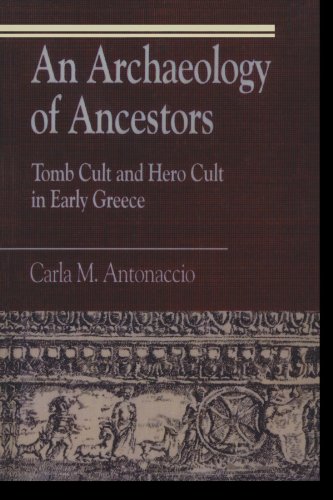
An Archaeology of Ancestors
Authors:
Carla M. Antonaccio
Publisher:
Rowman & Littlefield Publishers
Publication Date:
Not available
ISBN:
084767942X
In this fresh consideration of the origins of the ancient Greeks' ideas and practices concerning their own past, Carla M. Antonaccio demonstrates that... hero cult and ancestor cult persisted, throughout the Iron Age, long before epic poetry's heroic narratives were widely disseminated. Although it was not until the dissolution of Iron Age societies that epic poetry and organized hero cult developed to aid claims to legitimacy, practices such as visiting tombs to make offerings were common, and contradict the usual picture of Iron Age religious conservatism.
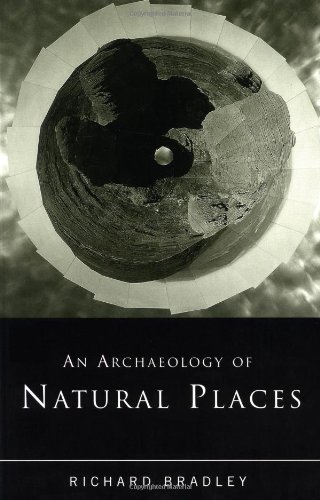
An Archaeology of Natural Places
Authors:
Richard Bradley
Publisher:
Routledge
Publication Date:
Not available
ISBN:
0415221501
This volume explores why natural places such as caves, mountains, springs and rivers assumed a sacred character in European prehistory, and how the... evidence for this can be analysed in the field. It shows how established research on votive deposits, rock art and production sites can contribute to a more imaginative approach to the prehistoric landscape, and can even shed light on the origins of monumental architecture. The discussion is illustrated through a wide range of European examples, and three extended case studies.An Archaeology of Natural Places extends the range of landscape studies and makes the results of modern research accessible to a wider audience, including students and academics, field archaeologists, and those working in heritage management.
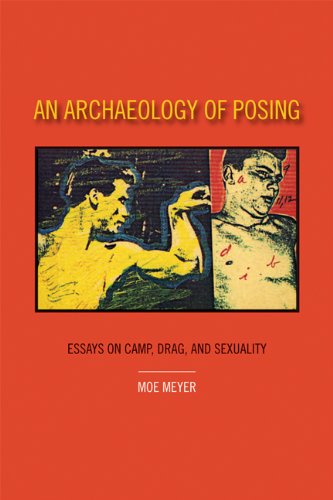
An Archaeology of Posing: Essays on Camp, Drag, and Sexuality
Authors:
Moe Meyer
Publisher:
Macater Press
Publication Date:
Not available
ISBN:
0981492452
An Archaeology of Posing compiles two decades of new and previously published writing on gay culture by one of the field’s most provocative and... outspoken critics. Diverging from the text-based premise of most queer theory, Meyer utilizes performance studies and interpretive anthropology to examine camp and drag performances in the spaces in which they appear. He explores a variety of topics—from transsexual striptease and Harlem drag balls to the death of camp—within the genre of queer drag and sexuality performance. This collection of essays, with Meyer’s rejection of gender parity and his celebration of the effeminate gay male body, presents a fresh interpretation of established art forms. From the pre-Stonewall era to the present day, Meyer’s cultural critique redefines how we understand the phenomena of camp and drag.
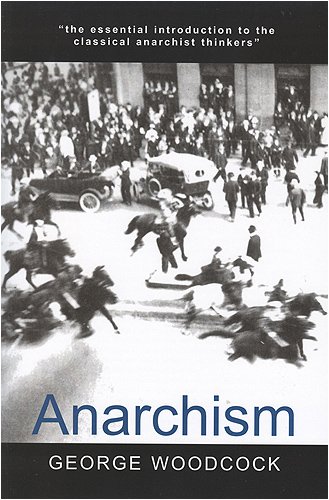
Anarchism
Authors:
George Woodcock
Publisher:
University of Toronto Press, Higher Education Division
Publication Date:
Not available
ISBN:
1551116294
To what degree can anarchism be an effective organized movement? Is it realistic to think of anarchist ideas ever forming the basis for social life... itself? These questions are widely being asked again today in response to the forces of economic globalization. The framework for such discussions was perhaps given its most memorable shape, however, in George Woodcock's classic study of anarchism—now widely recognized as the most significant twentieth-century overview of the subject. Woodcock surveys all of the major figures that shaped anarchist thought, from Godwin and Proudhon to Bakunin, Goldman, and Kropotkin, and looks as well at the long-term prospects for anarchism and anarchist thought. In Woodcock's view "pure" anarchism—characterized by "the loose and flexible affinity group which needs no formal organization"—was incompatible with mass movements that require stable organizations, that are forced to make compromises in the face of changing circumstances, and that need to maintain the allegiance of a wide range of supporters. Yet Woodcock continued to cherish anarchist ideals; as he said in a 1990 interview, "I think anarchism and its teachings of decentralization, of the coordination of rural and industrial societies, and of mutual aid as the foundation of any viable society, have lessons that in the present are especially applicable to industrial societies." This classic work of intellectual history and political theory (first published in the 1960s, revised in 1986) is now available exclusively from UTP Higher Education.
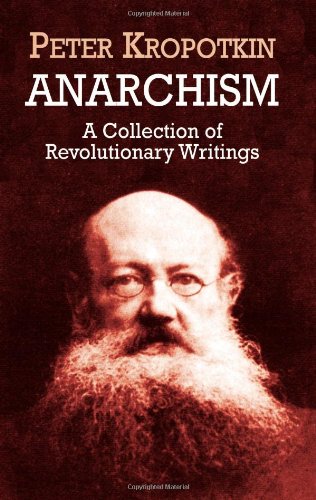
Anarchism: A Collection of Revolutionary Writings
Authors:
Peter Kropotkin
Publisher:
Dover Publications
Publication Date:
Not available
ISBN:
048641955X
Important writings by the leading theorist of anarchism, including the brief but moving "Spirit of Revolt," "Law and Authority," an argument for social... control through custom and education, and other documents. An invaluable addition to the libraries of instructors, students, and anyone interested in history, government, and anarchist thought.
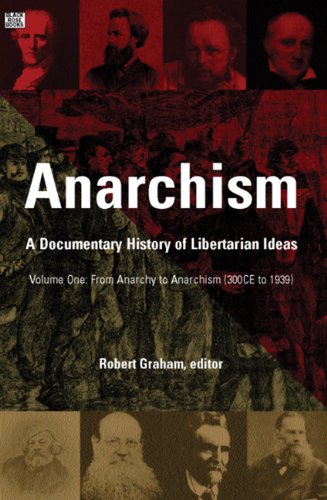
Anarchism: A Documentary History of Libertarian Ideas, Volume One
Authors:
Robert Graham
Publisher:
Black Rose Books
Publication Date:
Not available
ISBN:
1551642506
Volume One of Anarchism: A Documentary History of Libertarian Ideas, is a comprehensive and far ranging collection of anarchist writings from the feudal... era (300) to 1939. Edited and introduced by noted anarchist scholar Robert Graham, the collection will include the definitive texts from the anarchist tradition of political thought, beginning with some of the earliest writings from China and Europe against feudal servitude and authority.The collection will then go on to document the best of the anti-authoritarian writings from the English and French Revolutions and the early development of libertarian socialist ideas, including such writers as Gerrard Winstanley, William Godwin, Charles Fourier, Max Stirner, as well as the early anarchist writings of Pierre-Joseph Proudhon, Michael Bakunin, Peter Kropotkin, Errico Malatesta, Elisee Reclus, Leo Tolstoy, and Emma Goldman.This incomparable volume deals both with the positive ideas and proposals the anarchists tried to put into practice, and with the anarchist critiques of the authoritarian theories and practices confronting them during these years with their revolutionary upheavals.Robert Graham has written extensively on the history of anarchist ideas. He is the author of “The Role of Contract in Anarchist Ideology,” in the Routledge publication, For Anarchism, edited by David Goodway, and he wrote the introduction to the 1989 Pluto Press edition of Proudhon’s General Idea of the Revolution in the 19th Century, originally published in 1851. He has been doing research and writing on the historical development of anarchist ideas for over 20 years and is a well respected commentator in the field.Includes original portraits of the anarchists drawn by Maurice Spira specifically for this book Spira’s imagery is rooted to the political, his subject matter global. Works such as “Battle of Seattle,” “Gulf,” and “Refugees” are the visual equivalent of newspaper headlines.
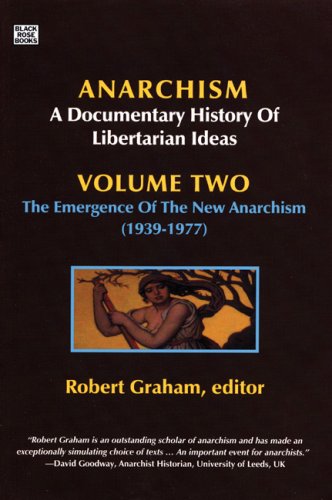
Anarchism: A Documentary History of Libertarian Ideas, Volume Two:...
Authors:
Not Available
Publisher:
Black Rose Books
Publication Date:
Not available
ISBN:
1551643103
Continuing where volume one left off, this anthology documents anarchist writings from World War II up until the present day. Many of the translations... (from Africa, India, China, Latin America, and Europe) have never before been published in English. Contributors include Noam Chomsky, Murray Bookchin, Emma Goldman, George Woodcock, Marie Louise Berneri, Herbert Read, Alex Comfort, Martin Buber, Paul Goodman, Carole Pateman, Colin Ward, Paul Feyerabend, Pierre Clastres, Chaia Heller, Ivan Illich, Daniel Guerin, Luce Fabbri, and many more. Robert Graham is the editor of Anarchism: A Documentary History of Libertarian Ideas, Volume One: From Anarchy to Anarchism (300CE to 1939).

Anarchism and Education: A Philosophical Perspective (Routledge...
Authors:
Judith Suissa
Publisher:
PM Press
Publication Date:
Not available
ISBN:
1604861142
Arguing that the central role of educational practice in anarchist theory and activism has been overlooked by many theorists, this examination of... contemporary educational philosophy counters the assertion that anarchism reflects a naïve or overly optimistic view of human nature. By articulating the philosophical underpinnings of anarchist thought on issues of human nature, freedom, authority, and social change, the case is made that the anarchist tradition can be a rich source of insights into perennial philosophical questions about education. This theoretical exploration is then bolstered with a historical account of anarchist education, focusing on key defining features of anarchist schools, their ideological underpinnings, and their pedagogical approaches. Finally, a clear explanation of how anarchist education is distinct from libertarian, progressive, Marxist, and liberal models defines the role of anarchist education in furthering and sustaining a just and equal society.

Anarchism and Other Essays
Authors:
Emma Goldman
Publisher:
Dover Publications
Publication Date:
Not available
ISBN:
0486224848
12 essays by the influential radical include "Marriage and Love," "The Hypocrisy of Puritanism," "The Traffic in Women," Anarchism," and "The Psychology... of Political Violence."
 '
'