production
/viewbook/list/all/?page=981
/
/static/
None
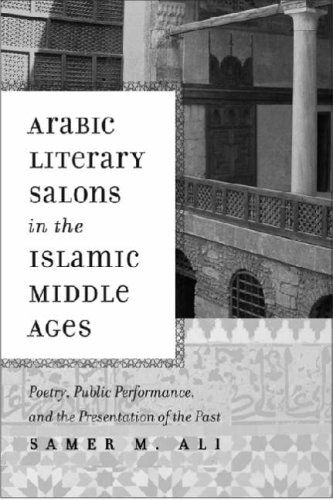
Arabic Literary Salons in the Islamic Middle Ages: Poetry, Public...
Authors:
Samer M. Ali
Publisher:
University of Notre Dame Press
Publication Date:
Not available
ISBN:
0268020329
Arabic literary salons emerged in ninth-century Iraq and, by the tenth, were flourishing in Baghdad and other urban centers, In an age before broadcast... media and classroom education, salons were the primary source of entertainment and escape for middle- and upper-rank members of society, serving also as a space and means for educating the young. Although salons relied on a culture of oral performance from memory, scholars of Arabic literature have focused almost exclusively on written sources of the tradition.That emphasis, argues Samer Ali, has neglected the interplay of oral and written, as well as of religious and secular knowledge in salon society, and the surprising ways in which these seemingly discrete categories blurred in the lived experience of participants. Looking at the period from 500 to 1250, and using methods from European medieval studies, folklore, and cultural anthropology, Ali interprets Arabic manuscripts in order to answer fundamental questions about literary salons as a social institution. He identifies salons not only as sites for socializing and educating, but as loci for performing literature and oral history; for creating and transmitting cultural identity; and for continually reinterpreting the past.A fascinating recovery of a key element of humanistic culture, Ali's work will encourage a recasting of our understanding of verbal art, cultural memory, and daily life in medieval Arab culture."Arabic Literary Salons in the Islamic Middle Ages is a unique contribution to understanding how poetry and literature were received in medieval Islam. By brilliantly situating salons both in the context of their predecessors and in comparable European and Persian traditions, Ali shows how the mujalasat tradition shaped, and was shaped by, people from all ages and walks of life. His careful study makes this tradition, with its vibrant performative dimension, come to life for a contemporary audience." --Dale F. Eickelman, Dartmouth College"This important book makes a unique contribution to the social history of Arabic literature, literacy practices, and historical consciousness. Its arguments are built on meticulous, theoretically innovative readings of some key Abbasid works in their contexts of composition and salon performance. It will be of great value to Arabists and to scholars of world comparative literature, the ethnography of literacy, and historiography in and beyond medieval studies." --Margaret A. Mills, Ohio State University"Samer Ali has written a wonderful, very accessible book that addresses important aesthetic phenomena of the Arab Middle Ages, especially those emanating from the heart of the Abbasid Empire. A major contribution is his inclusion of new or barely considered manuscript material as well as discussion of the social dynamics of everyday life in the Arab Middle East and North Africa, little known by most westerners." --Sabra Webber, Ohio State University
Arabic Practical Dictionary: Arabic-English English-Arabic...
Authors:
Nicholas Awde
Publisher:
Hippocrene Books
Publication Date:
Not available
ISBN:
0781810450
This dictionary is an essential resource for students of Arabic and English alike. It covers their needs with the most up-to-date entries in handy... reference form, and will especially prove to be an aid in navigating the growing vocabulary of politics, telecommunications, technology, the Internet, tourism, business, and travel. Compact and concise, the dictionary includes more than 18,000 entries in clear, easy-to-read format the Arabic is provided with Romanised transliterations and the English with phonetic transliterations, while grammatical forms such as verb conjugations and plurals, are given for each word in both languages. The selection of current words and expressions and their practical arrangement make this a comprehensive and reliable dictionary that is not only a principal tool for the study of Modern Standard Arabic, bit also a perfect two-way portal for students of both Arabic and English.

ARABIC SCRIPTOLINGUA (BKPART 1)
Authors:
Not Available
Publisher:
Not available
Publication Date:
Not available
ISBN:
Not available
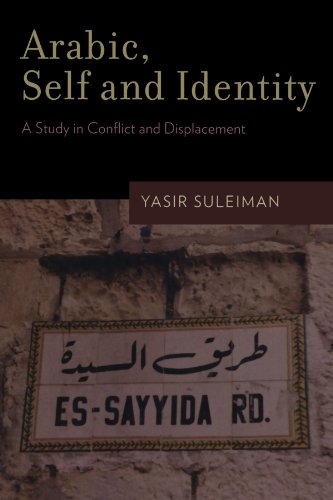
Arabic, Self and Identity: A Study in Conflict and Displacement
Authors:
Yasir Suleiman
Publisher:
Oxford University Press, USA
Publication Date:
Not available
ISBN:
0199747008
Arabic, Self, and Identity uses autoethnography, autobiography, and a detailed study of names to investigate the links between conflict and... displacement, and between the Self and group identity. In the process it raises questions about trauma and globalization, underscoring the complex roles of language and identity in society.Yasir Suleiman frames his findings against a far-reaching critique of the dominant, correlational approach in Arabic sociolinguitics. He argues that this approach does not sufficiently explore the link between language and the major narratives of identity and conflict in the Middle East. Instead he advocates for combining this approach with qualitative studies that are nevertheless aware of the limits of interpretation and the positionality of the researcher. This combined endeavor, Suleiman says, can generate a richer understanding of the sociopolitical underpinnings of language, and help to bridge the gaps between the various disciplines that converge on language as a field of investigation and analysis.
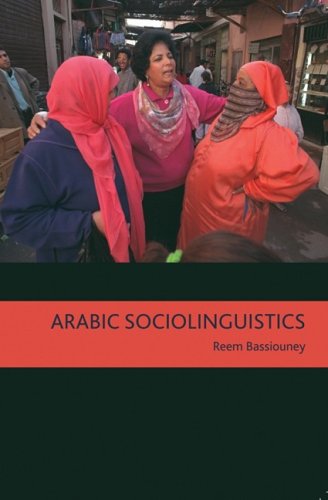
Arabic Sociolinguistics: Topics in Diglossia, Gender, Identity, and...
Authors:
Reem Bassiouney
Publisher:
Georgetown University Press
Publication Date:
Not available
ISBN:
1589015738
This introduction to major topics in the field of Arabic sociolinguistics examines key issues in diglossia, code-switching, gendered discourse, language... variation and change, and language policies. It introduces and evaluates various theoretical approaches and models, and it illustrates the usefulness and limitations of these approaches to Arabic with empirical data. Reem Bassiouney explores how current sociolinguistic theories can be applied to Arabic and, conversely, what the study of Arabic can contribute to our understanding of the function of language in society.Graduate students of Arabic language and linguistics as well as students of sociolinguistics with no knowledge of Arabic will find this volume to be an indispensable resource.

Arabic Thought in the Liberal Age 1798-1939
Authors:
Albert Hourani
Publisher:
Cambridge University Press
Publication Date:
Not available
ISBN:
0521274230
Arabic Thought in the Liberal Age is the most comprehensive study of the modernizing trend of political and social thought in the Arab Middle East.... Albert Hourani studies the way in which ideas about politics and society changed during the nineteenth and the first half of the twentieth centuries, in response to the expanding influence of Europe. His main attention is given to the movement of ideas in Egypt and Lebanon. He shows how two streams of thought, the one aiming to restate the social principles of Islam, and the other to justify the separation of religion from politics, flowed into each other to create the Egyptian and Arab nationalisms of the present century. The last chapter of the book surveys the main tendencies of thought in the post-war years. Since its publication in 1962, this book has been regarded as a modern classic of interpretation. It was reissued by the Cambridge University Press in 1983 and has subsequently sold over 8000 copies.
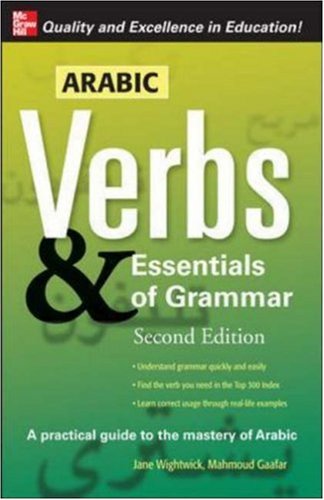
Arabic Verbs & Essentials of Grammar, 2E (Verbs and Essentials...
Authors:
Jane Wightwick
Publisher:
McGraw-Hill
Publication Date:
Not available
ISBN:
0071498052
Your one-stop guide to mastering the basics of Arabic Can one book have all you need to communicate confidently in a new language? Yes, and that... book is Arabic Verbs & Essentials of Grammar. It offers a solid foundation of major verbal and grammatical concepts of the language, from pronouns to idioms and expressions and from irregular verbs to expressions of time. Each unit is devoted to one topic, so you can find what you need right away and get focused instruction immediately. Concise yet thorough, the explanations are supported by numerous examples to help you master the different concepts. And for those tricky verbs, Arabic Verbs & Essentials of Grammar includes a Verb Index of the most common verbs, cross-referenced with the abundant verb tables appearing throughout the book. This book will give you: An excellent introduction to the basics of Arabic if you are a beginner or a quick, thorough reference if you already have experience in the language Contemporary usage of verbs, adjectives, pronouns, prepositions, conjunctions, and other grammar essentials Examples that reflect contemporary usage and real-life situations
ARABIC VOCABULARY FLASHCARD, LEVEL 1, PART1
Authors:
Not Available
Publisher:
Not available
Publication Date:
Not available
ISBN:
Not available
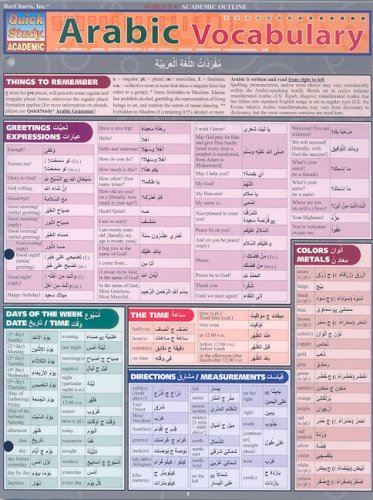
Arabic Vocabulary (Quickstudy: Academic)
Authors:
Inc. BarCharts
Publisher:
QuickStudy
Publication Date:
Not available
ISBN:
1423204166
A useful, comprehensive source of information for students, travelers and those conducting business overseas, this 3-panel (6-page) guide showcases... common Arabic vocabulary words/phrases and their English translations. Subjects covered include: • Greetings/Expressions • Days of the Week/Date/Time • The Year & the Islamic Lunar Calendar • Seasons/Weather/Nature • Colors • Directions/Measurements • The Family/People/Work • Places/Associations/Languages/Nationalities • Clothes • Food/Restaurant • The Body/Health/Hygiene • Sports/Entertainment/Media • City/School/Travel • Home/Dwelling/Habitat • Religions/Spirituality/Names/Holidays • Glossary • And more!

Arab in America
Authors:
Toufic El Rassi
Publisher:
Last Gasp
Publication Date:
Not available
ISBN:
0867196734
Joann Sfar's beloved, humorous, and wise talking cat is back for more beautifully illustrated adventures in Algiers and across Africa in the 1930s. ... While the rabbi is away, his cat tags along with Malka of the Lions (the rabbi's enigmatic cousin), who roams the desert with his ferocious-on-demand lion. Some believe Malka to be a pious Jew, others think he's a shrewd womanizer, but the cat will be the one to discover the surprising truth.Back in Algiers, the rabbi's daughter, Zlabya, and her new husband fill the house with their fighting, while the city around them fills with a rising tide of anti-Semitism. On a whim, the rabbi's cat, the rabbi, a sheikh (also a cousin of the rabbi), and a very misplaced Russian painter set out on a fantastic journey (even encountering a young reporter named Tintin in the Congo) in search of an African Jerusalem. It turns out to be very fortuitous that the rabbi's cat is not just a talking cat, but a multilingual talking cat.
Arabists: The Romance of an American Elite
Authors:
Robert D. Kaplan
Publisher:
Free Press
Publication Date:
Not available
ISBN:
0028740238
A tight-knit group closely linked by intermarriage as well as class and old school ties, the "Arabists" were men and women who spent much of their lives... living and working in the Arab world as diplomats, military attaches, intelligence agents, scholar-adventurers, and teachers. As such, the Arabists exerted considerable influence both as career diplomats and as bureaucrats within the State Department from the early 19th century to the present. But over time, as this work shows, the group increasingly lost touch with a rapidly changing American society, growing both more insular and headstrong and showing a marked tendency to assert the Arab point of view. Drawing on interviews, memoirs, and other official and private sources, Kaplan reconstructs the 100-year history of the Arabist elite, demonstrating their profound influence on American attitudes toward the Middle East, and tracing their decline as an influx of ethnic and regional specialists has transformed the State Department and challenged the power of the old elite.
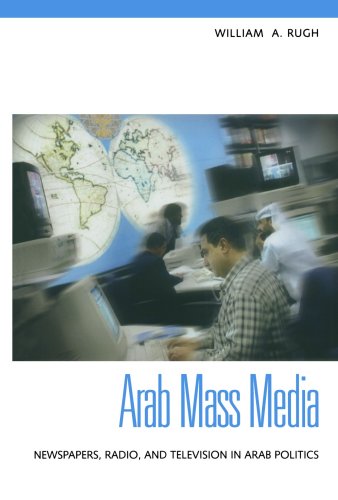
Arab Mass Media: Newspapers, Radio, and Television in Arab Politics
Authors:
William A. Rugh
Publisher:
Praeger
Publication Date:
Not available
ISBN:
0313361622
Since September 11, 2001, and the wars in Afghanistan and Iraq, many television viewers in the United States have become familiar with Al Jazeera as... offering an alternative take on events from that presented by mainstream U.S. media, as well as disseminating anti-American invective. Westerners have tended toward simplistic views of Arab newspapers, radio, and television, assuming that they are all under government control and that freedom of press is non-existent. William A. Rugh, a long time observer of the Arab mass media, offers a more nuanced picture of the Arab press as it relates to the political situation in the Arab world today.Although governmental influence over the media is stronger in the Middle East than in Europe or the United States, Rugh argues that there is more diversity in the Arab media than most people in the West realize. In reality, the Arab media are coming to reflect the diversity and wide range of opinions of those within the Arab world itself. In particular, the advent of privately owned Arab satellite television in the 1990s has led to significant liberalization of the media throughout the region. Rugh concludes that a democracy of ideas and voices is slowly growing in the Arab world, and he remains guardedly optimistic about the positive role the Arab media can play in processes of democratization and nation-building.

Arab Nationalism in the Twentieth Century: From Triumph to Despair
Authors:
Adeed Dawisha
Publisher:
Princeton University Press
Publication Date:
Not available
ISBN:
0691122725
Like a great dynasty that falls to ruin and is eventually remembered more for its faults than its feats, Arab nationalism is remembered mostly for its... humiliating rout in the 1967 Six Day War, for inter-Arab divisions, and for words and actions distinguished by their meagerness. But people tend to forget the majesty that Arab nationalism once was. In this elegantly narrated and richly documented book, Adeed Dawisha brings this majesty to life through a sweeping historical account of its dramatic rise and fall.Dawisha argues that Arab nationalism--which, he says, was inspired by nineteenth-century German Romantic nationalism--really took root after World War I and not in the nineteenth century, as many believe, and that it blossomed only in the 1950s and 1960s under the charismatic leadership of Egypt's Gamal 'Abd al-Nasir. He traces the ideology's passage from the collapse of the Ottoman Empire through its triumphant ascendancy in the late 1950s with the unity of Egypt and Syria and with the nationalist revolution of Iraq, to the mortal blow it received in the 1967 Arab defeat by Israel, and its eventual eclipse. Dawisha criticizes the common failure to distinguish between the broader, cultural phenomenon of "Arabism" and the political, secular desire for a united Arab state that defined Arab nationalism. In recent decades competitive ideologies--not least, Islamic militancy--have inexorably supplanted the latter, he contends.Dawisha, who grew up in Iraq during the heyday of Arab nationalism, infuses his work with rare personal insight and extraordinary historical breadth. In addition to Western sources, he draws on an unprecedented wealth of Arab political memoirs and studies to tell the fascinating story of one of the most colorful and significant periods of the contemporary Arab world. In doing so, he also gives us the means to more fully understand trends in the region today.
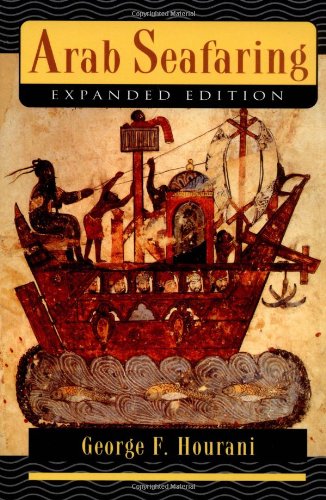
Arab Seafaring: In the Indian Ocean in Ancient and Early Medieval...
Authors:
George F. Hourani
Publisher:
Princeton University Press
Publication Date:
Not available
ISBN:
0691000328
In this classic work George Hourani deals with the history of the sea trade of the Arabs in the Indian Ocean from its obscure origins many centuries... before Christ to the time of its full extension to China and East Africa in the ninth and tenth centuries. The book comprises a brief but masterly historical account that has never been superseded. The author gives attention not only to geography, meteorology, and the details of travel, but also to the ships themselves, including a discussion of the origin of stitched planking and of the lateen fore-and-aft sails. Piracy in the Indian Ocean, day-to-day life at sea, the establishment of ancient lighthouses and the production of early maritime guides, handbooks, and port directories are all described in fascinating detail. Arab Seafaring will appeal to anyone interested in Arab life or the history of navigation. For this expanded edition, John Carswell has added a new introduction, a bibliography, and notes that add material from recent archaeological research.
Arab Society and Culture: An Essential Guide
Authors:
Not Available
Publisher:
Saqi Books
Publication Date:
Not available
ISBN:
0863566162
Arab Society and Culture provides wide-ranging essays and supplementary readings that examine recent social and cultural change in Arab societies.From... investigations of consumerism and Islam on the Internet to changing attitudes toward sex, gender, and homosexuality, this collection challenges stereotypes and assesses the impact of increasingly global and mobile lifestyles on family structure, public space, and private life. Emphasis is placed on how local cultures are adapting to global and postmodern transformations.Samples are taken from a wide range of writings on the Middle East, including essays by Orhan Pamuk, Bertrand Russell, Edward Said, Amin Maalouf, and Nawal El Saadawi. Many of the contributors have US academic posts and affiliations.Samir Khalaf is a professor of sociology and director of the Center for Behavioral Research at the American University of Beirut. He has held academic appointments at Princeton, Harvard, MIT, and New York University, and is most recently the co-editor of Sexuality in the Arab World (Saqi Books, 2006).Roseanne Saad Khalaf is an assistant professor of English and creative writing at the American University of Beirut, and she is the co-editor of Transit Beirut (Saqi Books, 2006).
 '
'